After a fire in Charlotte, board-up covers broken windows, doors and wall openings with plywood fastened into the framing, and tarping covers roof burn-through or vent holes with heavy tarp held down by battens. Most fire-damaged houses need both the same night, because rain through an open roof or window adds water damage and most policies expect you to prevent further damage.
Why the house is open after a fire
Firefighters break windows to let heat and smoke out, force doors to get in, and often cut holes in the roof to vent the fire. That is part of saving the house, and it leaves it open to rain, animals and people. Storms do the same thing with falling limbs and wind.
Whatever opened it, the goal is the same: close it that night, so the damage stops where it is. A house left open for even one rainy night can take on enough water to turn a smoke job into a drying and tear-out job as well.
When a house needs board-up
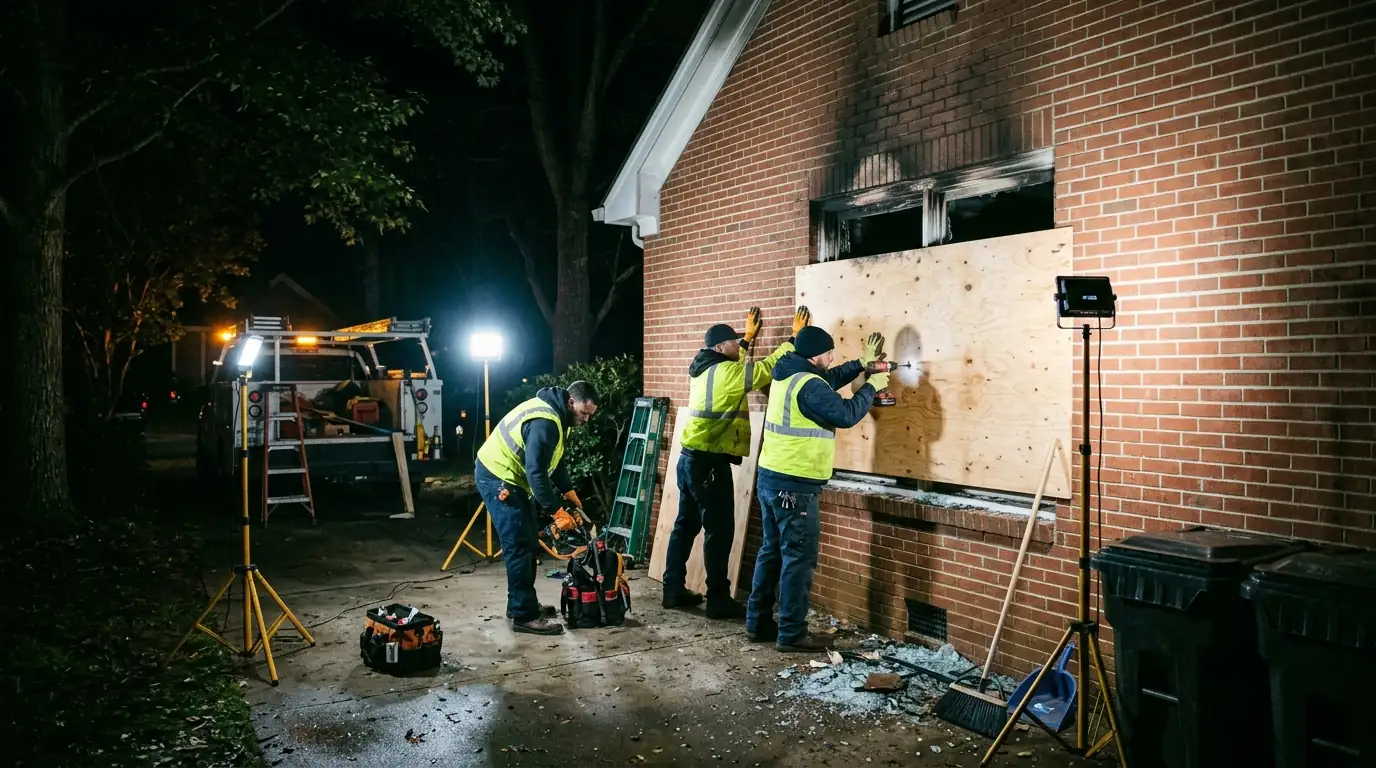
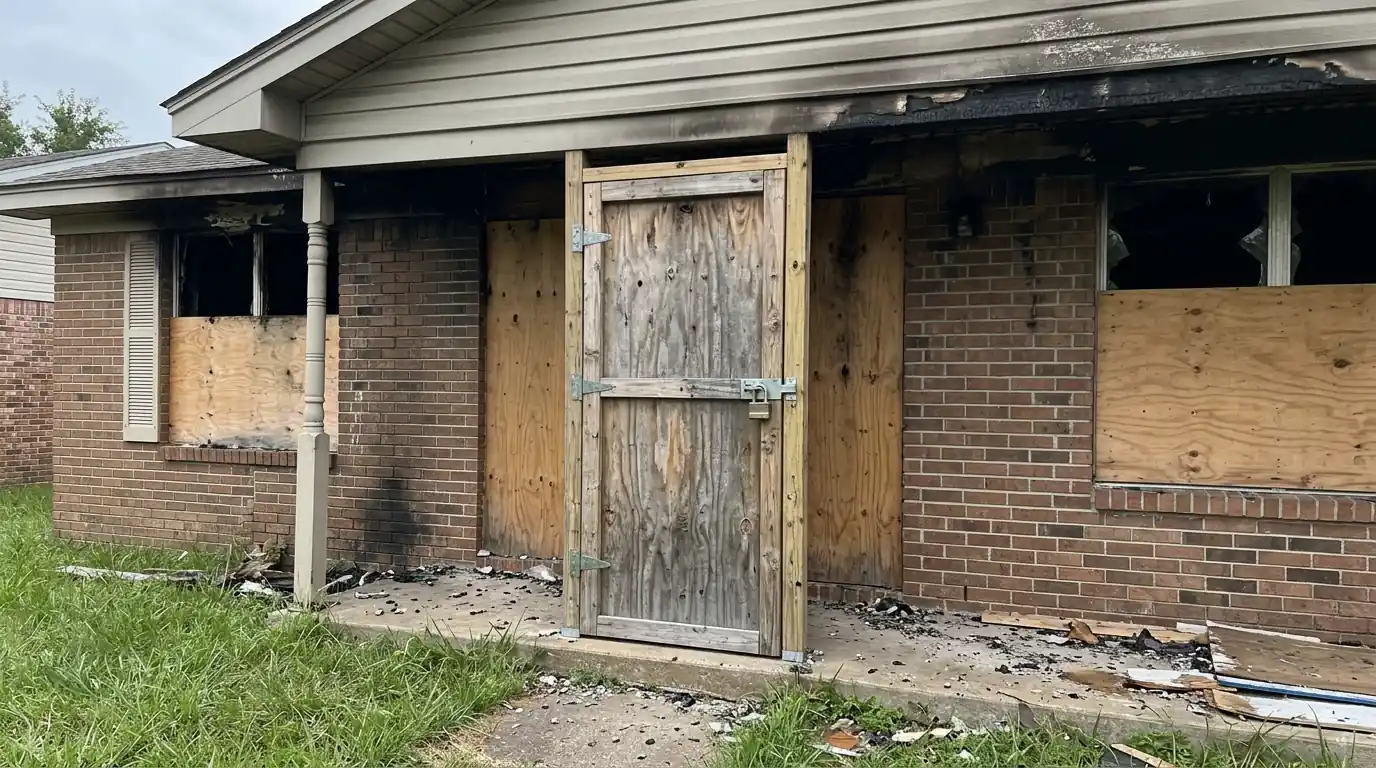
Board-up is for openings in walls: broken windows, forced or burned doors, and holes the fire or the firefighters made in exterior walls. Plywood is cut to each opening and fastened into the framing, from outside where possible, so it cannot be pried off easily. Glass is cleared from frames and floors first.
At least one opening gets a lockable access door, so you, your adjuster and the workers can get in without pulling boards off. Emergency board-up and roof tarping shows how the visit runs.
When a house needs a tarp
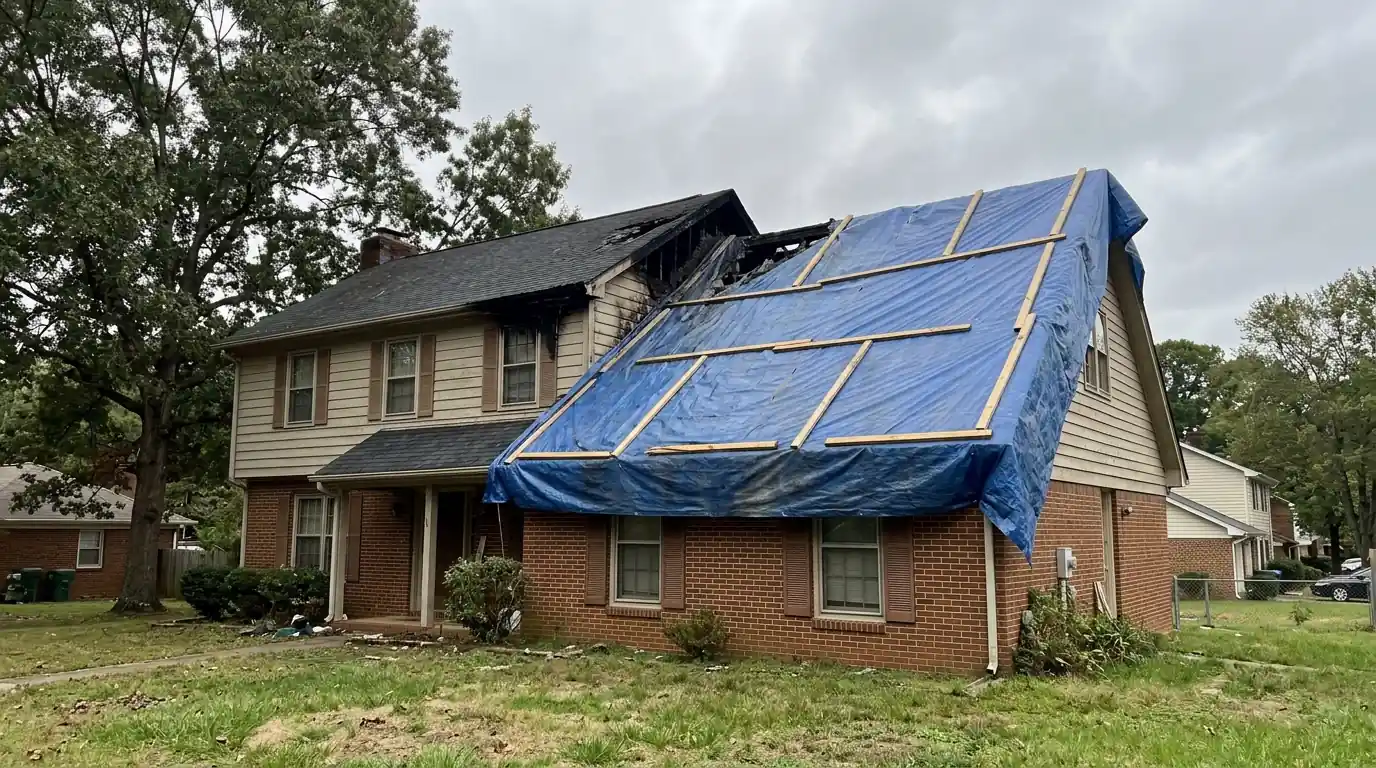
Tarping is for the roof: burn-through, holes cut to vent the fire, and storm damage from limbs. A heavy tarp is laid well past the opening, over the ridge where possible, and held down with wood battens fastened through the tarp into the roof, so wind cannot get under it. The decking around the hole is checked from inside first, because burning and firefighting weaken it. Sandbags and tape alone do not hold through a storm.
House open to the weather tonight?
Call now. We answer any hour and board up and tarp across Charlotte.
(704) 368-1592Why most fire jobs need both
A kitchen fire that vented through a window might only need board-up. But any fire that reached the attic, or where the fire department ventilated the roof, needs a tarp too, and those houses almost always have broken windows as well.
The two are done on the same visit, together with water extraction, because water that already came in keeps doing damage while the openings are being closed.
Storms make it a year-round job
Board-up and tarping are not only fire work around Charlotte. When Helene came through in September 2024, more than 1.75 million Carolinas customers lost power at the storm's height, and in Gastonia police reported more than 50 mature trees to be removed, some of them on power lines. Trees on roofs and broken windows need the same same-night response as a fire, and the same care with the decking underneath.
What happens to the boards and the tarp later
Board-up and tarping are temporary by design. The boards stay while the house is dried, cleaned and packed out, which protects both the structure and the belongings still inside, and they come off window by window as new glass and doors go in. The tarp stays until the roof is repaired, which is usually one of the first rebuild steps because everything below depends on it. Both are checked after storms, and a loose batten or torn tarp is fixed the same day.
Businesses and rental properties
Storefronts, offices and apartment buildings need the same response, often with more at stake. A boarded storefront may need lighting and temporary fencing, and a building with tenants needs every unit's openings secured, not just the one that burned. For commercial fires and multifamily buildings, securing the property is also how the owner protects the tenants who are still living there.
Doing it yourself, safely
Homeowners can board a window themselves when it is safe. A roof is a different matter.
- Only if the structure is safe and the fire department has released it.
- Plywood, not plastic, for windows and doors, screwed into the framing, not the trim.
- Stay off a burned roof, because weakened decking can give way.
- Leave roof tarping to people with fall protection if you cannot work safely from a ladder at the edge.
- Photograph everything first, so the openings are on record for the claim.
What board-up and tarping cost
Published cost guides put emergency board-up at roughly $250 to $2,500, depending on the number and size of openings, height and access. Tarping is priced by the roof area covered and the pitch. Both are usually billed as the first lines of the fire claim, because they are the reasonable steps to prevent further damage that most policies expect.
Questions people ask about this
Usually, as reasonable steps to prevent further damage. Keep the photos and the invoice for the claim.
A properly battened tarp lasts until the roof is repaired, but it should be checked after every storm.
Usually not. Their job ends when the fire is out and the scene is safe; securing the property afterward falls to the owner.
Yes, even more so. An empty, open house invites weather, animals and people.
Usually the same night the fire department releases the house, depending on access and conditions.
Keep reading
Why you should not run the HVAC after a fire
One switch can spread soot to every room in the house. What to do with the system instead.
Wet smoke vs dry smoke residue
Two fires, two completely different cleanups. How we read the residue before a single wall gets touched.
How to get smoke smell out of a house for good
Why candles and open windows fail, and how fogging, hydroxyl and sealing actually remove the odor.
House open after a fire or storm?
Call now and we will board it up and tarp the roof tonight.
Call (704) 368-1592