Structural drying in a Charlotte home removes the water left in walls, floors, subfloor and framing after extraction, using air movers to pull moisture out of materials and dehumidifiers to take it out of the air. Moisture readings decide where the equipment goes and when it comes out, and drying usually takes several days to reach dry targets.
How drying runs
- Extract first
Standing water out before drying starts.
- Take baseline readings
Wet areas and a dry standard for each material.
- Remove what will not dry
Pad, soaked insulation and saturated drywall.
- Place equipment
Air movers along walls, dehumidifiers sized to the room.
- Close the area
Doors shut so the equipment dries the structure.
- Check daily
Readings logged, equipment moved as areas dry.
- Confirm dry
Every area at target before the equipment leaves.
What drying actually does
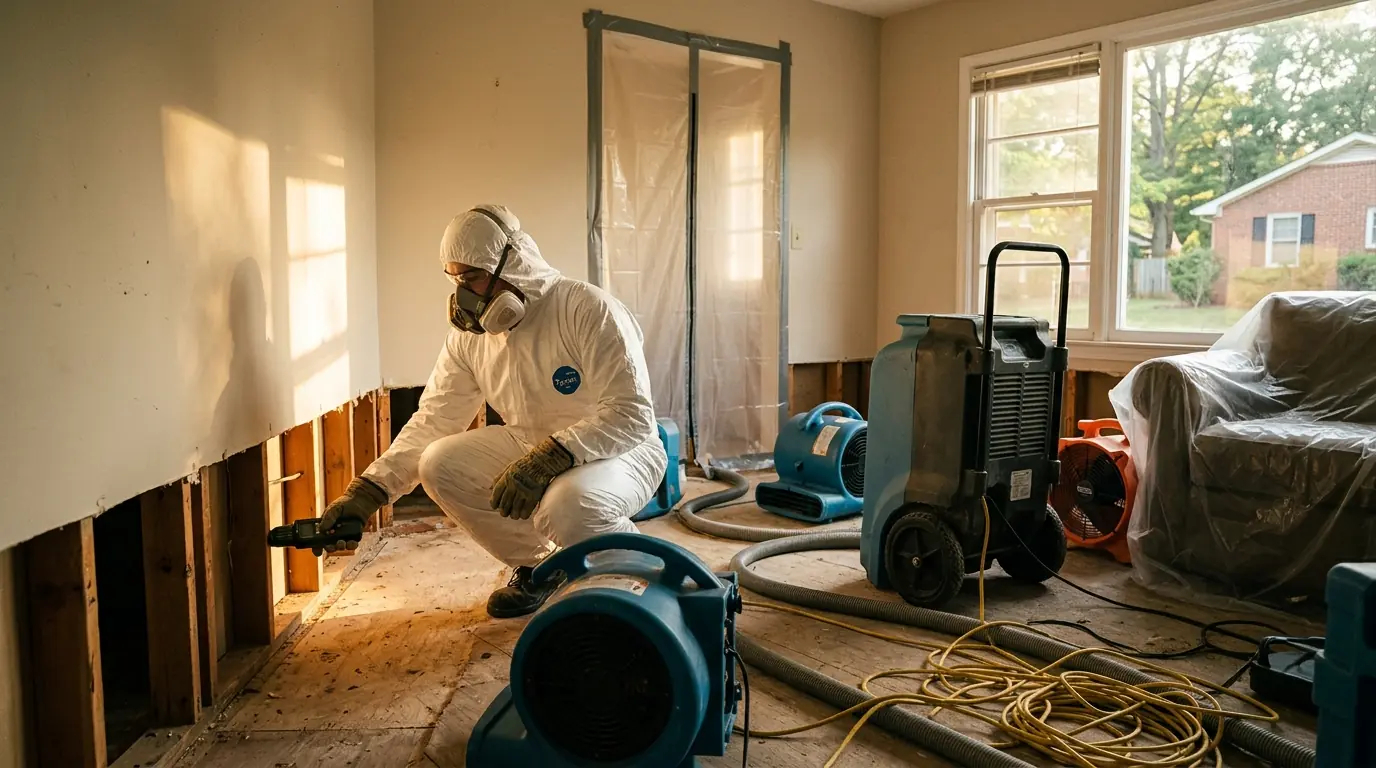
Extraction removes the water you can see. Drying removes the water inside materials: the drywall that wicked it up, the subfloor it soaked into, the framing and the hardwood. Air movers blow across wet surfaces to evaporate it, and dehumidifiers pull that moisture out of the air so it does not settle back into the house.
The science is simple. The discipline is in placing equipment correctly and measuring every day.
Drying Equipment Placement
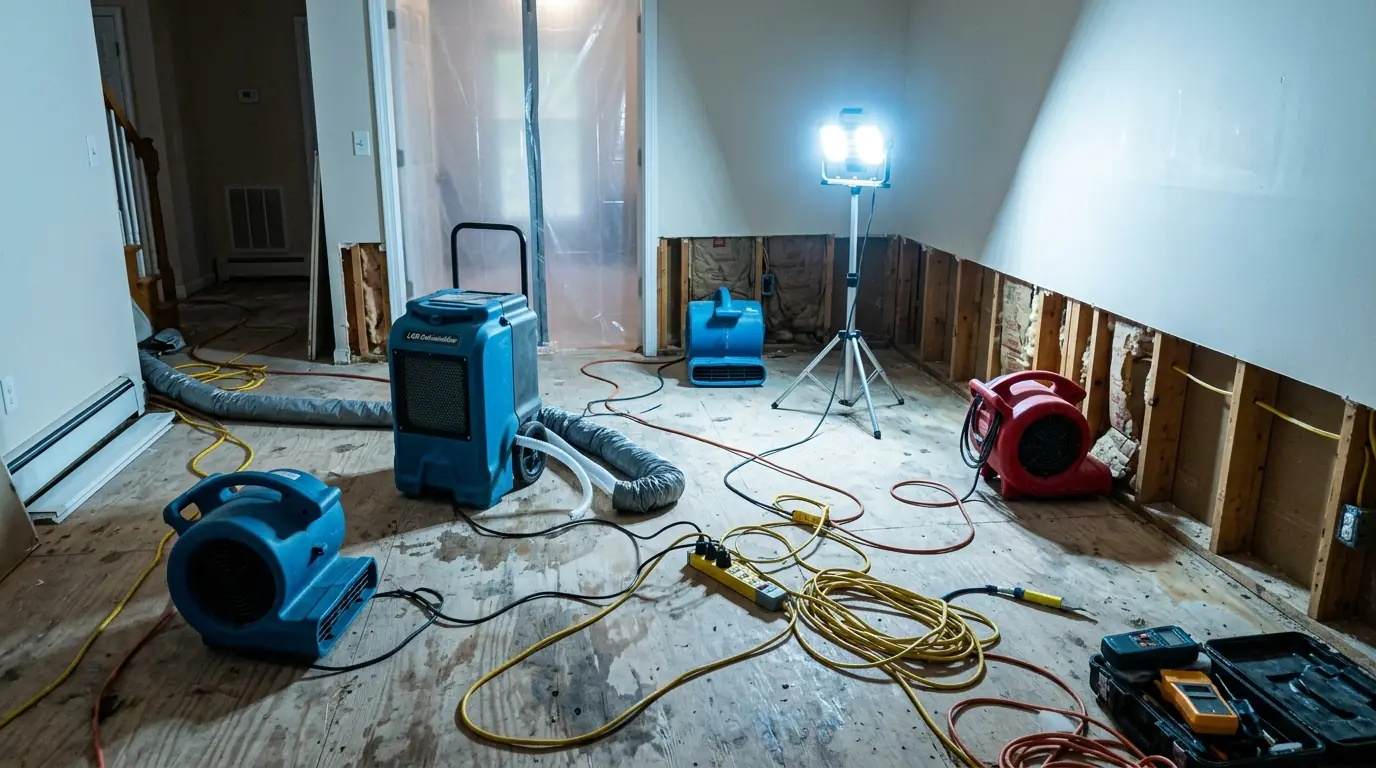
Equipment goes where the readings put it, not in the middle of the room. Air movers are aimed along walls at a low angle so air sweeps the wet surface, spaced along the wet area rather than bunched. Dehumidifiers are sized to the amount of water and the space, and the room is closed off so they dry the structure, not the whole neighborhood. Wall cavities that are wet but not being torn out can be dried through small holes behind the baseboard, with air pushed inside.
Daily Moisture Monitoring
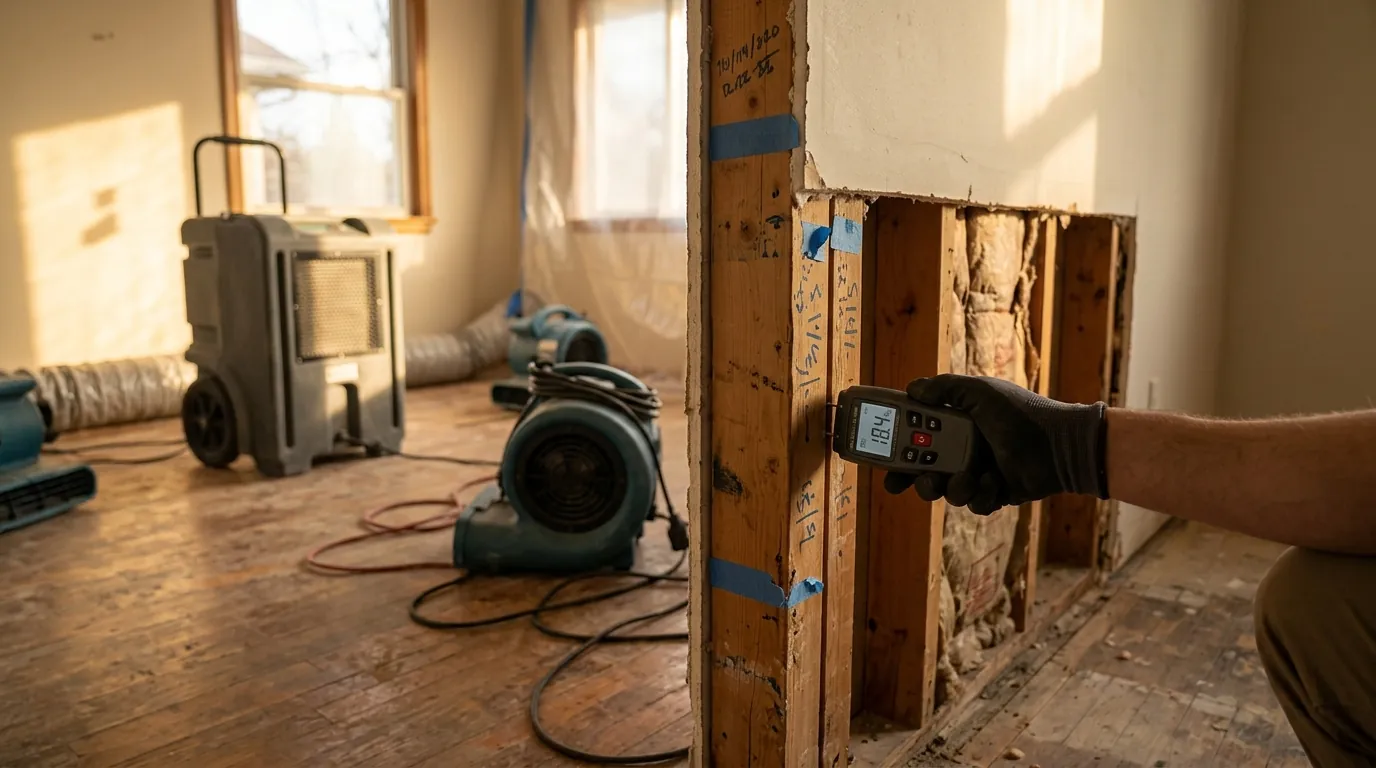
Every wet area is measured when drying starts and checked again every day after that, with readings logged against a dry standard taken from an unaffected area of the same material. As each area reaches target, equipment is moved to where it is still needed or removed, which keeps drying efficient and your power bill lower. The daily log is also what proves to your adjuster that the house was dried, and it tells the rebuild when walls can close.
Hardwood Floor Drying
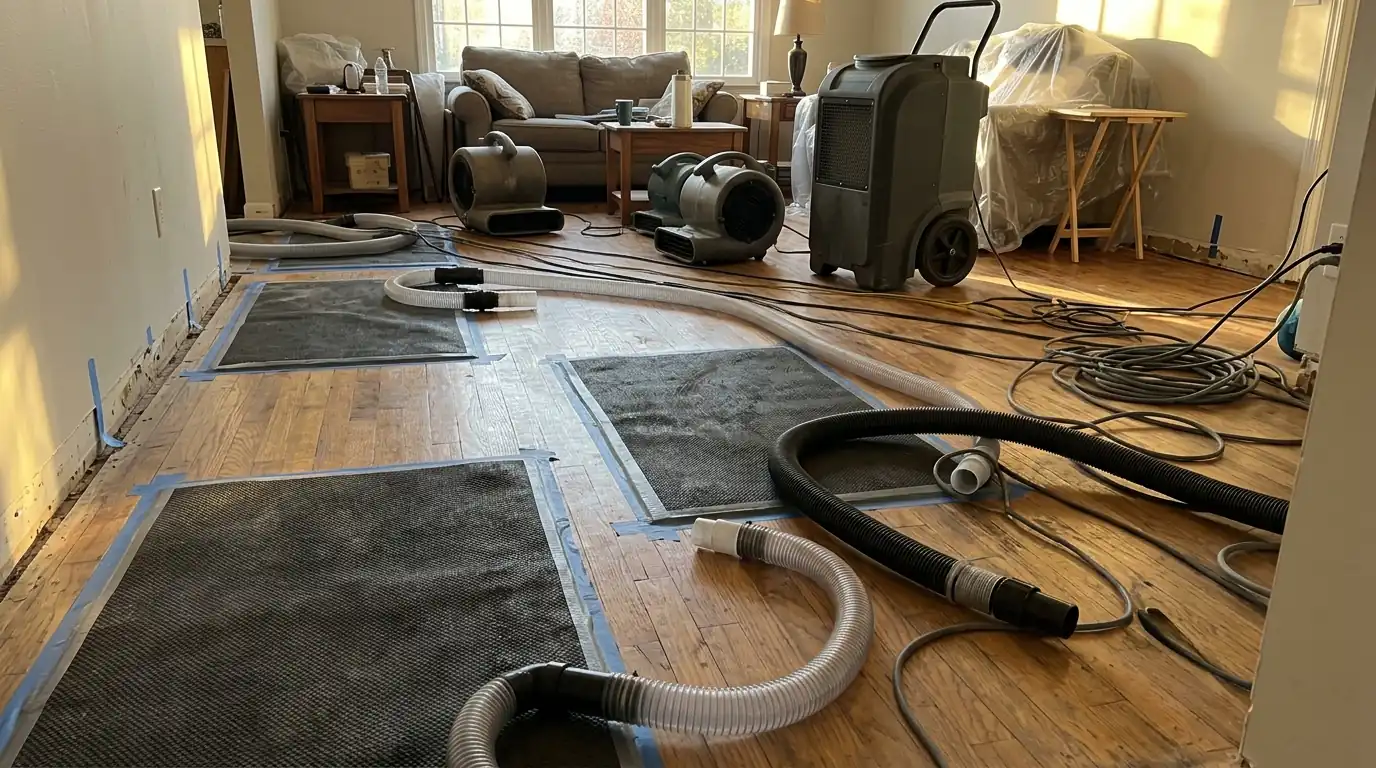
Wet hardwood cups as the bottoms of the boards swell. Caught early, many floors can be dried in place with drying mats that pull water up through the boards under suction, combined with dehumidifying the room. Readings are taken in the boards and in the subfloor beneath. Drying hardwood is slow, and some cupping flattens as it dries; the floor is judged for sanding and refinishing only once it has stabilized. Boards that crown, split or sat in dirty water are replaced.
How long structural drying takes
Most drying jobs reach target in several days. Drywall and carpeted rooms are quickest; hardwood floors, plaster walls and crawlspaces take longer, sometimes more than a week. Daily readings decide it, and the log shows exactly when each area came down to dry.
Drying in Charlotte's humid air
Charlotte's relative humidity stays around 70 to 75% most of the year, and the city gets about 43 to 44 inches of rain a year with no dry season. In that air, opening the windows does not dry a house; it lets more moisture in. Closed rooms with dehumidifiers running do the work, which is why drying here is planned around the equipment and the readings rather than the weather.
What moves the cost
Drying is usually priced by the equipment and the days it runs, as part of the water side of a claim. The published range below covers water cleanup after firefighting.
- Amount of water. More wet material means more equipment.
- Materials. Hardwood, plaster and crawlspaces dry slowest.
- Days to dry. Equipment is billed per day until readings hit target.
- Access. Crawlspaces and finished lower levels need special setups.
- Water damage cleanup after firefighting$1,000 to $6,000
Published planning ranges, not our quote. Local labor, access and how far the smoke traveled move the final figure.
Drying on these jobs runs mostly on Dri-Eaz and Phoenix dehumidifiers with XPOWER and B-Air air movers, and Benefect for antimicrobial treatment where it is needed.
Questions about structural drying & dehumidification
Usually several days. It runs until readings reach the dry standard, and daily checks move it to where it is still needed.
Please do not. Drying works continuously; switching off lets moisture settle back and adds days.
Air movers move a lot of air and dehumidifiers give off heat. The warmth actually helps drying.
Somewhat. Moving equipment out as areas dry keeps the cost down, and some policies reimburse it, so keep your bills.
Not in humid weather. Outside air adds moisture; closed rooms with dehumidifiers dry faster.
Readings match the dry standard for each material, and the daily log shows it for you and your adjuster.
Related work in Charlotte
Walls or floors still wet?
Call and we will measure and set the right equipment. We answer any hour across Charlotte.
Call (704) 368-1592