Smoke odor removal in a Charlotte home starts with cleaning off the residue that holds the smell, because candles, air fresheners and household cleaners will not remove embedded smoke odor. Then the air and remaining surfaces are treated with thermal fogging, hydroxyl generators or ozone, chosen by residue type, and framing that still holds odor is sealed.
Why smoke smell outlasts the cleanup
Smoke odor comes from microscopic particles and gases that settle into porous materials: drywall, wood, insulation, fabric, carpet and ductwork. Cleaning removes most of it from surfaces, but some stays where a sponge cannot reach, and it releases slowly, especially when the house warms up or the humidity rises.
Odor treatment finishes what cleaning starts; it does not replace it.
What moves the cost
Odor treatment is priced per room or per treatment. These published figures cover the common methods.
- Residue type. Protein and synthetic odors can need more than one treatment.
- Method. Hydroxyl runs longer; ozone is faster but needs the house empty.
- Sealing. Encapsulating framing and replacing attic insulation add material.
- Size. A whole-house treatment costs more than a single room.
- Odor removal per room (ozone, fogging, hydroxyl)$200 to $600 per room
- Thermal fogging$200 to $600
- Ozone smoke treatment$400 to $800
Published planning ranges, not our quote. Local labor, access and how far the smoke traveled move the final figure.
Hydroxyl or ozone?
| Factor | Hydroxyl | Ozone |
|---|---|---|
| Speed | Slower, often several days | Fast, often hours |
| Occupancy | Safe with people, pets and plants inside | House must be empty, then aired out |
| Materials | Gentle on rubber, fabric and electronics | Can degrade rubber and some fabrics over time |
| Best for | Occupied homes, open businesses, rooms of contents | Empty houses with strong, stubborn odor |
Thermal Fogging
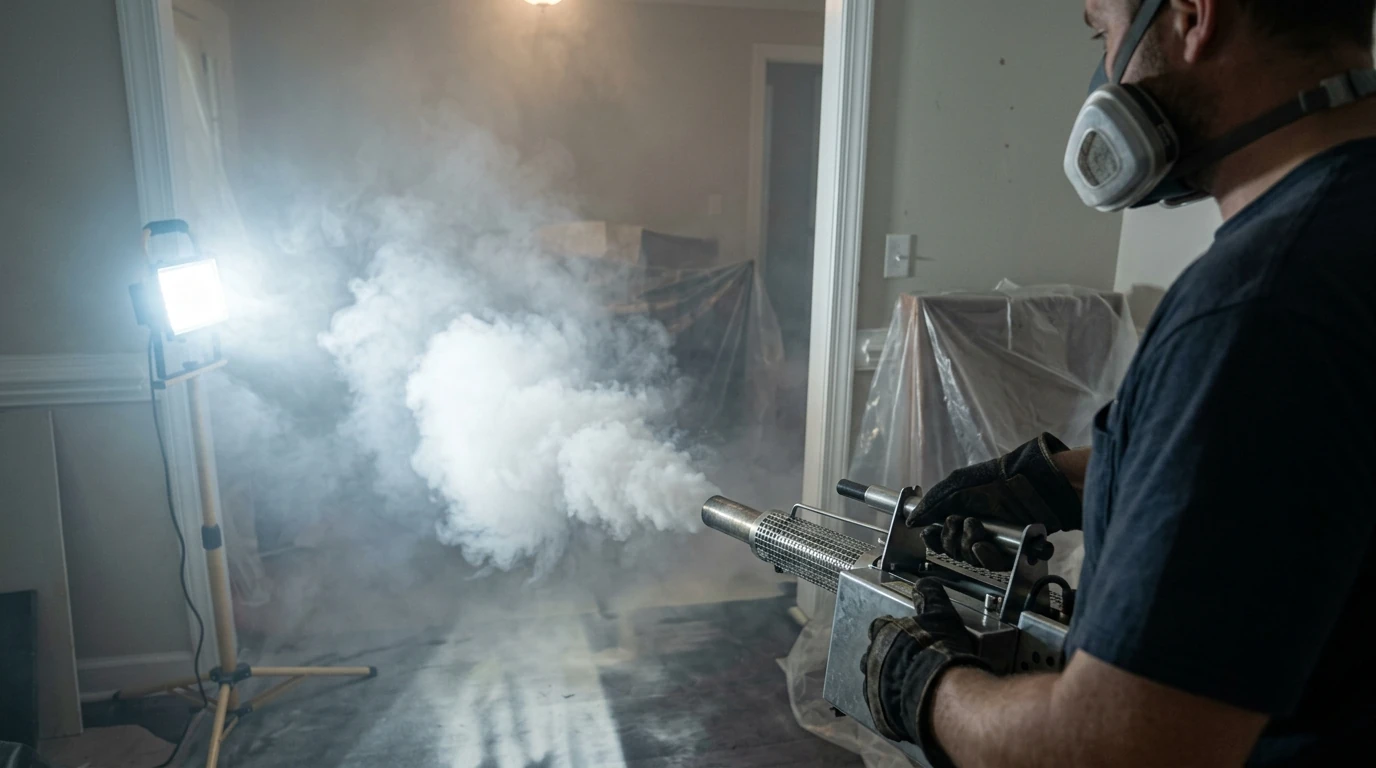
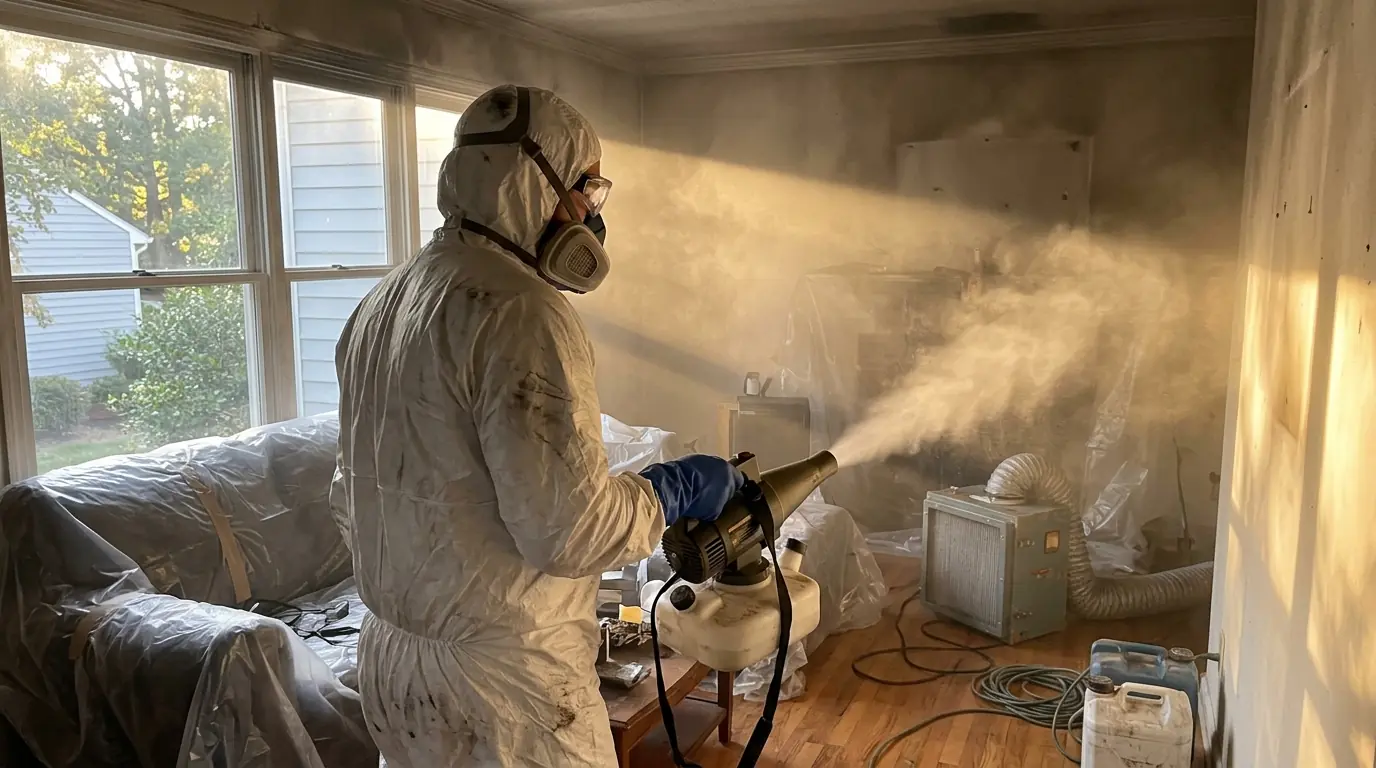
A thermal fogger heats a deodorizing solution into a fine, dry fog that behaves like smoke, drifting into the same cracks, cavities and porous surfaces the smoke reached and neutralizing odor where it settled. It works especially well on protein and synthetic smoke odors. The house has to be empty during fogging and aired out afterward, and the solution has to match the residue. Fogging is usually done once cleaning is finished and before walls are closed up or repainted.
Hydroxyl Generators
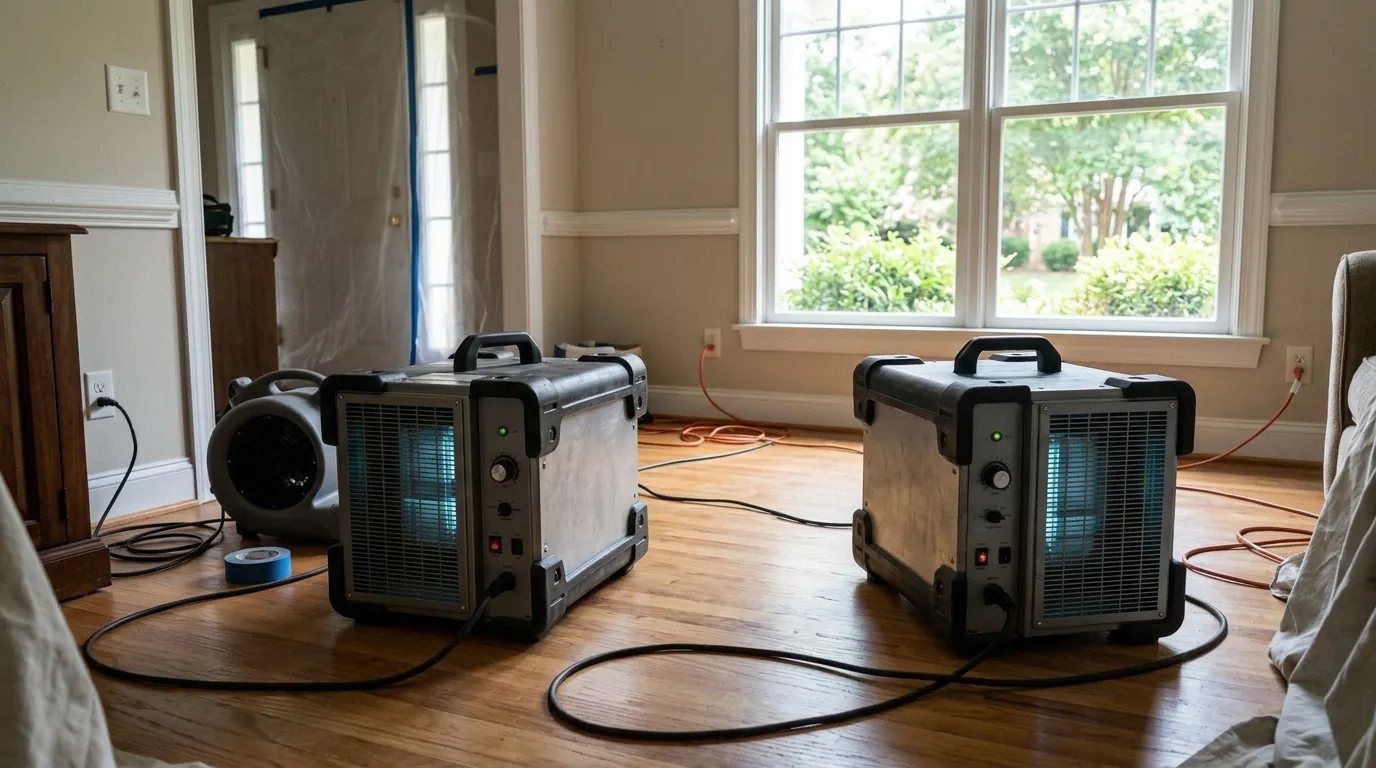
Hydroxyl generators use ultraviolet light to create hydroxyl radicals from moisture in the air, which break down odor molecules. They work more slowly than ozone, often running for several days, but they are safe to run with people, pets and plants in the house, and they do not damage rubber, fabric or electronics. That makes them the usual choice in an occupied home, a business that stays open, or rooms full of belongings. We move them room by room as each area clears.
Ozone Treatment
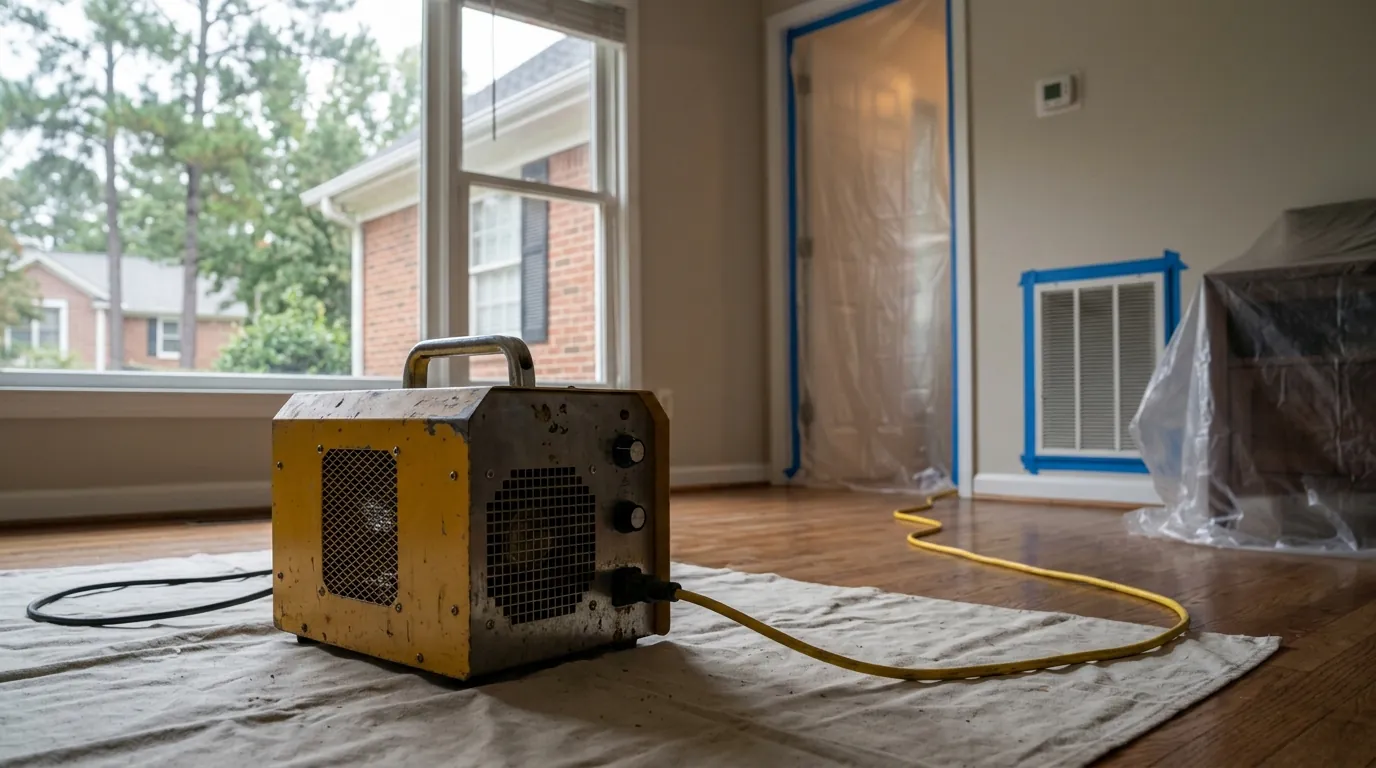
Ozone generators produce a gas that reacts with odor molecules and breaks them down fast, which makes ozone effective on strong, stubborn smoke odor. It is also harsh: at treatment levels it irritates the lungs, and it can degrade rubber and some fabrics with long exposure. So ozone is only run in an empty house, with people, pets and plants out, for a set period, followed by airing out before anyone returns. It is a tool for the right job, not the default.
Sealing and Encapsulating Framing
Some odor cannot be treated out, only locked in. Framing, subfloor and roof decking exposed to heavy smoke are cleaned and then sealed with an odor-blocking encapsulant before insulation and drywall go back. Attic insulation that smells of smoke is removed and replaced rather than treated, because the fibers hold odor. Sealing is the step that stops the smell coming back on the first hot day, months after everyone thought the job was done. Every sealed bay is photographed for the file.
Residue type, attic insulation and odor in Mecklenburg County
Which treatment works depends on the residue: protein, synthetic and wood smoke each call for different agents, and candles, air fresheners and household cleaners will not remove embedded smoke odor. In a Charlotte house the attic is often where odor hides. Mecklenburg County requires R-38 attic insulation, a deep layer of fibers that soaks up smoke, so smoky attic insulation is replaced rather than treated.
How the odor is removed
- Find the source
Which rooms, materials and cavities hold the smell.
- Clean the residue
Soot and film off surfaces before any treatment.
- Clean the ducts
HVAC cleaned and filters replaced.
- Choose the treatment
Fogging, hydroxyl or ozone by residue type and occupancy.
- Treat
Run for the set time, room by room or whole house.
- Seal
Encapsulant on framing; smoky insulation replaced.
- Check on a warm day
A closed-up walk-through with you to confirm it is gone.
Odor work runs on Odorox hydroxyl generators, Vaportek units, Unsmoke deodorizers and Fiberlock or Zinsser sealers for the framing.
Questions about smoke odor removal
It helps the air, but the odor keeps coming from residue in walls, fabric and ducts. The residue has to be cleaned first.
Only in an empty house. People, pets and plants stay out while it runs, and the house is aired out after.
Yes, with hydroxyl generators, which are safe to run with people in the house. They take longer than ozone.
Heat and humidity release odor from residue left in porous materials, which is why framing is sealed and smoky insulation replaced.
Treatments run from hours to several days, depending on the method and the residue. Sealing happens during the rebuild.
A walk-through with the house closed up on a warm day, when odor is strongest. We do it with you before closing out the job.
Related work in Charlotte
Still smell smoke after the cleanup?
Call and we will find where it is coming from. We answer any hour across Charlotte.
Call (704) 368-1592