Most smoke-damaged clothing can be saved if it is cleaned properly before anyone runs it through a hot home wash, and hard furniture of wood, metal or glass usually cleans up completely. Upholstered pieces depend on exposure: light to moderate smoke usually cleans and deodorizes, while heavy smoke in the foam, flame damage or dirty water usually means replacement.
Why smoke damage is usually surface damage
Smoke leaves residue on and in materials; it rarely destroys them. On a cotton shirt, a wool coat or a painted dresser, the damage is a film of particles and an odor, and both can often be removed. What decides whether an item is saved is how deep the residue went, what the item is made of, and whether heat or water did damage the smoke did not.
That is why belongings are sorted by material, not by room, when they are cleaned, and why the decision is made piece by piece rather than bag by bag.
Clothing, bedding and curtains
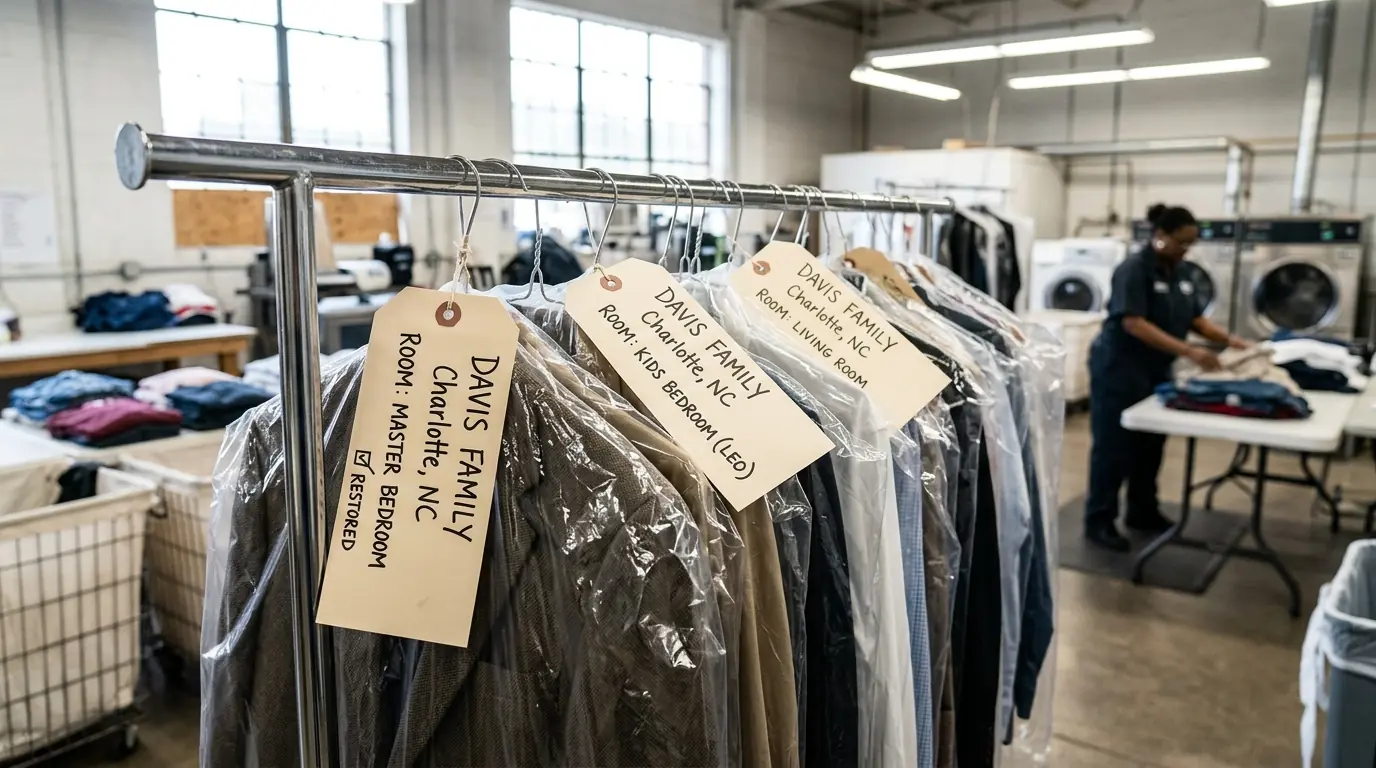
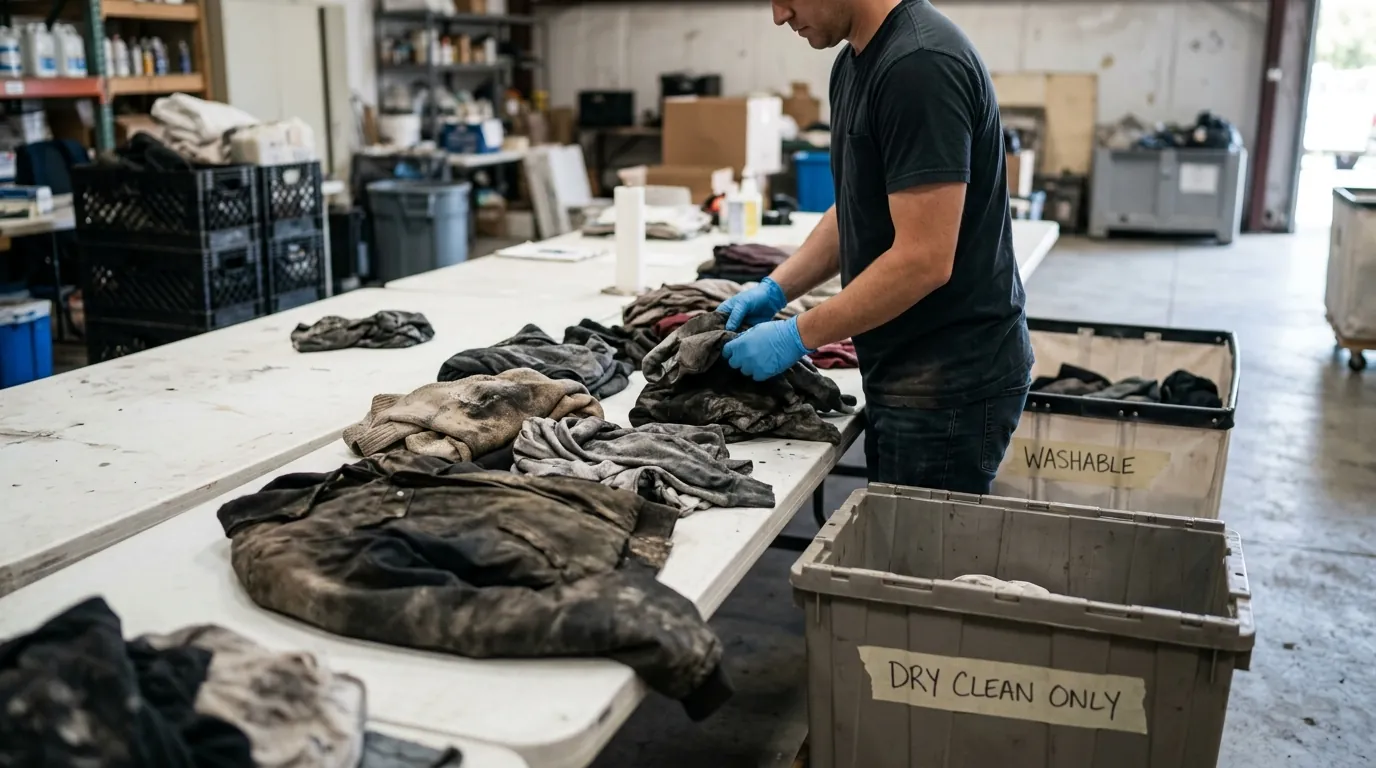
Washable clothing is the success story of most fire jobs. Once loose soot is shaken and vacuumed out, and collars, cuffs and seams are pretreated for the residue type, most everyday garments come back wearable. Dry-clean-only items go through dry cleaning made for smoke. Bedding and curtains follow the same pattern, though feather and foam pillows that hold odor are often cheaper to replace. Clothing and textile restoration explains how it runs.
The mistake to avoid is the home wash: a hot cycle with ordinary detergent can set smoke residue and odor into the fibers for good, especially the protein residue a kitchen fire leaves.
Upholstered furniture and mattresses
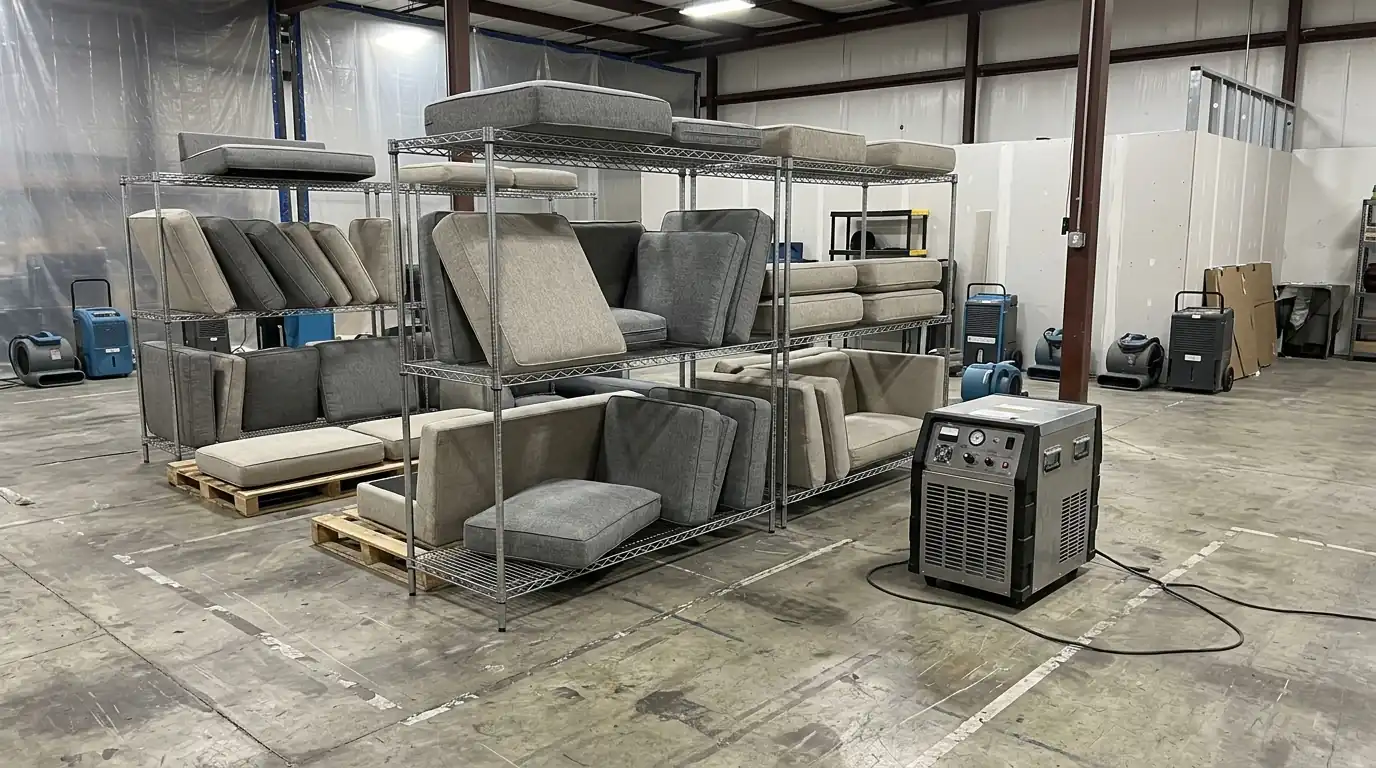
Sofas, chairs and mattresses are the hardest call. Smoke works into the fabric and down into the foam, and cleaning reaches the fabric far better than the foam. When exposure was light to moderate, fabric cleaning by the method its fiber calls for, followed by deodorizing, often in an ozone or hydroxyl chamber, brings pieces back. When smoke was heavy, the foam keeps releasing odor after the fabric is clean, and the piece usually goes on the replace list.
Leather is its own case: it can often be cleaned and conditioned, but it should never be washed. Wood frames, legs and arms are cleaned separately as part of contents cleaning.
Belongings smell of smoke?
Most of them can be saved. Call and we will start the inventory with you.
(704) 368-1592Hard furniture and household goods
Finished wood, metal, glass and ceramic are the easy wins. Soot sits on the surface, and careful cleaning, by hand for furniture and often ultrasonically for dishes, glassware and metal decor, removes it. Heat is what ruins hard goods: warped plastic, blistered finishes and cracked glass near the fire usually cannot be saved. Wood furniture whose finish dulled from heat may need a light refinish rather than replacement.
What usually has to go
Some things are almost never worth cleaning, and knowing the list early saves time for everyone involved.
- Anything charred or melted, because heat damage is not reversible.
- Upholstery and mattresses with heavy smoke deep in the foam.
- Porous items soaked in dirty firefighting water, such as pillows and particleboard.
- Open food, medications and cosmetics exposed to smoke or heat.
- Stuffed toys and baby items with foam or electronics inside, when exposure was heavy.
Photos, papers and electronics are their own cases
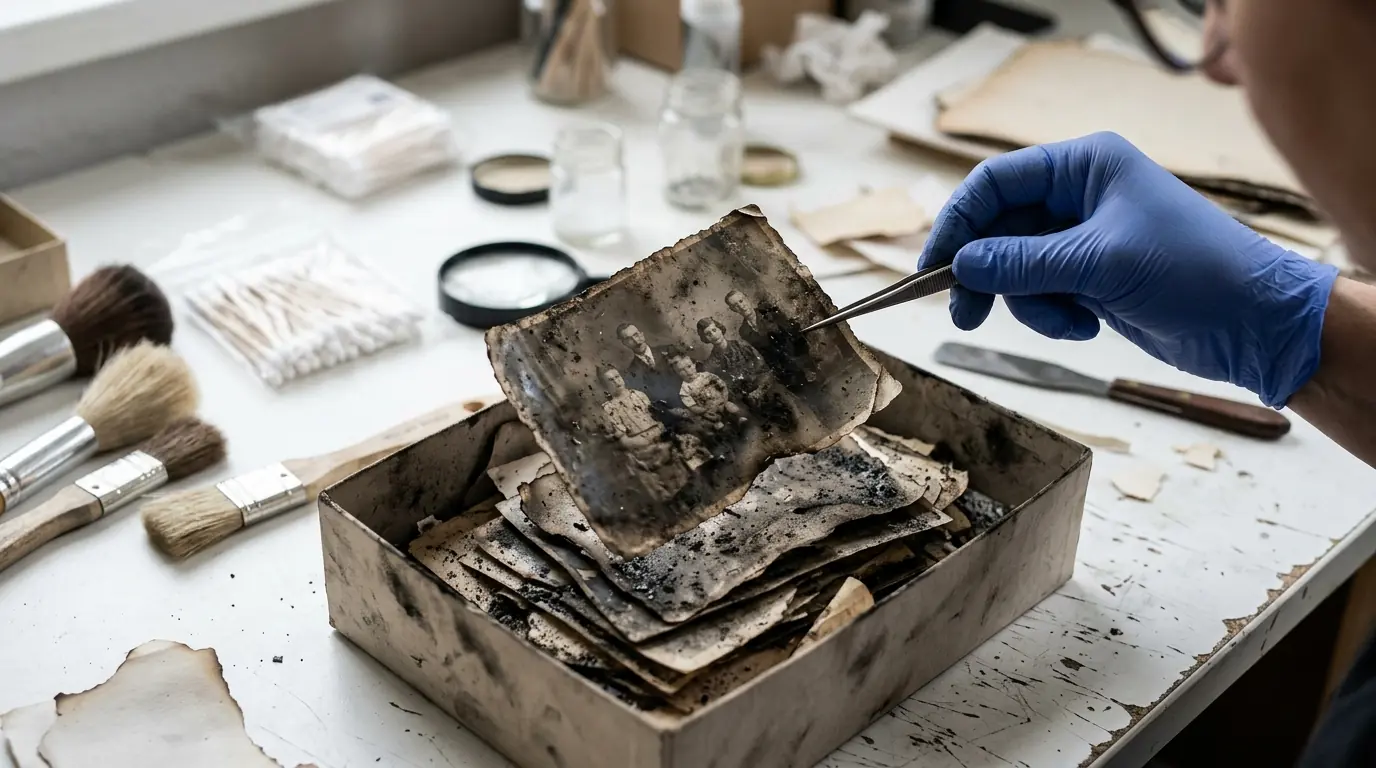
A few kinds of belongings follow different rules. Photographs and documents are fragile once they are wet or sooty: wet ones should be frozen rather than dried, and smoke-darkened ones are scanned before any cleaning, which is how document and photo restoration saves the image even when the paper does not fully recover.
Electronics are the opposite of clothing: the damage is inside, where acidic soot corrodes circuit boards. They should stay unplugged until they are cleaned and tested, and the ones that fail are logged with serial numbers for the claim, as described on the electronics cleaning page.
What to do before anything is cleaned
Photograph belongings where they sit before moving them; the photos are part of your claim, especially for anything that ends up replaced. Keep damaged items until your adjuster agrees they can go. Bag a few days of essentials if you need them now, but do not wash them hot or with fragrance.
And ask for the inventory. Every item that is cleaned, stored or discarded should be on a list you can see, room by room, which is how a contents pack-out is run.
What cleaning belongings costs
Published cost guides put furniture and textile deodorizing at roughly $200 to $1,000 as a line item, depending on volume. Clothing is usually priced by the item or by the load, and dry-clean-only pieces cost more than washables. For most households, cleaning what can be saved costs less than replacing it, which is why insurers expect cleaning to be tried first.
Questions people ask about this
Wait until loose soot is removed and the residue type is known. If you must, wash cold with no fragrance, and keep the rest for proper cleaning.
Not if the residue was removed. Odor that returns on humid days means residue is still in the fibers.
Sometimes not. If cleaning costs more than replacing it, the piece is documented and replaced instead.
Washable plush usually cleans up. Items with foam or electronics inside are usually replaced after heavy smoke.
You and your adjuster, after items are photographed and listed. Nothing should be discarded without that record.
Keep reading
What to throw away after a house fire
Food, medicine, cosmetics and soft goods that have to go, what is worth cleaning, and why to photograph first.
What fire damage restoration costs in Charlotte
Published planning ranges for board-up, soot removal, odor treatment and rebuild, and what pushes a job to the high end.
Documenting a fire loss for your claim in NC
Photos, inventory, receipts and moisture logs: what an adjuster needs to see and how we help you build the file.
Want to know what can be saved?
Call and we will walk your belongings with you and sort what cleans, what stores and what goes.
Call (704) 368-1592