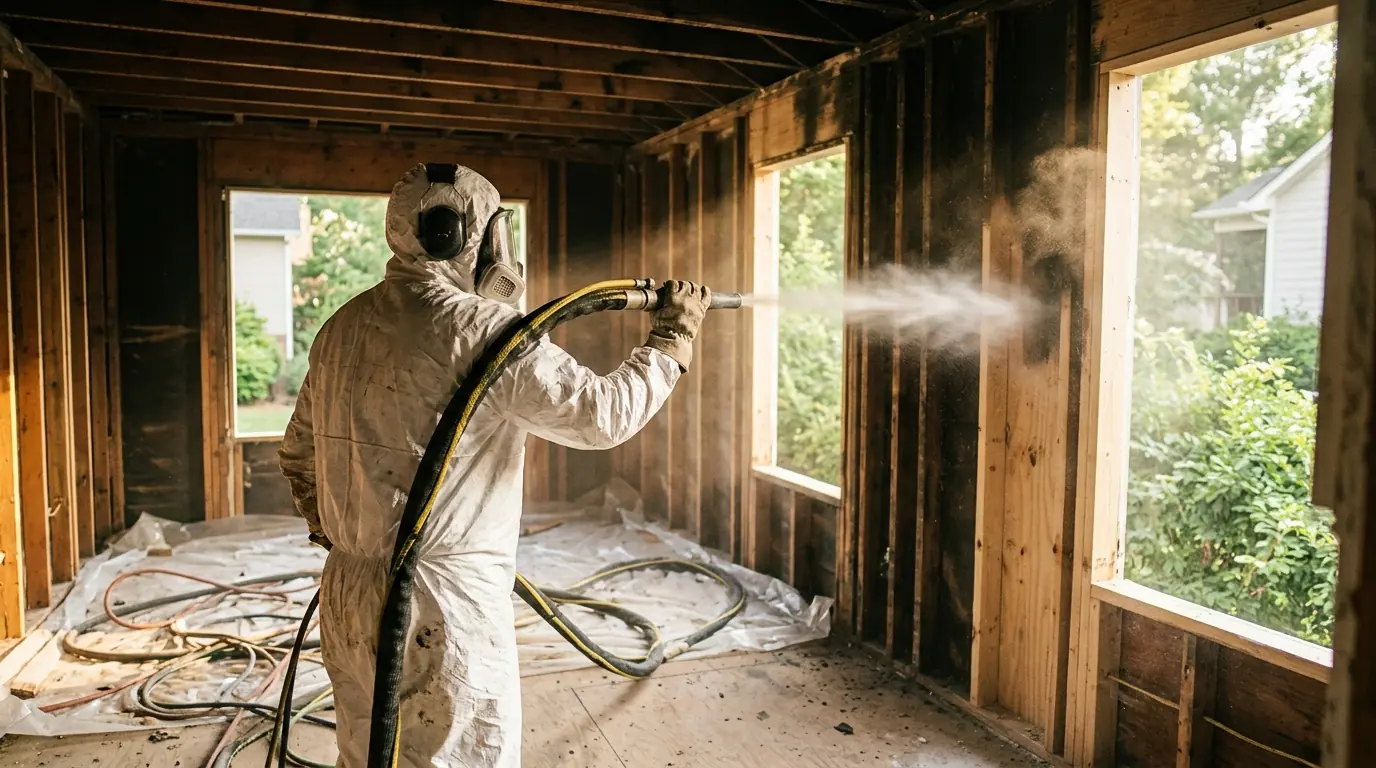
Soda blasting cleans charred and smoke-stained framing in a Charlotte house by blowing sodium bicarbonate at the wood, which strips soot and surface char without gouging sound lumber. It happens after demolition opens the walls and before new drywall goes up, and the cleaned framing is usually sealed with an odor-blocking encapsulant.
Why framing gets cleaned before the walls go back
Once drywall and insulation come out after a fire, the studs, joists and roof decking behind them are usually black with soot, and some are charred on the surface. That residue holds smoke odor. Close it in with new drywall and the house smells like the fire every humid afternoon, however well the rooms were painted.
Framing cleanup is the step between demolition and rebuild: remove the residue, confirm which members are still sound, then seal what stays.
What moves the cost
Framing cleanup is part of the remediation scope, so published figures price it inside remediation per square foot rather than as a line of its own.
- Depth of char. Surface soot blasts off quickly; char that has to be checked member by member takes longer.
- Method. Dry ice costs more to run than soda but saves cleaning up spent media.
- Access. Attics, crawlspaces and tall walls need more setup and containment.
- Sealing. Encapsulating the cleaned framing adds a coat of material and labor.
- Remediation only vs remediation plus reconstruction$4 to $7 per square foot for remediation alone; $20 or more per square foot with reconstruction
Published planning ranges, not our quote. Local labor, access and how far the smoke traveled move the final figure.
Clean and seal, or replace?
| Factor | Clean and seal | Replace or reinforce |
|---|---|---|
| Char depth | Soot and shallow surface char | Char deep enough to reduce the member's strength |
| What it takes | Blasting and a coat of sealer | Framing labor, lumber and a permit |
| Who signs off | Photos for the adjuster | A permit inspection before the walls close |
| Timeline | Usually days | Longer, tied to the permit |
Soda Blasting Charred Studs and Joists
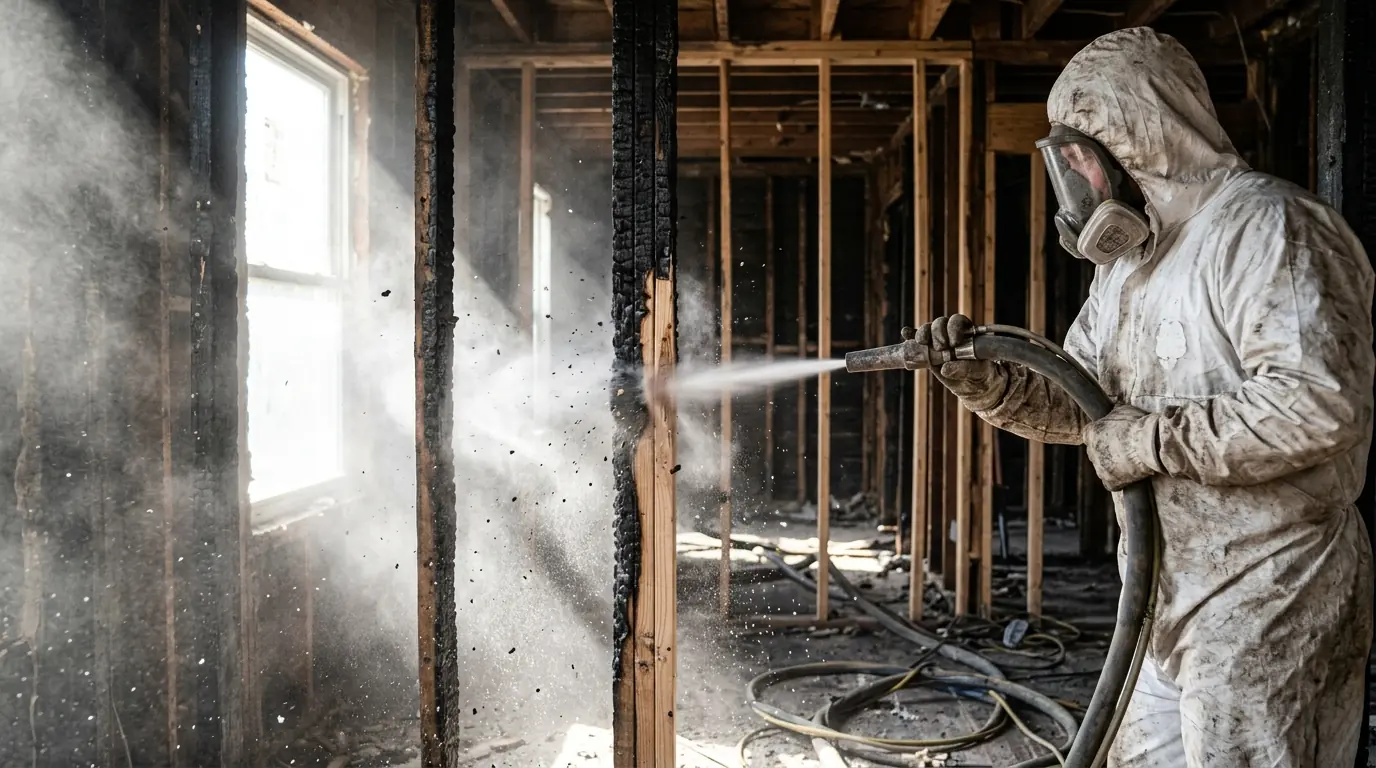
Soda blasting uses compressed air to throw sodium bicarbonate at the wood. The soft media shatters on impact, lifting soot and loose char while leaving sound wood underneath intact, which is why it suits framing better than sand. It also helps neutralize odor on contact. The area is contained first, because blasting makes a fine dust that has to be vacuumed up afterward. Surface char comes off; deep char that has eaten into a member is flagged for the rebuild rather than blasted away.
Dry Ice Blasting
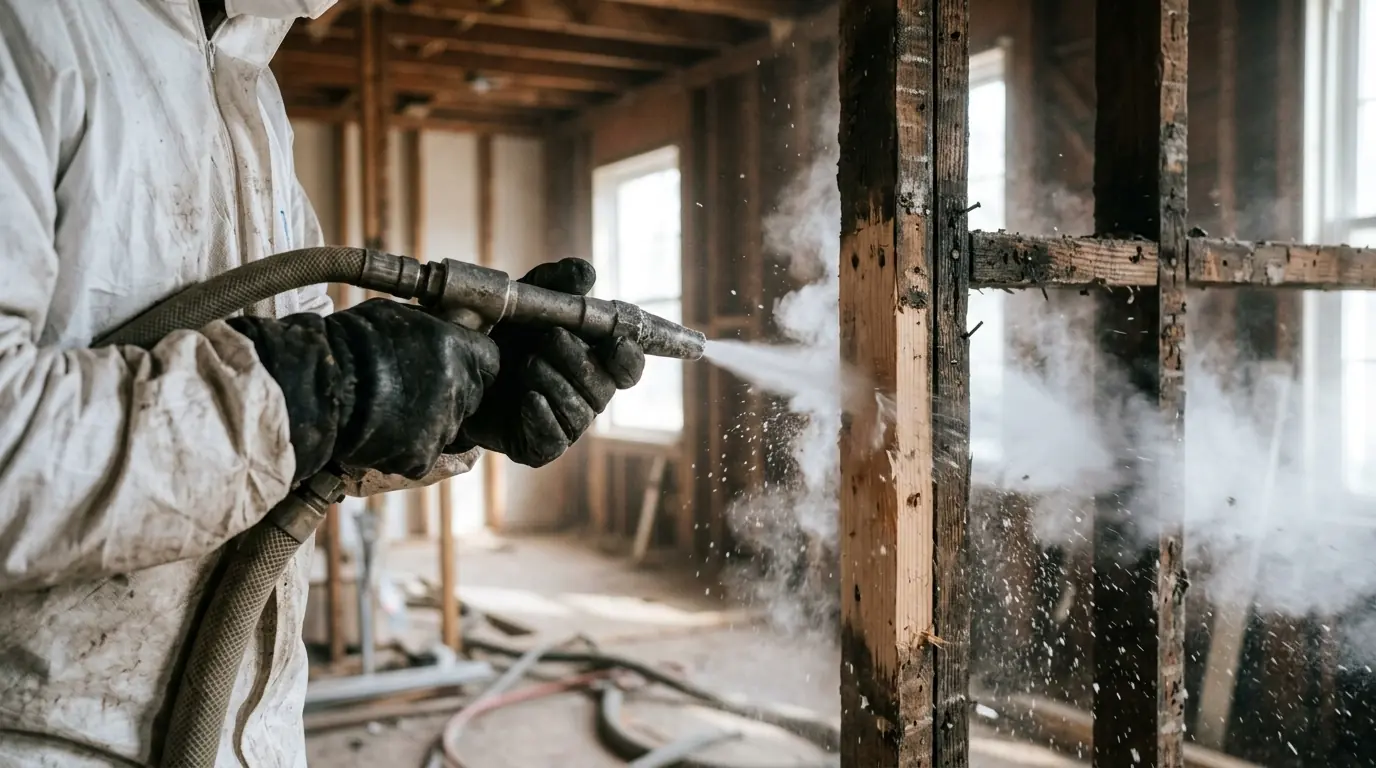
Dry ice blasting fires pellets of frozen carbon dioxide instead of soda. The pellets turn to gas on impact, so there is no blast media left to sweep up, only the soot and char that came off. That makes it the better choice in tight attics, around wiring that is staying, and in spaces where cleaning up spent media would be slow. It costs more to run than soda, so we match the method to the space rather than using one method for everything.
Encapsulating Cleaned Framing
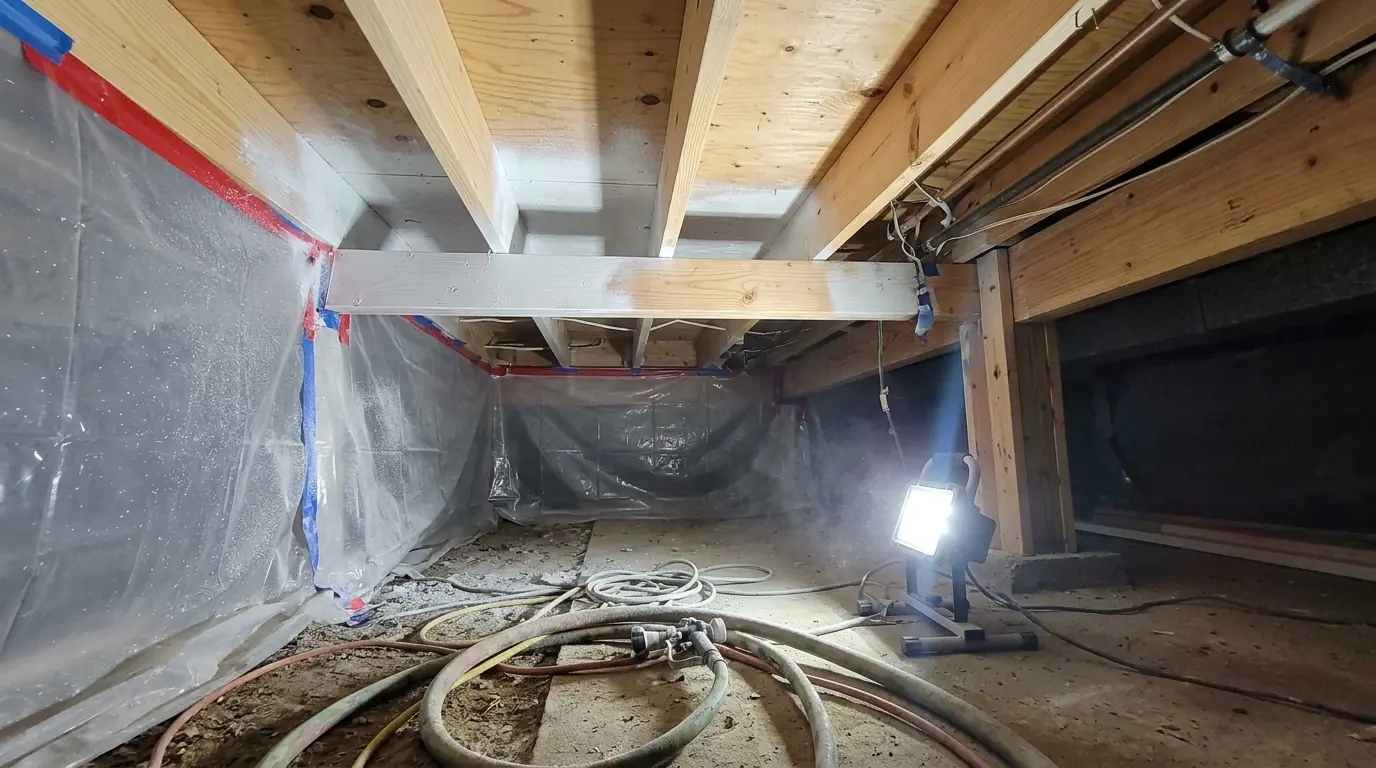
Cleaned framing still carries trace odor in the wood grain, so it is usually sealed before insulation and drywall go back. A pigmented, odor-blocking encapsulant is sprayed or rolled onto the studs, joists and decking, locking in whatever residue remains. The color makes coverage easy to check, and it gives the inspector and the adjuster a clear sign the step was done. We photograph each wall and ceiling bay after sealing so the rebuild can close them in with confidence.
What framing cleanup includes
- Containment with plastic sheeting and negative air
- Char depth checked on every charred member
- Soda or dry ice blasting of studs, joists and decking
- HEPA vacuuming of spent media and residue
- Wipe-down of framing, top plates and blocking
- Odor-blocking encapsulant over the cleaned wood
- Photos of each wall and ceiling bay
- A list of members flagged for structural repair
What goes back in the walls in Mecklenburg County
Cleaned framing is only half of it. Once the bays are sealed, the insulation that was torn out goes back to Mecklenburg County's current requirements: R-15 in exterior wall cavities, R-38 in the attic and R-19 in a floor over a crawlspace or garage. Many older Charlotte houses had less than that, so a fire rebuild can leave a room better insulated than before. We leave the bays clean, sealed and photographed so the insulation can go straight in.
How framing gets cleaned and sealed
- Confirm the walls are open
Drywall, insulation and debris out so every bay is exposed.
- Contain the area
Plastic sheeting and negative air so blast dust stays put.
- Probe the char
Each charred member checked for depth before blasting.
- Blast
Soda or dry ice, matched to the space and what stays in it.
- Vacuum and wipe
Spent media and loose residue removed with HEPA vacuums.
- Seal
Odor-blocking encapsulant over the cleaned framing.
- Photograph each bay
A record for the inspector, the adjuster and the rebuild.
Questions about soda blasting & framing cleanup
Yes, when the area is contained. Baking soda is non-toxic, but blasting makes fine dust, so the space is sealed off and the media is vacuumed up afterward.
No. The soft media removes soot and loose char without cutting into sound wood. Where char runs deep, the member is flagged for repair, not blasted thinner.
Sealing without cleaning traps loose soot under the coating and often fails to hold the odor. Cleaning first, then sealing, is what keeps the smell out.
Structural repair is part of the rebuild and is done under a permit through our reconstruction work. Framing cleanup identifies which members need it.
It leaves no media behind, which matters in tight attics, near wiring that stays, and where cleanup would be slow. It costs more, so it is used where it earns that.
One room is often a day of blasting and sealing once the walls are open. Whole-house and attic jobs take longer and are scheduled around demolition and the rebuild.
Related work in Charlotte
Walls open and the framing black?
Call before the rebuild closes anything in. We blast, seal and photograph framing in Charlotte homes so the smell stays out.
Call (704) 368-1592