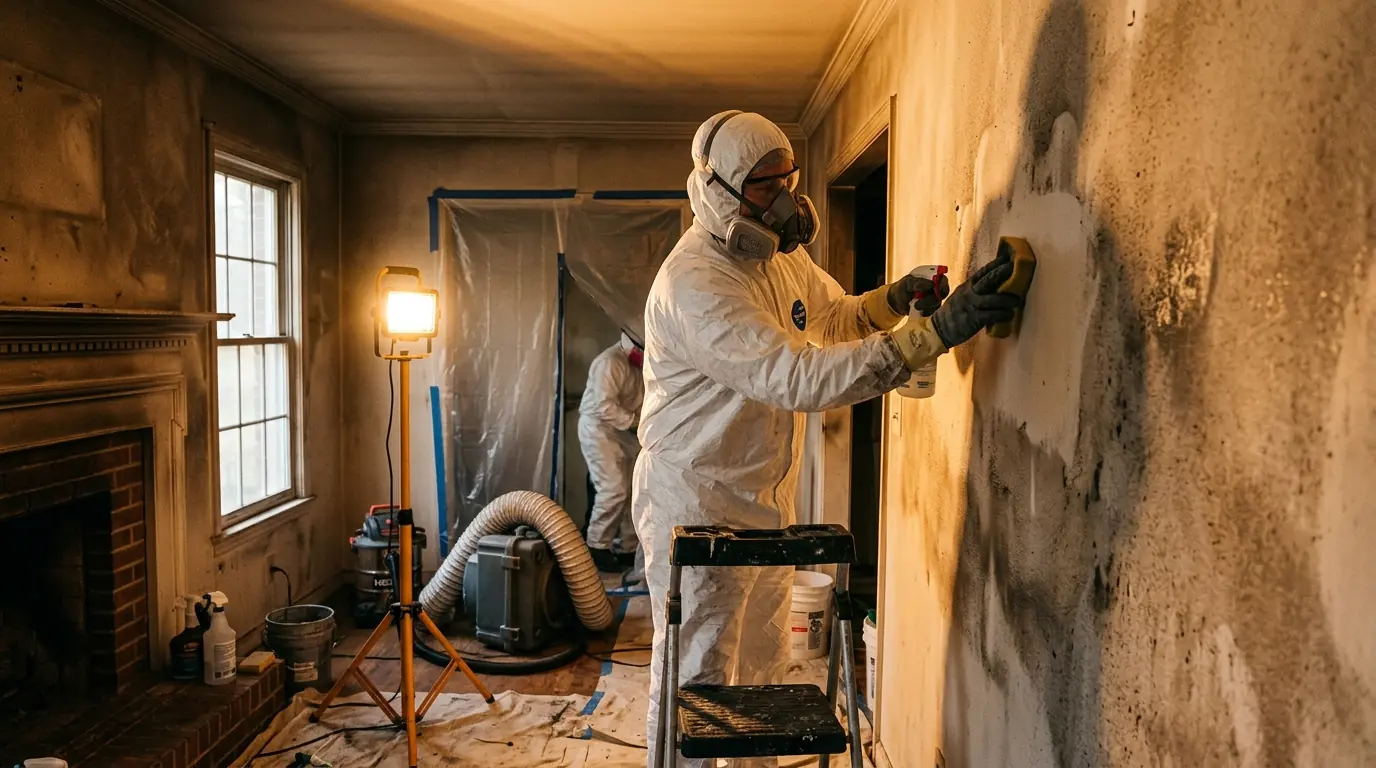
Smoke damage cleanup in a Charlotte home starts with testing the residue, because dry soot, wet smoke film and protein residue each need a different method, and water on dry soot smears it into the paint. We remove loose residue with HEPA vacuums and dry sponges first, then wash with cleaners matched to the residue, top to bottom.
What smoke leaves on a house, and where it hides
Smoke travels further than fire. It follows air currents to the coolest surfaces, so it collects on exterior walls, around windows, on ceilings above doorways and inside closets and cabinets that seemed shut. The residue is acidic and keeps working on paint, metal and grout until it is removed.
Good cleanup is mostly sequence: dry methods before wet, ceilings before walls, and the rooms nearest the fire last, so nobody tracks soot into rooms already finished.
What moves the cost
Smoke cleanup is usually priced per room or per square foot of affected area. These published ranges are national planning figures, not local quotes.
- Residue type. Wet smoke and protein film take longer than dry soot.
- Paint finish. Flat paint that absorbed residue may need sealing and paint on top of cleaning.
- How far it traveled. Smoke in closets, cabinets and the attic adds rooms to the scope.
- Ceiling height and access. Vaulted ceilings and stairwells need staging and more time.
- Smoke damage restoration per room$200 to $1,200 per room
- Smoke damage cleanup national average$425 to $1,800
- Smoke remediation per square foot$3.50 to $7.00 per square foot
Published planning ranges, not our quote. Local labor, access and how far the smoke traveled move the final figure.
Washing walls yourself: what usually goes wrong
Water and all-purpose cleaner on dry soot is the most common mistake we see. It turns loose powder into a paste and presses it into the paint, and that smear then needs sealing and repainting. Melamine sponges take paint off along with the residue.
Before we arrive, leave the walls alone and keep the HVAC off.
Wall and Ceiling Washing
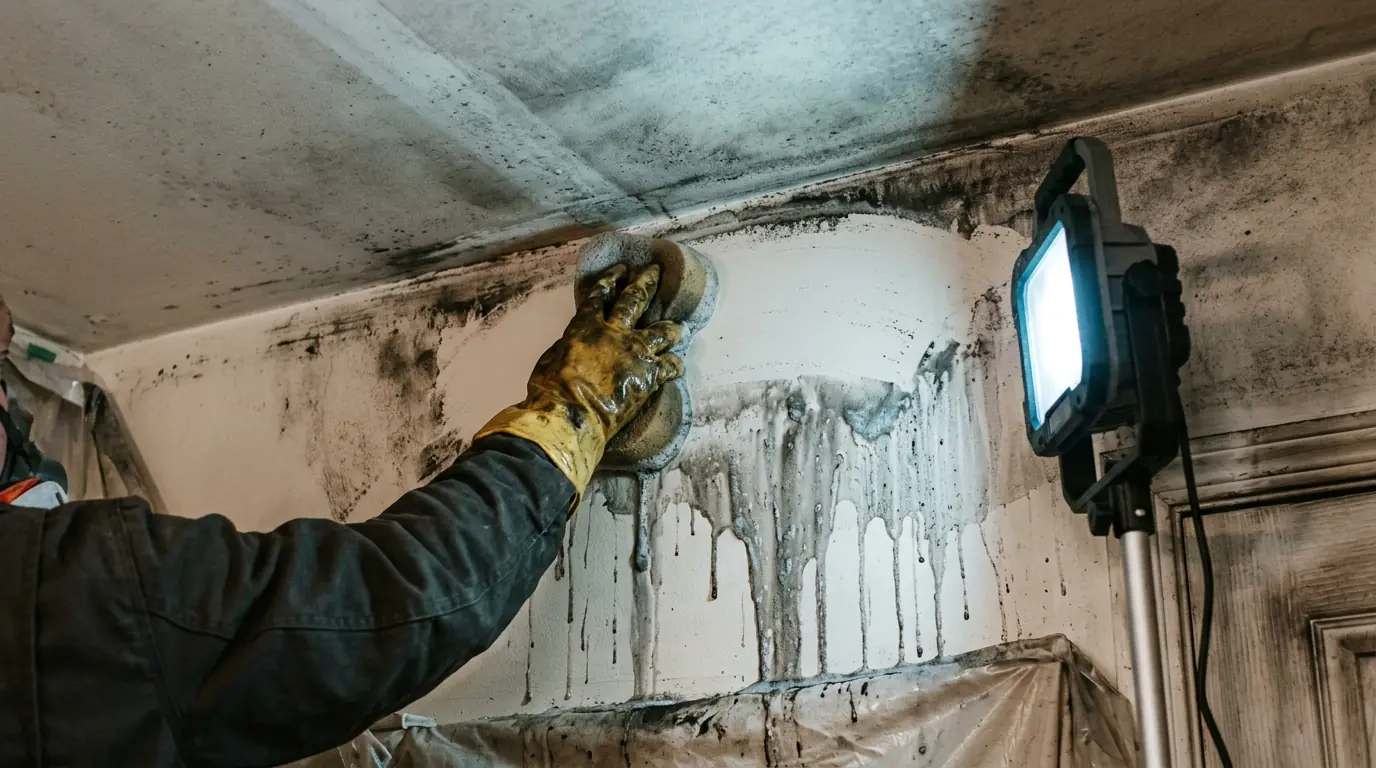
Walls and ceilings are cleaned in two passes. The first is dry: HEPA vacuuming and chemical dry sponges that pull soot off the surface without pressing it into the paint. The second is a wet wash with a cleaner chosen for the residue in that room, then a rinse so no film is left for new paint to fight. Flat paint absorbs residue more than eggshell or semigloss, so a flat ceiling that tested heavy often needs sealing and paint even after a good clean.
Wet Smoke vs Dry Smoke Residue
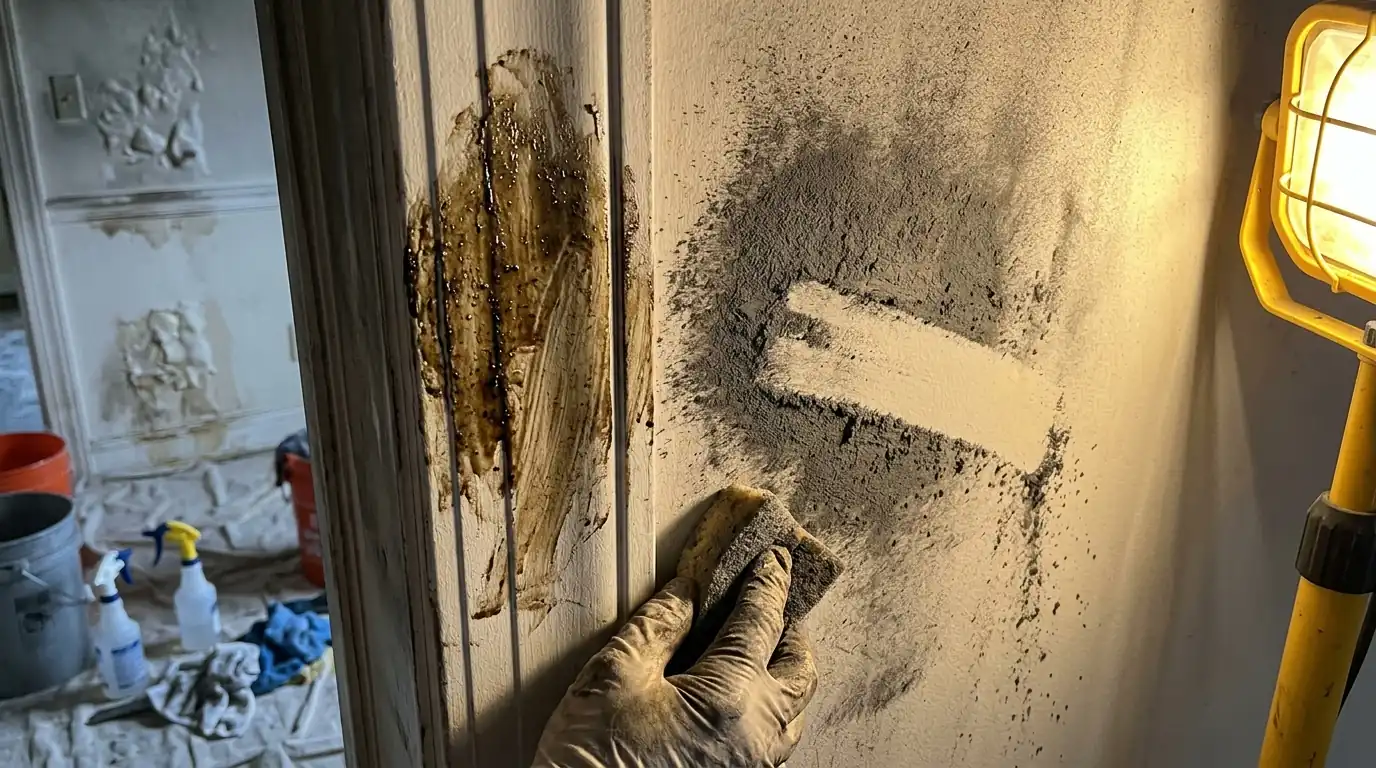
A hot, fast fire burning wood and paper leaves dry, powdery soot that brushes off if it is handled correctly. A slow, smoldering fire, especially one that burned plastics or foam, leaves a wet, sticky film that smears at a touch and carries a stronger odor. Many houses have both in different rooms. We check each room with a dry sponge test before choosing a method, because the wet-smoke approach on dry soot wastes time, and the dry approach on wet smoke simply spreads it around.
Cabinet, Closet and Drawer Interiors
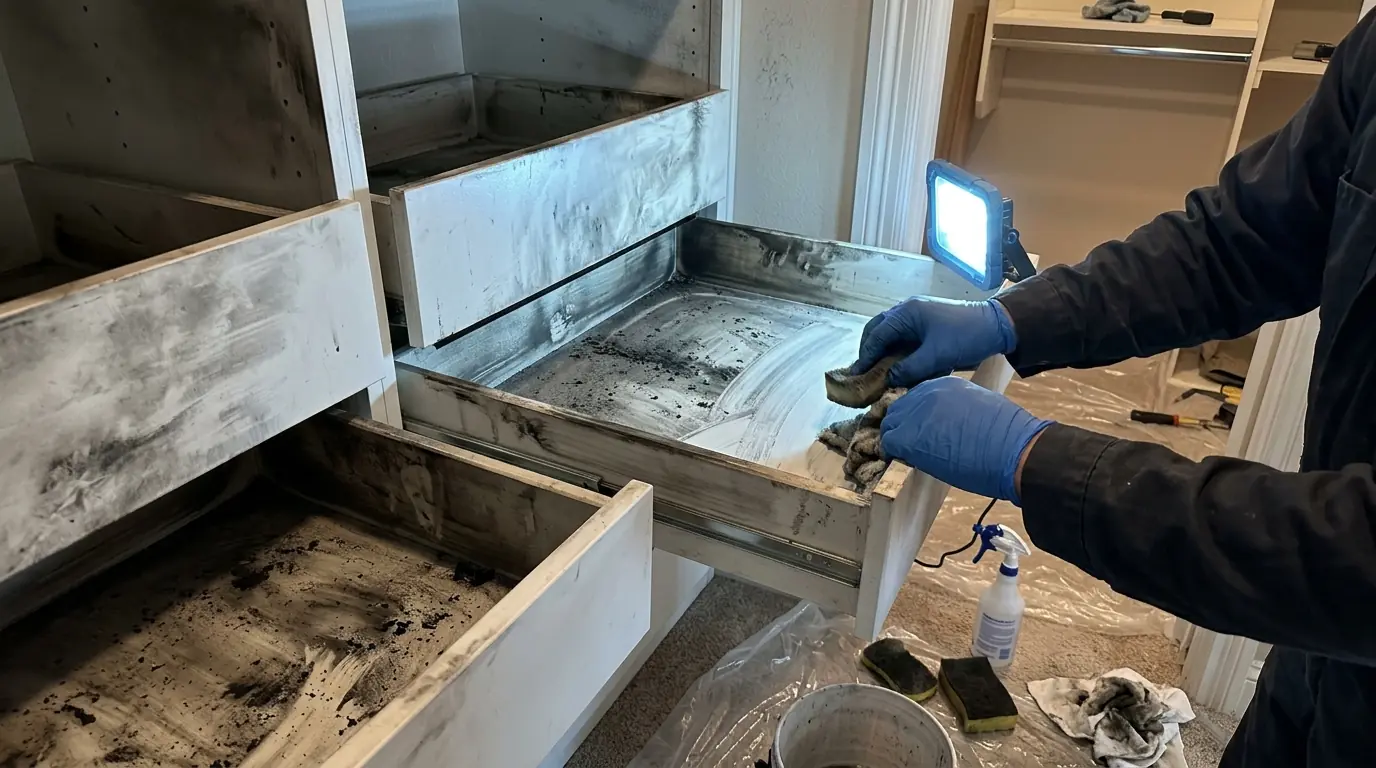
Closed spaces fool people. The pressure of a fire pushes smoke into cabinets, closets and drawers, and the residue inside often smells stronger than the room because it has nowhere to go. We empty them, clean every shelf, door back and drawer box, and clean hardware separately. Kitchen cabinets near a stovetop fire get degreasing for the protein film. Unfinished interiors such as particleboard shelves can keep holding odor, so we seal them when cleaning alone does not clear it.
How house age in Charlotte and Cary changes smoke cleanup
Much of inner Charlotte was built before 1970, so smoke cleanup there often means plaster walls, old oil-based trim and painted-over wallpaper, each of which reacts to cleaners differently than the drywall and latex paint in the 1990s and 2000s subdivisions outside I-485. Cary and the rest of Wake County have one of the youngest housing stocks in North Carolina, which usually means drywall throughout and far fewer surprises under the paint.
How we clean a smoke-damaged house
- Test every room
Dry sponge tests show the residue type and the method.
- Protect clean areas
Floors covered, doorways sealed off, air scrubbers running.
- Vacuum the loose soot
HEPA vacuums on ceilings, walls, fixtures and trim.
- Dry sponge
Chemical sponges lift residue without pressing it into paint.
- Wet clean
Residue-matched cleaners, top to bottom, then a rinse.
- Clean the closed spaces
Cabinets, closets, drawers and hardware inside and out.
- Check and hand over
A walk-through to confirm the residue is gone before odor treatment or paint.
Unsmoke and Chemspec sponges and cleaners, Odorox hydroxyl units and Zinsser sealing primer do most of the work on these jobs.
Questions about smoke damage cleanup
Light, dry soot on a small area, gently, with a dry sponge. Wet wiping, spray cleaner or a melamine sponge usually smears residue into a stain that needs paint.
Most of it, because most odor lives in the residue. What remains in framing, ducts and porous materials is handled by odor treatment and sealing after cleaning.
Not always. Glossier paints often clean up fully. Flat paint that absorbed heavy residue usually needs a sealing primer and fresh paint, and we tell you which surfaces before we start.
We test them. Smoke reaches rooms far from the fire, and the rooms that look fine are often the ones with residue inside closets and cabinets.
Soot carries fine particles and chemical residue, so air scrubbers run during the work. If anyone in the house has breathing problems, plan for them to stay elsewhere until cleaning is done.
A room or two after a small kitchen fire can take a day or two. A whole house with smoke in every room takes longer, and you get a room-by-room schedule after testing.
Related work in Charlotte
Smoke on the walls? Call before you wipe.
We test the residue and start dry cleaning in Charlotte homes the same visit, and tell you which surfaces will clean and which need paint.
Call (704) 368-1592