Lightning strike damage restoration in Charlotte covers three kinds of damage: fire and smoke where the strike ignited the attic, roof or a wall; surge damage to wiring, appliances and electronics throughout the house; and physical damage such as split rafters, blown-off shingles or a cracked chimney. Call the fire department first if you smell smoke, even when you see no flames.
Signs lightning damaged more than you can see
- A burning smell with no flamesCan mean smoldering insulation or wiring in the attic or a wall.
- Scorch marks on the ceilingHeat from a fire above, or at an outlet or light fixture.
- Breakers that will not resetDamage to the panel or a circuit.
- Appliances and electronics deadSurge damage through the wiring and other lines.
- Cracked chimney or missing shinglesThe strike's path through the roof.
- A fresh scar on a nearby treeThe strike may have jumped to the house.
- Flickering lights afterwardDamaged wiring that an electrician should check.
After a strike, step by step
- Call the fire department
Hidden fire is checked for, even with no visible flames.
- Make it safe
Power off where needed; an electrician checks the panel.
- Tarp the roof
Holes from the strike covered the same day.
- Inspect attic and walls
Burned framing and scorched insulation found and photographed.
- List surge damage
Appliances and electronics logged with serial numbers.
- Clean smoke and soot
Every room tested, including the ones that look fine.
- Repair
Framing, roof and finishes restored under permit.
What a lightning strike does to a house
Lightning carries enormous current for a fraction of a second, and it takes the easiest path to ground: the roof, the chimney, a gutter, the wiring, the plumbing. Along the way it can ignite framing, blow holes in roof decking and siding, and send a surge through every circuit, burning out appliances and electronics in rooms nowhere near the strike.
The damage is often hidden, which is why a lightning job starts with a careful look at the attic and walls before anything else.
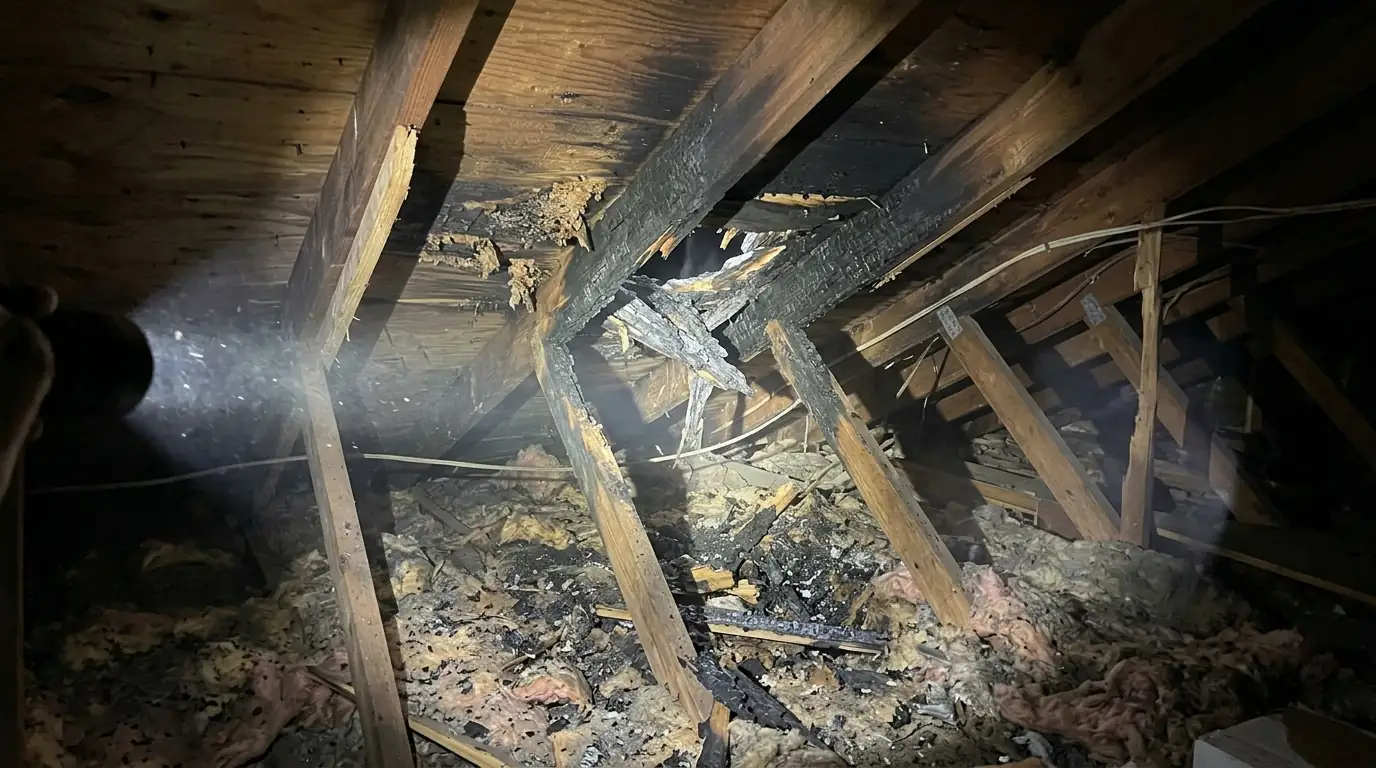
Attic and Roof Strikes
Most strikes hit high: the roof ridge, a chimney, an antenna or a tree next to the house. They can split rafters, blow shingles and decking off, and start a smoldering fire in attic insulation that may not show smoke for hours. After the fire department has checked for hidden fire, we inspect the attic, photograph burned and split framing, remove scorched or wet insulation, and clean smoke residue from the framing. Structural repairs go through a Mecklenburg County permit, and the roof is tarped until it is repaired.
Surge Damage to Wiring and Electronics
The surge from a strike travels through the electrical system and the phone, cable and network lines, and it can damage anything plugged in: televisions, computers, the HVAC control board, the garage door opener, appliances with electronic controls. Some fail immediately; others fail days later. An electrician checks the panel and wiring first. We then list and photograph affected devices with serial numbers, test what can be tested, and clean residue from anything near a burn point, so your claim covers the whole house, not just the attic.
Smoke and Fire After a Strike
When a strike does start a fire, the cleanup follows the same path as any house fire: board-up and tarping, water extraction after firefighting, soot and smoke cleaning, odor treatment and rebuild. The difference is that the fire often starts in a wall or attic, so smoke travels through cavities and ductwork before anyone sees it, and residue shows up in closets and rooms far from the burned area. We test for residue in every room, including the ones that look untouched.
Lightning in North Carolina
North Carolina averaged more than 412,000 cloud-to-ground lightning flashes a year from 2009 to 2018, according to Vaisala's national lightning detection network, roughly 8.3 flashes per square mile each year. Most of it arrives with summer thunderstorms, and a Charlotte house with tall trees, a chimney or a high roofline is a likely path to ground. That is also why a strike that seems to have missed the house can still send a surge through its wiring.
Burning smell after a storm?
Call the fire department first, then us. Hidden fire and smoke spread fast.
(704) 368-1592What moves the cost
Lightning jobs combine fire and smoke cleanup with repairs and surge losses. Published cost guides do not price them as one line, so here is what drives the number.
- Fire or no fire. A strike that started a fire adds the full fire cleanup.
- Structure. Split rafters, decking and a damaged chimney mean permitted repairs.
- Surge losses. Every damaged appliance and device is listed, tested and replaced or repaired.
- Hidden smoke. Smoke that traveled through walls and ducts adds rooms to the cleaning.
Questions about lightning strike damage restoration
Yes. Lightning can start a smoldering fire in the attic or a wall that shows no smoke for hours, and firefighters check with thermal cameras.
Lightning, including the fire and surge damage it causes, is usually covered by homeowners policies, subject to your deductible.
The surge travels through the wiring and other lines into anything plugged in, anywhere in the house.
Some can, many cannot. Each is tested and logged so the claim reflects what was actually lost.
No. An electrician checks and repairs the wiring and panel. We handle the fire, smoke and structural repairs and the documentation.
Check the house anyway. Current can jump from the tree or travel through the ground into utility lines, so the wiring and appliances need checking too.
Related work in Charlotte
Lightning hit the house?
If you smell smoke, call the fire department first, then call us. We answer any hour across Charlotte.
Call (704) 368-1592