Fire damage restoration in Charlotte ranges from a few hundred dollars for a small, contained smoke cleanup to more than $50,000 when structure has to be rebuilt; national cost guides put whole fire and smoke jobs between about $3,107 and $51,243, averaging around $27,175. The spread comes from how many separate jobs one fire creates: board-up, water, soot, odor, contents and rebuild.
Why one fire turns into six separate costs
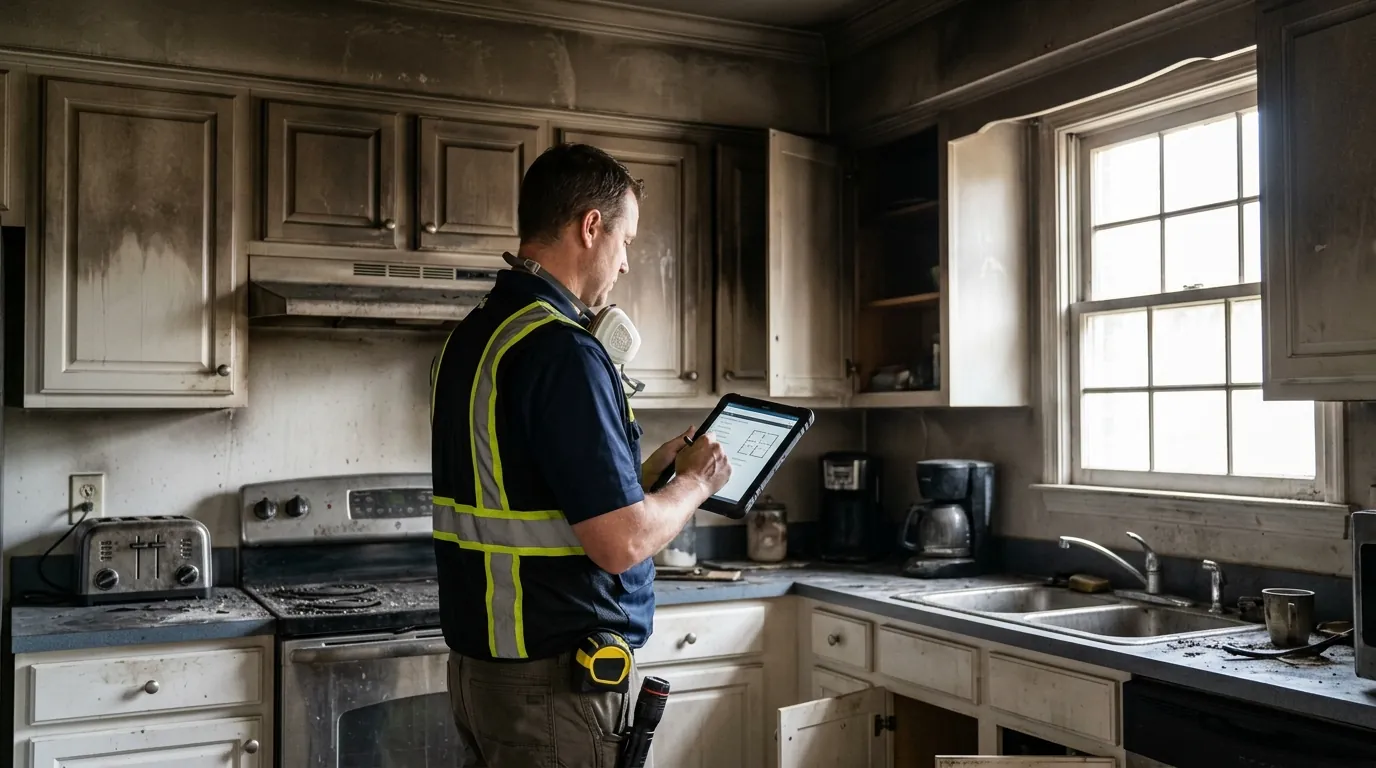
When people ask what fire restoration costs, they usually picture one job. In practice, even a modest kitchen fire in a Charlotte house creates several: board-up and tarping over the openings firefighters made, extraction and drying for the water they used, soot removal on every surface the smoke reached, odor treatment for what remains, contents cleaning for belongings, and reconstruction for whatever burned. Each is priced separately on an insurance scope, and each has its own range.
That is why two fires that look similar from the street can cost very different amounts. A grease fire that stayed on the stovetop may need a day of cleaning and an odor treatment. A fire that burned into the attic may need all six jobs, plus permits and inspections.
Published ranges for each part of the job
These are planning figures from national cost guides, not local quotes. They help you understand scale and read an estimate; they cannot price a specific house, because the size of the loss matters more than anything else.
- Emergency board-up$250 to $2,500
- Water damage cleanup after firefighting$1,000 to $6,000
- Soot removal as a line item$2,000 to $6,000
- Smoke damage restoration per room$200 to $1,200 per room
- Odor removal per room (ozone, fogging, hydroxyl)$200 to $600 per room
- Air duct cleaning after a fire$250 to $500
- Furniture and textile deodorizing$200 to $1,000
- Major structural repair$15,000 to $25,000 per room
Published planning ranges from national cost guides, not a quote. Local labor, access and the size of the loss move the final figure.
What pushes a Charlotte job toward the high end
Within those ranges, a handful of things decide where a job lands. None of them is the size of the flames; most of them are about how far the damage spread and how long it was left.
- How far the smoke traveled. Smoke in closets, the attic and the ductwork adds rooms to the scope, even when they look clean.
- Residue type. Protein residue from a kitchen fire and synthetic residue from plastics take longer than dry wood soot.
- Water. A fire that needed a lot of hose water brings drying and often tear-out into the job.
- Time. Soot is acidic, and surfaces left for days need refinishing that an early cleaning would have avoided.
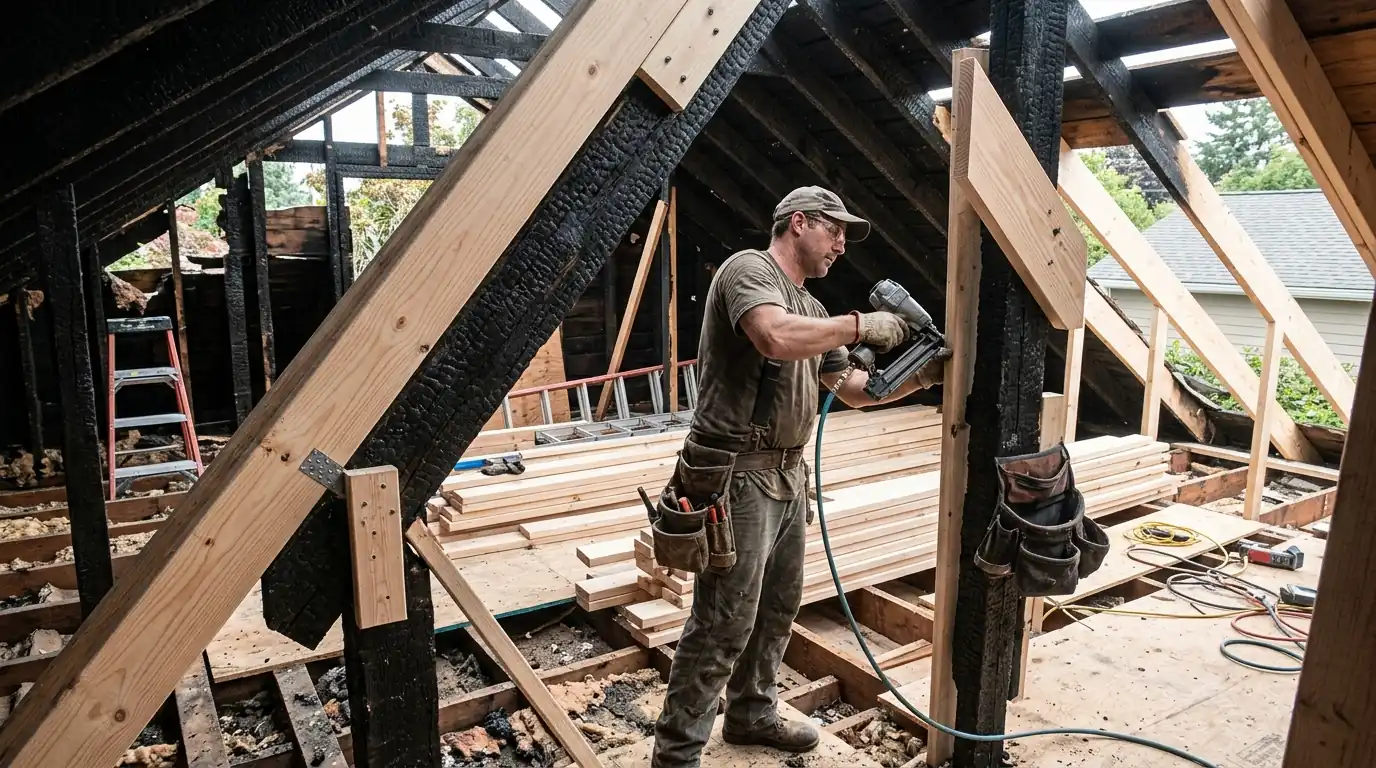
- Structure. Charred framing or roof decking means permitted repair, which is where costs rise fastest.
- Contents. A furnished house with years of belongings is often the largest line after the structure.
Want a real number for your house?
Call and we will walk it, test the residue and write the scope. We answer any hour.
(704) 368-1592Remediation only, or remediation plus rebuild
The biggest divide in any estimate is whether the job ends at cleaning or goes on to reconstruction. Published figures put remediation alone at roughly $4 to $7 per square foot of affected area, and $20 or more per square foot once reconstruction is included. Major structural repair runs $15,000 to $25,000 per room in the same guides.
In Charlotte, structural repair also means a Mecklenburg County permit and inspections, which add time more than cost, but they are part of why rebuild-heavy jobs run long. Cleaning and cosmetic work such as paint and flooring do not need a permit.
How insurance fits into the number
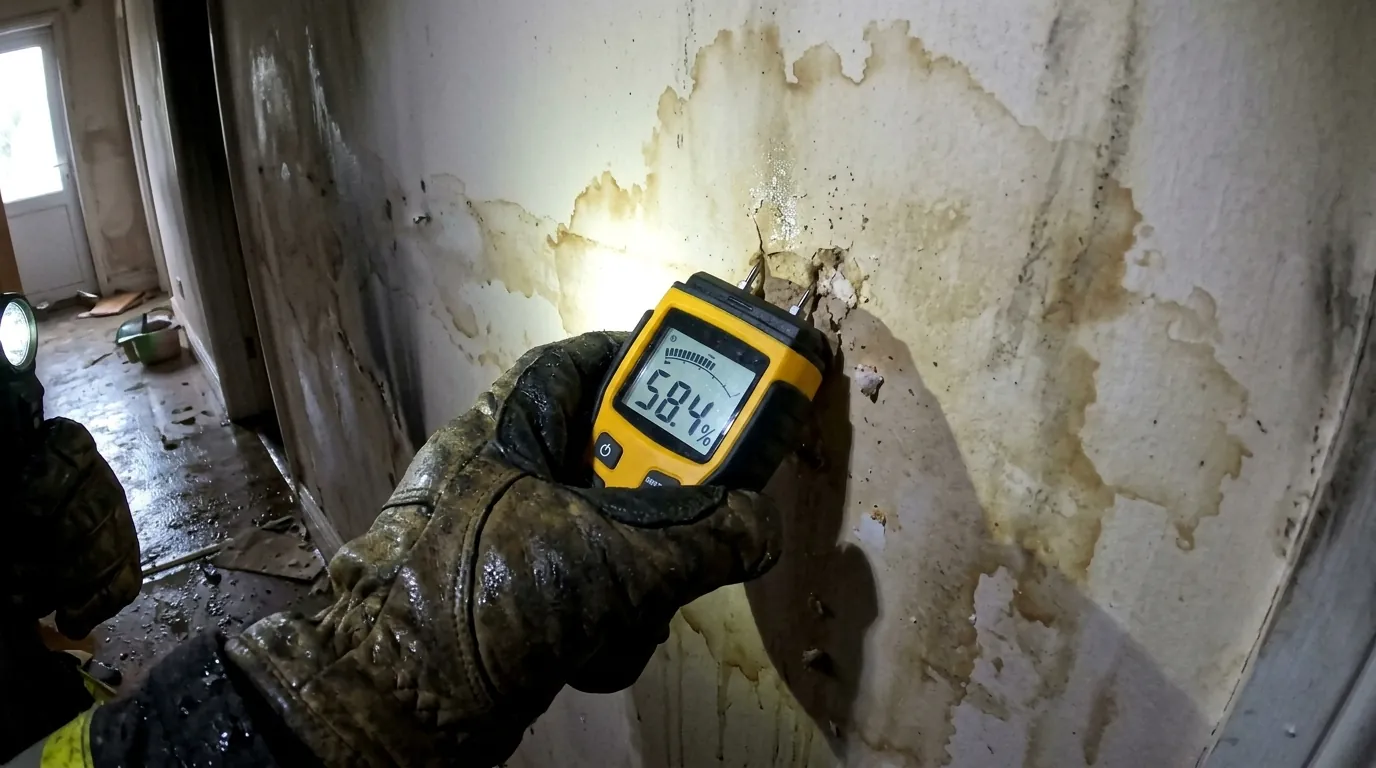
For most homeowners the question is not the total but the share their policy covers. A standard homeowners policy usually covers sudden fire damage, including the water used to put it out, subject to your deductible and limits. What it pays depends on the scope, which is why first-day documentation matters: residue tests, moisture readings and photos are what turn the cleanup into line items an adjuster can approve.
Keep receipts for anything you pay for yourself, such as a hotel, meals or emergency purchases. Many policies reimburse additional living expenses while the house is being restored, and receipts are what make that simple.
How to read a fire restoration estimate
When an estimate arrives, a few checks tell you whether it reflects your house or a template.
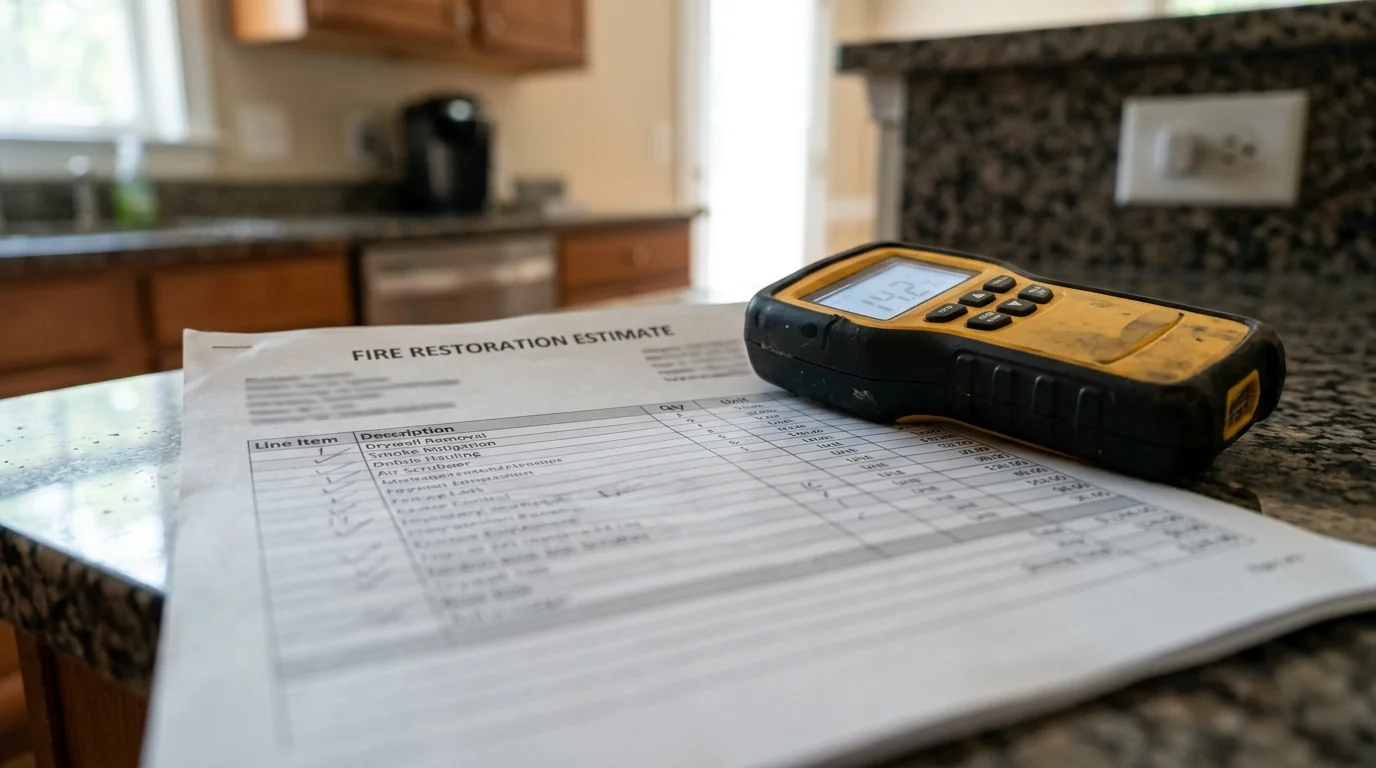
- Look for rooms, not just totals. A good scope lists the work room by room so you can see what each part costs.
- Check that contents are separate. Belongings should have their own inventory and line items.
- Ask what was tested. Cleaning methods should match residue test results, not a flat rate for every wall.
- Look for the odor line. Cleaning without odor treatment often means the smell comes back.
Questions people ask about this
Usually, for sudden fires, including water damage from firefighting, subject to your deductible and limits. Some causes and gradual damage can be excluded, so check your policy with your agent.
Online ranges price one part of a job. A real estimate adds every part a fire creates, from board-up to rebuild, plus local labor and access.
Usually, which is why insurers expect cleaning first. Surfaces and items that cannot be restored are replaced and documented.
Payment terms depend on the job and your claim. Ask for them in writing before work starts, along with the scope.
Call early, keep the HVAC off, do not wipe soot, and let the house be documented before anything moves. Most avoidable cost comes from damage that spreads in the first days.
Keep reading
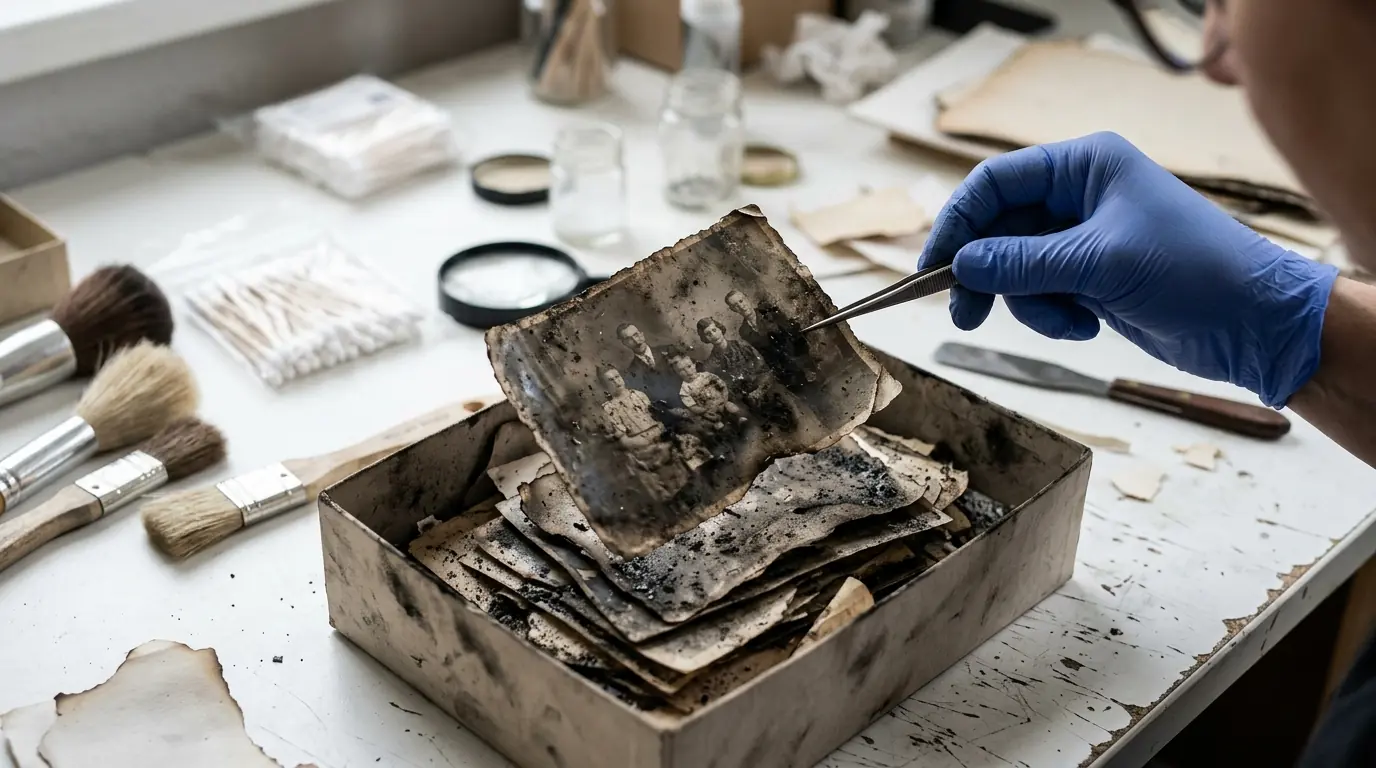
Documenting a fire loss for your claim in NC
Photos, inventory, receipts and moisture logs: what an adjuster needs to see and how we help you build the file.
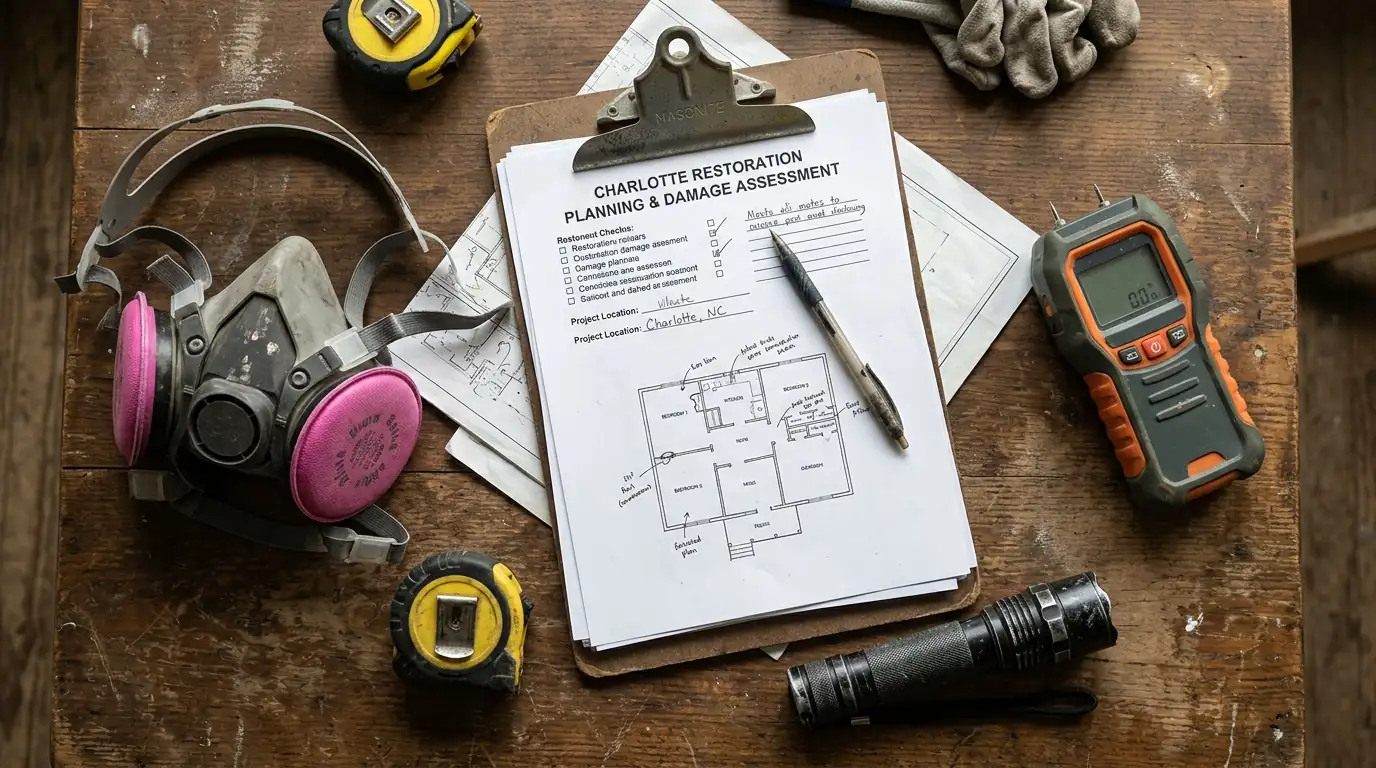
How long fire damage restoration takes
From a two-day kitchen fire cleanup to a months-long rebuild: realistic timelines phase by phase.
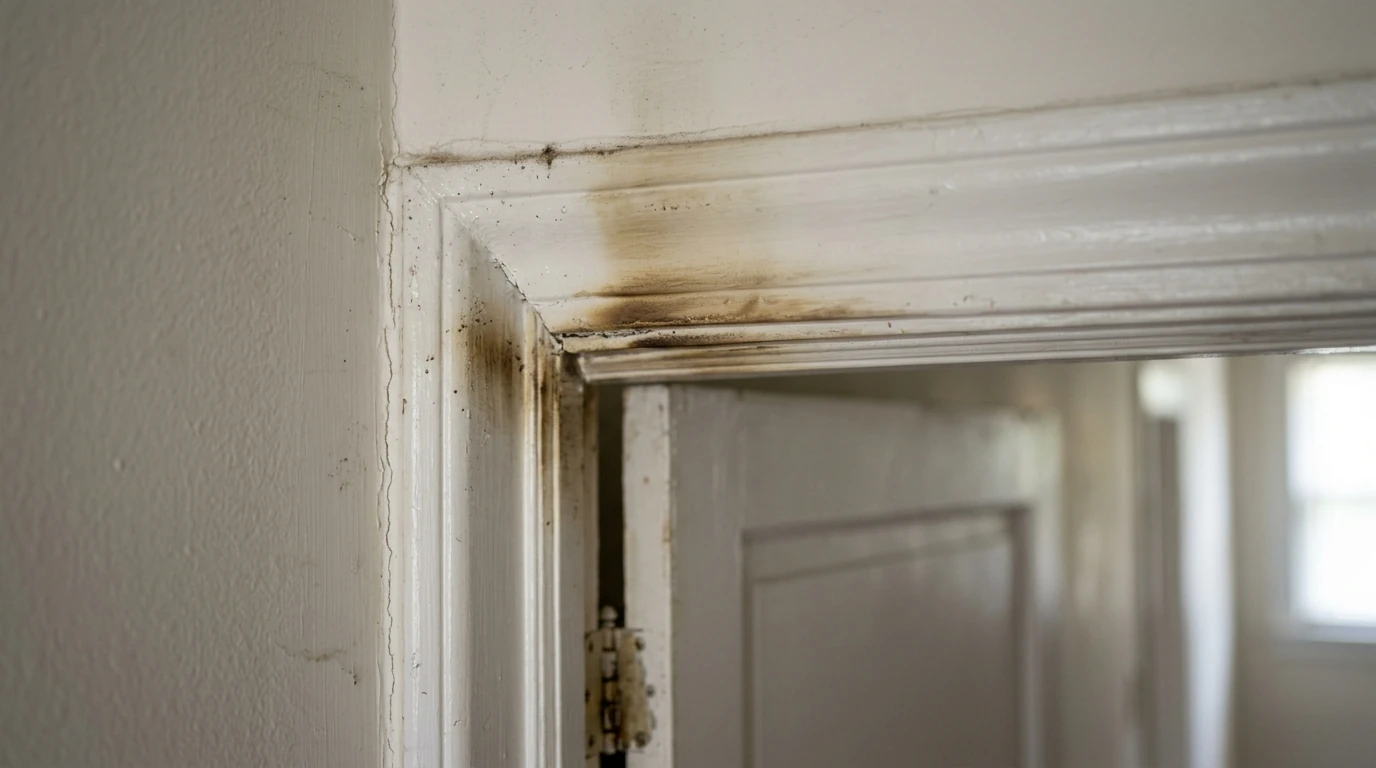
Choosing a fire restoration company
The questions to ask on the first call, the signs of a careful company, and the warning signs to walk away from.
Get the scope written for your house
We walk it with you, test the residue and put every line in writing for you and your adjuster.
Call (704) 368-1592