Apartment fire restoration in Charlotte deals with the origin unit and everything around it: neighboring units that took smoke or water, shared hallways, stairwells and roofs, and each tenant's belongings. The work is coordinated with the property manager and more than one insurer, because the building's policy and each tenant's renters policy cover different things.
How a multifamily fire job runs
- Secure the building
Origin unit boarded; roof and openings covered.
- Isolate the origin unit
Sealed off under negative air.
- Stop the water
Extraction in the origin unit and the units below.
- Walk every unit
With the property manager, affected units listed.
- Clean common areas
Corridors, stairwells and the air supply.
- Clean unit by unit
Neighbors first, so they can move back sooner.
- Document per party
Records split by owner and by tenant.
Why multifamily fires are coordination jobs
A fire in one apartment sends smoke through shared walls, attics and corridors, and water from the fight runs down into the units below. Within an hour, a single kitchen fire can affect a dozen households. Each has its own belongings and often its own insurer, while the owner's policy covers the structure and common areas.
The restoration is organized around that: unit by unit, area by area, with records the owner and every tenant's adjuster can use.
Isolating the Origin Unit
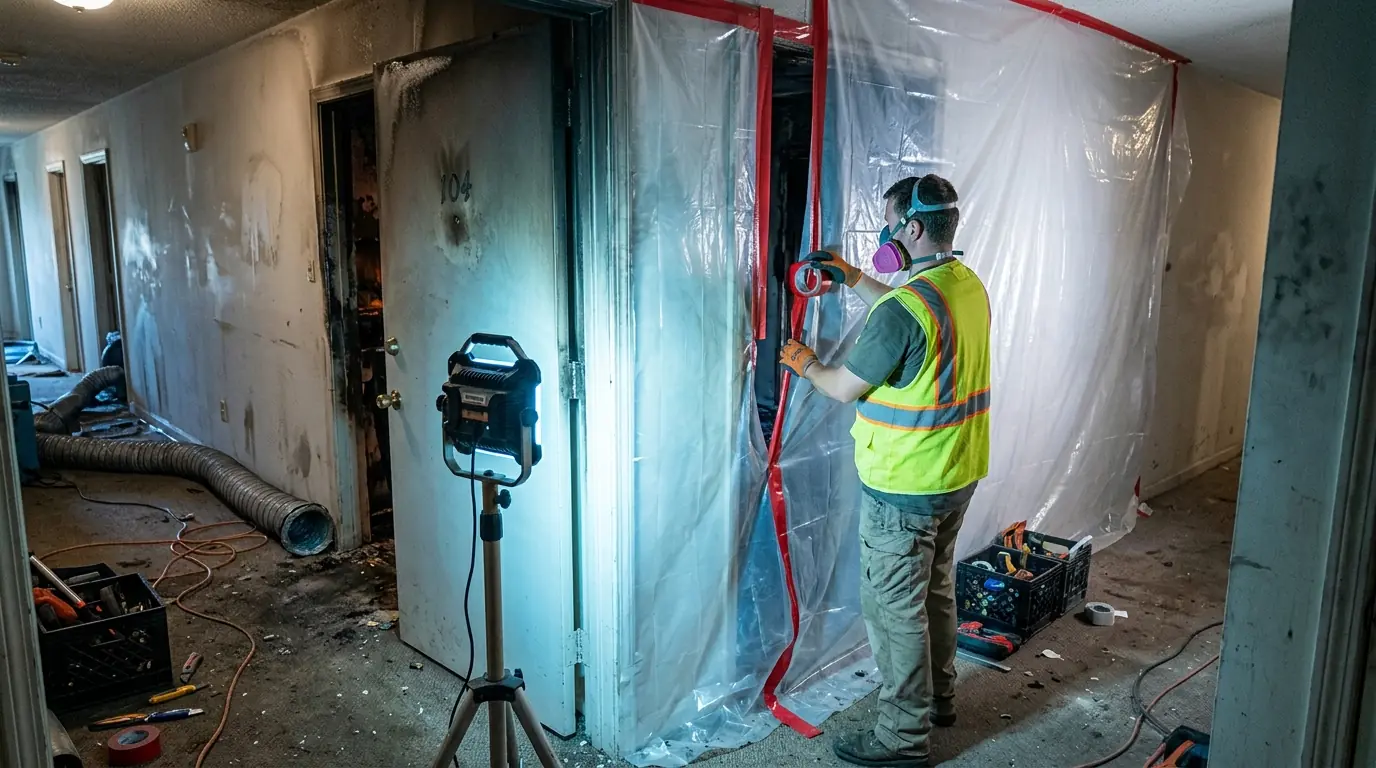
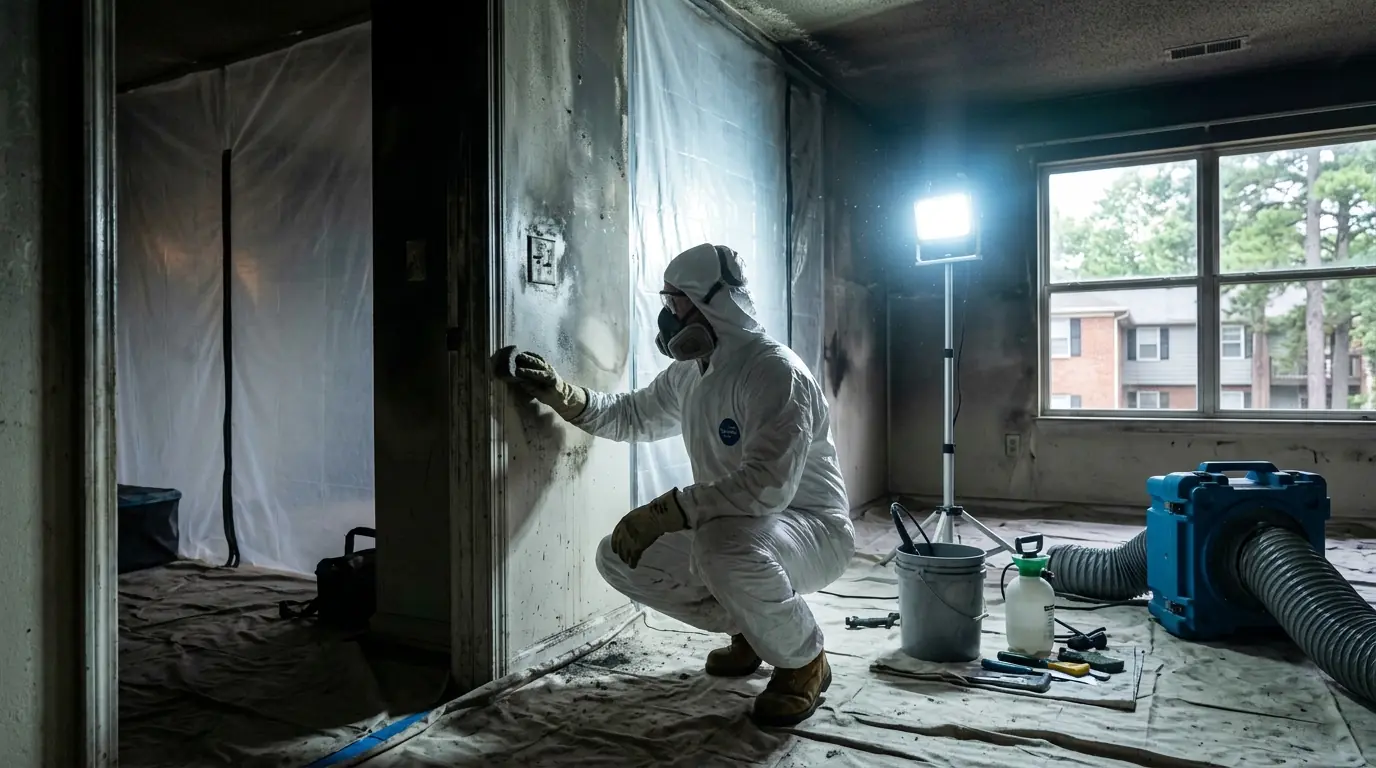
The unit where the fire started is boarded, secured and sealed off first. Doors to the corridor are covered with plastic and the unit is put under negative air, so its smoke is not pulled into the hallway every time someone opens a door. Extraction starts there and in the units directly below. The origin unit's cleanup and rebuild may run for weeks, so it is kept separated from the rest of the building, which can often reopen much sooner. Access is limited to the people working on it.
Hallways, Stairwells and Common Areas
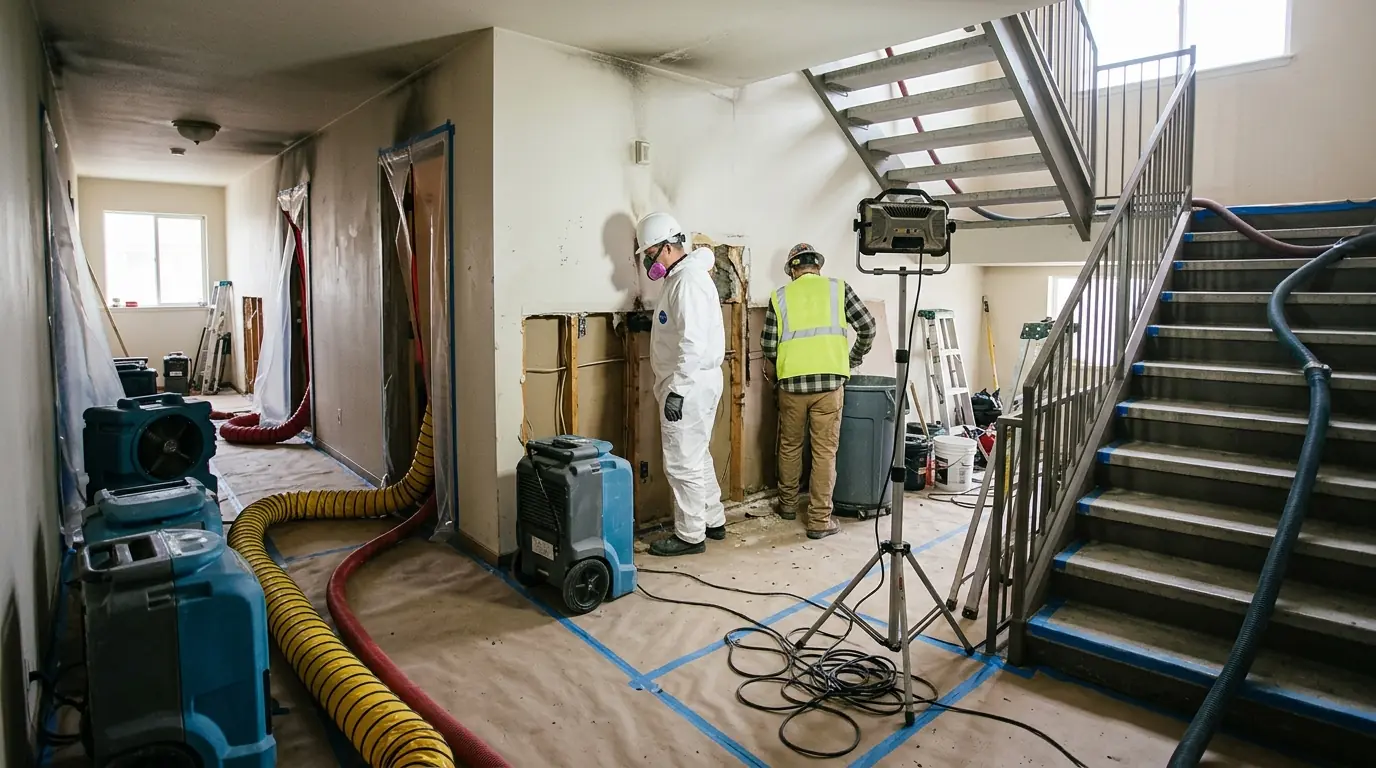
Corridors and stairwells carry smoke between floors, and they are the first thing every resident walks through. We clean walls, ceilings, handrails and doors in the common areas, clean or replace hallway carpet, and clean the corridor air supply and returns. Fire doors, exit signs and emergency lighting are checked for soot and heat damage and reported to the property manager, because life-safety equipment has to work before residents move back. Common areas are usually cleaned first so undamaged units can reopen.
Tenant Contents and Displacement
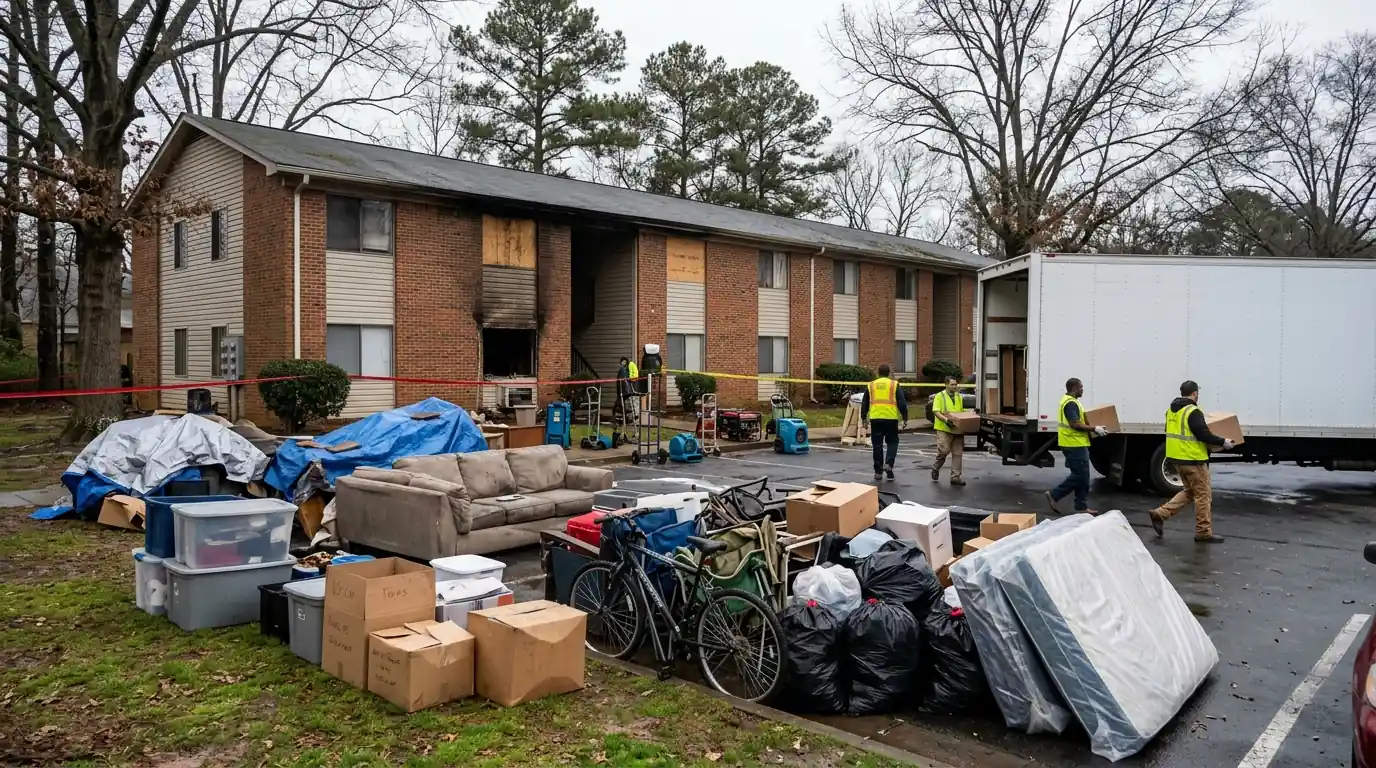
Every tenant's belongings are inventoried separately, labeled by unit, and handled according to that tenant's wishes and insurer. Some residents need clothes and essentials cleaned first so they can stay with family; others need everything packed out. Each household's items are kept apart with their own list, and nothing belonging to one household is mixed with another's. For displaced residents, expected timelines go to the property manager, so they can plan temporary housing and keep every tenant informed as the work moves along.
How long a multifamily fire job takes
Neighboring units with smoke only can often be cleaned and reoccupied in days to a couple of weeks, and common areas are usually done in parallel. The origin unit takes longest, because it usually needs demolition, repairs and inspections before anyone lives in it again.
Apartment fires in Charlotte
National NFPA data put cooking behind 72% of fires in apartments and other multifamily homes, so most multifamily jobs start in one kitchen and spread by smoke and water. In Charlotte the scale can be far larger: in May 2023 a five-story wood-frame apartment building under construction in SouthPark burned for nearly six hours, probably the largest fire in the department's history. Occupied buildings rarely go that far, but even a small fire can reach several units.
What multifamily fire restoration covers
- Board-up and securing of the origin unit
- Negative air isolation of the origin unit
- Water extraction in the origin unit and units below
- Cleaning of corridors, stairwells and the common air supply
- Unit-by-unit smoke cleaning and odor treatment
- A separate contents inventory for each household
- Life-safety equipment checked and reported
- Records split by building owner and by tenant
What moves the cost
Multifamily jobs are priced per unit and per area, split between the building's policy and the tenants' policies. Published figures give the per-square-foot range.
- Units affected. The origin unit, units below, and neighbors that took smoke.
- Common areas. Corridors, stairwells and roof add to the building's scope.
- Contents. Each household's belongings inventoried and cleaned separately.
- Phasing. Keeping undamaged units occupied needs containment.
- Smoke remediation per square foot$3.50 to $7.00 per square foot
- Fire and smoke remediation whole job$3,107 to $51,243, average about $27,175
Published planning ranges, not our quote. Local labor, access and how far the smoke traveled move the final figure.
Questions about apartment & multifamily fire restoration
Usually the owner's policy covers the structure and common areas, and each tenant's renters policy covers belongings and living costs. We keep separate records for each.
Often, with the origin unit sealed off and common areas cleaned first. It depends on how far the smoke went and on the fire department's release.
Both. The manager coordinates the building, and each tenant decides about their own belongings.
Each unit's items are inventoried, labeled and stored apart, with a list for each household.
They are checked for heat and soot damage and flagged to the manager, since they must work before residents return.
Neighboring units often in days to a couple of weeks. The origin unit takes longer because it usually needs repairs.
Related work in Charlotte
Fire in one of your buildings?
Call now. We answer any hour and work with property managers across Charlotte.
Call (704) 368-1592