Fire extinguisher residue cleanup in a Charlotte home removes the fine powder a dry chemical extinguisher leaves over the room, which becomes corrosive once it absorbs moisture from the air. It should be vacuumed with a HEPA vacuum rather than wiped wet, then the remaining film is neutralized and cleaned, including inside vents, appliances and electronics, within a day or two.
How extinguisher residue is cleaned up
- Identify the agent
Dry chemical, wet chemical, CO2 or clean agent.
- Keep the HVAC off
So the powder does not travel through the ducts.
- Unplug electronics
Appliances and devices near the discharge unplugged.
- HEPA vacuum dry
Loose powder lifted top down before anything wet.
- Neutralize and clean
Remaining film cleaned with the right solution, then rinsed.
- Clean inside units
Vents, hood filters and reachable internals cleaned.
- Test and check
Electronics tested; surfaces checked for film.
Why a small extinguisher discharge makes a big mess
Most home extinguishers are dry chemical units that blast a cloud of very fine powder, usually monoammonium phosphate, over everything near the fire. It settles on counters, cabinets and floors, inside appliances, and drifts into nearby rooms and the HVAC return. On its own it is an irritant; once it absorbs moisture from humid air, it turns acidic and starts etching metal and electronics.
So the cleanup is about speed and method: get the dry powder up dry, then deal with the film.
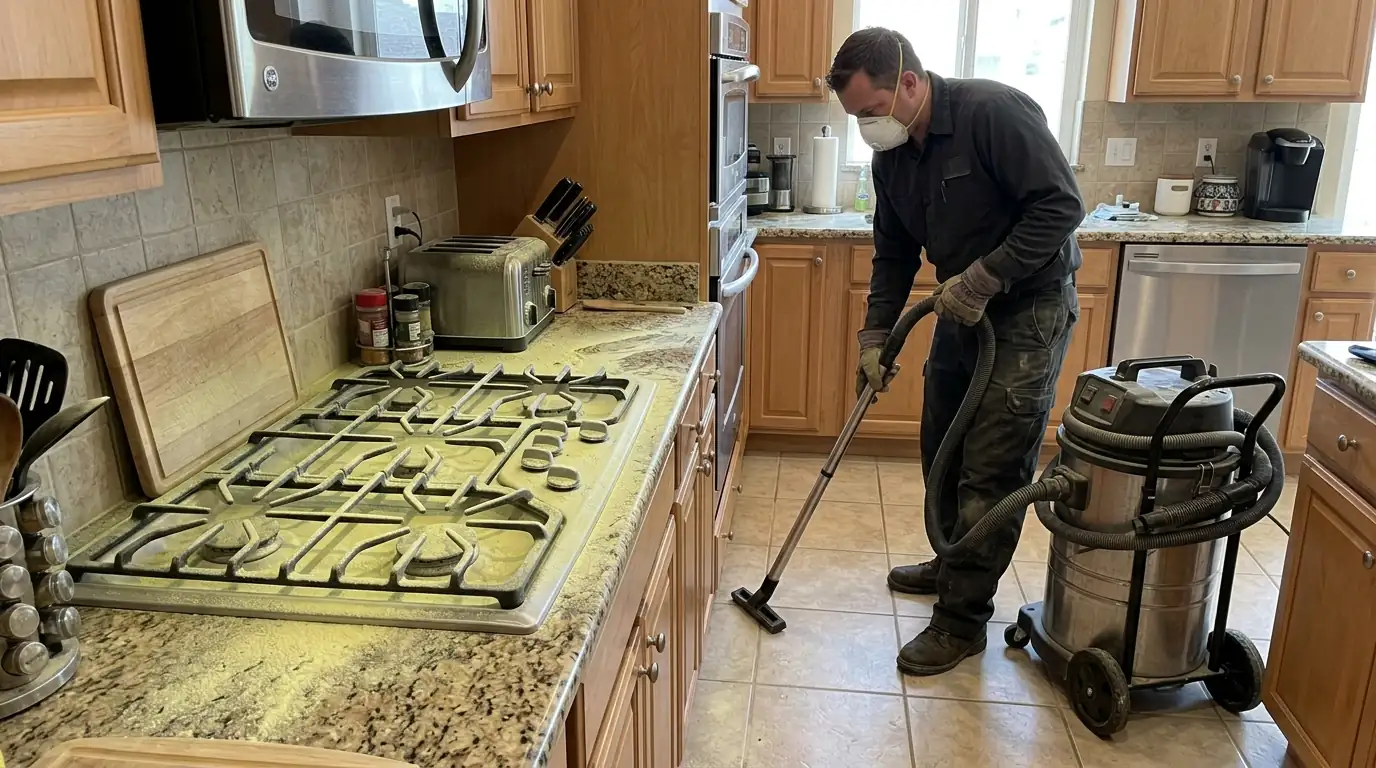
Dry Chemical Powder
The first pass is always dry. A HEPA vacuum lifts the loose powder from every surface, working top down, before anything wet touches it, because wiping turns the powder into a sticky paste that spreads. What remains is cleaned with a neutralizing solution suited to the agent, then rinsed and dried. Porous things the powder settled into, such as fabric, upholstery and unfinished wood, are vacuumed and cleaned on their own, and items that cannot be cleaned are documented for the claim.
Residue on Electronics and Appliances
Extinguisher powder gets into the vents of microwaves, range hoods, toasters, computers and anything with a fan. Inside, it meets warm circuit boards and moisture, and corrosion can start within days. Appliances and electronics near the discharge stay unplugged until they are opened where possible, cleaned with low-pressure air and HEPA vacuuming, and tested. The range hood filter and the duct behind it are cleaned too, since the hood pulls powder in when it runs. Anything that fails testing is logged with its serial number.
Wet Chemical and Clean Agent Residue
Not every extinguisher leaves powder. Kitchen Class K extinguishers and restaurant hood systems use a wet chemical agent that leaves an alkaline, soapy film on the cooking line, and it has to be neutralized, not just wiped. Clean agent and CO2 extinguishers leave little or no residue, so the cleanup there is the fire's own soot. Which agent was used is the first thing we ask when you call, because it sets the cleaners, the protective gear and the order of work.
Why extinguisher cleanups follow kitchen fires in North Carolina
North Carolina's Office of State Fire Marshal reports unattended cooking as the leading cause of cooking fires, and a stovetop flare-up is the fire most people fight with a home extinguisher. That puts the powder in the kitchen, where it lands on food, dishes, cabinets and the range, and in humid air it absorbs moisture quickly. In a Charlotte kitchen we clean the room and the spaces the cloud drifted into, and deal with smoke residue from the fire itself at the same time.
Which extinguisher was used?
| Factor | Dry chemical (ABC) | Wet chemical (Class K) |
|---|---|---|
| Where you find it | Most home and car extinguishers | Restaurant kitchens and hood systems |
| What it leaves | Fine yellowish powder everywhere | A soapy, alkaline film on the cooking line |
| Main risk | Corrodes metal and electronics once damp | Irritates skin and eyes; must be neutralized |
| First step | HEPA vacuum dry, never wipe first | Neutralize and rinse food-contact surfaces |
Cleaning extinguisher powder yourself
A small amount on a counter can be vacuumed up and the surface wiped with a damp cloth afterward. What goes wrong is wiping first, which makes paste, sweeping, which throws the powder back into the air, and running the HVAC or range hood, which carries it into places you cannot reach.
If the powder reached electronics or several rooms, keep everything unplugged and the HVAC off until it is cleaned properly.
What moves the cost
Extinguisher residue cleanup is usually a small job priced by the rooms and items affected. Published cost guides do not list it separately, so here is what drives the number.
- Where it spread. One kitchen versus a cloud that reached several rooms and the HVAC.
- Electronics and appliances. Opening, cleaning and testing units adds time.
- Agent type. Wet chemical from a hood system needs neutralizing across the line.
- Smoke from the fire. Soot and odor from the fire itself add their own cleaning.
Questions about fire extinguisher residue cleanup
Dry chemical powder is an irritant to eyes, skin and lungs rather than highly toxic. Ventilate, keep children and pets away, and wear a mask while it is cleaned up.
Vacuum it first. Wiping dry chemical powder with a damp cloth turns it into a paste that spreads and sticks.
Throw out open food and anything exposed to the powder. Sealed cans and jars can be washed.
Not if they are cleaned early. The powder turns corrosive with moisture, so appliances and electronics near the discharge should stay unplugged until cleaned.
Usually, as part of the fire claim, since the extinguisher was used to stop a covered fire.
Most kitchen discharges are cleaned in a day, plus testing of electronics and any smoke cleanup from the fire.
Related work in Charlotte
Just used an extinguisher?
Leave the powder dry and call. We answer any hour across Charlotte.
Call (704) 368-1592