Emergency fire damage restoration in Charlotte is the first-day response after a house fire: securing the property with board-up and tarps, extracting firefighting water, starting air scrubbers and drying, and photographing the damage before anything moves. It starts as soon as the fire department releases the scene, because soot and water keep doing damage every hour.
The first day, step by step
- Answer the call
Any hour, with a few quick questions about safety and access.
- Meet you on site
Once the fire department releases the property.
- Walk it together
Hazards, damage and what you need to take tonight.
- Secure it
Board-up, roof tarp and a locked access point.
- Stop the water
Extraction and drying equipment in.
- Clean the air
Air scrubbers running; electronics unplugged and moved.
- Document everything
Photos of every room and a list for your insurer.
What the first day after a fire is for
The first day is not for cleaning; it is for stopping the damage from growing. Water is still spreading through walls and floors, soot is starting to etch surfaces, the house may be open to the weather, and the evidence your claim depends on is still in place. Every one of those gets worse by morning if nobody acts.
So the first visit secures, dries and documents. Cleaning and rebuilding come after, from a written scope.
After-Hours Fire Response
Fires do not keep business hours, so the phone is answered around the clock, every day of the year. When you call, we ask a few quick questions: is everyone out and safe, has the fire department released the house, is the power off, and is anything still open to the weather. Then we head out to meet you at the property. You do not need a claim number yet; the photos and the first protective steps can start before the claim is even opened.
The First 24 Hours After a Fire
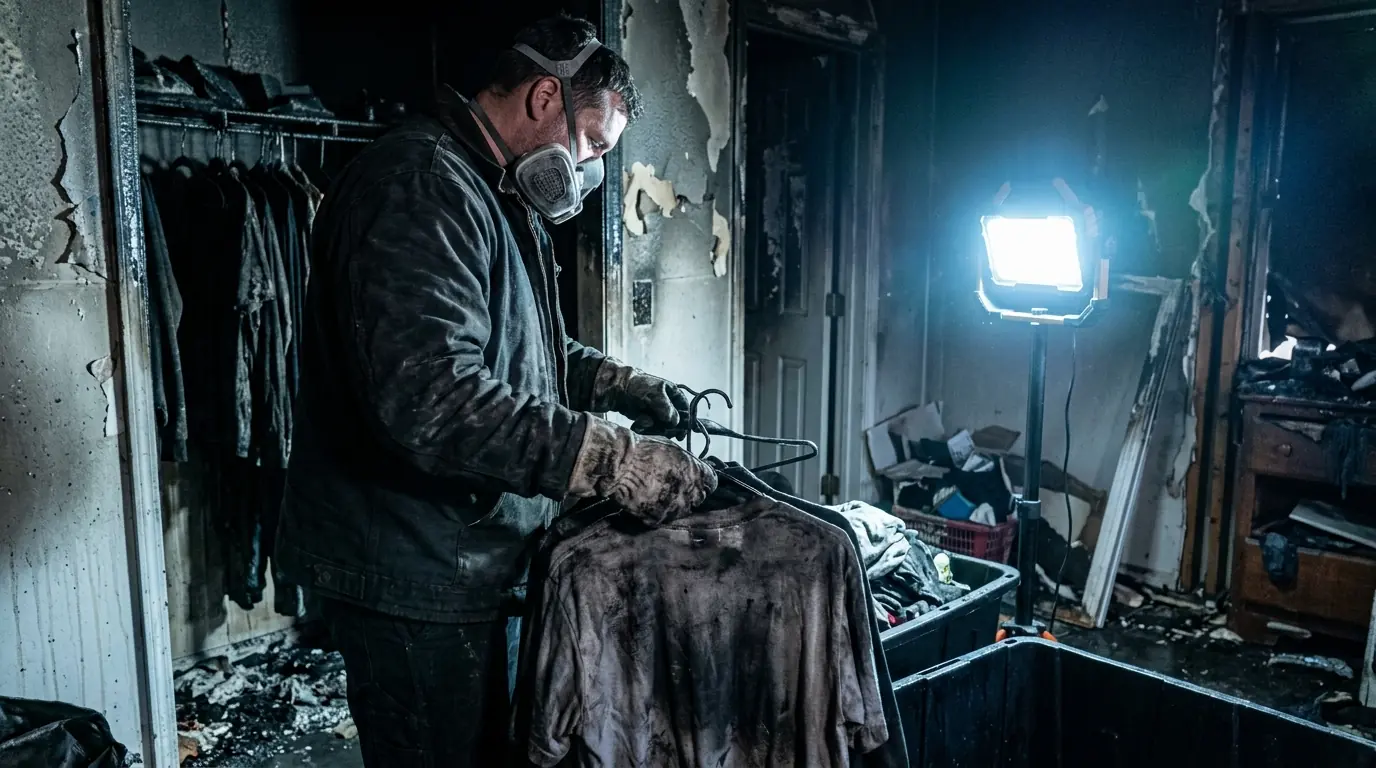
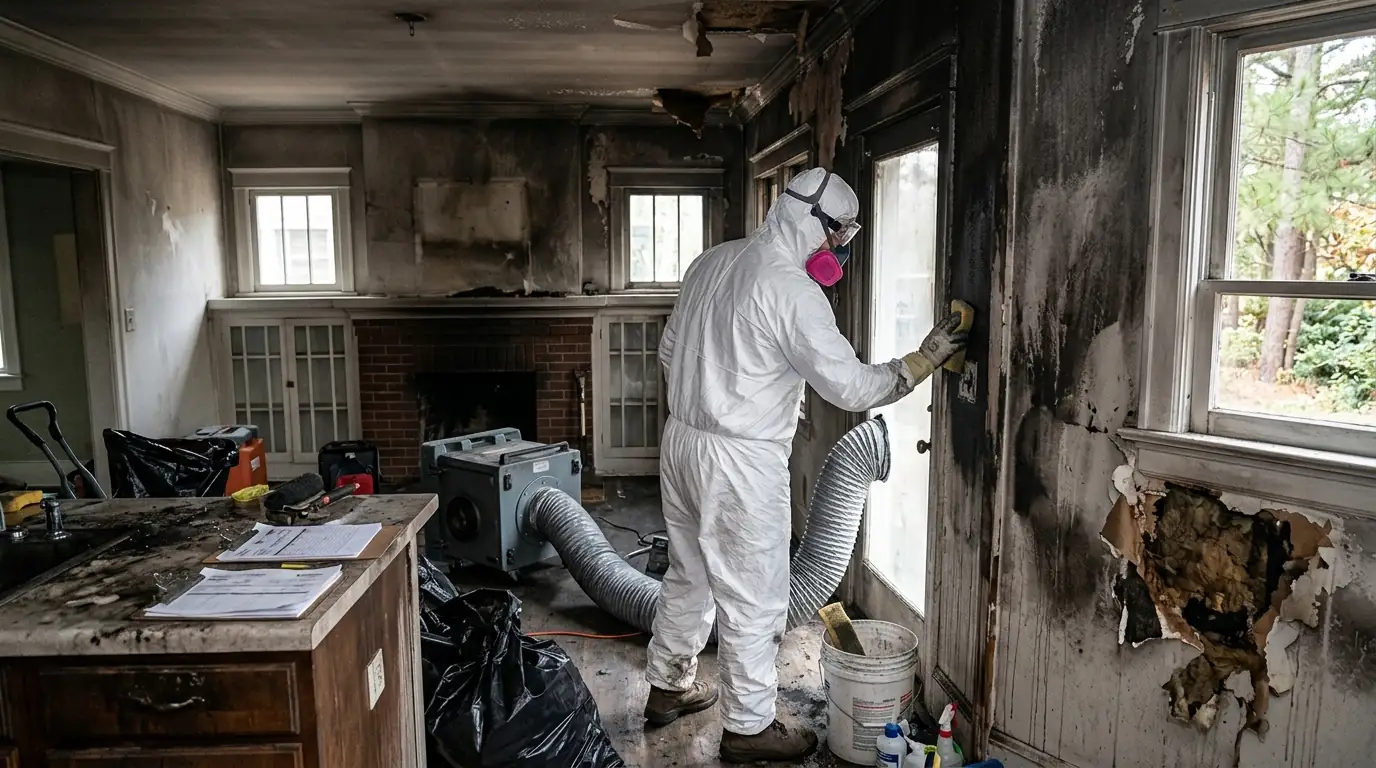
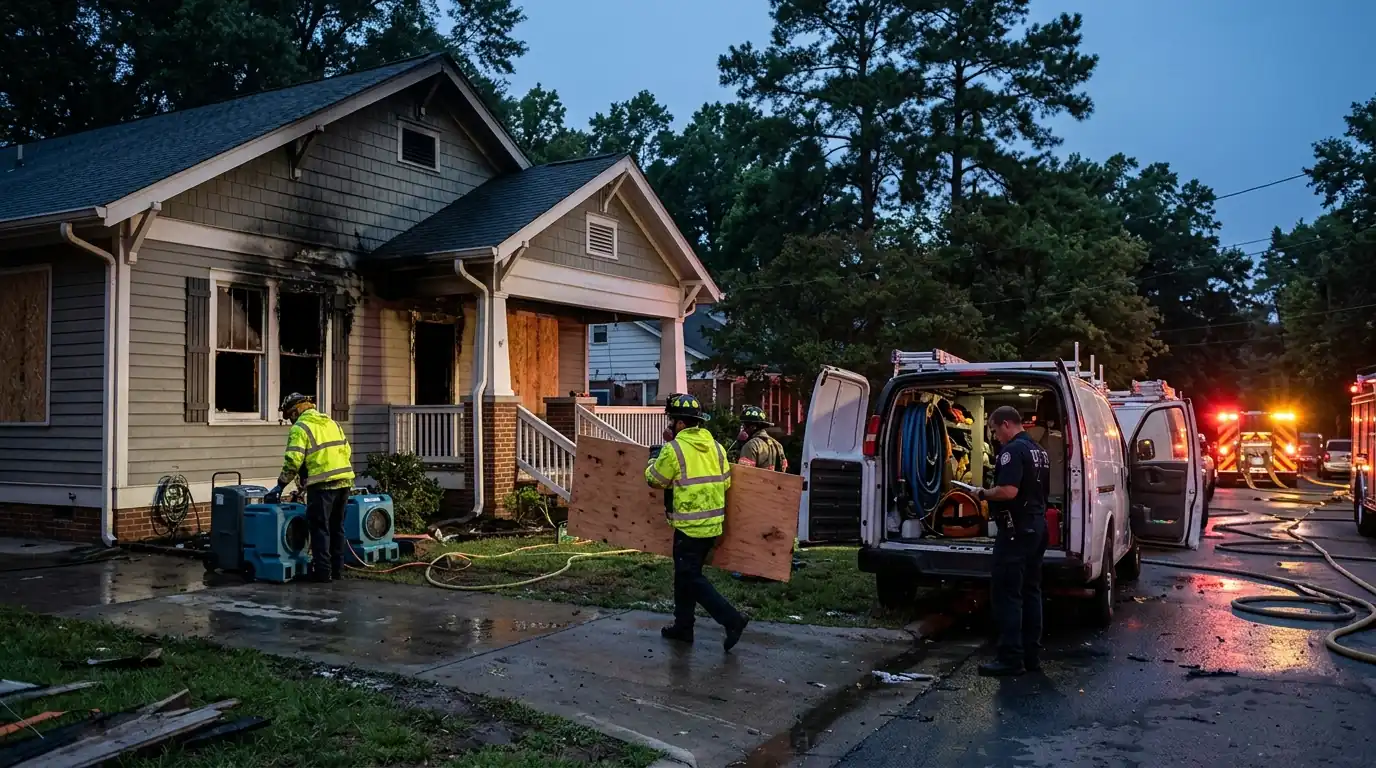
The first day follows a set order. Openings are boarded and the roof tarped. Standing water is extracted and drying equipment set. Air scrubbers start pulling soot out of the air. Electronics are unplugged and moved, and wet contents are taken to dry space. Food, medications and anything unsafe are bagged. Every room is photographed before anything moves. By the end of the day the house is closed, drying and documented, and you have a list of what was done for your insurer.
Walk-Through After the Fire Department Releases the Scene
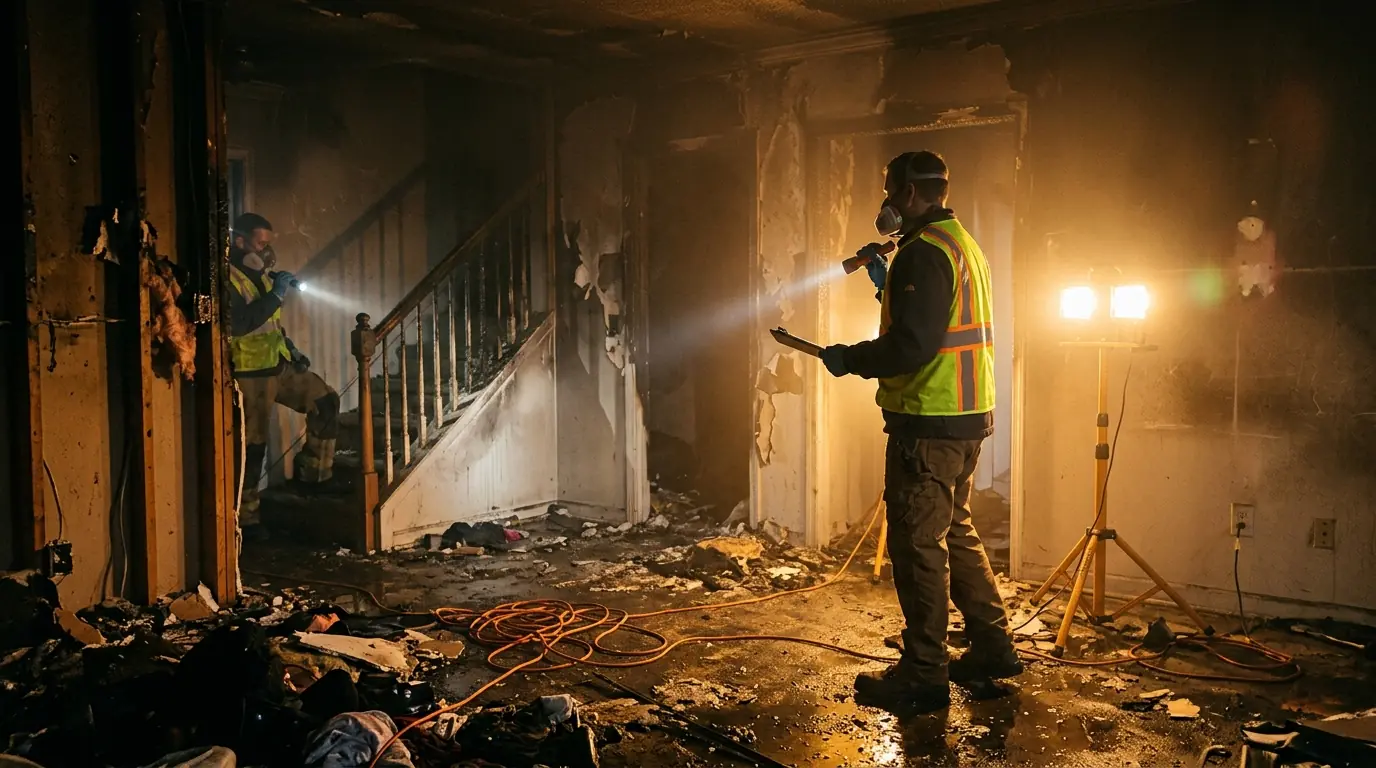
Once firefighters hand the property back, we walk it with you. Structural hazards come first: burned stairs, weakened floors, ceilings that took water. Then, room by room, we note what burned, what smoked and what got wet, and what you need to take with you tonight: medications, documents, phones, clothes. The walk-through is also when we explain what happens next, in plain terms. If you cannot be there, a relative or your property manager can walk it in your place.
How long the emergency phase lasts
The emergency phase is usually the first day or two: securing, extraction, drying setup and documentation. Drying then runs for several days while the scope is written and agreed. Cleaning, contents work and repairs follow, and how long they take depends on the size of the fire.
When the Charlotte Fire Department hands the property back
The Charlotte Fire Department runs 45 stations and answered roughly 137,000 calls in 2022. After a house fire its crews stay until the fire is fully out and the scene is safe, then release the property to the owner. The incident is written up to national reporting standards and published on the city's open data portal, so your insurer can look it up. Our first visit starts from that release.
What the first visit covers
- Safety walk-through once the scene is released
- Board-up of broken windows and doors
- Roof tarping over burn-through or vent holes
- Extraction of standing water
- Drying equipment and air scrubbers set
- Electronics unplugged and moved to dry space
- Photos of every room before anything moves
- A written list of what was done for your insurer
Standing in front of the house right now?
Call. We answer any hour and walk you through what to do before we get there.
(704) 368-1592What moves the cost
Emergency work is billed as the first lines of the fire claim. Published figures show what board-up costs and how wide whole fire jobs range.
- Openings and roof. How much has to be boarded and tarped.
- Water. How much firefighting water went where.
- Size of the house. More rooms mean more equipment and more photos.
- Contents at risk. Wet or valuable items moved to dry space on the first day.
- Emergency board-up$250 to $2,500
- Fire and smoke remediation whole job$3,107 to $51,243, average about $27,175
Published planning ranges, not our quote. Local labor, access and how far the smoke traveled move the final figure.
Questions about emergency fire damage restoration
Both, in either order. Your insurer opens the claim; we protect the house and start the record. Policies expect you to prevent further damage, which is what the first day does.
Usually not after a significant fire. Power may be off, the air is poor and the structure may be unsafe. Your policy may cover somewhere to stay.
Medications, documents, phones and chargers, glasses, a few days of clothes and your pets. Leave the rest for the photo record.
No. Securing and documenting the house can start before the claim is opened.
Not yet. Wiping soot smears it, and moving things before they are photographed makes the claim harder.
A written scope for cleaning, contents and repairs goes to your adjuster, then the work runs in the order the scope sets.
Related work in Charlotte
Fire tonight?
Call now. We answer any hour and meet you at the house once the fire department releases it.
Call (704) 368-1592