Contents cleaning after a Charlotte house fire restores smoke-exposed belongings, such as dishes, decor, furniture, lamps and hard goods, instead of replacing them. Items are sorted by material, then cleaned ultrasonically, by hand, or with upholstery methods, deodorized, inventoried and stored until the house is ready. Anything that will not clean up is photographed for the claim.
Clean it or replace it: why most contents can be saved
After a fire, belongings tend to get written off because they look bad and smell worse. Most of it is surface residue. Glass, ceramic, metal, finished wood and many plastics clean well, and upholstered furniture often does when the exposure was smoke rather than flame. Cleaning usually costs less than replacement, which is why insurers expect it, and it keeps the things that are hard to replace.
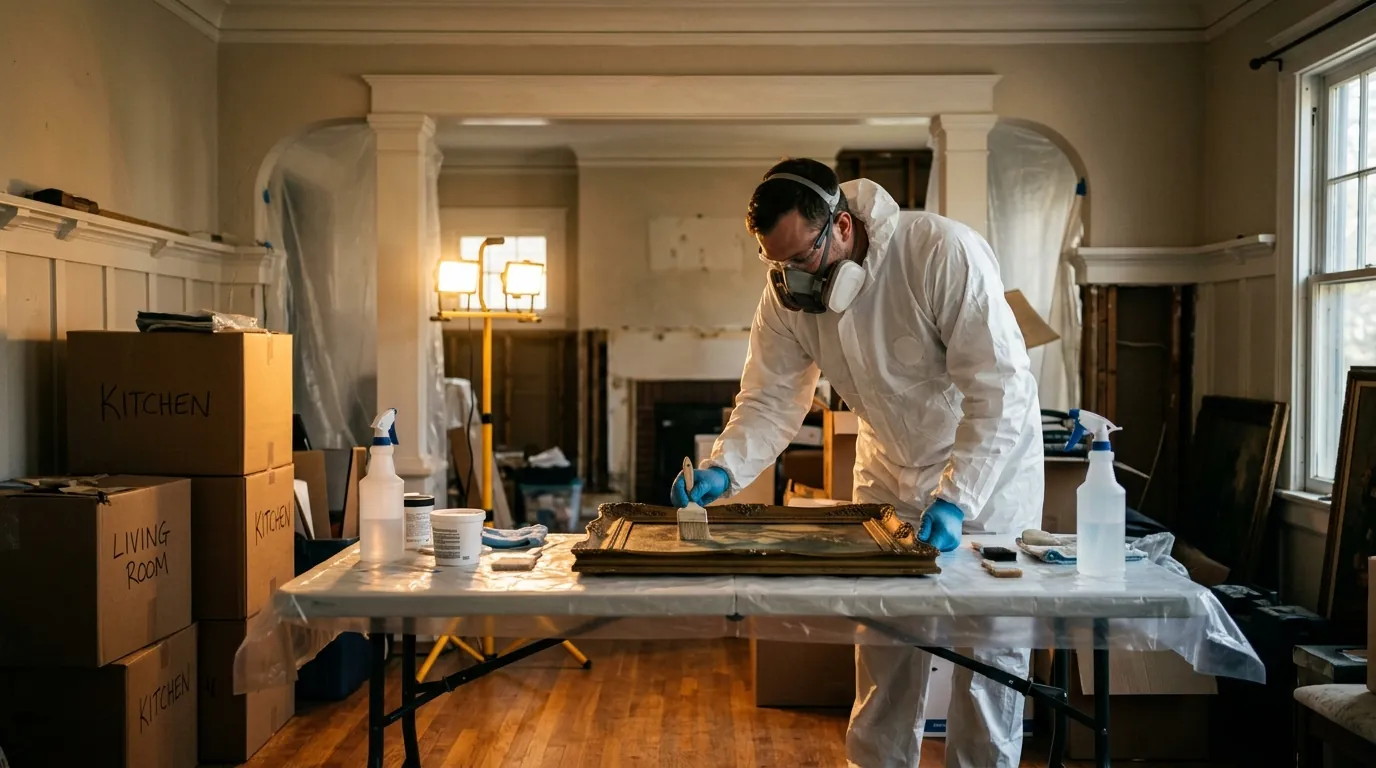
The decisions are item by item, so every piece is inventoried, photographed and tagged restore, clean or replace.
What moves the cost
Contents cleaning is priced by the item or by volume. The published range below covers furniture and textile deodorizing as a line item.
- Volume. A kitchen's worth of dishes and a furnished house are different jobs.
- Method. Ultrasonic batches are fast; hand cleaning fragile pieces takes time.
- Residue type. Protein residue needs degreasing before other cleaning works.
- Storage. Cleaned items stored until the rebuild add storage to the bill.
- Furniture and textile deodorizing$200 to $1,000
Published planning ranges, not our quote. Local labor, access and how far the smoke traveled move the final figure.
Restore or replace?
| Factor | Usually restored | Usually replaced |
|---|---|---|
| Hard goods | Glass, ceramic, metal, finished wood | Heat-warped plastics and charred items |
| Upholstery | Light to moderate smoke exposure | Heavy smoke in the foam, or flame damage |
| Electronics | Pass testing after cleaning | Board corrosion or water damage |
| Consumables | Sealed cans and jars, after cleaning | Open food, medications and cosmetics |
Ultrasonic Cleaning
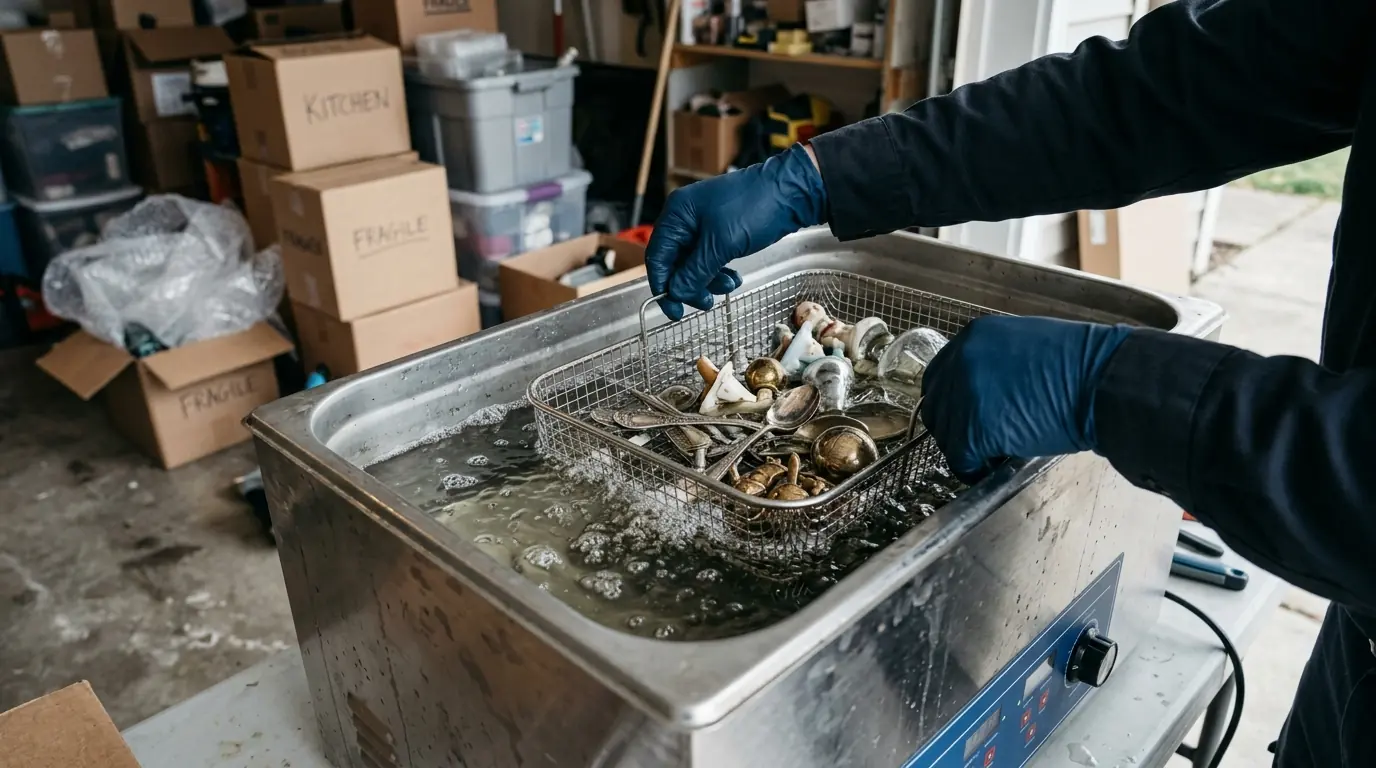
Ultrasonic tanks clean by sending high-frequency sound through a cleaning solution, which forms tiny bubbles that collapse against every surface and lift soot out of textures a brush cannot reach. It suits items that can be submerged: dishes, glassware, ceramics, metal decor, blinds, light fixture parts, tools and many hard plastics. Items go in batches by material, get rinsed and dried, and are checked under good light for any film left behind. It is fast, thorough and gentle on intricate pieces.
Hand Cleaning of Hard Goods
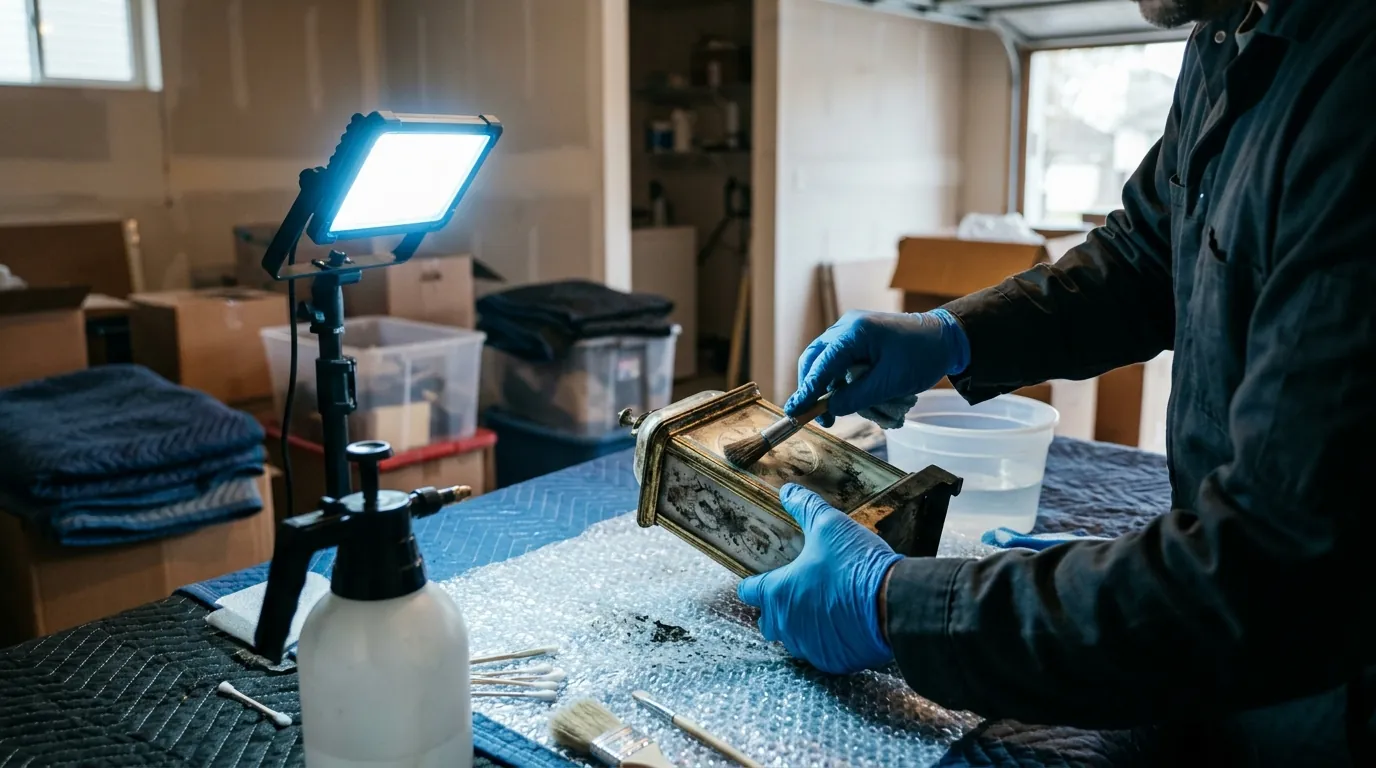
Some things cannot be submerged: finished wood furniture, lamps with wiring, framed art, electronics housings, collectibles and anything with a fragile finish. These are cleaned by hand, starting with dry sponges and HEPA vacuuming to take off loose soot, then residue-specific cleaners chosen for the surface, applied sparingly and wiped off. Finished wood may need polish or light refinishing where heat dulled it. Items with protein residue from a kitchen fire are degreased first. Each piece is checked in good light before it is wrapped.
Furniture and Upholstery
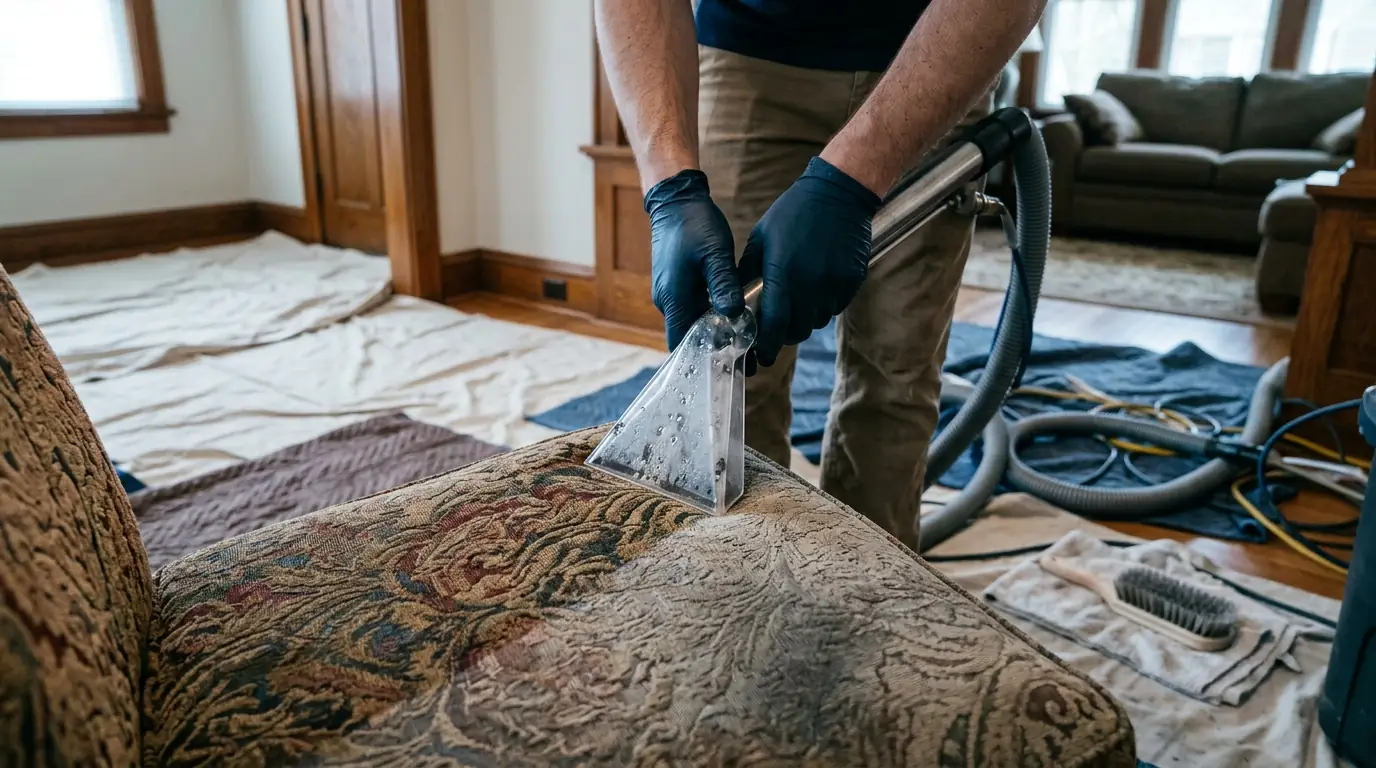
Upholstered sofas, chairs and mattresses absorb smoke deep into the foam and fabric. When exposure was light to moderate, the fabric is cleaned with the method its fiber code calls for, and the piece is deodorized, often in an ozone or hydroxyl chamber. When smoke was heavy, the foam holds odor that cleaning cannot reach, and the piece goes on the replace list with photos. Wood frames, legs and hard surfaces are cleaned separately, and leather gets its own cleaning and conditioning.
What contents cleaning includes
- Photo inventory of every item before it moves
- Sorting by material and cleaning method
- HEPA vacuuming and dry sponging of loose soot
- Ultrasonic cleaning of hard goods that can be submerged
- Hand cleaning of furniture, lamps, art and collectibles
- Upholstery cleaning and deodorizing
- Wrapping and labeling by room
- Storage and return when the house is ready
Kitchen fires and the residue on Charlotte contents
Cooking is consistently the leading cause of home fires nationally, so the residue on belongings in a Charlotte house is often the thin, greasy protein film a kitchen fire leaves: nearly invisible, with a sharp, sour smell. It has to be degreased before any other cleaning works, while contents from a wood or plastics fire need different agents. Candles, air fresheners and household cleaners will not remove any of the three from your things.
How your belongings get cleaned
- Inventory in place
Photos and a line for every item before it moves.
- Sort by material
Hard goods, wood, upholstery, electronics and textiles separated.
- Dry clean first
Loose soot off with HEPA vacuums and dry sponges.
- Clean by method
Ultrasonic, hand cleaning or upholstery cleaning, piece by piece.
- Deodorize
Odor treatment for anything that still holds smoke.
- Inspect and wrap
Checked in good light, wrapped and labeled by room.
- Store and return
Held until the house is ready, then placed back.
Contents work runs on Unsmoke and Chemspec cleaners, Prochem for upholstery, and Odorox hydroxyl units in the deodorizing room.
Questions about contents cleaning & restoration
Usually yes, when cleaning costs less and restores the item. Photos and the inventory show which items were cleaned and which could not be.
Hard furniture almost always. Upholstered pieces depend on how heavy the smoke was, and we tell you honestly which ones will keep holding odor.
Flag them during the inventory. They are cleaned by hand, and if something cannot be saved, you see it before any decision is made.
Both. Light jobs can be cleaned in place; heavier ones are packed out and cleaned away from the dust of the structural work.
Wrapped, labeled by room and returned when the house is ready, with the inventory checked off as they come in.
Only items you and your adjuster agree on, after they are photographed and listed. Open food, medications and cosmetics exposed to smoke are usually discarded.
Related work in Charlotte
Belongings smell of smoke?
Most of them can be cleaned. Call and we will walk the house with you and start the inventory.
Call (704) 368-1592