Water-soaked documents and photos from a Charlotte fire should be frozen within about 48 hours, because mold can start on wet paper within a day or two. Frozen items are later freeze-dried, which turns the ice straight to vapor and keeps pages from warping or sticking. Smoke-stained items are scanned first, then cleaned, so an image is kept even if cleaning fails.
Why paper gets its own track in a fire job
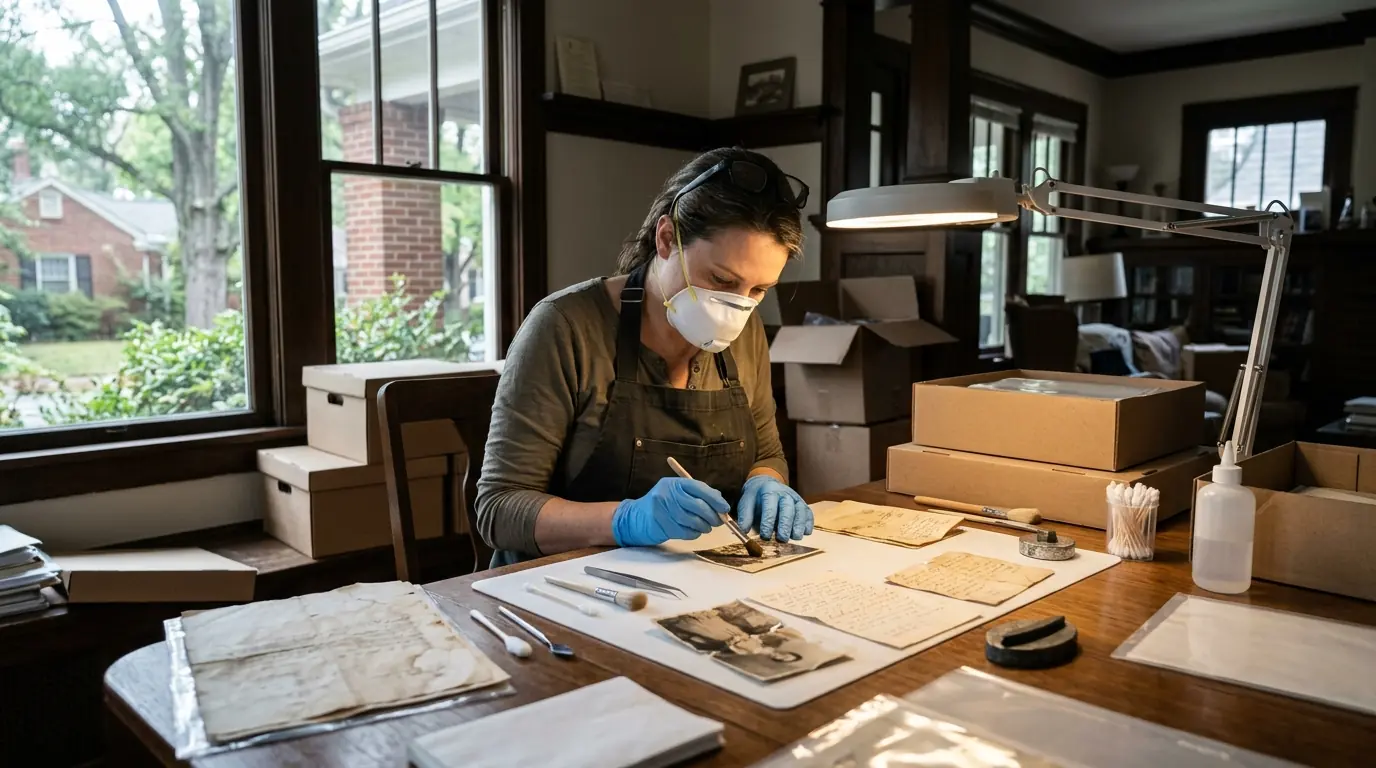
Papers are some of the hardest things to replace after a fire: deeds, tax records, medical files, business records, letters, and family photos that exist nowhere else. They take damage from every direction. Heat curls and browns them, soot settles into the fibers and the emulsion of prints, and firefighting water soaks boxes that were nowhere near the flames.
We handle them apart from the rest of the contents, with their own inventory, so nothing important is bagged with the debris.
What moves the cost
Document and photo work is priced by volume and method, and published cost guides do not list it separately. These four things set the price.
- Volume. A few boxes of papers and a whole filing room are very different jobs.
- Wet or dry. Freeze-drying wet material costs more than cleaning dry, smoky items.
- Photographs. Prints and albums need slower, piece-by-piece handling than paper.
- Scanning. Scanning and digital restoration are priced by the item or page.
Drying documents yourself: what goes wrong
Spreading wet papers across the floor or using a hair dryer seems sensible, and it is how most of the damage happens. Pages cockle and stick, ink runs, and photos glue themselves to the next print. Mold can start before the stack is dry, and then it spreads through the box.
If you cannot get help quickly, leave wet items together, put them in sealed bags, and freeze them. That stops the clock.
Freeze-Drying Water-Soaked Paper
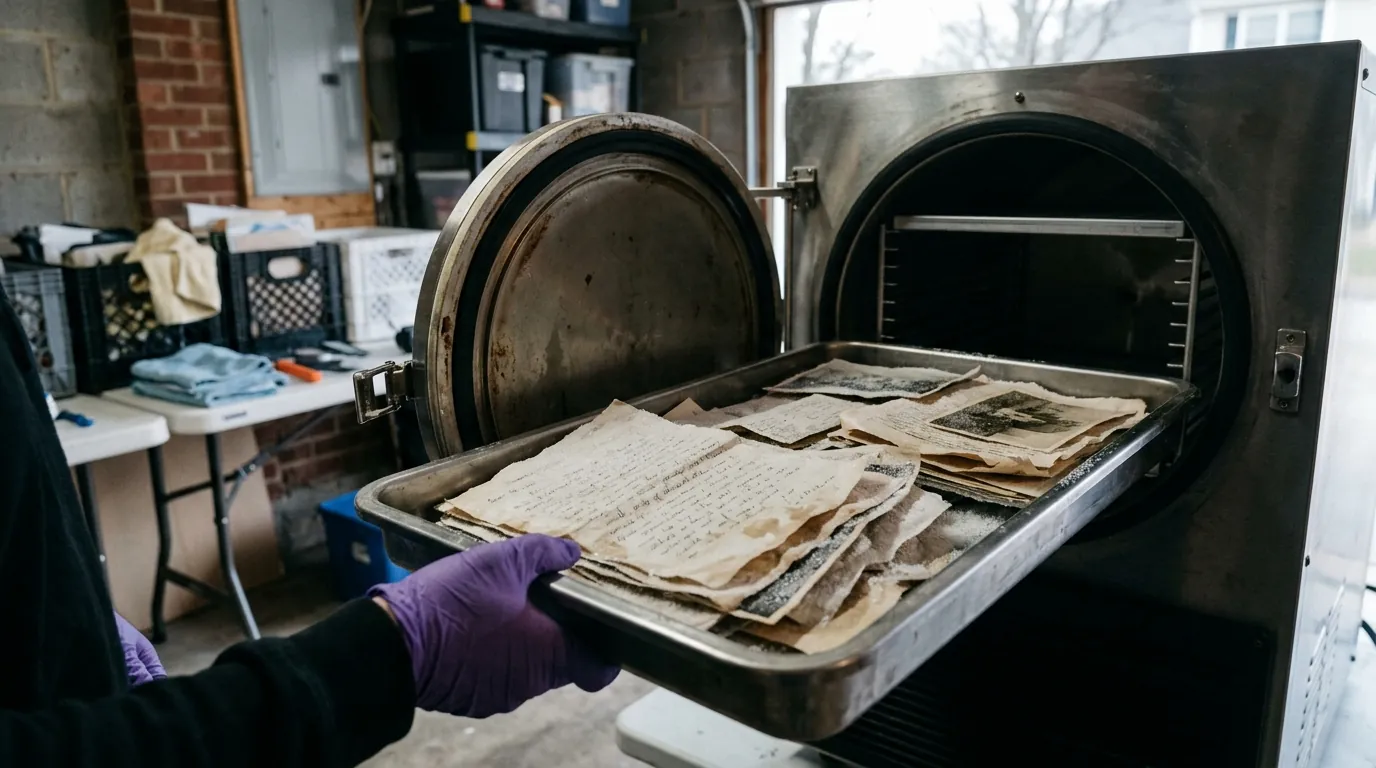
Wet documents go into freezer boxes as they are, without separating stuck pages or trying to air-dry them. Freezing stops mold and ink bleed and buys time. The frozen items are then vacuum freeze-dried: the ice turns straight to vapor without passing through liquid, so pages dry flat instead of cockling, and bound books keep their shape. Afterward, documents can be deodorized and, where soot is present, cleaned. The method works for files, books, maps and many photographs, which is why it is the standard for water-damaged paper.
Soot Removal From Photographs
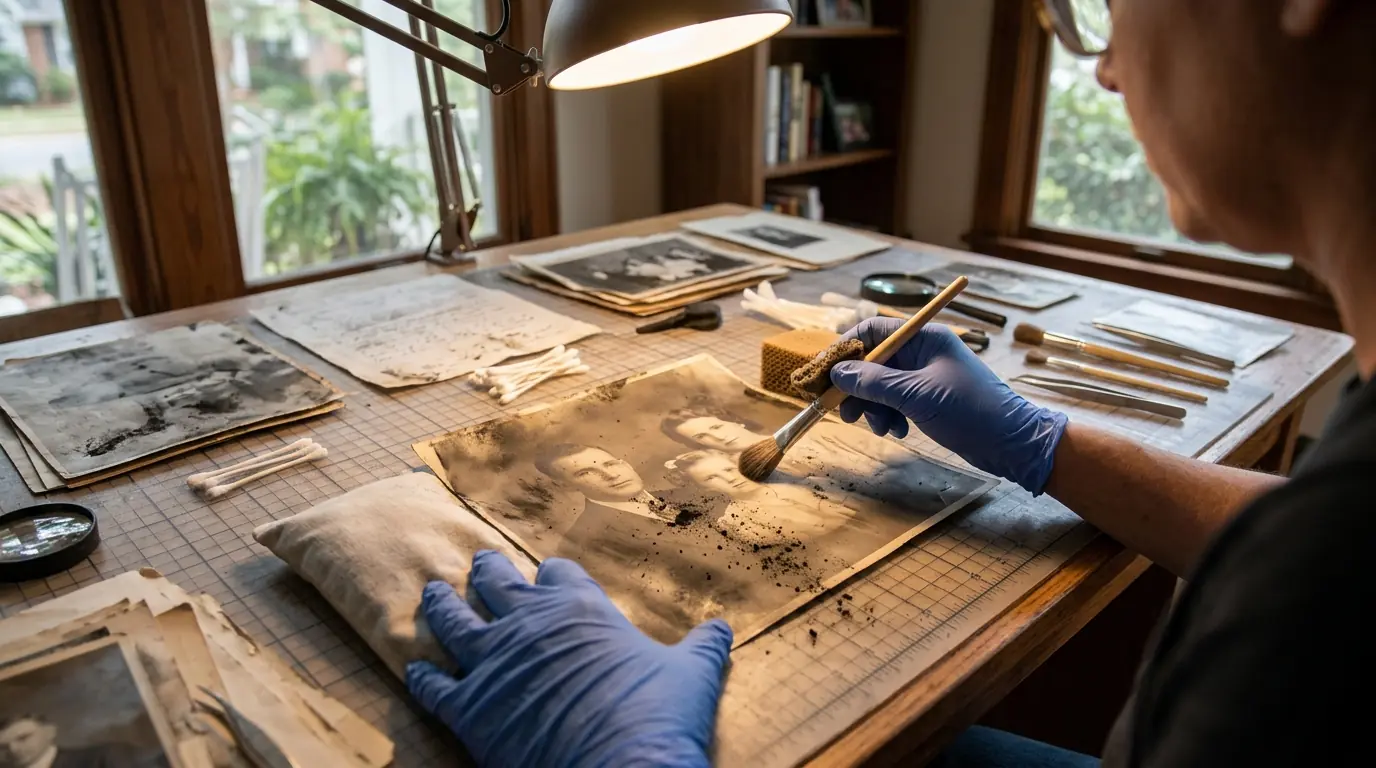
Soot on a photograph sits on the emulsion, the delicate image layer, and rubbing it with a cloth scratches it for good. Loose soot is lifted with a soft brush and low-suction vacuum first. Prints that are wet are kept wet or frozen until they can be handled properly, because a wet print dried face-down sticks to whatever it touches. Framed photos come out of the frame early, since glass trapped against a print can fuse to it as it dries. Heavily damaged prints are scanned and restored digitally.
Scanning Before Cleaning
Before anything fragile is cleaned, it is scanned. A high-resolution scan of a smoke-darkened letter or a water-stained photo keeps the information and the image even if the original does not survive cleaning, and digital restoration can often recover more than physical cleaning can. Scans are organized by box and folder, matching the inventory, and delivered to you on a drive or as a download. For business records, the scan set can serve as the working copy while the originals are restored.
How long document restoration takes
Scanning and dry cleaning of smoke-stained papers and photos can be finished in days to a couple of weeks. Freeze-drying wet material takes longer, often weeks, depending on how much there is and how wet it was. Scans usually come back first, so you have the information long before the originals return.
Why the first 48 hours decide what paper survives
Firefighting water soaks walls, floors, furniture and whatever is stored low, which is why file boxes on the floor of a Charlotte garage, closet or storage room are often wetter than anything near the fire. Restoration advice is to get help within 24 to 48 hours, because soot is acidic and keeps discoloring what it touches, and on paper that same window is when mold starts. Paper records come out on the first visit, before the drying equipment goes in.
How your papers and photos are handled
- Find them first
Files, books, albums and loose photos located on the first visit.
- Keep them as they are
Wet items are not separated, unfolded or dried by hand.
- Freeze what is wet
Boxed and frozen to stop mold and ink bleed.
- Inventory by box
Every box and album listed and labeled.
- Scan fragile items
High-resolution scans before any cleaning.
- Dry and clean
Freeze-drying for wet paper, dry soot removal for prints and pages.
- Return with the scans
Originals back in labeled boxes, scans on a drive.
Questions about document & photo restoration
Do not pull stuck prints apart or dry them face-down. If you cannot reach us quickly, keep them in a sealed bag in the freezer until they can be handled properly.
Usually. Books and papers can be deodorized after cleaning or freeze-drying. Charred edges stay charred, but the pages can often be read and scanned.
Many official records, such as deeds, vital records and tax returns, can be reissued, but that takes time. Restoring or scanning the originals keeps you working meanwhile.
It depends on the volume and how wet the items are, typically weeks rather than days. Frozen items are safe while they wait.
Yes. Files, ledgers and archives are inventoried and scanned so the business can work from copies while the originals are restored.
Devices go through electronics cleaning and testing. Storage drives often survive, and data can be recovered before anything is written off.
Related work in Charlotte
Boxes of wet papers after the fire?
Keep them wet or frozen and call. We answer any hour across Charlotte.
Call (704) 368-1592