Mold remediation in a Charlotte home means containing the affected area so spores do not spread, removing porous materials the mold has grown into, cleaning and treating the framing, and verifying afterward that the area is clean. It follows water damage, including firefighting water that was not dried quickly, and the moisture source has to be fixed first.
Why mold follows water, and why spraying it does not fix it
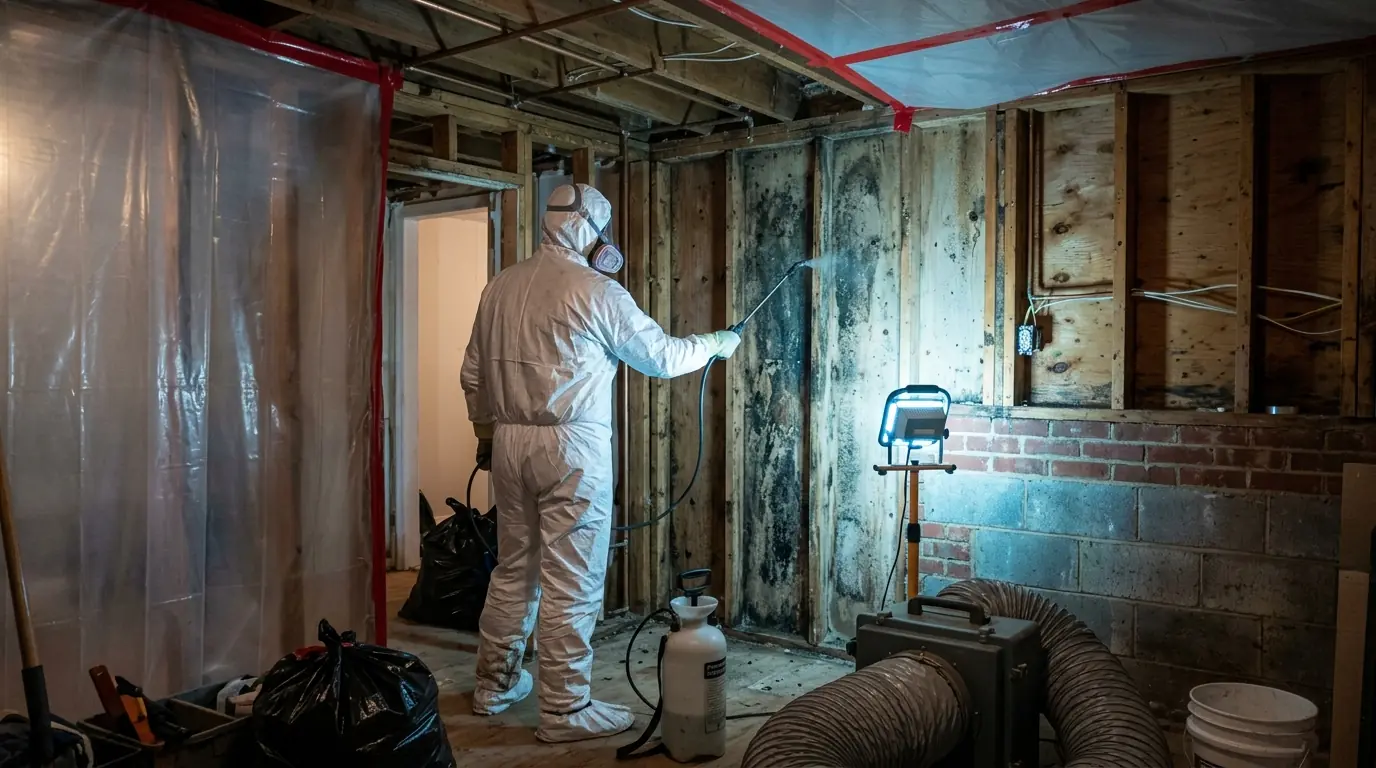
Mold needs moisture, food and time. Drywall paper, wood, insulation and dust supply the food; a leak, a flood or a house soaked by fire hoses supplies the moisture; and growth can start on wet materials within a day or two. Once it is inside drywall or insulation, surface sprays only bleach the stain. The growth, and the spores and odor with it, stay.
Remediation removes what is growing, then fixes the conditions that let it grow.
What moves the cost
Mold remediation is priced by the size of the affected area and how much has to come out. Published figures vary too widely to quote as a planning range, so here is what drives the number.
- Affected area. A patch behind a sink and a whole crawlspace are different jobs.
- Containment. Larger or multi-room areas need more setup and more air scrubbers.
- Removal. Drywall, insulation and flooring add labor and disposal.
- Verification. Independent air or surface testing is a separate cost.
Containment and Negative Air
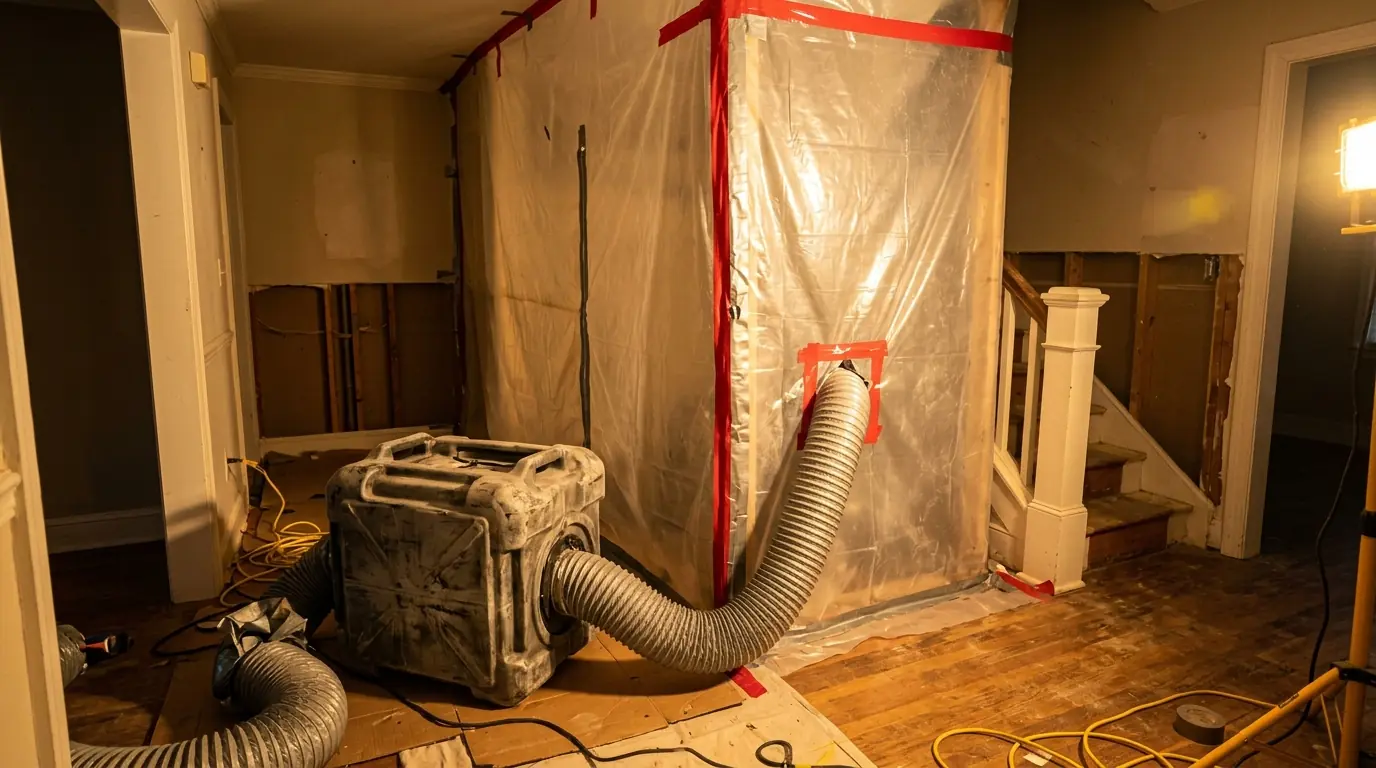
Before anything is disturbed, the work area is sealed off with plastic sheeting and a zippered entry, and an air scrubber exhausts filtered air so the area stays under negative pressure. That keeps spores stirred up during removal from drifting into clean rooms. HVAC vents in the area are sealed and the system stays off. Workers wear respirators and protective suits, and debris leaves the containment bagged. Containment is the step that separates remediation from simply tearing out moldy drywall.
Removing Affected Drywall and Insulation
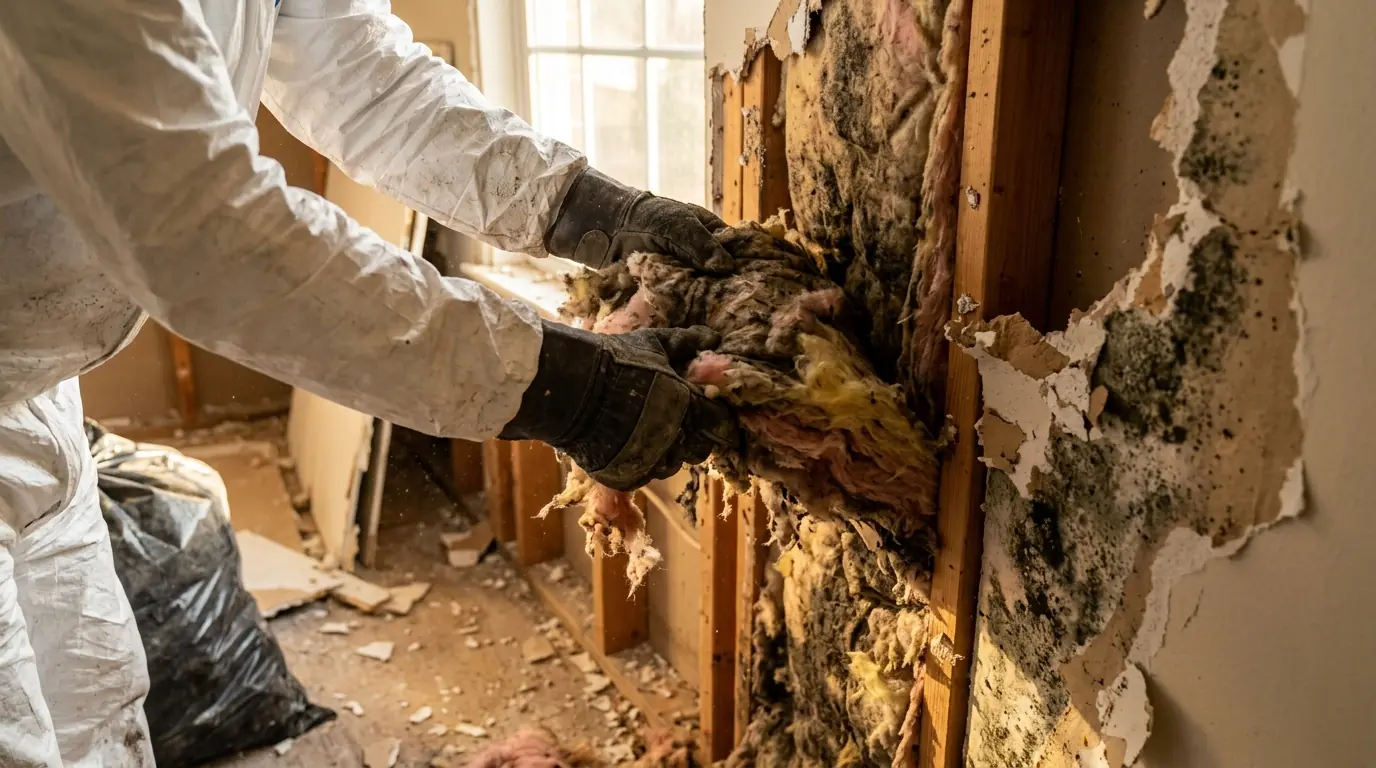
Porous materials the mold has grown into come out: drywall is cut out past the visible growth, insulation is bagged and removed, and carpet and pad are discarded. Framing and other solid wood stay, because mold on their surface can be cleaned. Those surfaces are HEPA vacuumed, scrubbed or sanded where growth has stained the wood, wiped with an antimicrobial, and sometimes sealed with a mold-resistant coating. Moisture readings on the framing are taken before and after, and nothing is closed up until it is dry and clean.
Post-Remediation Verification
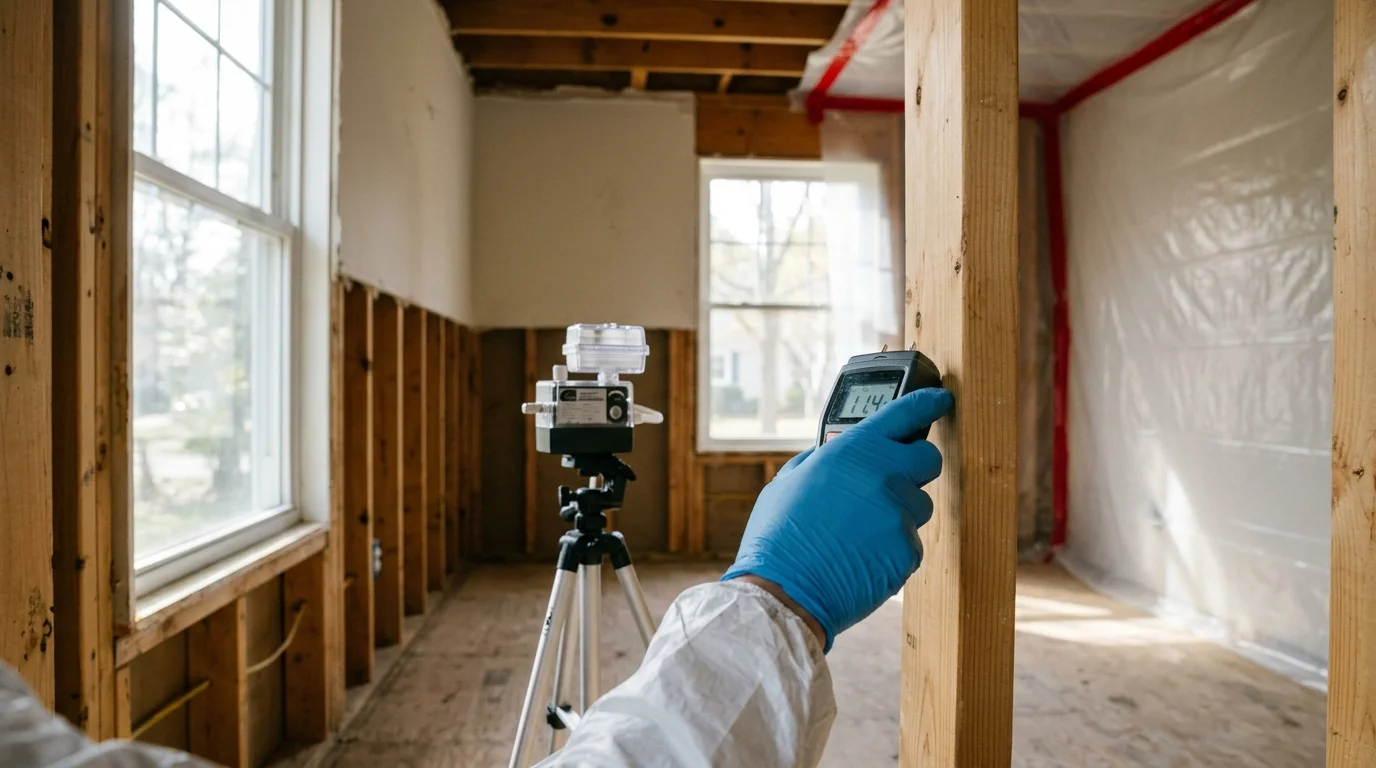
Once the work is done, the area is inspected with the containment still up. Visual inspection comes first: no visible growth, no dust, dry materials. Many homeowners and insurers also want an independent check, such as air or surface sampling by a separate assessor, to confirm the result. Only after the area passes is the containment taken down and the rebuild started. You get the photos, readings and any test results for your records and for any future sale of the house.
What mold remediation includes
- Moisture source found and fixed or dried
- Containment with sheeting and a zip door
- Negative air with HEPA air scrubbers
- Removal of affected drywall and insulation
- HEPA vacuuming and cleaning of framing
- Antimicrobial treatment of cleaned surfaces
- Drying to target moisture readings
- Inspection before the containment comes down
Why Charlotte's climate makes drying urgent
Charlotte has a humid subtropical climate with no dry season: about 43 to 44 inches of rain a year, more than the national average of 38, and relative humidity that stays around 70 to 75% through the year. In air that damp, wet drywall and framing dry slowly on their own, which gives mold time to start. That is why drying equipment and daily readings matter more here than in a drier climate.
How mold remediation runs
- Find the moisture
The leak or wet area fixed or dried first.
- Map the growth
Visible mold and moisture readings around it.
- Contain
Plastic sheeting, a zip door and negative air.
- Remove
Affected drywall, insulation and flooring bagged out.
- Clean the framing
HEPA vacuum, scrub or sand, then antimicrobial.
- Dry and verify
Readings at target and the area inspected clean.
- Rebuild
Insulation and drywall back once the area passes.
Questions about mold remediation
On a small patch of hard, non-porous surface, you can clean it. On drywall or wood, bleach whitens the stain but does not remove growth inside the material, and it adds moisture.
EPA guidance says a homeowner can usually handle an area of about ten square feet or less. Larger areas, anything in the HVAC, or growth after sewage water should be handled professionally.
It can trigger allergies and asthma and irritate eyes and lungs, especially in children, older adults and anyone with breathing problems. That is why containment keeps it out of the rest of the house.
Usually, for a contained area. For large jobs, or if anyone has breathing problems, staying elsewhere during removal is sensible.
Often when it follows a covered sudden loss, like a burst pipe or a fire, and often not when it comes from a long-term leak. Policies vary, so check yours.
Fix the moisture source and keep humidity down. Mold returns only where water does.
Related work in Charlotte
Found mold after a leak or fire?
Leave it undisturbed and call. We serve homes across Charlotte.
Call (704) 368-1592