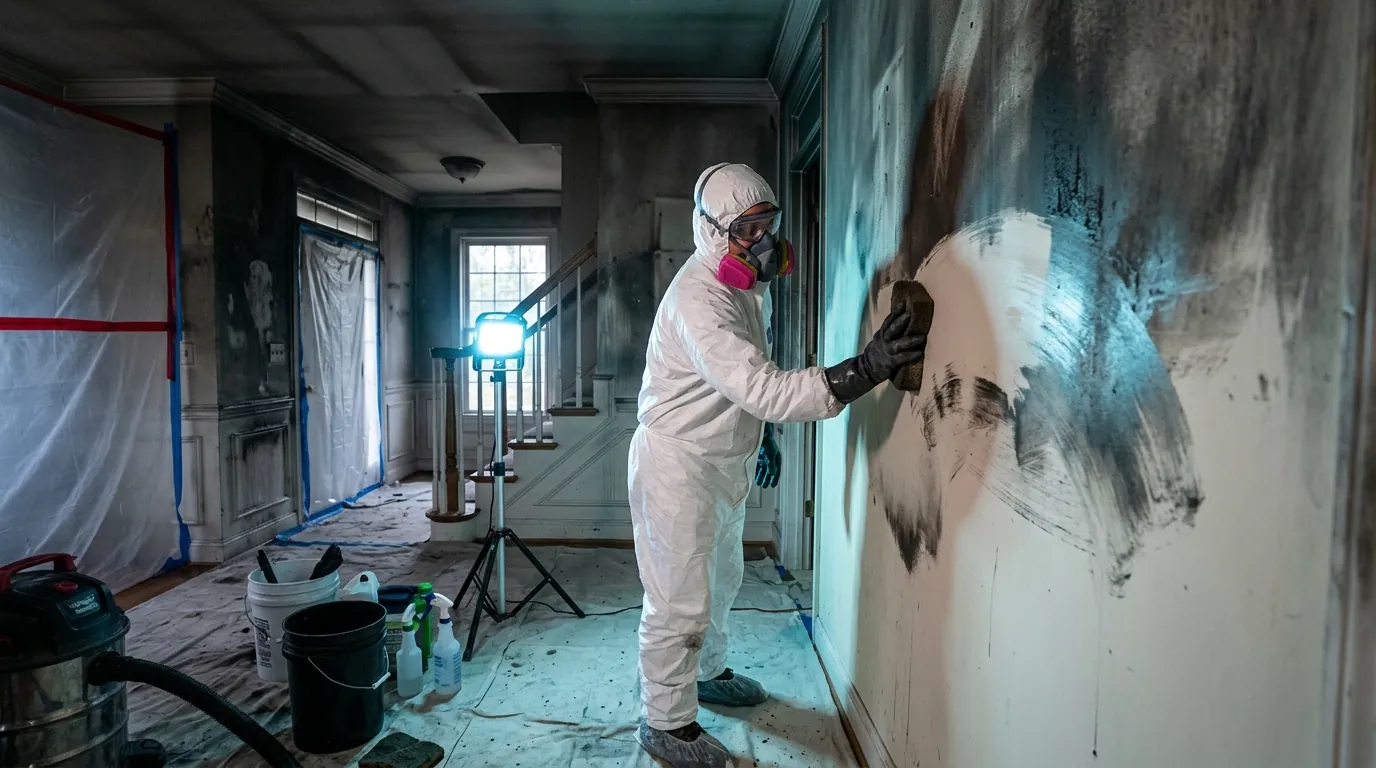
Soot removal in a Charlotte home works from dry to wet and top to bottom: loose soot comes off with HEPA vacuums, the remaining film with chemical dry sponges, and oily or protein soot with degreasers matched to the residue. Starting within a day or two matters, because soot is acidic and keeps staining paint and etching metal, glass and grout.
What soot is, and why the order of removal matters
Soot is the fine black carbon and residue that incomplete burning leaves behind. Dry soot from a hot wood fire is powdery; oily soot from burning plastics, rubber or cooking grease is sticky. Both are acidic. Left in place, soot yellows paint, pits chrome and aluminum, etches glass and discolors grout, and the damage deepens every day.
Removal is mostly about order. Water or pressure used too early turns dry soot into a stain.
What moves the cost
Soot removal is priced by the area affected or as a line item in a larger smoke job. These published figures show both ways it is quoted.
- Soot type. Oily and protein soot take longer than dry wood soot.
- How long it sat. Soot left for days etches surfaces and adds refinishing.
- Ceiling height. Vaulted ceilings and stairwells need staging.
- Fixtures and trim. Detailed hand cleaning adds labor beyond flat walls.
- Soot removal as a line item$2,000 to $6,000
- Soot damage cleanup$325 to $4,500 or more
- Soot and smoke cleaning per square foot$2 to $6 per square foot of affected area
Published planning ranges, not our quote. Local labor, access and how far the smoke traveled move the final figure.
HEPA Vacuuming of Loose Soot
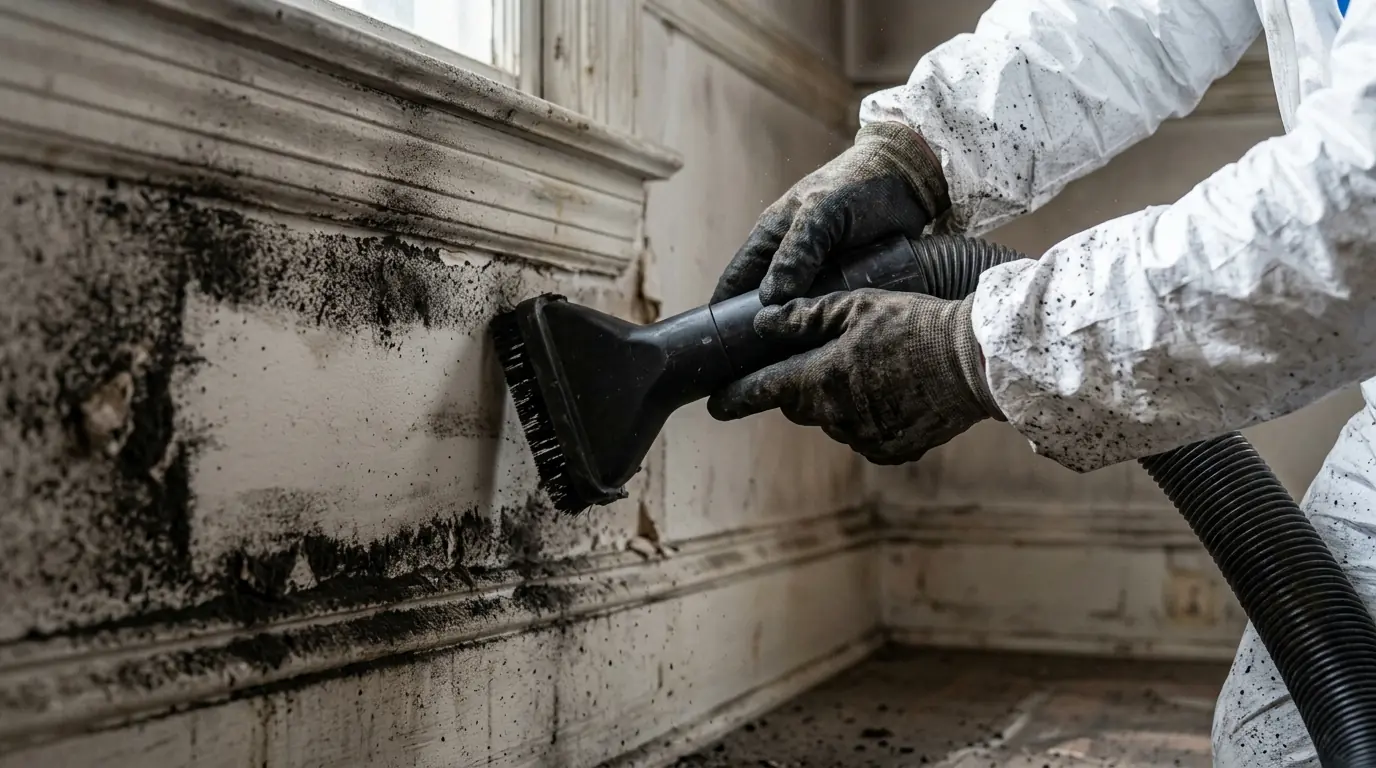
The first pass is always a HEPA vacuum with a soft brush attachment, held just off the surface so it lifts loose particles instead of grinding them in. HEPA filtration matters because soot particles are fine enough to pass straight through an ordinary vacuum and back into the air. Ceilings come first, then walls, then horizontal surfaces and floors. On a light job this single step removes most of what is visible; on a heavy one it makes every later step faster and cleaner.
Dry Sponge Cleaning
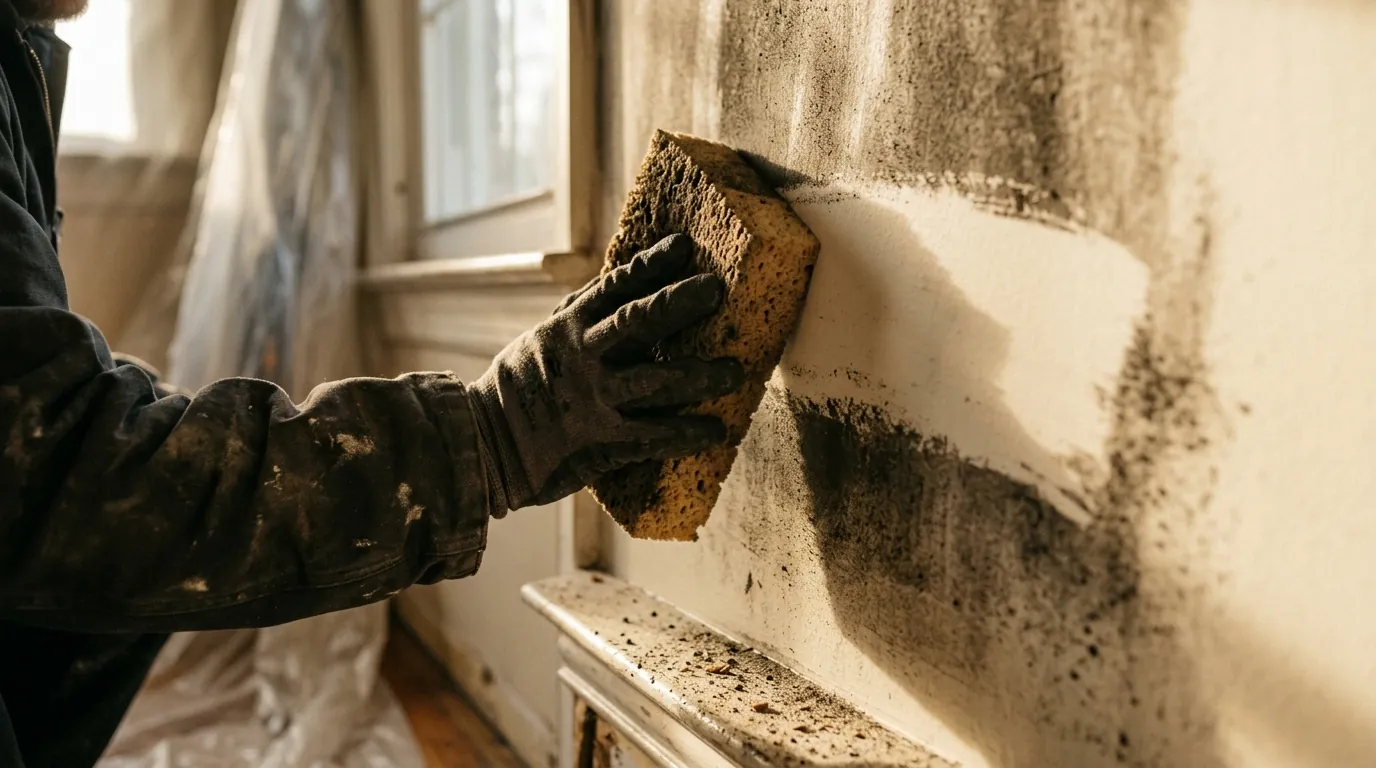
Chemical dry sponges are made of vulcanized rubber that grabs soot without any liquid. They are wiped in straight, overlapping strokes, never scrubbed, and the dirty face is cut away as it loads so it does not put back what it picked up. Dry sponging clears most dry soot from flat paint, wallpaper, acoustic ceilings and unfinished wood, surfaces that water would stain. It is also the step that shows us whether a surface will clean up or will need paint.
Oily Soot Degreasing
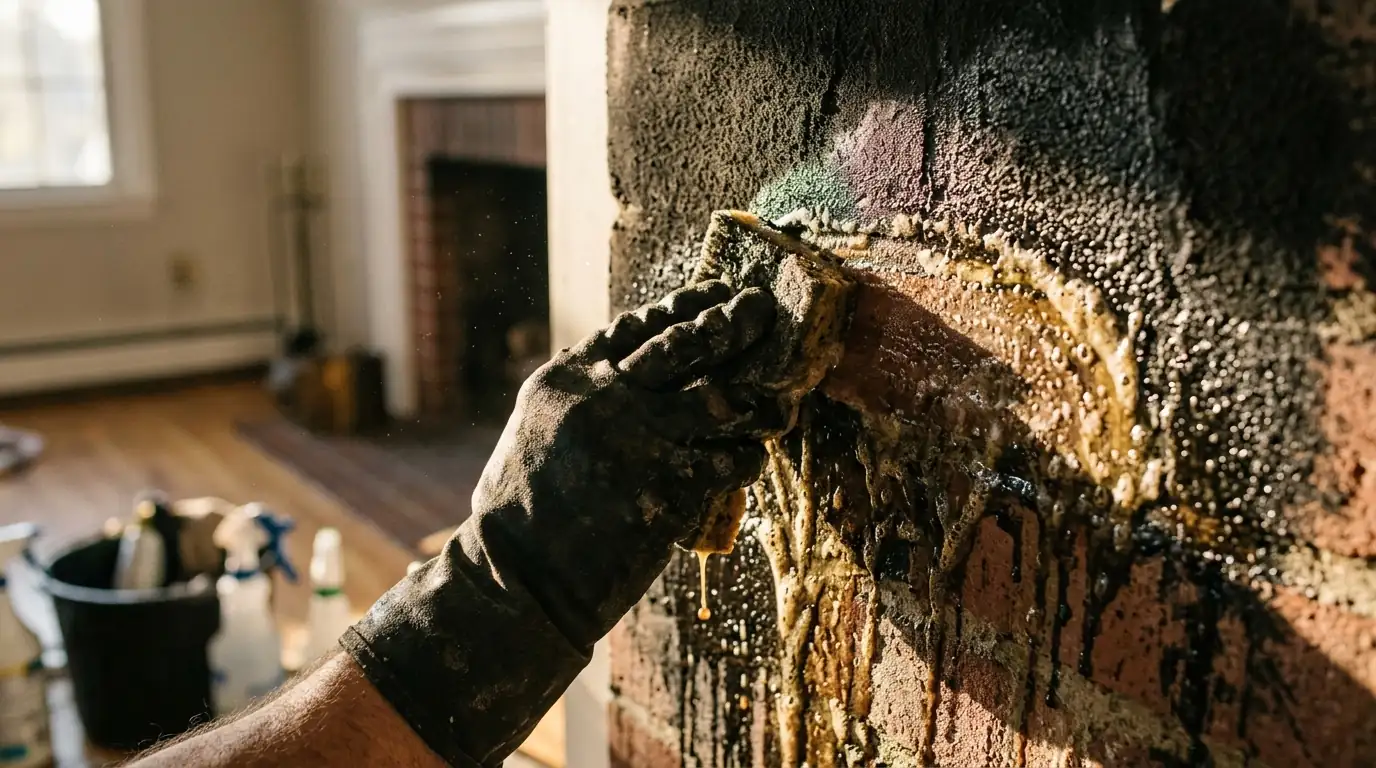
Oily soot from plastics, rubber and cooking grease smears at a touch, so dry methods only go so far. After vacuuming, surfaces are cleaned with alkaline or solvent-based degreasers suited to the residue, applied with microfiber in small sections, then rinsed so no film is left for new paint to fight. Kitchen fires add a protein film that is nearly invisible but smells strongly, and it needs a protein-specific cleaner before anything else. It is slow work, and rushing it is what leaves streaks.
Light Fixtures, Fans and Trim
Fixtures, fans and trim catch soot on every ledge and blade. Glass shades and fixture parts come down and are cleaned separately, often ultrasonically. Ceiling fan blades and motor housings are wiped by hand with the power off. Trim, door casings, crown molding and baseboards are cleaned by hand because they have profiles a sponge cannot follow, and painted trim often needs a second pass. Metal hardware, switch plates and vent covers are removed and cleaned before the acid etches them.
What soot removal includes
- Containment and air scrubbers during the work
- Soot type tested in every room
- HEPA vacuuming of ceilings, walls and ledges
- Dry sponging of flat and porous surfaces
- Degreasing of oily and protein residue
- Fixture, fan and trim detailing by hand
- Hardware and vent covers removed and cleaned
- A final inspection in raking light
Why timing and house age matter for soot in Charlotte and Cary
Restoration advice is to get help within 24 to 48 hours, because soot is acidic and keeps discoloring and corroding what it lands on. What it lands on varies here. Much of inner Charlotte was built before 1970, with plaster and older painted finishes that need more careful cleaning, while Cary and the rest of Wake County have one of the youngest housing stocks in North Carolina, with drywall and newer finishes that clean well when they are reached early.
How soot comes off
- Protect the room
Floors covered, air scrubbers running, clean rooms sealed off.
- Test the soot
Dry, oily or protein, room by room.
- HEPA vacuum
Ceilings first, then walls, ledges and floors.
- Dry sponge
Straight strokes, never scrubbed.
- Degrease where needed
Residue-matched cleaners on oily and protein soot, then a rinse.
- Detail by hand
Fixtures, fans, trim and hardware.
- Inspect in raking light
Missed film found before odor treatment or paint.
Most soot comes off with Unsmoke dry sponges and cleaners, Chemspec degreasers and HEPA vacuums, with Prochem products for the textiles in the same rooms.
Questions about soot removal
Within a day or two if possible. Soot is acidic, and the longer it sits the more it etches metal, glass and grout and stains paint.
Partly. Dry sponging removes a lot, but flat paint absorbs residue, so heavily sooted flat walls usually need sealing and repainting.
Soot particles are fine enough to reach the lungs, which is why HEPA vacuums and air scrubbers run during the work. Keep children, pets and anyone with breathing problems out.
Water on dry soot drives it into porous surfaces. Wet cleaning comes only after the dry passes, and pressure washing is kept for masonry and concrete.
Not if they are cleaned early. Chrome, brass and aluminum pit when soot sits on them, so hardware is among the first things removed and cleaned.
Yes, as part of duct cleaning after a fire, before the system runs again.
Related work in Charlotte
Soot on the ceilings and walls?
Leave it dry and call. We answer any hour across Charlotte.
Call (704) 368-1592