Smoke intrusion is residue and odor that entered a Charlotte home or unit from a fire somewhere else, usually a neighboring apartment, townhome or house. Even without flames it leaves soot film on walls, in closets and inside the HVAC, and it needs the same residue cleaning and odor treatment as direct smoke damage, room by room.
Signs a neighbor's fire reached your unit
- Odor strongest in closetsClosed spaces trap residue and hold the smell longest.
- Gray film on light fixturesSmoke from an attic comes down through ceiling openings.
- Dark lines around outletsSoot outlines on shared walls show where air moved through.
- A dirty return grilleSmoke pulled through the HVAC leaves residue at the return.
- A smell when the heat or AC runsThe ducts are carrying residue into the rooms.
- Odor in clothes and beddingFabric absorbs smoke from the air even in untouched rooms.
- Yellowing on white trimResidue discolors paint over the days after the fire.
What we do after a neighbor's fire
- Walk the unit
Every room, closet and cabinet checked with you.
- Find the entry points
Attic, shared walls, vents and doors, wherever the smoke got in.
- Keep the HVAC off
Filters and returns checked before the system runs again.
- Clean the residue
Dry sponges and residue cleaners on walls, ceilings and cabinets.
- Clean contents
Textiles, upholstery and hard goods, each by what they are made of.
- Treat the odor
Hydroxyl or thermal fogging once the residue is gone.
- Document for the claim
Photos and a room list for your policy or the building's.
How a fire next door ends up inside your home
Smoke is pushed by heat and pressure through every gap it can find: the shared attic above a row of townhomes, the space around pipes in a party wall, the return vent that pulls air from a common hallway. It leaves residue wherever it cools, which is why the inside of a closet or a kitchen cabinet can smell worse than the living room.
The work is the same as any smoke job, only more targeted.
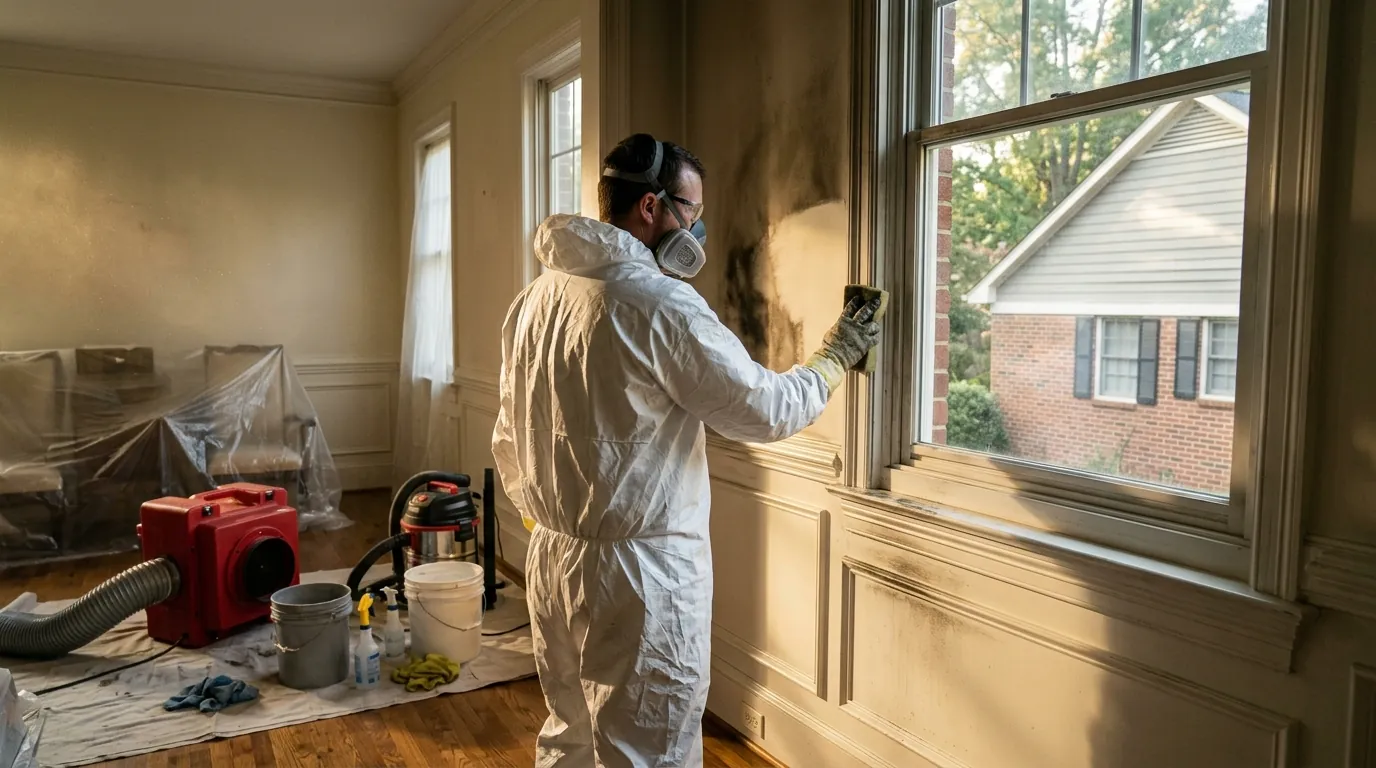
Shared Wall and Attic Smoke
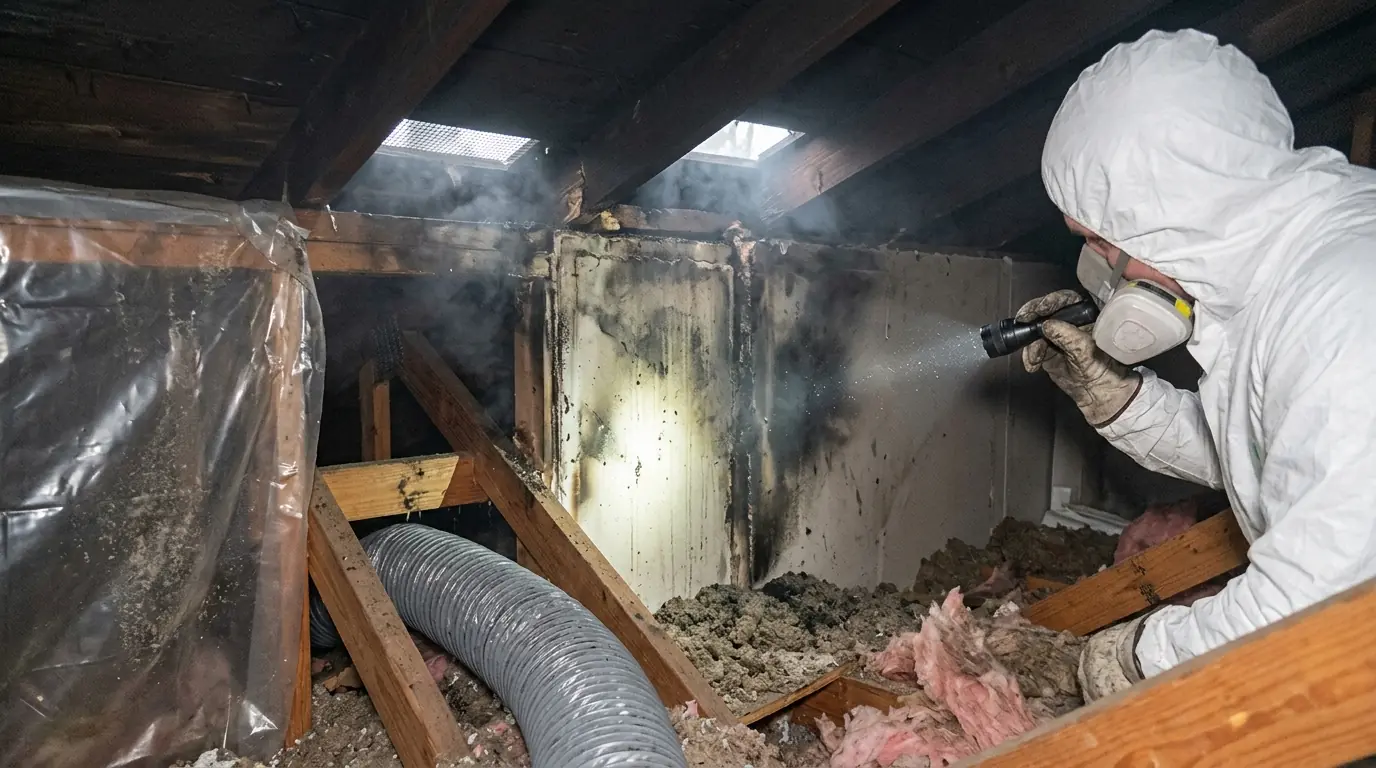
In townhomes and older duplexes the attic often runs across several units with little separation, so smoke from one fire rolls into the neighbors' attic space and down through light fixtures and ceiling gaps. Apartments leak smoke through the openings around pipes, wiring and outlets in shared walls. We check the attic and the wall penetrations first, clean the residue on that side, then work through the rooms below. Gaps we find are noted for the building owner so the next fire has a harder path.
Smoke Carried Through Shared HVAC
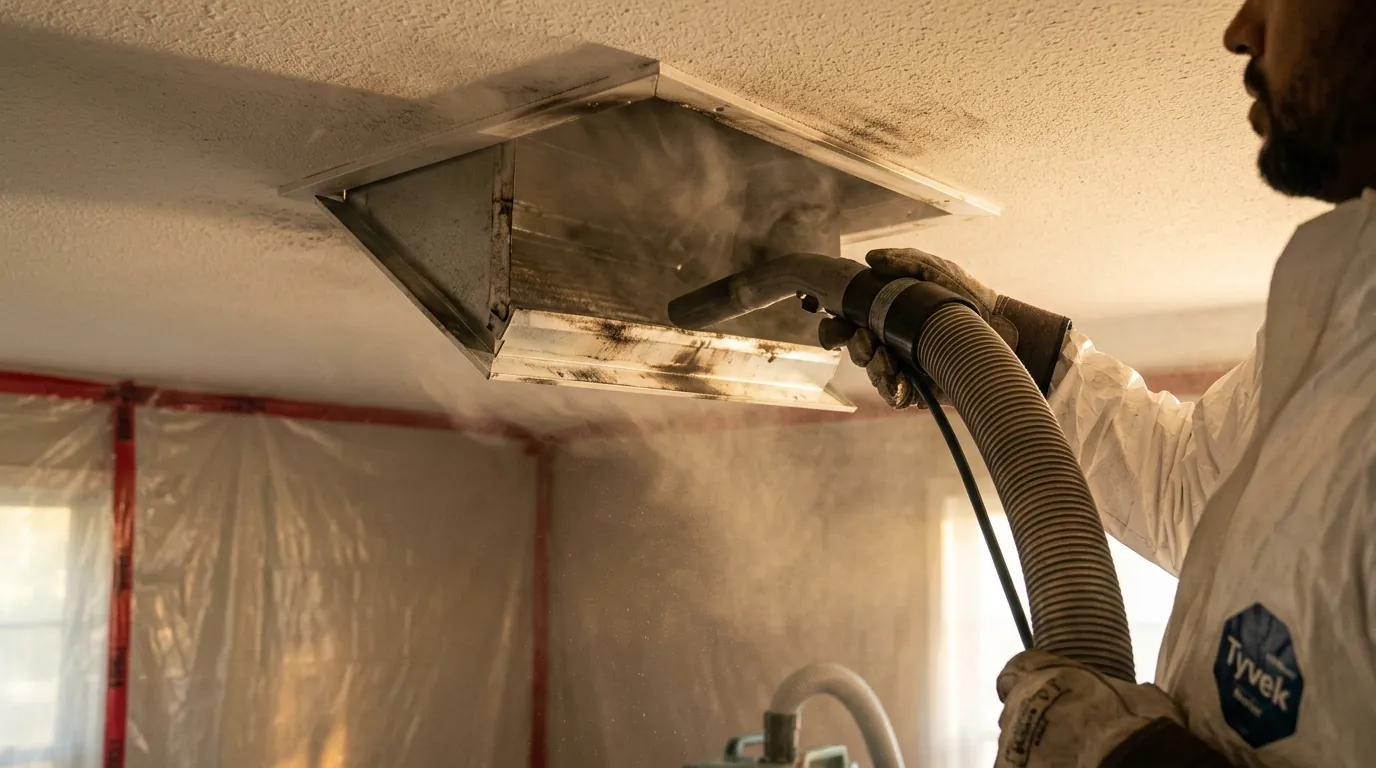
Where units share ductwork, a common return or a hallway air supply, the system can pull smoke from the fire unit and spread it across the building. Running your own system after the fire can do the same inside your home, pushing residue from the return into every room. We check filters, returns and supply registers for soot, clean the ductwork that carried smoke, and replace filters before the system runs. Until then, the most useful thing you can do is keep it off.
Contents Odor in an Untouched Unit
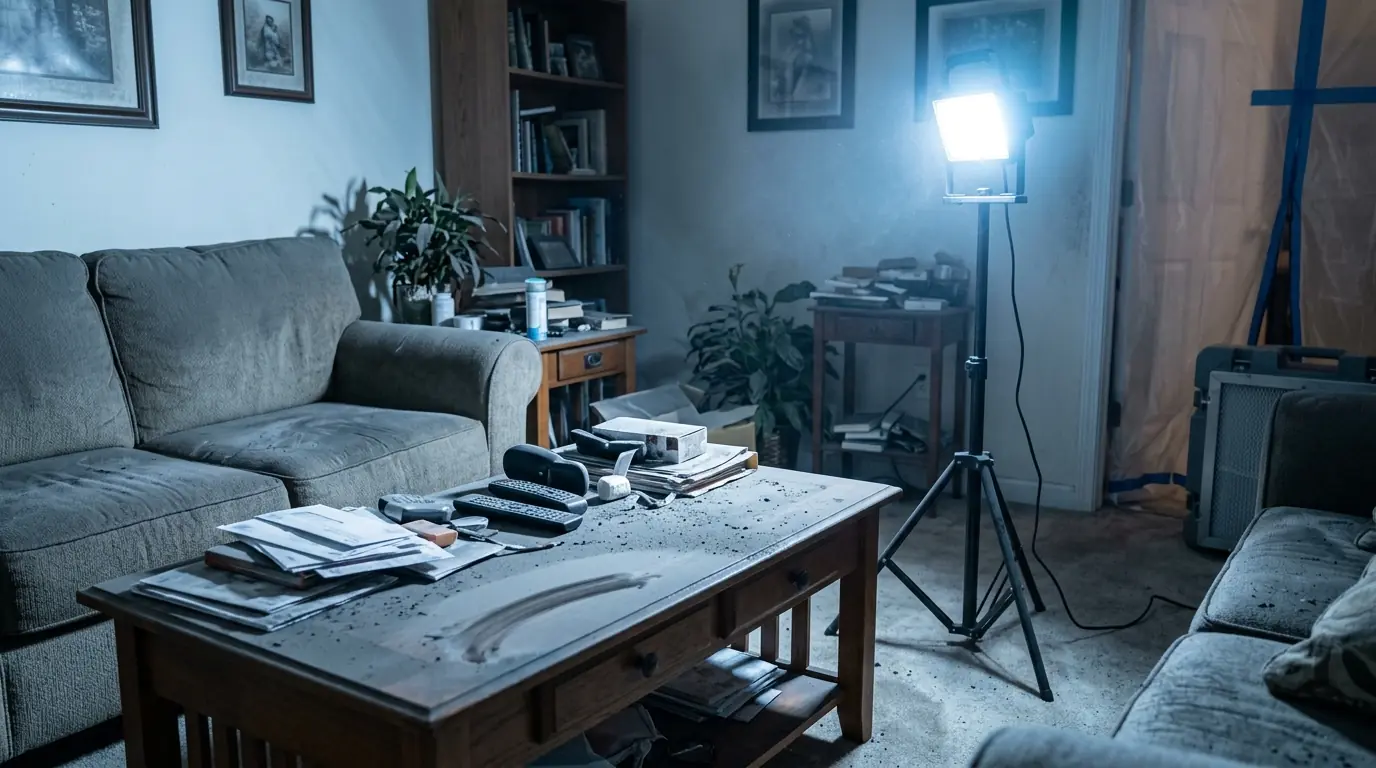
Your belongings can hold smoke even when the walls look fine. Clothing, bedding, upholstered furniture, curtains and rugs absorb odor from the air, and hard goods in cabinets collect a thin film. We sort contents by what they are made of and how strong the odor is: textiles go through smoke-specific cleaning, upholstery is cleaned and deodorized, and hard goods are wiped down. Most of it can be done without you moving out, and anything that leaves the unit is inventoried.
Why Charlotte sees so much smoke intrusion
A third of Charlotte's housing is large apartment complexes, and another 9% is row houses and other attached homes, so a fire in one unit often turns into smoke calls from the units around it. The May 2023 fire at a wood-frame apartment building under construction in SouthPark burned for nearly six hours, probably the largest in the department's history. Long fires put smoke into the air for hours, and it finds its way into nearby homes.
Air fresheners, candles and ozone machines
Fragrance sprays and candles mask the smell for an afternoon. Renting an ozone generator and running it in an occupied home is a bad idea: ozone at treatment levels irritates the lungs, and it does not remove the soot that holds the odor.
Before we arrive: keep the HVAC off, close off the smelliest rooms, and hold off on washing smoky fabric in hot water.
What moves the cost
Intrusion jobs are usually smaller than direct fire damage, and are priced per room for odor treatment plus whatever cleaning the residue needs.
- How many rooms smell. One bedroom closet and a whole unit are priced very differently.
- Residue on surfaces. Visible film on walls and ceilings adds cleaning to the odor treatment.
- HVAC involvement. Ducts that carried smoke need cleaning before the system runs.
- Contents. Textiles and upholstery that absorbed odor add cleaning by the piece.
- Odor removal per room (ozone, fogging, hydroxyl)$200 to $600 per room
- Thermal fogging$200 to $600
- Smoke damage restoration per room$200 to $1,200 per room
Published planning ranges, not our quote. Local labor, access and how far the smoke traveled move the final figure.
Questions about smoke intrusion cleanup
It depends on the policies. A renters or homeowners policy often covers your unit and belongings, and the building's policy may cover shared areas. We document it for either adjuster.
Usually not. Most intrusion jobs are cleaned with you living there, one room at a time. If the odor is heavy or someone has breathing problems, a few days away helps.
It helps the air, but the odor keeps coming back from residue on walls, fabric and inside ducts. Removing the residue is what clears it.
Ask for a residue check, not just a smell test. We can document what we find so you and the property manager see the same evidence.
Once residue is cleaned and odor treated, most units clear by the end of treatment. Lingering odor usually means a missed closet, attic or duct.
Yes, through gaps under doors, around outlets and through vents.
Related work in Charlotte
Smell smoke from a fire next door?
Keep the HVAC off and call. We answer any hour across Charlotte.
Call (704) 368-1592