Water extraction after a Charlotte house fire removes the firefighting water from floors, carpet, wall cavities and the crawlspace, then dries the structure with air movers and dehumidifiers. It should start within 24 to 48 hours, because wet materials begin growing mold in that window, and it has to happen before soot cleaning in the wet rooms.
From the hoses to a dry house
- Confirm it is safe
Fire department release and power off to wet areas.
- Extract
Standing water and ash sludge out, top floor first.
- Map the moisture
Readings across walls, floors, ceilings and crawlspace.
- Open and remove
Wet drywall, insulation and pad out.
- Set equipment
Air movers and dehumidifiers placed by the readings.
- Dry the crawlspace
Pump out, remove wet barrier, dry the joists.
- Confirm dry
Readings at target before soot cleaning in wet rooms.
Why the water comes before the soot
Fire hoses deliver a lot of water fast, and it goes everywhere the fire went and many places it did not: down through ceilings, into wall cavities, under flooring and into the crawlspace. Mixed with soot and ash, it is dirty water. Left in place it swells wood, rots subfloor, and starts mold within a couple of days.
So water comes first: extract, remove what cannot dry, dry the rest, then clean.
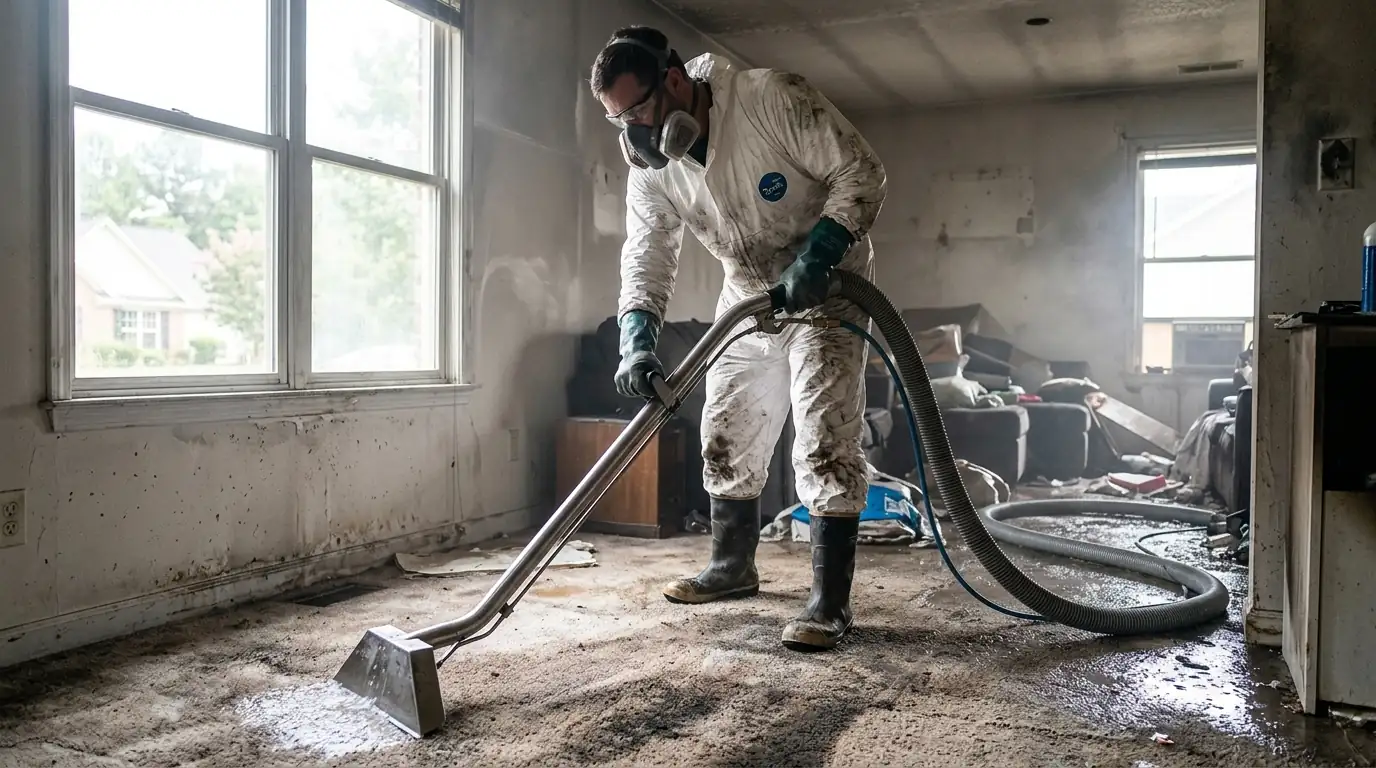
Standing Water Removal
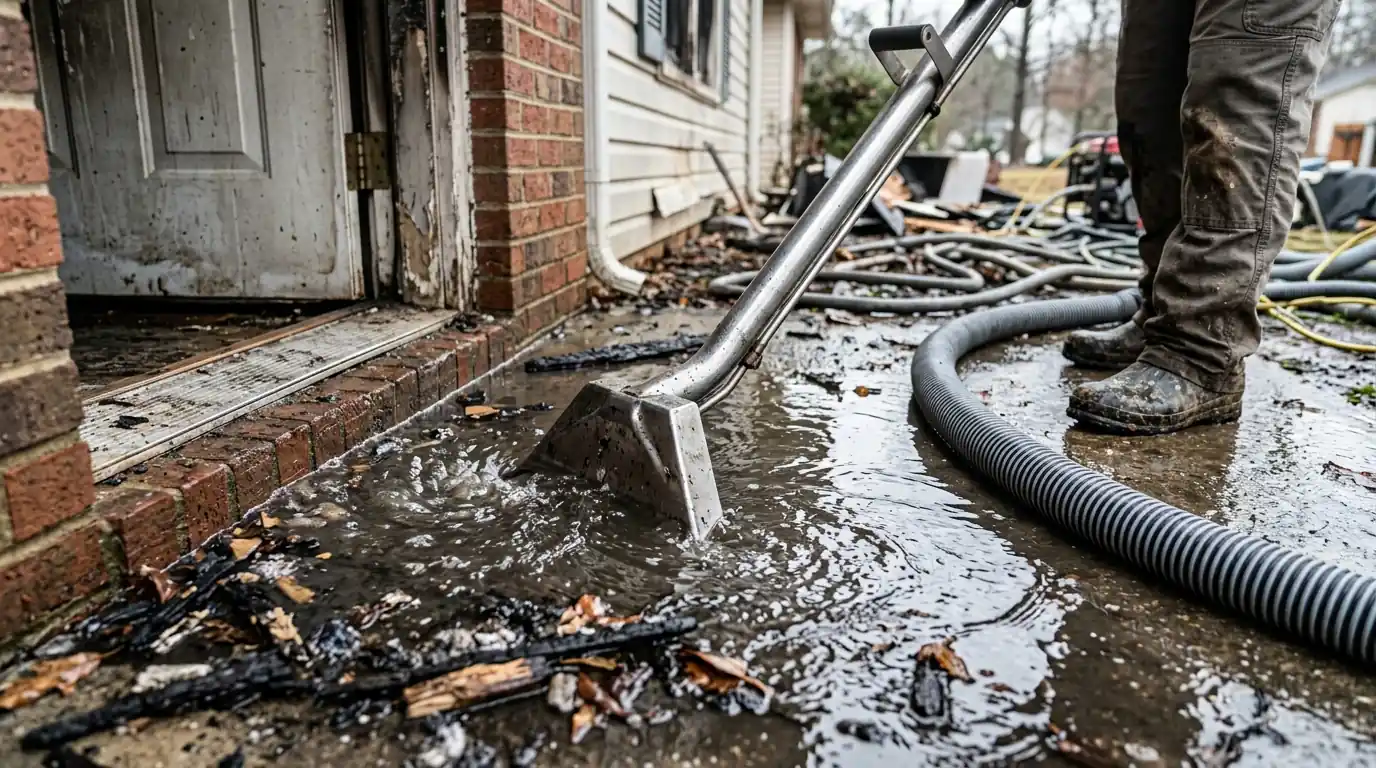
Standing water on floors and in carpet is pulled with truck-mounted or portable extractors, and weighted extraction tools squeeze water out of carpet and pad. Because firefighting water carries soot and ash, it is treated as contaminated: carpet pad is removed, and carpet is usually replaced rather than saved. Water that ran down through the house is extracted floor by floor, starting at the top. Ash sludge on hard floors is scraped up before extraction so it does not clog the lines.
Saturated Drywall and Insulation
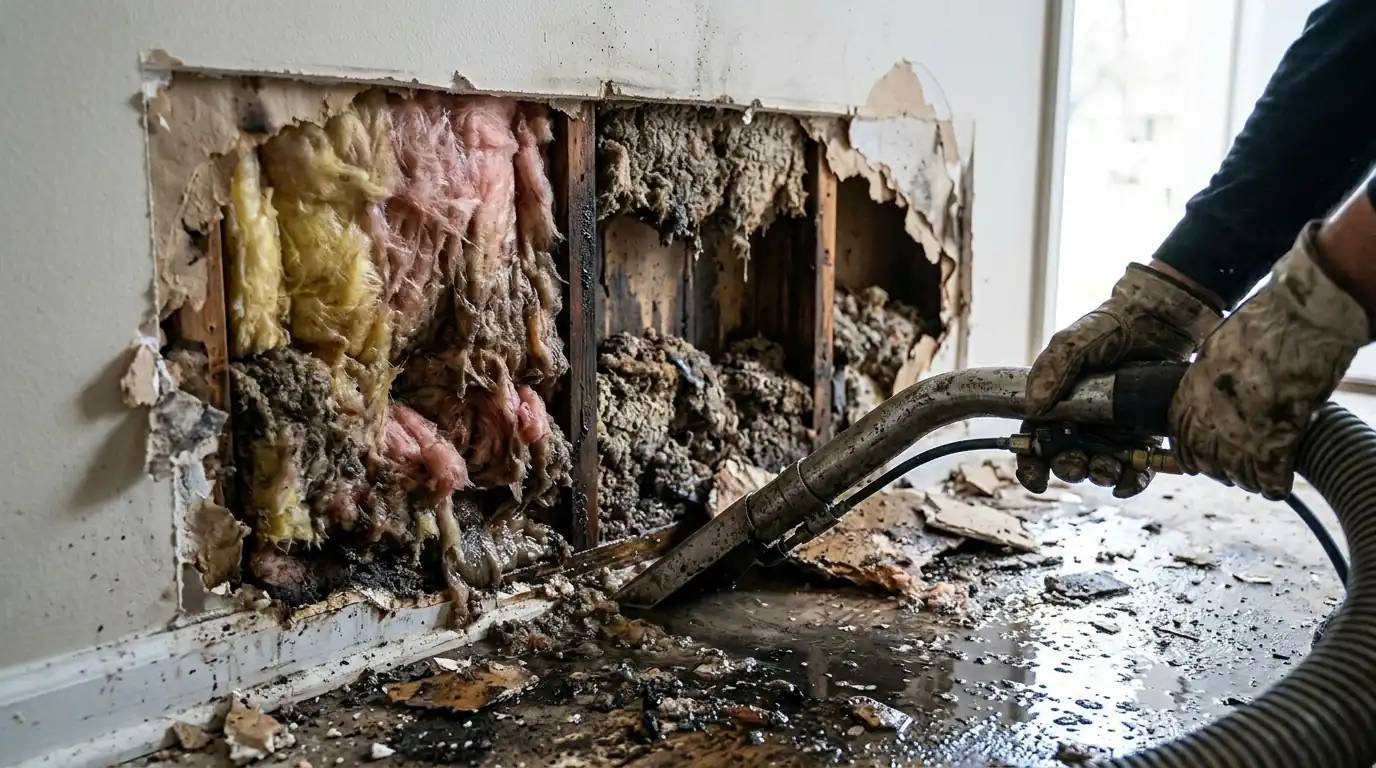
Drywall wicks water upward, and insulation soaks it up and holds it against the framing. Moisture readings show how high the water went; drywall is cut a little above that line, and wet insulation comes out entirely because it will not dry in place. Opening the wall lets air reach the cavity, which is what dries the framing. Ceilings that took water from above, especially sagging ones, are brought down safely before they fall. Everything cut out is photographed first for the claim.
Subfloor and Crawlspace Moisture
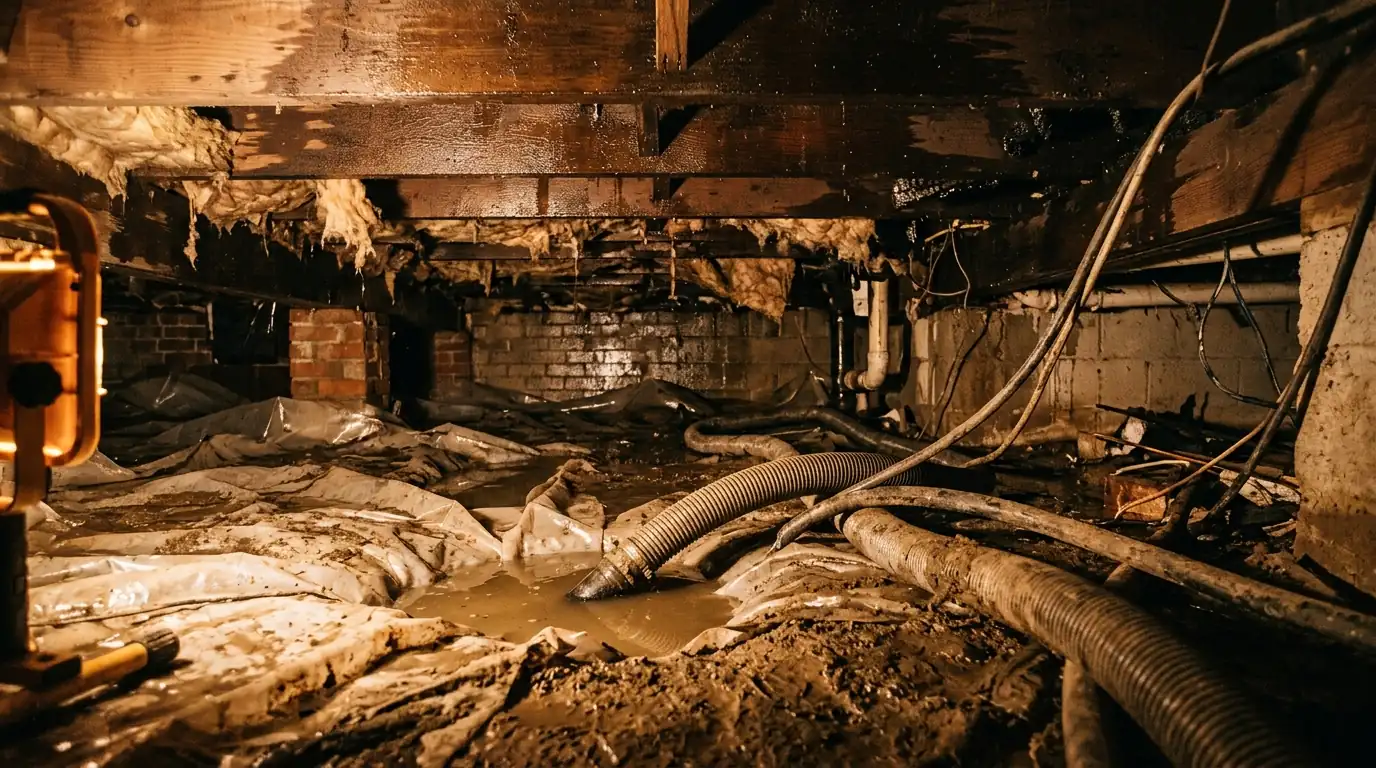
Water that goes through the floor ends up in the subfloor and, in a crawlspace house, on the vapor barrier and soil below. Wet subfloor swells and delaminates, and a wet crawlspace keeps the whole floor damp and grows mold on the joists. We pump out standing water, remove soaked vapor barrier and insulation, and dry the crawlspace with dehumidifiers and air movers, taking readings on the joists and subfloor until they reach dry targets. A new vapor barrier goes down once it is dry.
How long drying takes after a fire
Extraction is done the first day. Drying the structure usually takes several more, with readings taken daily and equipment moved as areas reach target. Crawlspaces, plaster walls and hardwood take longest. Soot cleaning in the wet rooms waits for the readings, which is why a fire job has a drying phase before the cleaning phase.
Why fire and water jobs run together in Charlotte
The water used to put out a house fire soaks walls, flooring, furniture and electronics, which is why fire restoration and water restoration run as one job, and why the HVAC should stay off until the residue and moisture are checked. Restoration advice is to get help within 24 to 48 hours. For a Charlotte house, that means drying equipment going in on the first visit, often the same day the fire department hands the property back.
Dry it in place or tear it out?
| Factor | Dry in place | Remove and replace |
|---|---|---|
| Drywall | Damp near the base, readings dropping | Soaked, sagging, or wet above the cut line |
| Insulation | Rarely | Almost always once wet |
| Hardwood | Caught early, light cupping | Badly cupped or sat in dirty water |
| Carpet and pad | Almost never after firefighting | Pad always, carpet usually |
Water still on the floor?
Every hour it sits, more of the house has to come out. Call now.
(704) 368-1592What moves the cost
Water cleanup after firefighting is usually its own line in the fire claim. The published range below covers it.
- How much water. A kitchen fire and a whole-house fire use very different amounts.
- How far it went. Water on the second floor usually means wet ceilings below.
- Crawlspace. Drying and a new vapor barrier add a separate scope.
- Removal. Pad, insulation and drywall tear-out add labor and disposal.
- Water damage cleanup after firefighting$1,000 to $6,000
Published planning ranges, not our quote. Local labor, access and how far the smoke traveled move the final figure.
Questions about water extraction after firefighting
Cleaning soot off wet walls smears it, and walls that are soaked often come out anyway. Drying first keeps the cleaning from being done twice.
Sometimes, if they are dried quickly with specialized equipment. Floors that cupped badly or sat in dirty water usually need replacing.
It carries soot, ash and residue from what burned, so it is treated as dirty water, and soaked carpet and pad are removed.
Usually several, longer for crawlspaces, hardwood or plaster. It is done when the readings hit target.
Not the AC, which spreads soot through the ducts. Box fans help a little but cannot pull water out of walls.
It can in a day or two on wet materials. Fast extraction and measured drying prevent it.
Related work in Charlotte
House soaked after the fire?
Call now. We answer any hour and start extraction as soon as the fire department releases the house.
Call (704) 368-1592