Selective demolition after a Charlotte house fire removes only the materials that cannot be cleaned or dried, such as charred framing, soaked drywall and insulation, and burned flooring, while protecting what can be restored. Everything is photographed before it comes out, debris is hauled away, and structural removal is done under a Mecklenburg County permit when one is required.
Why demolition after a fire should be selective
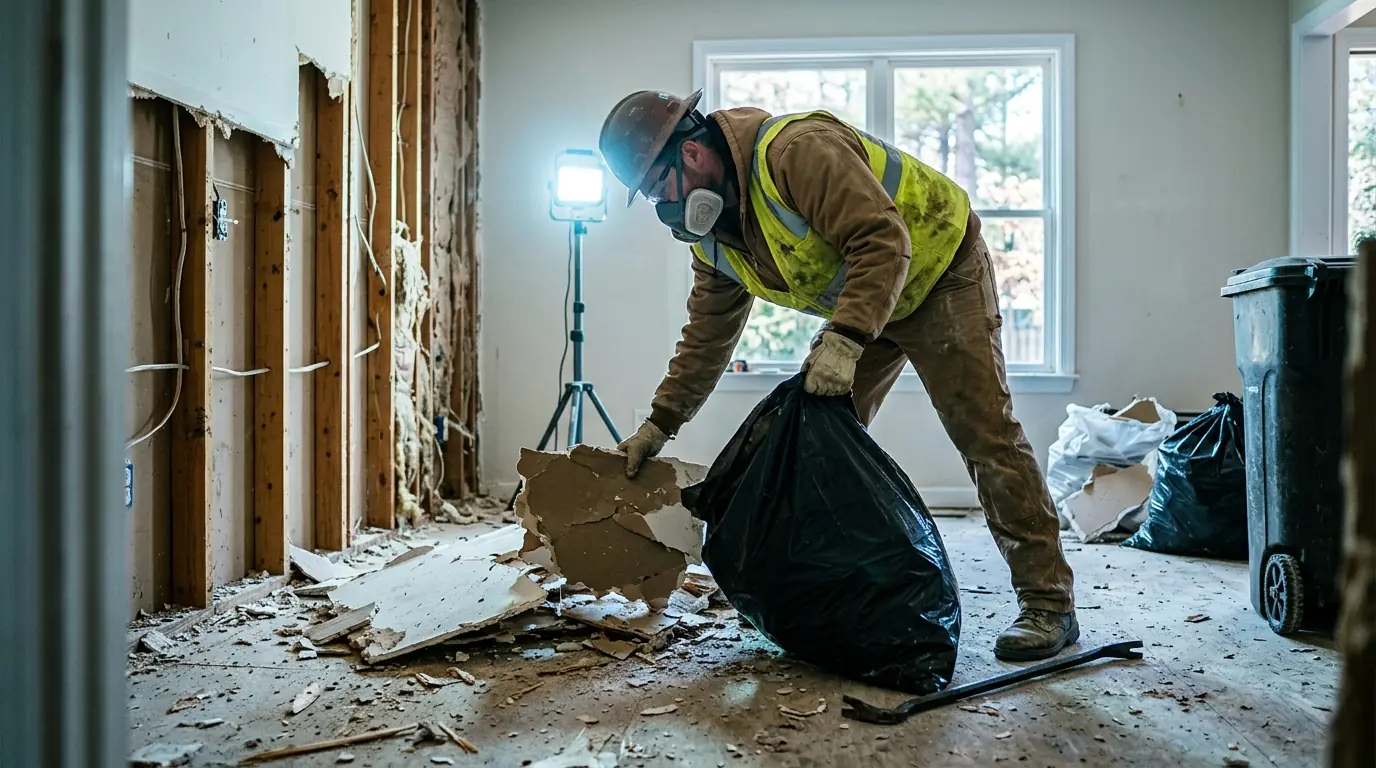
After a fire it is tempting to gut the room and start over, and sometimes that is right. More often, the drywall above a clear wet line can be saved, the smoke-stained studs can be cleaned and sealed, and the cabinets on the far wall only need cleaning. Every piece that stays is one the insurer does not pay to replace and one less delay in the rebuild.
Good demolition starts with the assessment: residue results and moisture readings mark the line between what goes and what stays, and the photos show why.
What moves the cost
Demolition is priced by the material and area removed plus haul-off. The published per-square-foot figure for drywall gives a sense of scale.
- How much comes out. A flood cut in one room versus a tear-out to the studs.
- Structural work. Removing and supporting charred framing adds labor and a permit.
- Debris weight. Plaster, tile and wet materials fill a dumpster faster than dry drywall.
- Access. Second floors, attics and tight lots slow removal.
- Drywall removal and replacement$2 to $5 per square foot
Published planning ranges, not our quote. Local labor, access and how far the smoke traveled move the final figure.
Selective demolition or a full gut?
| Factor | Selective demolition | Full gut to the studs |
|---|---|---|
| Best for | Damage with clear moisture and residue lines | Heavy fire damage, or smoke and water through every wall |
| What stays | Sound drywall, cabinets and flooring that tests dry | Framing and subfloor that test structurally sound |
| Rebuild scope | Smaller, faster, fewer trades | Full drywall, insulation, finishes and often systems |
| For the claim | Each removal backed by readings and photos | Justified by the extent shown in the assessment |
Tearing out drywall yourself
Homeowners who start demolition before the loss is documented often make the claim harder: what is gone cannot be photographed, and the adjuster has to take it on trust. Fire debris brings real hazards too: nails and sharp edges, soot you breathe in once it is disturbed, and in older houses materials that should be tested before anyone cuts them.
Wait until the house is photographed and tested. If water is still spreading, call and drying starts first.
Charred Framing Removal
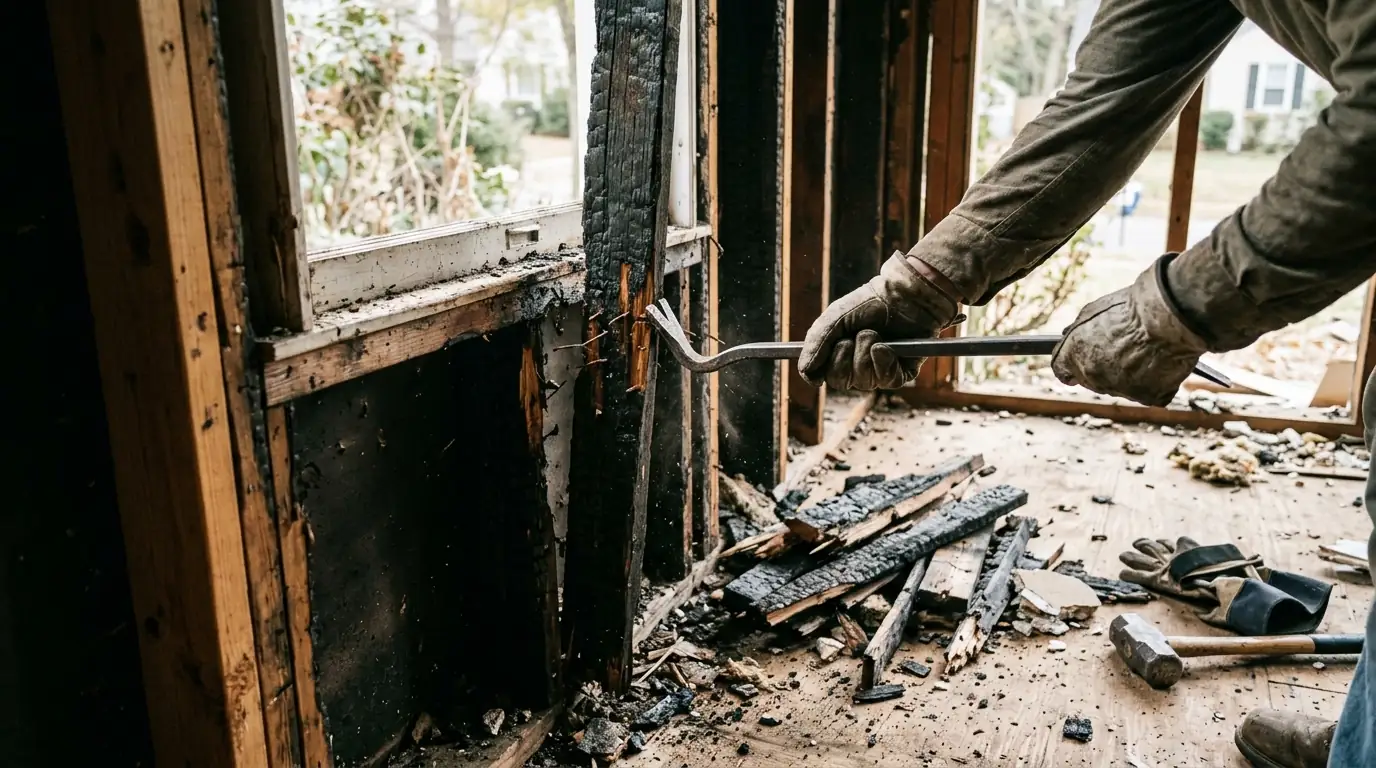
Framing that has burned deep enough to lose strength has to come out or be reinforced, and that is structural work. We probe charred studs, joists and rafters to see how deep the char goes, mark the members that fail, and support the structure before anything is cut. Surface char stays for soda blasting and sealing. Structural members come out under permit and are documented one by one, so the inspector and the adjuster can see what was removed and why.
Drywall, Insulation and Flooring Tear-Out
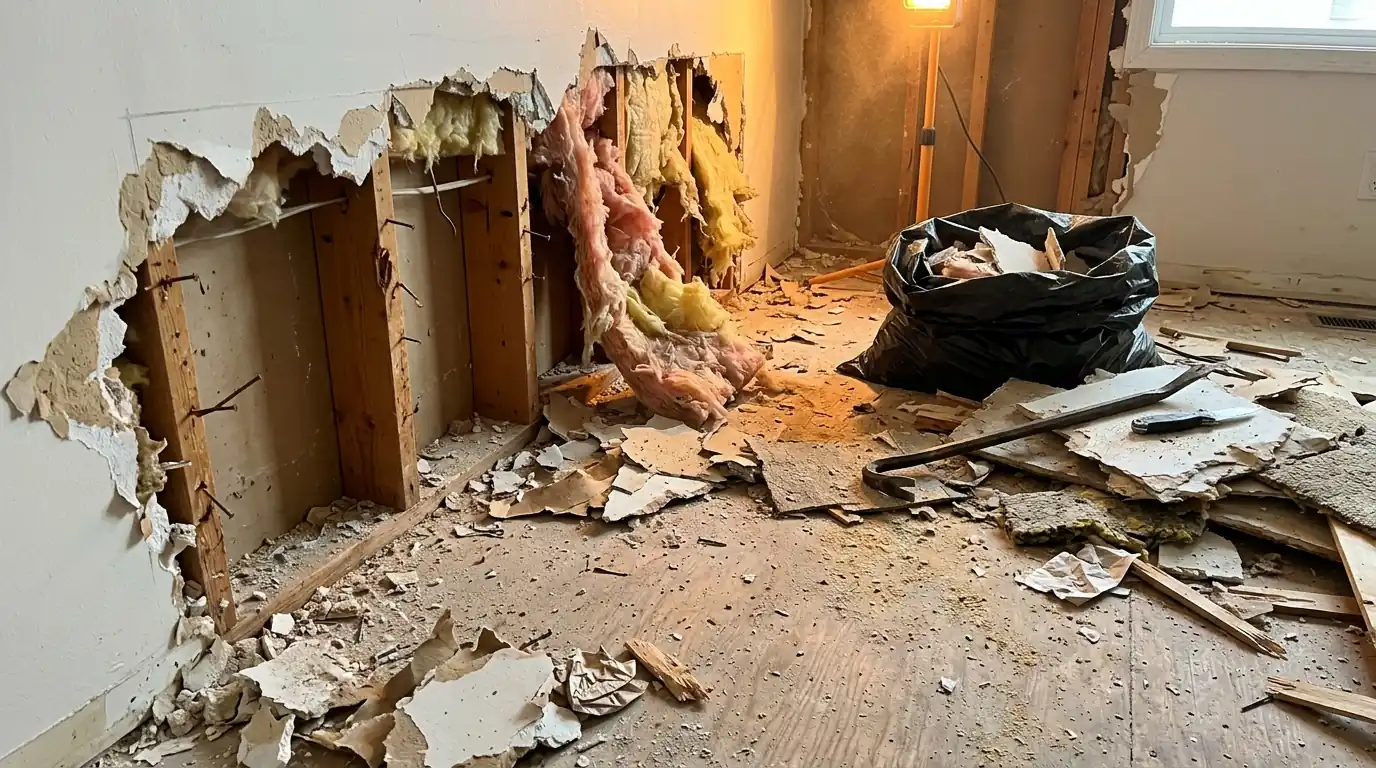
Drywall is cut out where it is burned, where soot has soaked in past cleaning, or where firefighting water has wicked into it, usually with a flood cut a set distance above the highest wet reading. Wet insulation always comes out, because it holds water and odor. Flooring comes up where water got underneath or heat damaged it: carpet and pad first, then laminate, vinyl or engineered wood that has swollen. Hardwood that is only wet may dry in place, which is a call made with moisture readings.
Dumpster and Haul-Off
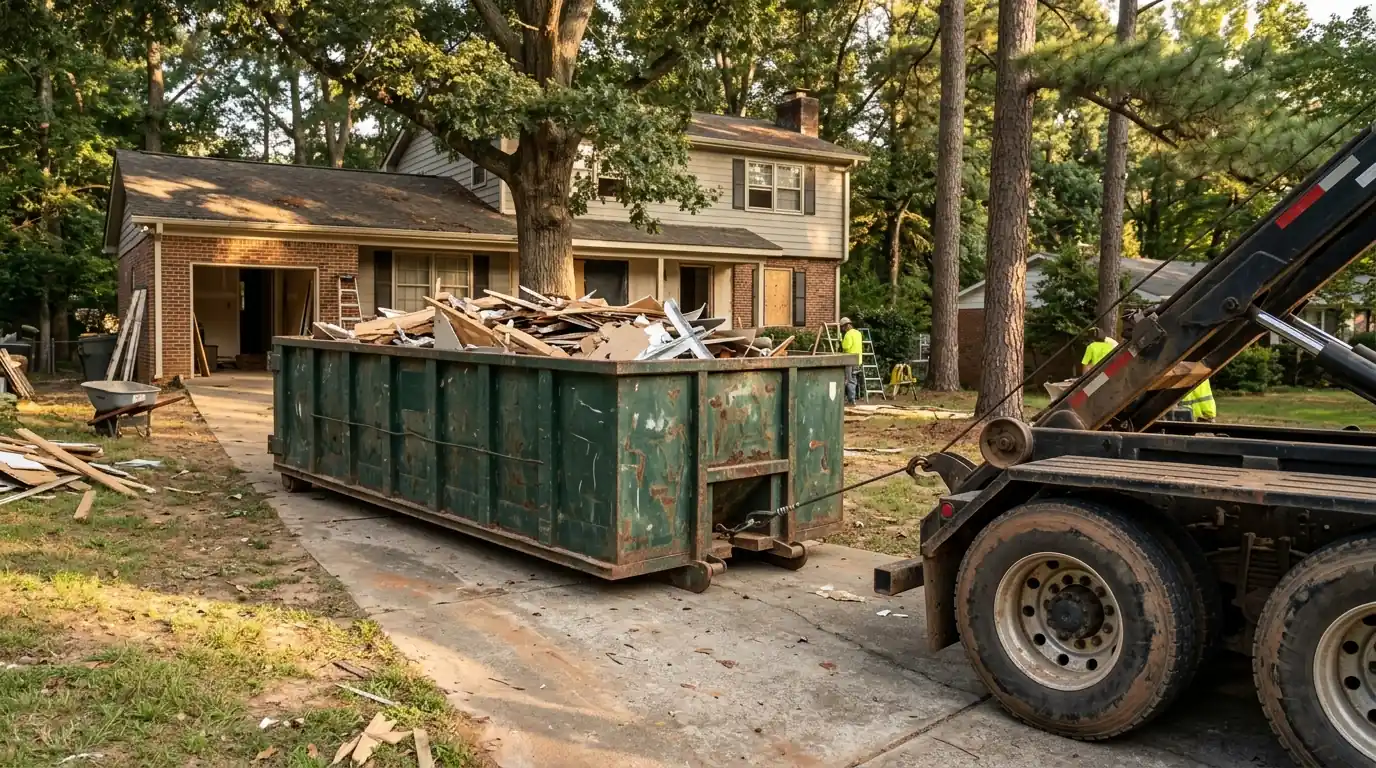
Fire debris is heavy, sharp and dirty, and it should not sit in the yard for weeks. We place a dumpster or run trailer loads, bag and remove debris as demolition goes, and keep walkways clear. Burned contents that you and your adjuster have agreed to discard go out the same way, after they are photographed and listed. Appliances, electronics and anything with special disposal rules are kept out of the general load. When the last load leaves, the site is swept and vacuumed for the framing cleanup.
Demolition permits around Charlotte
In Mecklenburg County, structural repairs and demolition need a permit from County Code Enforcement, while cosmetic work like flooring and paint does not. That line matters on a fire job: pulling wet carpet is not permitted work, but removing burned rafters is. Mecklenburg holds only about 47% of the Charlotte region's housing, and jobs in the surrounding counties go through their own permit offices, which we confirm at the start of each job.
How selective demolition runs
- Mark what goes
Assessment readings and residue tests set the lines.
- Photograph first
Every wall, floor and member before it is removed.
- Protect what stays
Floors, cabinets and fixtures covered or moved out for cleaning.
- Pull the permit
Whenever structural members come out.
- Remove in order
Ceilings and walls, then insulation, then flooring.
- Haul off as you go
Debris bagged and loaded daily, walkways kept clear.
- Leave it clean
Swept and vacuumed so framing cleanup can start.
Questions about selective demolition & debris removal
Because what can be saved usually costs less to clean than to replace, and your insurer expects that choice. Gutting also adds rebuild time you may not need.
The readings and the residue tests, reviewed with you and your adjuster. Photos show why each area was removed.
For structural work in Mecklenburg County, yes. Removing wet carpet or damaged drywall alone generally does not need one, and we confirm on each job.
Old textured ceilings, some flooring and pipe insulation should be tested before they are disturbed, and demolition waits for the result.
Yes. Tell us before demolition starts. Anything you want is set aside, photographed and listed before the dumpster is filled.
One room is often done in a day. Whole-house or structural removal takes longer, especially when permits and temporary supports are involved.
Related work in Charlotte
Ready to clear out the damage?
We remove what cannot be saved and haul it away across Charlotte. Call and we will start with a walk-through.
Call (704) 368-1592