Storm damage restoration in Charlotte starts with making the house safe and weathertight: tarping the roof, boarding broken windows and coordinating removal of any tree on the structure. Then the water that came in is extracted and dried, and the roof, siding, windows, ceilings and interior finishes are repaired, with every step documented for your homeowners claim.
From the storm to a whole house
- Make it safe
Power lines, gas and structural hazards checked first.
- Secure the house
Tarps on the roof, boards over broken windows.
- Coordinate the tree
Removal planned around the damaged framing.
- Extract and dry
Water traced, removed and dried to readings.
- Document
Every slope, wall and room photographed for the claim.
- Repair the structure
Framing and roof deck repaired under permit.
- Finish
Roofing, siding, windows and interior restored.
Why storm damage is more than a hole in the roof
A limb through the roof or a window blown in is the part you see. The larger damage is usually the rain that followed: water in the attic insulation, ceilings that sag hours later, wet drywall and flooring in the rooms below. Wind can also lift shingles and siding along a whole side of the house without leaving an obvious hole.
So storm work runs in the same order as a fire job: secure, dry, document, then repair.
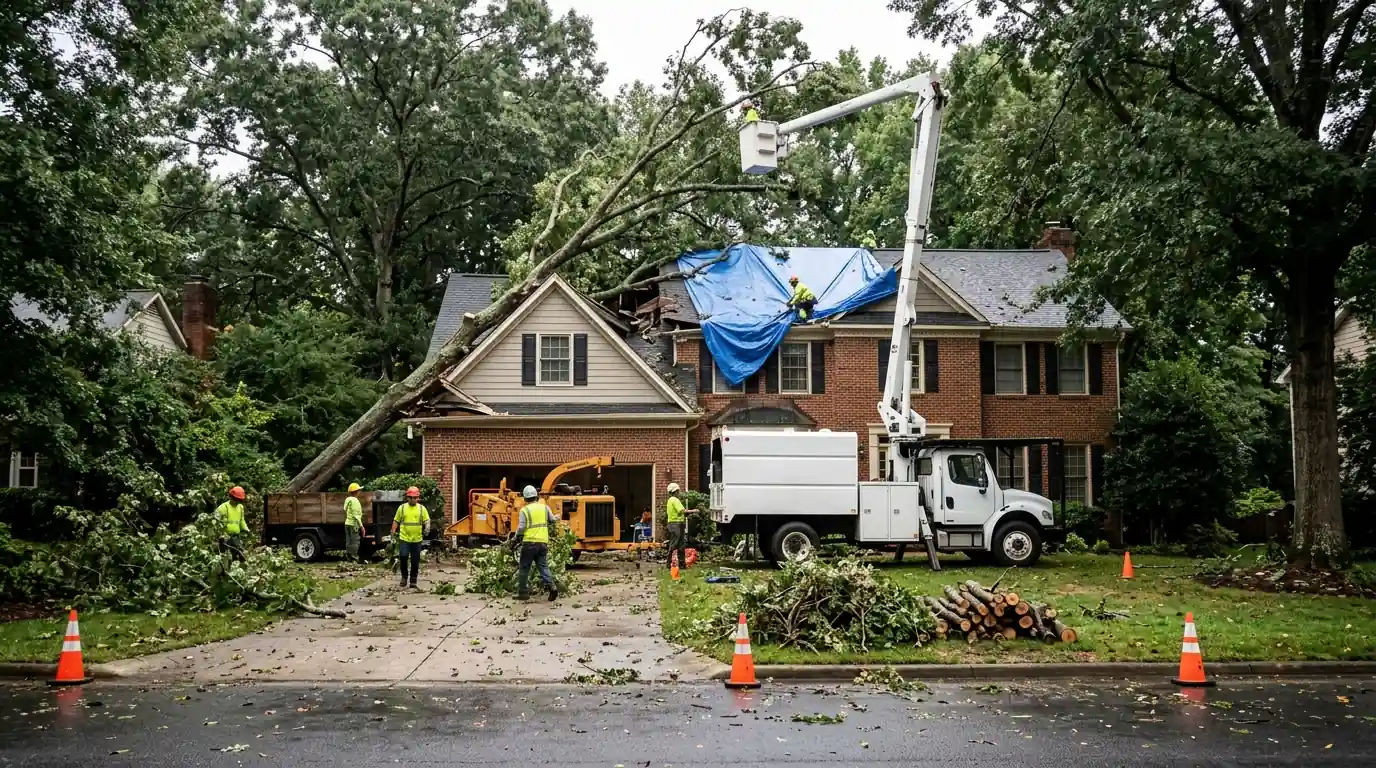
Trees on Roofs and Walls
A tree on a house is a structural problem as well as a hole. The tree has to come off in sections, usually by a tree crew with a crane or bucket truck, and removing it shifts the load on damaged framing, so the removal is planned with the structure in mind. We coordinate that work, tarp the opening as soon as the tree is off, and check rafters, trusses and wall framing for cracks and breaks before anything is repaired. If power lines are involved, nothing starts until the utility has made them safe.
Wind-Driven Rain and Roof Damage
Wind lifts and tears shingles, peels flashing and drives rain sideways under siding and around windows. The water finds its way into the attic and wall cavities, often far from the visible damage. We tarp damaged roof areas, trace the water inside with moisture meters and thermal imaging, remove soaked attic insulation and sagging ceiling drywall, and dry the structure with readings until it reaches dry targets. Missing or creased shingles are photographed on every slope for the claim, not just the obvious ones.
Siding, Windows and Exterior Repairs
Once the house is dry, the exterior is repaired: damaged siding panels replaced and matched as closely as the product line allows, broken windows reglazed or replaced, gutters and downspouts rehung, and fascia and soffits repaired where limbs hit them. Structural repairs to framing are done under a Mecklenburg County permit. Interior repairs follow the same path as any water loss, from insulation and drywall to paint and flooring, so the house ends up whole rather than patched together room by room.
How long storm repairs take
Securing the house and starting the drying usually happen the first day, once any tree is off. Drying takes several more days. Repairs depend on the damage: a few weeks for siding, windows and interior work, longer when framing needs permitted repairs or materials are backordered after a large regional storm.
Charlotte's tree canopy and storm season
Charlotte's 2023 tree canopy assessment found trees still cover 47.3% of the city, and many of the largest center-city trees were planted between 1895 and 1920, so an aging canopy hangs over a lot of roofs. When Helene came through in September 2024, more than 1.75 million Carolinas customers lost power at the storm's height, and Gastonia police reported more than 50 mature trees needing removal. Big old trees and strong storms are why a single storm can damage many houses at once.
What moves the cost
Storm repairs are priced on the securing work, the drying and the repairs, usually as a homeowners claim. The published range below covers emergency board-up.
- Tree removal. Crane work and sectioning add cost when a tree is on the structure.
- Water inside. Wet insulation, ceilings and flooring add drying and tear-out.
- Structural repair. Broken rafters or trusses mean permitted framing work.
- Exterior. Siding, windows and gutters matched and replaced.
- Emergency board-up$250 to $2,500
Published planning ranges, not our quote. Local labor, access and how far the smoke traveled move the final figure.
Questions about storm damage restoration
A tree crew with the right equipment removes it in sections; we coordinate the timing with them and tarp the opening as soon as it is off.
Wind and falling trees usually are, subject to your deductible; flooding from rising water usually is not. Check your policy.
If the structure is safe, power is on and the damaged rooms can be closed off, often yes. A tree on the house usually means staying elsewhere until it is removed.
Within a day or two if possible, before mold starts on wet insulation and drywall.
Yes. Roof decking and framing are repaired under permit, and the roof covering is replaced over the repaired area.
Stay well away and call the utility. Nothing on the house starts until they have made the lines safe.
Related work in Charlotte
Tree on the house or water coming in?
Call now. We answer any hour and secure storm-damaged homes across Charlotte.
Call (704) 368-1592