Fire sprinkler discharge cleanup in Charlotte starts once the system is shut at the valve by the building's sprinkler contractor, staff or the fire department, then extracts the water and dries every floor and unit it reached. Water from wet-pipe systems has often sat in steel pipe for years, so it stains and smells, and it is treated as dirty water.
From the discharge to a dry building
- Stop the flow
The system is shut at the valve by the people responsible for it.
- Protect what is below
Floors below checked, contents moved or covered.
- Extract top down
Water removed floor by floor, starting where it began.
- Walk every unit
Moisture readings in ceilings, walls and floors.
- Remove stained materials
Ceiling tile, pad and drywall that will not clean or dry.
- Dry unit by unit
Equipment placed per unit and checked daily.
- Document per party
Records split by owner, tenant and common area.
Why a sprinkler discharge spreads further than a leak
Sprinkler systems are built to put a lot of water on a fire quickly, and a broken head does the same thing whether there is a fire or not. Heads get knocked by ladders, lifts and furniture, split in a freeze, or activate from heat near a kitchen or in an attic. The water runs through ceilings, down walls and into the floors and units below until the valve is closed.
In a multi-story or multi-tenant building, one head can affect several suites or apartments, each needing its own drying plan and its own record.
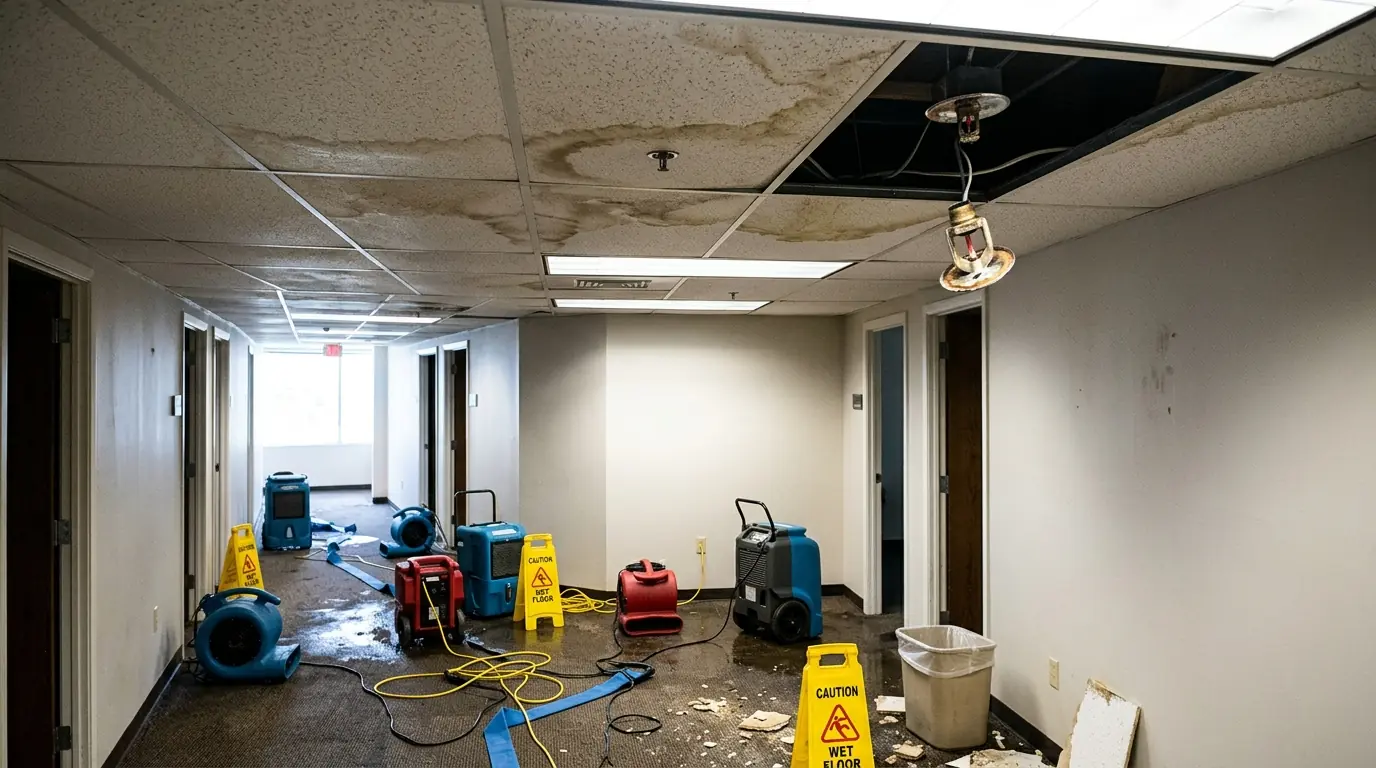
Accidental Head Breaks and Freeze Bursts
Most discharges are not fires. A head struck during a move or renovation, a pipe that froze in an unheated attic, stairwell or balcony, or a system that tripped during maintenance. The first job is making sure the flow is stopped and the system is taken out of service by the people responsible for it; then the water is extracted floor by floor from the top down. The building's sprinkler contractor restores the system once the damaged head or pipe is replaced, and the fire code's rules for impaired systems apply in the meantime.
Black Pipe Water and Staining
Water in wet-pipe sprinkler systems can sit in steel pipe for years, and when it comes out it is often black or rust-colored, oily and smelly. It stains ceiling tile, carpet and drywall in a way clean water does not, and it can carry bacteria from the stagnant water. We treat it as dirty water: stained ceiling tile and soaked carpet pad are removed, hard surfaces are cleaned, and walls and floors are dried and deodorized so the smell does not linger in the building.
Multi-Unit Water Migration
In apartment and office buildings, water from one unit's sprinkler moves through floor assemblies and wall cavities into the units below and beside it. We walk every unit that might have taken water, not just the obvious ones, take moisture readings in ceilings and walls, and set drying equipment unit by unit. Hallway carpet and common-area ceilings are included, since water follows corridors too. Each tenant gets their own record, and the property manager gets a building-wide picture for the owner's insurer.
Sprinklered buildings around Charlotte
North Carolina's building code requires sprinklers installed to NFPA 13 wherever the code calls for them, lets residential buildings up to four stories use the NFPA 13R standard, and requires sprinkler protection on roofed balconies and decks of wood-frame residential buildings; those balcony and attic heads are the ones exposed to freezes. In Mecklenburg County, apartment and condo buildings with shared exits are treated as commercial property under the fire code, which is why a Charlotte building's system is restored through its sprinkler contractor before it is back in service.
What sprinkler discharge cleanup covers
- Coordination with the sprinkler contractor and property manager
- Extraction floor by floor from the source down
- Moisture mapping of every unit that may have taken water
- Removal of stained ceiling tile and soaked carpet pad
- Cleaning and deodorizing of black pipe water residue
- Unit-by-unit drying with daily readings
- Contents protection and moving in affected units
- Separate records for owner, tenants and common areas
What moves the cost
Sprinkler discharge cleanup is priced by the area and the number of units the water reached. Published cost guides do not give a reliable range, so here is what drives the number.
- Units affected. One suite versus several floors of apartments.
- Water quality. Black pipe water adds removal and cleaning.
- Materials. Ceiling tile, carpet and drywall that stained or soaked.
- Phasing. Keeping the rest of the building open adds containment.
Questions about fire sprinkler discharge cleanup
The building's sprinkler contractor, maintenance staff or the fire department close the valve and take the system out of service. Extraction starts as soon as the flow stops.
That depends on the fire code rules for impaired systems, which may require a fire watch until the system is restored. The property manager coordinates it.
Water in wet-pipe systems sits in steel pipe for years and picks up rust, oil and bacteria. It stains and smells, so it is treated as dirty water.
Stained or sagging tiles are replaced. Dry, unstained tiles can stay in place.
Usually the owner's policy for the structure and common areas, and each tenant's policy for their contents. We keep separate records for each.
Usually several days per unit, longer where water got into the floor assemblies between levels.
Related work in Charlotte
Sprinkler just went off in your building?
Get the valve closed and call. We answer any hour and work with property managers across Charlotte.
Call (704) 368-1592