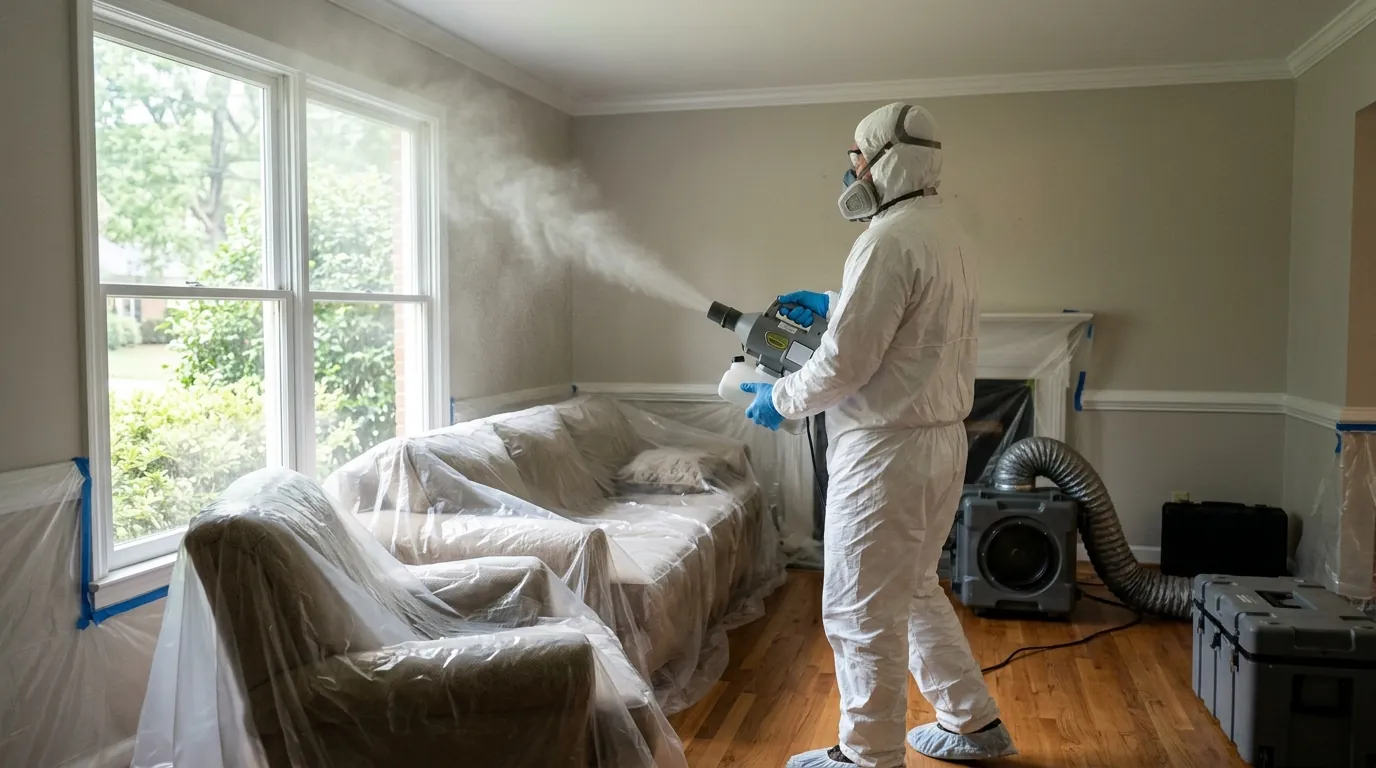
Cigarette smoke odor removal in a Charlotte home means removing the nicotine and tar film that years of smoking leave on every surface, then treating what holds odor deeper down, such as carpet pad, subfloor and ductwork. Walls are washed, soft flooring usually comes out, and surfaces are sealed with a stain-blocking primer before repainting.
Why cigarette odor survives a fresh coat of paint
Tobacco smoke leaves a sticky, yellow-brown film of nicotine and tar on walls, ceilings, cabinets, windows and inside the HVAC. It is water-soluble, so latex paint rolled over it draws the stain and smell back through within weeks, especially on humid days. Carpet and its pad hold even more, and smoke that settled for years often reaches the subfloor.
Removing it is a sequence: wash the film, remove or treat the soft materials, seal, then paint.
What moves the cost
Cigarette odor jobs are priced by the room, with flooring replacement and painting on top. These published figures cover the odor treatment side.
- Years of smoking. Light film washes off in one pass; heavy tar needs several and more primer.
- Soft flooring. Carpet and pad removal, subfloor sealing and new flooring add up quickly.
- Ductwork. Duct cleaning is needed whenever the system ran while people smoked.
- Painting. Sealing primer and repaint of every affected surface is usually the largest line.
- Odor removal per room (ozone, fogging, hydroxyl)$200 to $600 per room
- Ozone smoke treatment$400 to $800
- Smoke damage restoration per room$200 to $1,200 per room
Published planning ranges, not our quote. Local labor, access and how far the smoke traveled move the final figure.
Paint over it, or clean and seal?
| Factor | Paint only | Wash, seal, then paint |
|---|---|---|
| Odor | Returns within weeks, worst on humid days | Removed at the source and locked in |
| Stains | Yellow bleeds back through latex | Blocked by the sealing primer |
| Soft flooring | Left in place and still smelling | Removed, with the subfloor sealed |
| Over time | Cheaper once, often repeated | Done once |
Vinegar bowls, charcoal and fresh paint
Bowls of vinegar, baking soda and activated charcoal absorb a little odor from the air but do nothing about the film on the walls. A quick coat of latex paint hides the color for a while, then the nicotine bleeds through and the smell returns.
If the house is empty, leave it closed until it can be washed and sealed properly.
Nicotine Film Washing
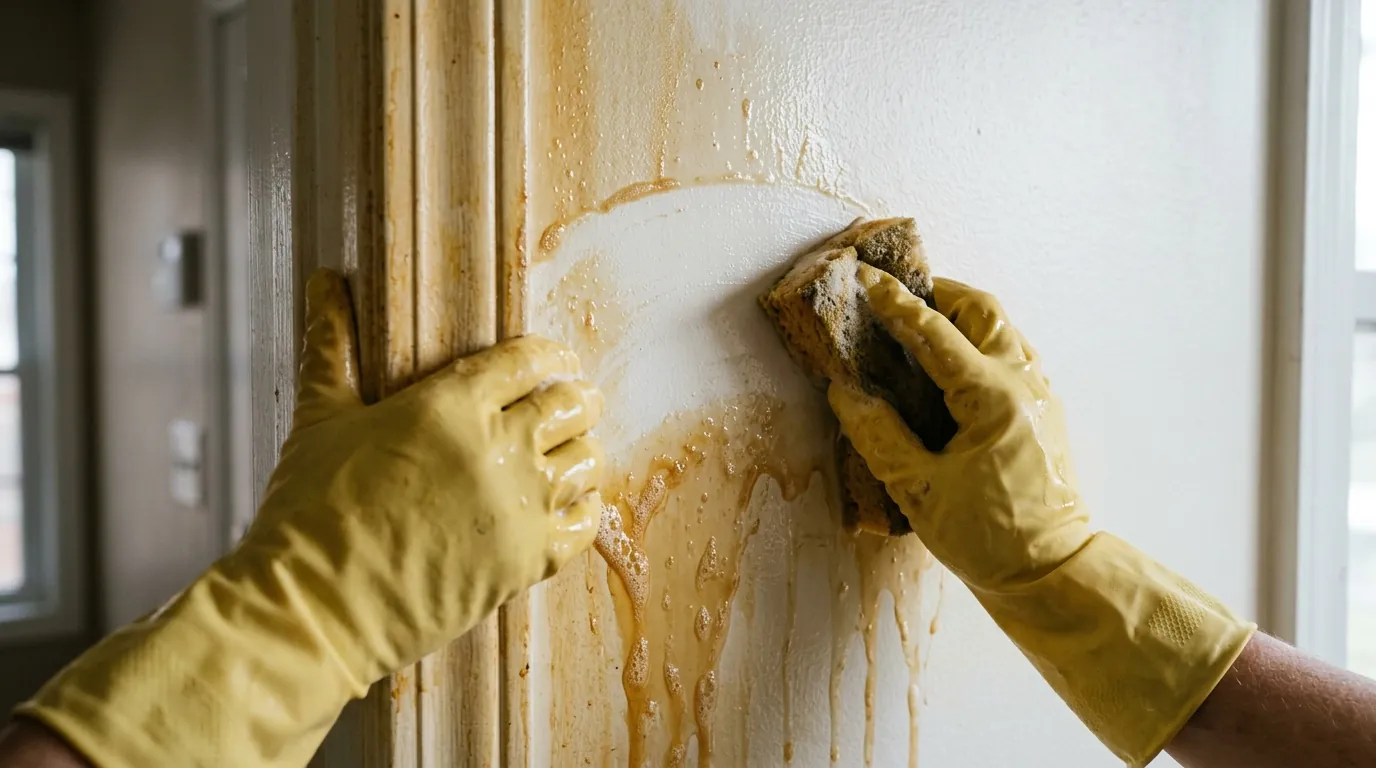
Every wall, ceiling, door and cabinet face is washed with a cleaner made to cut nicotine and tar, then rinsed. The runoff tells the story: in a heavily smoked house it comes off brown, and walls may need two or three passes before it runs clear. Light fixtures, switch plates, window blinds and the inside of closets and cabinets get the same treatment, because residue there keeps releasing odor into a clean room. Only when the film is off does sealing work.
Carpet, Pad and Subfloor
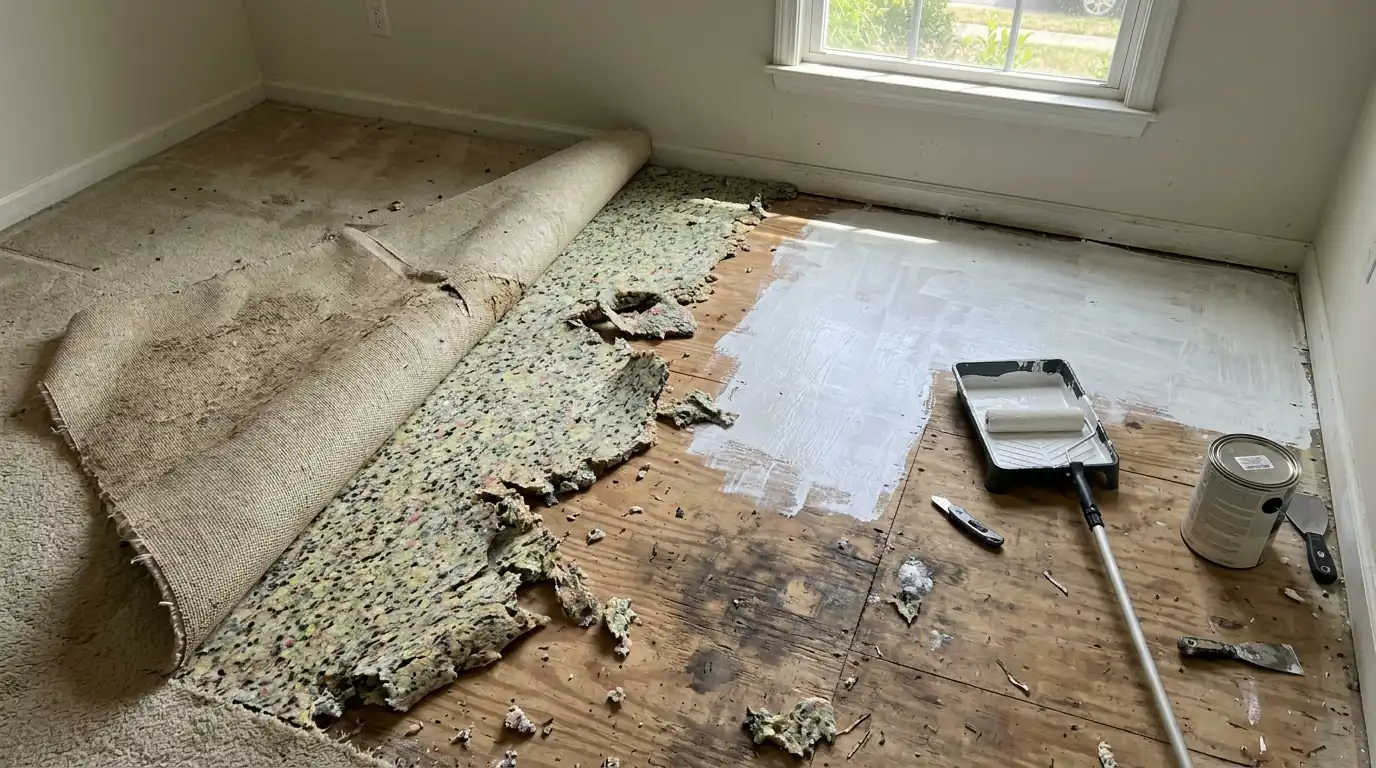
Carpet in a smoker's house is usually beyond saving, and the pad beneath it is worse. We pull both, then check the subfloor: residue that soaked through shows as yellow staining on plywood or OSB, and it keeps smelling until it is cleaned and sealed. Hard flooring is cleaned and left in place. Upholstered furniture and curtains follow the same logic as carpet: they can be cleaned and deodorized when the exposure was short, and often not when it was years.
Priming and Sealing Before Repaint
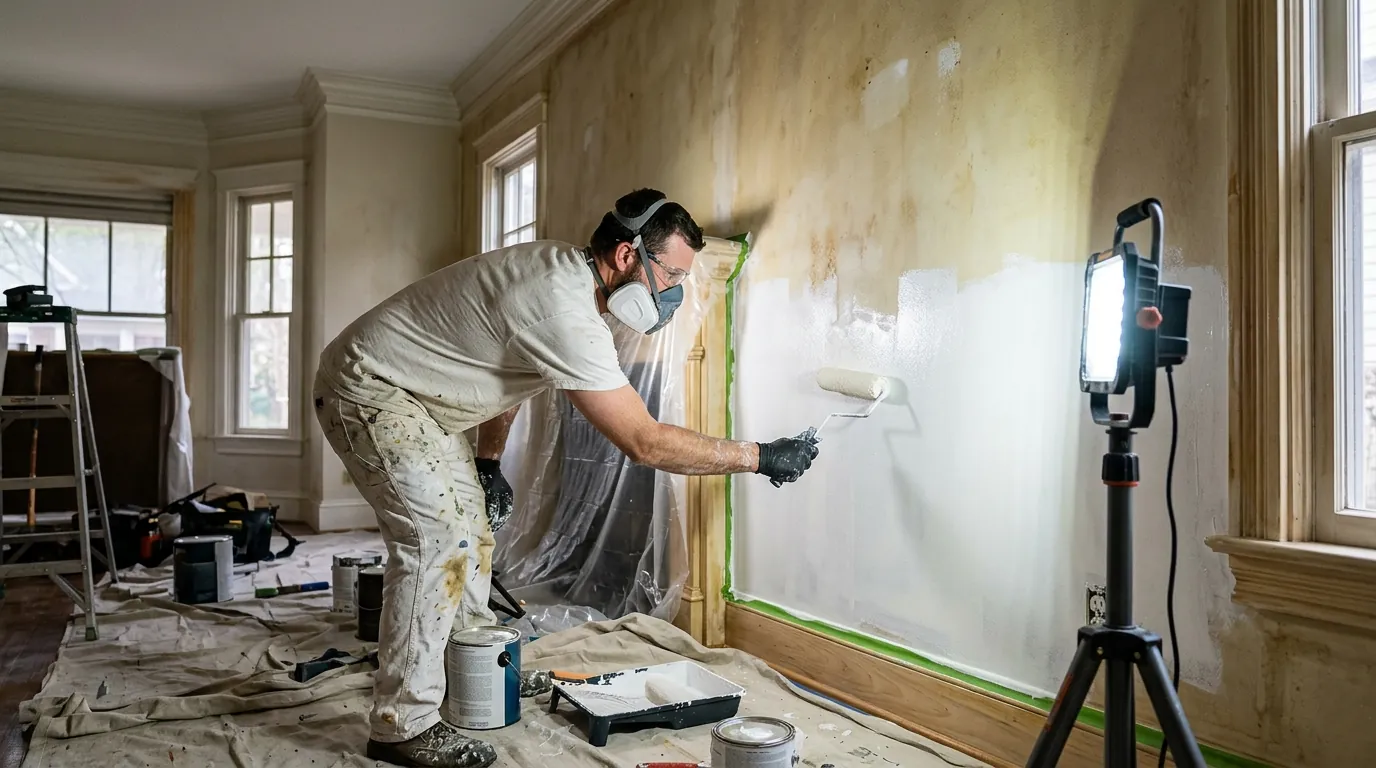
After washing, walls, ceilings, trim and any stained subfloor are sealed with a stain- and odor-blocking primer, usually shellac- or solvent-based on heavy jobs, because water-based primers let nicotine bleed through. One full coat, two where staining was heavy, then the new paint. Ducts are cleaned and filters replaced before the system runs, or the smell returns through the vents. A hydroxyl or ozone treatment in the empty house finishes the job, followed by a final walk-through with you before anyone moves back in.
Cigarette odor and Charlotte's rental market
Cigarette odor is often a rental problem in Charlotte. More than 2,300 build-to-rent single-family homes are under construction inside the city and about 5,300 across the metro, on top of the existing rental stock, and a house that turns over every year or two gets smoked in sooner or later. For landlords the goal is a unit that shows clean to the next tenant, which usually means washing, sealing and a paint turnover rather than a full renovation.
How we remove cigarette odor
- Walk and smell
Every room, closet and the HVAC checked with you.
- Pull soft materials
Carpet, pad and anything porous that cannot be cleaned.
- Wash the film
Walls, ceilings, cabinets and fixtures until the runoff is clear.
- Clean the ducts
Ductwork cleaned and filters replaced before the system runs.
- Seal
Stain- and odor-blocking primer on walls, ceilings and subfloor.
- Treat the air
Hydroxyl or ozone in the empty house.
- Walk it again
A final check with you before paint and flooring go in.
Heavy nicotine jobs lean on Chemspec and Unsmoke cleaners, Zinsser shellac-based primer for sealing, and Odorox or Vaportek units for the final air treatment.
Questions about cigarette smoke odor removal
Not with ordinary latex paint. Nicotine bleeds through within weeks. The film has to be washed off and the surface sealed with a stain-blocking primer first.
No. Ozone at treatment levels irritates the lungs, so nobody, including pets and plants, stays inside while it runs, and the home is aired out after.
Rarely after years of smoking. The pad holds most of the odor, and the subfloor under it often needs sealing too.
Walk the house after it has been closed up on a warm day, when residue releases odor. We do that walk-through with you before paint and flooring go in.
It is a known, fixable problem, but budget for it. Washing, sealing, new soft flooring and paint are the usual scope, and we can walk it with you before closing.
Yes. Turnovers are scheduled so the unit is washed, sealed and ready for paint on your timeline.
Related work in Charlotte
Showing or moving into a smoker's house?
Call and we will walk it with you, tell you what has to go and what can be sealed, and schedule the work.
Call (704) 368-1592