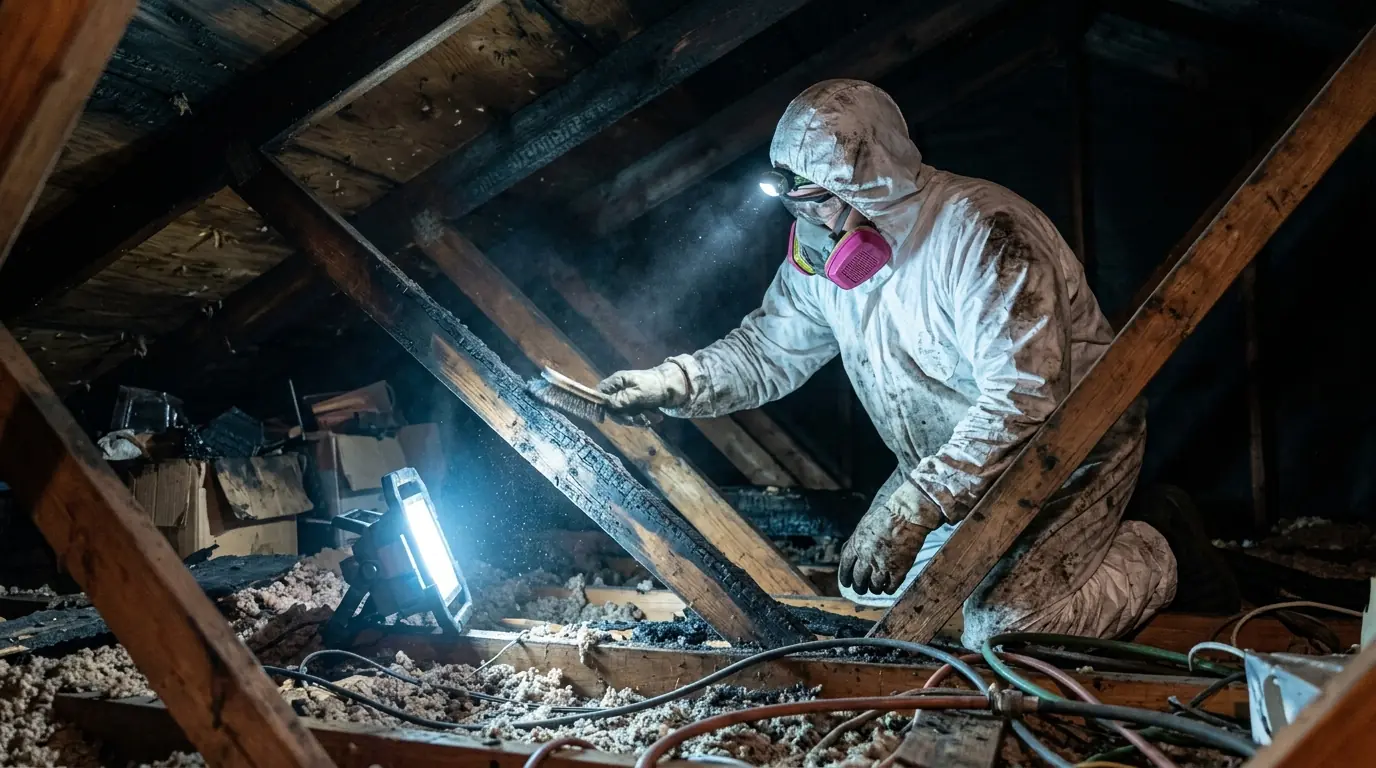
Attic fire restoration in a Charlotte home removes burned and water-soaked insulation, repairs or replaces charred rafters, trusses and roof decking under permit, then cleans and seals the remaining framing to lock in odor before new insulation goes in. Ceilings below are checked for firefighting water, which often brings them down.
Why attic fires are harder than they look
Attic fires start from electrical faults, lightning, heat from recessed lights or flues, or climb from a kitchen or garage fire below. Firefighters fight them from underneath and through the roof, so an attic fire usually ends with burned framing above and a lot of water on the ceilings below. The insulation soaks up both smoke and water, and the ceiling drywall carries the weight.
The job runs top down: make it safe, strip the attic, repair the structure, clean and seal, then insulate and close up.
What moves the cost
Attic fire jobs combine structural repair with cleaning and new insulation. Published figures give the range for remediation and structural work.
- Structural damage. Rafter, truss and decking repairs are the largest line.
- Insulation. Removal and replacement across the whole attic.
- Ceilings below. Water-damaged ceilings add drywall and paint.
- HVAC in the attic. Ducts or air handlers exposed to smoke need cleaning or replacement.
- Remediation only vs remediation plus reconstruction$4 to $7 per square foot for remediation alone; $20 or more per square foot with reconstruction
- Major structural repair$15,000 to $25,000 per room
Published planning ranges, not our quote. Local labor, access and how far the smoke traveled move the final figure.
Clean and seal, or replace?
| Factor | Clean and seal | Remove and replace |
|---|---|---|
| Rafters and trusses | Soot and shallow surface char | Char that reduces strength, or damaged trusses |
| Roof decking | Smoke-stained but sound | Burned through or charred deep |
| Insulation | Never | Always, once burned, wet or smoky |
| Ductwork | Metal ducts with light soot | Heat-damaged or heavily sooted flex duct |
Insulation Removal
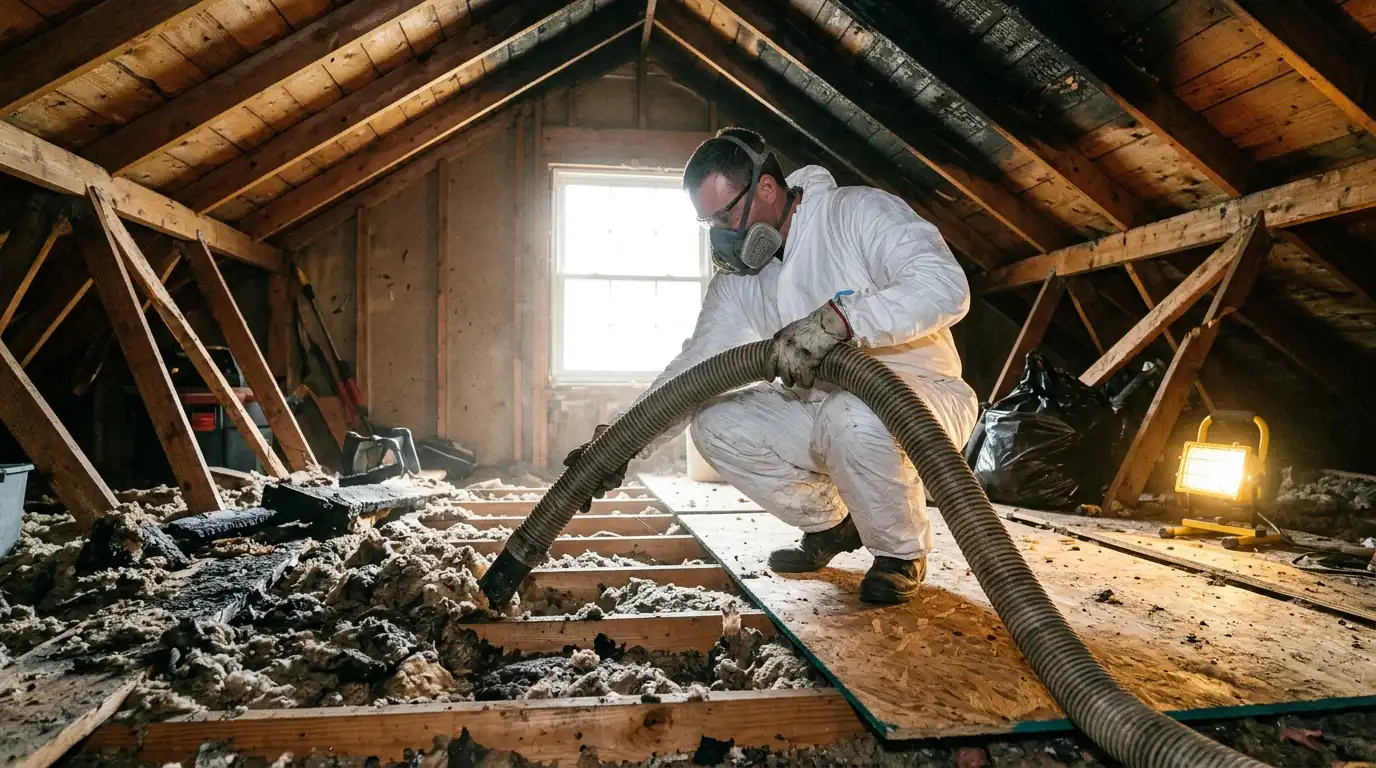
Attic insulation that burned, got wet or smells of smoke comes out; there is no cleaning loose fill or batts back to usable. Blown-in insulation is removed with a high-powered vacuum that bags it outside, which keeps soot and fibers out of the house. Batts are bagged by hand. With the insulation gone, the framing, wiring and ducts are finally visible, and the full extent of the fire can be seen and photographed. New insulation goes in only after repairs and sealing are finished.
Roof Deck and Rafter Repair
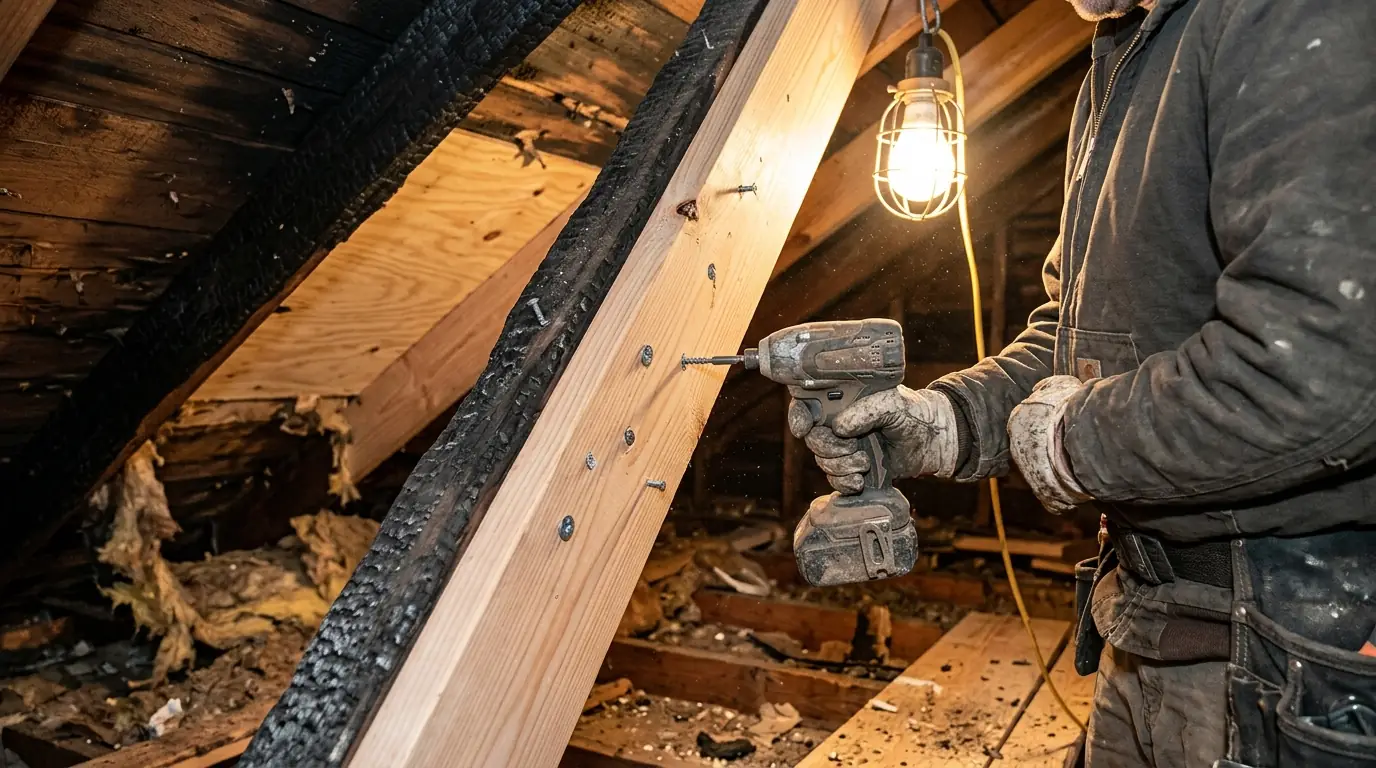
Charred rafters, trusses and roof decking are checked for depth of char and remaining strength. Surface char is cleaned and sealed; members that lost strength are sistered, reinforced or replaced, and burned decking is cut out and replaced, then the roof covering is repaired above it. Engineered trusses cannot be patched freely, so damaged ones need a repair designed for them. All of it is structural work done under a Mecklenburg County permit, with a framing inspection before the attic is closed.
Attic Odor Sealing
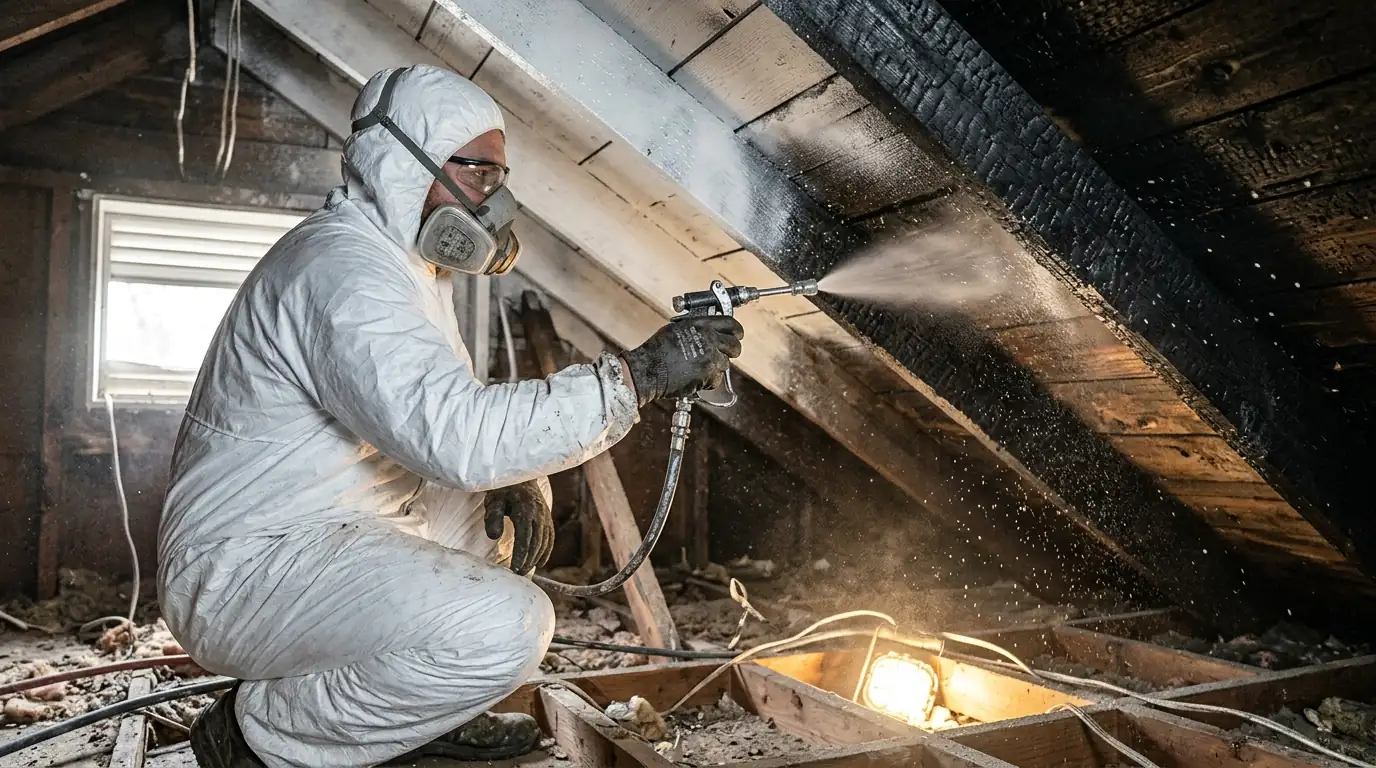
An attic that burned or filled with smoke keeps smelling long after the fire, because the odor lives in the wood. After cleaning, rafters, decking and joists are sealed with an odor-blocking encapsulant, sprayed to cover every surface the smoke reached. Ducts that run through the attic are cleaned or replaced, since they sat in the smoke. Only then does new insulation go in. Skip the sealing and the smell comes back on the first hot day, when the attic heats up.
Charlotte attics carry the HVAC and the humidity
38% of North Carolina homes heat with a central heat pump, and in houses where the air handler and ducts sit in the attic, they are right where an attic fire's smoke and water go. Add Charlotte's humid climate, with relative humidity around 70 to 75% most of the year, and a wet attic dries slowly unless it is opened up and dehumidified. We check the HVAC in the attic and dry the space before insulation goes back.
How an attic fire is restored
- Make it safe
Ceilings checked; sagging drywall brought down.
- Tarp the roof
Openings covered until the roof is repaired.
- Remove insulation
Vacuumed out and bagged outside.
- Assess the framing
Char depth checked on every rafter and truss.
- Repair under permit
Framing and decking fixed, then inspected.
- Clean and seal
Framing cleaned, then encapsulated.
- Insulate and close
New insulation, then ceilings repaired below.
Questions about attic fire restoration
Rarely. Insulation that burned, got wet or smells of smoke is removed and replaced.
No. Wet drywall with insulation on top can collapse. Stay out of rooms with sagging or stained ceilings until they are checked.
Not always. Burned decking is replaced where needed and the roof covering repaired above it; a full reroof depends on how much burned.
They sat in the smoke, so they are cleaned or, if heat-damaged, replaced before the system runs.
Not if the framing is sealed. Unsealed attics release odor as they heat up.
A few weeks for most attics, longer when trusses need engineered repairs or inspections add time.
Related work in Charlotte
Fire or smoke in the attic?
Stay out of rooms with sagging ceilings and call. We serve homes across Charlotte.
Call (704) 368-1592