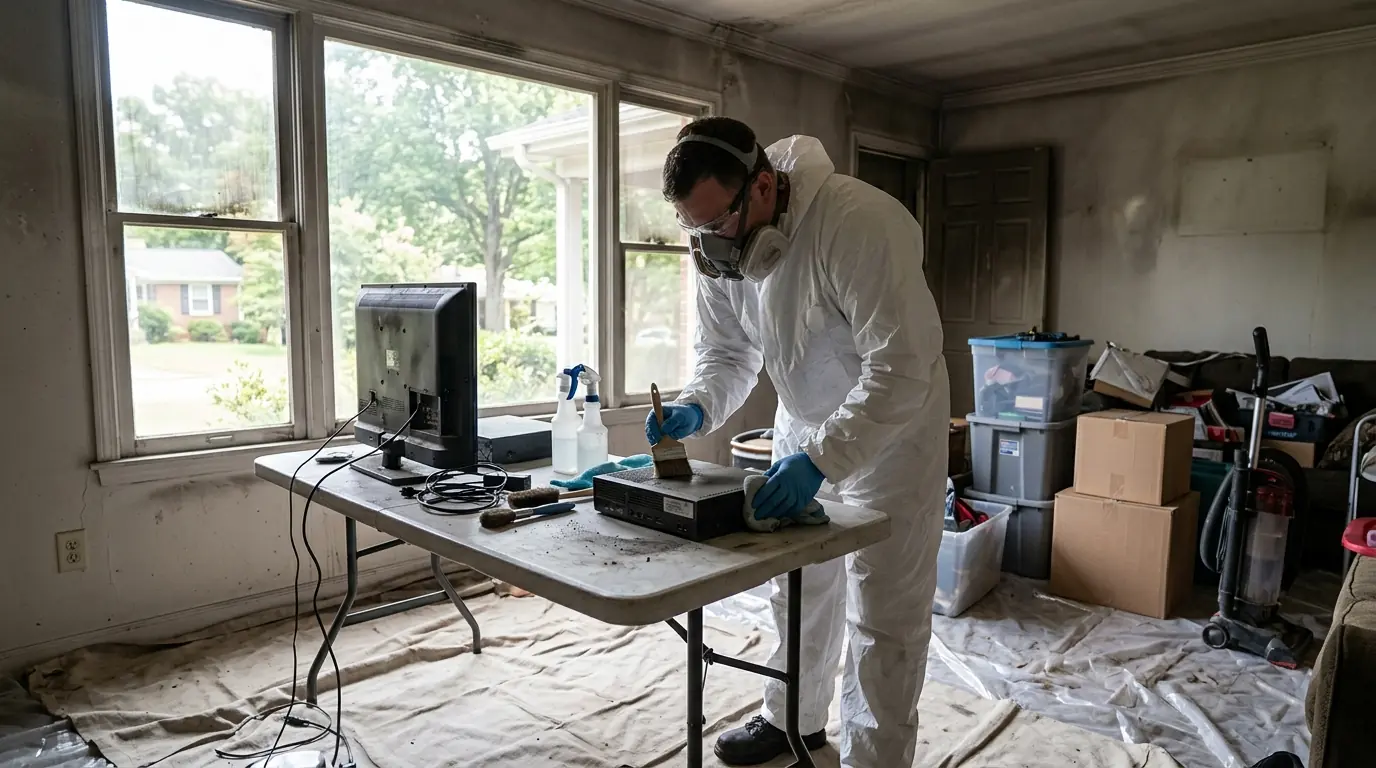
Smoke-exposed electronics in a Charlotte home should stay unplugged until they are cleaned, because acidic soot plus current speeds up corrosion on the board. We remove each unit, clean the housing, vents and reachable internals, dry it, then power-test it and record the result. Anything with corrosion on the board goes on the replace list with photos.
What happens to a TV or laptop that sat in the smoke
Smoke is not just a smell to a circuit board. The soot that settles inside a TV, a laptop or a microwave carries chlorides and acids from burned plastics, and in a damp house those residues start pitting solder joints and connectors within days. A device can switch on the morning after the fire and fail a month later, after the claim is closed.
So the order matters: out unplugged, cleaned away from the structural dust, tested, and logged by serial number.
What moves the cost
No published range covers electronics cleaning well, since jobs run from one TV to a whole home office. Four things set the price.
- How many devices and how many are worth cleaning against what they would cost to replace.
- Residue type. Dry soot from a wood fire comes off faster than the greasy film from burning plastics.
- Water exposure. Units that sat in firefighting water need drying time and fail testing more often.
- Documentation. Serial numbers, photos and test results for every item take time and make the claim easier.
Clean it or replace it
| Factor | Usually worth cleaning | Usually a replacement |
|---|---|---|
| Condition | Dry soot on the outside, no water exposure | Sat in firefighting water or shows board corrosion |
| Device type | Desktops, consoles, larger TVs, major appliances | Low-cost small electronics and melted items |
| Test result | Passes power and function tests after cleaning | Fails testing or behaves intermittently |
Cleaning electronics yourself: where it goes wrong
Wiping a screen with a damp cloth turns oily residue into a film that is harder to remove than the original soot. And plugging a device in to check it is the single most damaging thing that happens to electronics after a fire.
If you handle anything before we arrive, keep it unplugged and dry, and put it in a closed box in a room the smoke did not reach.
Corrosion Control in the First Days
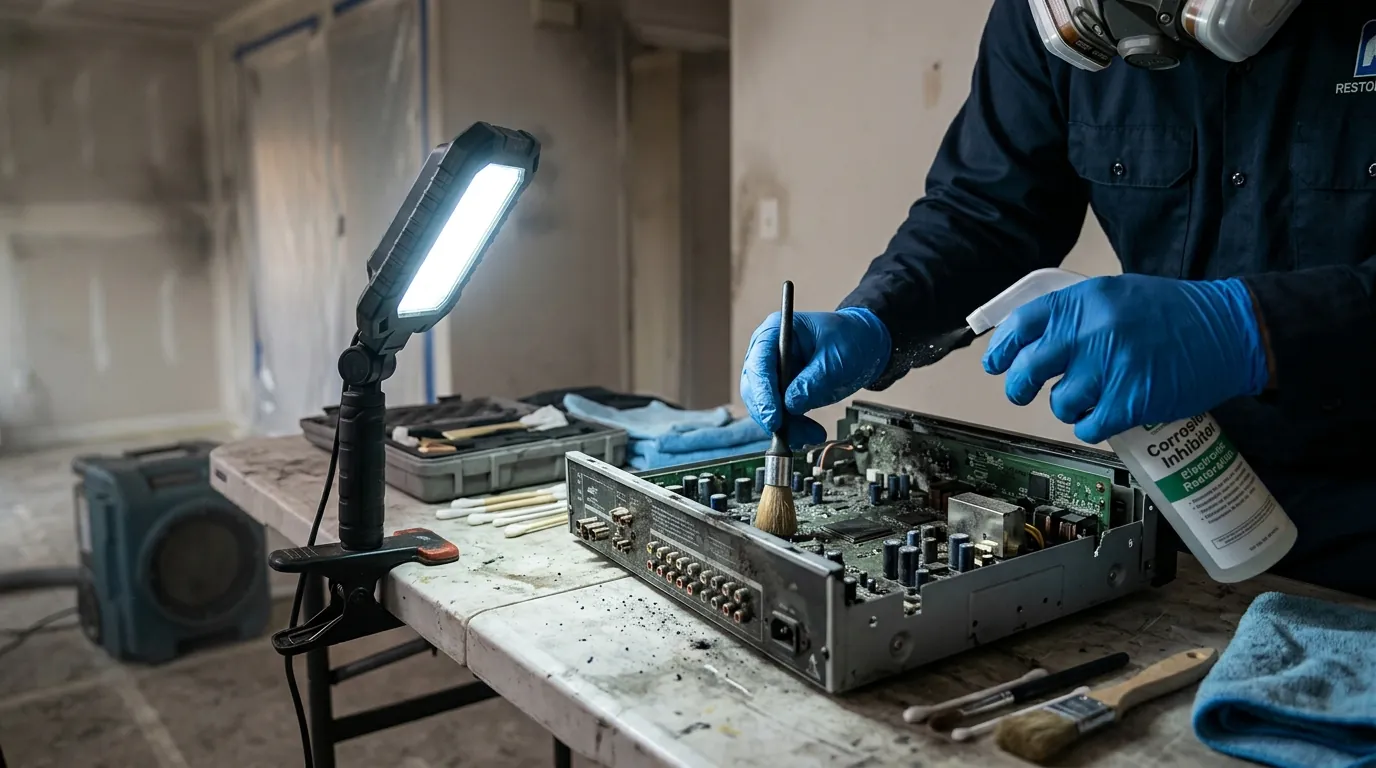
The window is short. Residue on a board keeps reacting with moisture in the air, and firefighting water raises that moisture in every room it reaches. Our first job is to get devices unplugged, out of the wet rooms and into dry, conditioned space, with batteries pulled from anything that has a removable one. Nothing gets switched on to see if it works. Photos go into the claim file before cleaning starts, so the adjuster sees the condition each item arrived in, not just the result.
TVs, Computers and Game Consoles
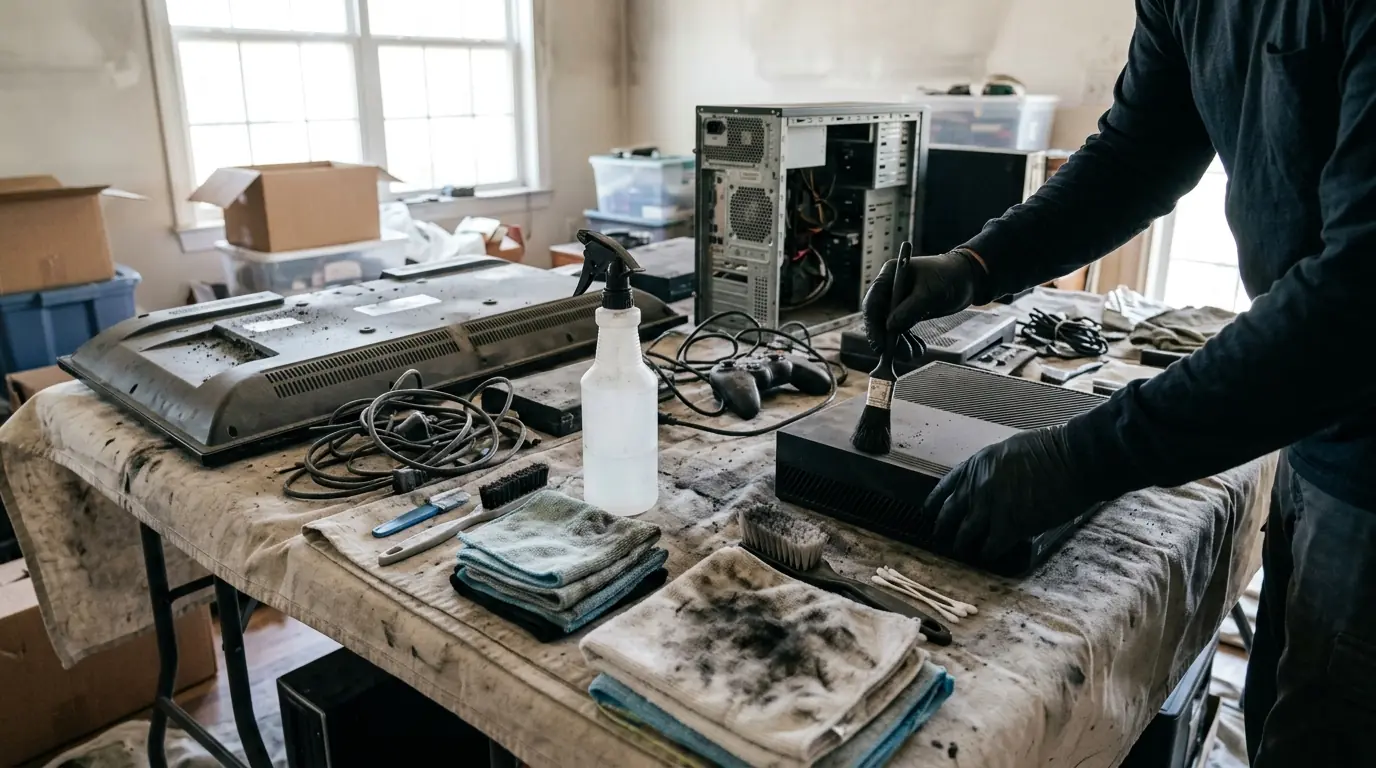
Flat screens, desktops, laptops and consoles pull air through their vents to stay cool, which means they pulled smoke through too. We open the vent paths, remove loose soot with low-pressure air and HEPA vacuuming, and clean housings with residue-specific cleaners rather than water. Laptops and consoles with a removable back get the reachable internals cleaned the same way. After a drying period each unit is power-tested on a test circuit. Screens with residue behind the glass, or boards showing green or white corrosion, are documented as losses.
Kitchen and Laundry Appliances
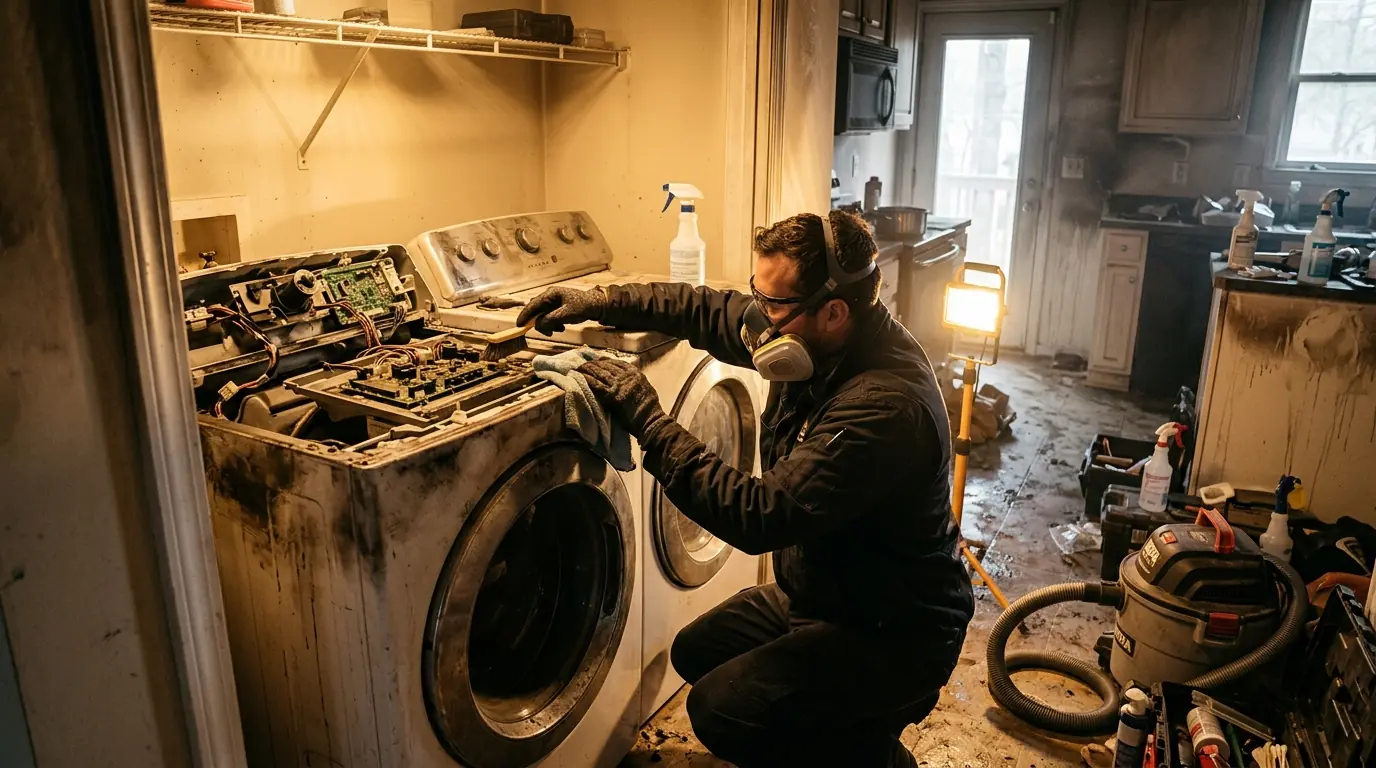
A stovetop fire coats the range, the hood, the microwave above it and the refrigerator next to it, often with the sticky protein film that burned food leaves. Refrigerators also pull smoke in through the condenser at the bottom. We degrease exteriors, clean condenser coils and door gaskets, and deodorize interiors. Washers and dryers get the same exterior and vent cleaning, and the dryer duct is checked for soot. Whether an appliance is worth cleaning or replacing is a cost call we make with you and your adjuster.
Why Charlotte humidity shortens the window for electronics
Charlotte sits in the humid Piedmont, and a house that has just been soaked by fire hoses is more humid still. Together they shorten the safe window: the water the firefighters left behind feeds the corrosion the soot starts, so a laptop left on a desk in a wet room for a week is in worse shape than the same laptop in a dry climate. We start drying the rooms and moving devices out on the same visit.
How an electronics job runs
- Unplug and remove
Every device leaves the house unplugged, batteries out where they come out.
- Photograph and log
Make, model, serial number and condition recorded before cleaning.
- Dry the unit
Wet items sit in dry, conditioned space before anything else happens.
- Clear the vents
Low-pressure air and HEPA vacuuming take soot out of the airflow paths.
- Clean the housing
Residue-specific cleaners on the case, screen frame, ports and keys.
- Power-test
Only after cleaning and drying, and only on a test circuit.
- Report the result
Each item marked cleaned and working, or failed with photos.
Most of this work runs on Unsmoke and Chemspec cleaning agents, HEPA vacuums and Odorox hydroxyl units.
Questions about electronics cleaning after a fire
Please do not. Powering a unit with soot and moisture inside is what turns a cleanable device into a dead one. Leave it unplugged until it has been cleaned and dried.
Often, yes. Storage drives usually outlast the machine, and if a laptop fails testing we tell you before anything is discarded so the data can be recovered.
For inexpensive devices, sometimes. We flag those early so you and your adjuster can decide, instead of paying more in labor than the item cost new.
We clean the vent paths and the internals we can reach safely once a back panel comes off. A board with visible corrosion goes on the loss list with photos rather than being scrubbed.
Every item is photographed and logged with its serial number, then tagged with its test result, so your contents inventory matches what the adjuster sees.
Phones usually leave with you. If one stayed behind, keep it off and uncharged until it is cleaned.
Related work in Charlotte
Keep it unplugged and call us
We collect smoke-exposed electronics across Charlotte, clean and test them, and give you the list for your claim.
Call (704) 368-1592