A commercial kitchen fire in Charlotte usually keeps the restaurant closed until the wet-chemical suppression residue is cleaned off every surface it hit and the inspector clears reopening. We clean the hood, plenum, line equipment, walls and dining room in the order that gets you to that inspection fastest.
From the call to the reopening inspection
- Walk the space with you
Kitchen, hood, walk-ins, dining room and restrooms, photographed from the start.
- Write the scope that day
A room-by-room plan you can send to your insurer.
- Clear the line
Open food, disposables and porous stock removed and logged.
- Neutralize the residue
Suppression agent lifted from hood, filters, equipment and floor.
- Degrease top to bottom
Line equipment, walls, ceiling and walk-in gaskets cleaned and rinsed.
- Treat the dining room
Walls, booths and HVAC returns cleaned, then odor treatment.
- Hand over for inspection
Food-contact surfaces rinsed and a photo record ready.
Why a small hood fire still shuts the kitchen
When a hood suppression system discharges, it covers the cooking line in a wet chemical agent built to smother grease fires. That residue is alkaline, it sticks to stainless, and it lands on surfaces food touches. Even if the fire was out in a minute, the kitchen cannot serve until that residue is gone.
We work toward the reopening: food-contact surfaces and the line first, then the hood and filters, then walls, ceilings and the front of house.
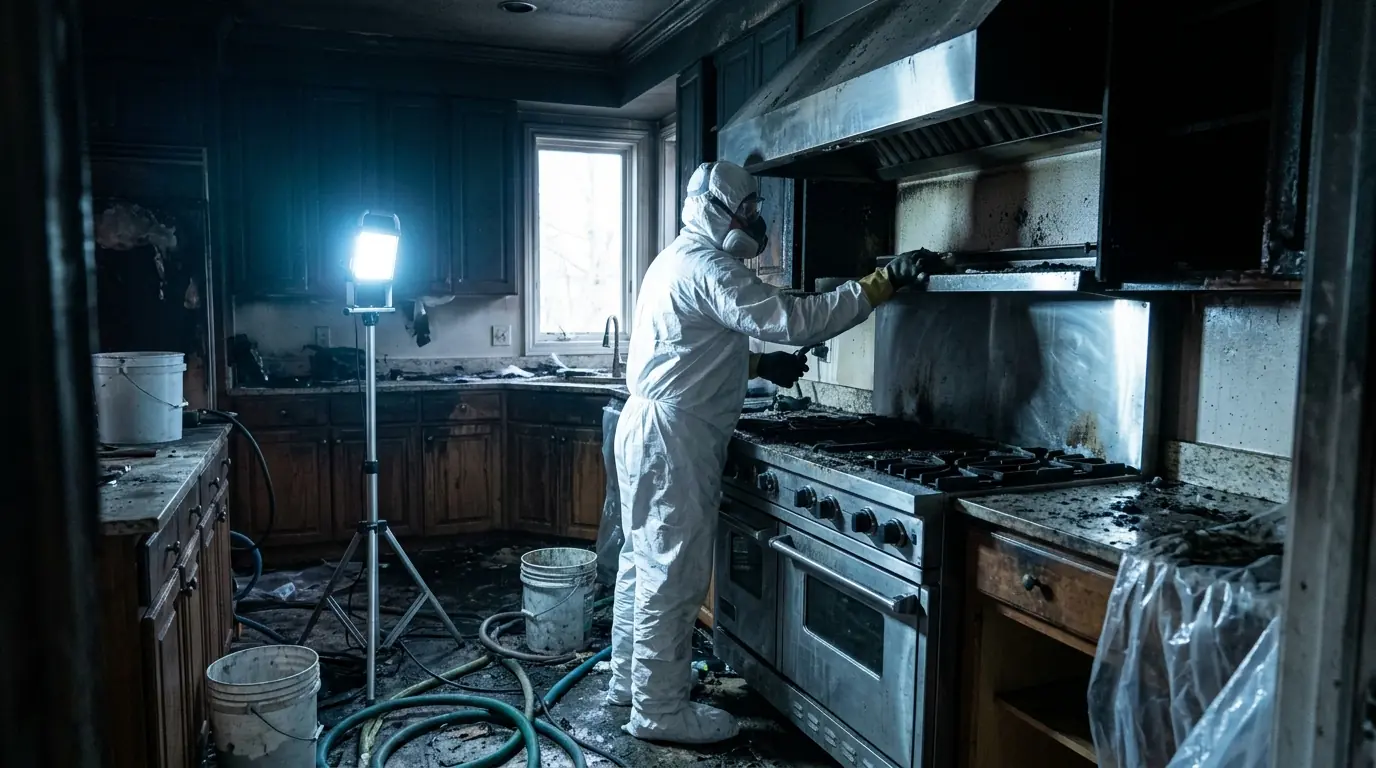
Hood and Suppression System Residue
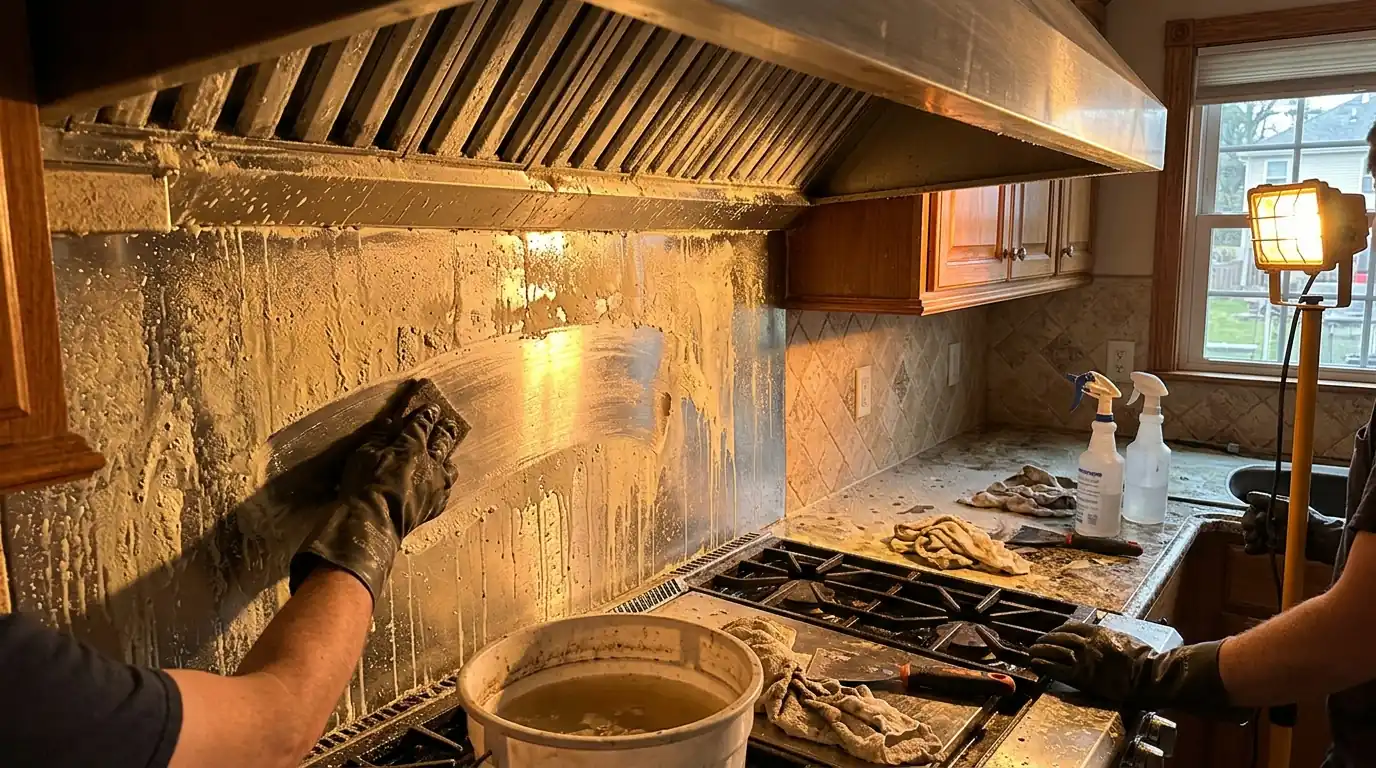
The agent from a discharged system dries into a crust on the hood interior, the filters, the appliance tops and the floor under the line. We remove it with neutralizing cleaners and hot-water rinsing, working from the plenum down so nothing drips onto surfaces already cleaned. The suppression system has to be recharged and re-tagged by the company that services it before you can cook, and your hood vendor may need to clean the duct past the filters. We clean around both and keep the schedule lined up so neither waits on the other.
Grease Fire Cleanup in a Commercial Kitchen
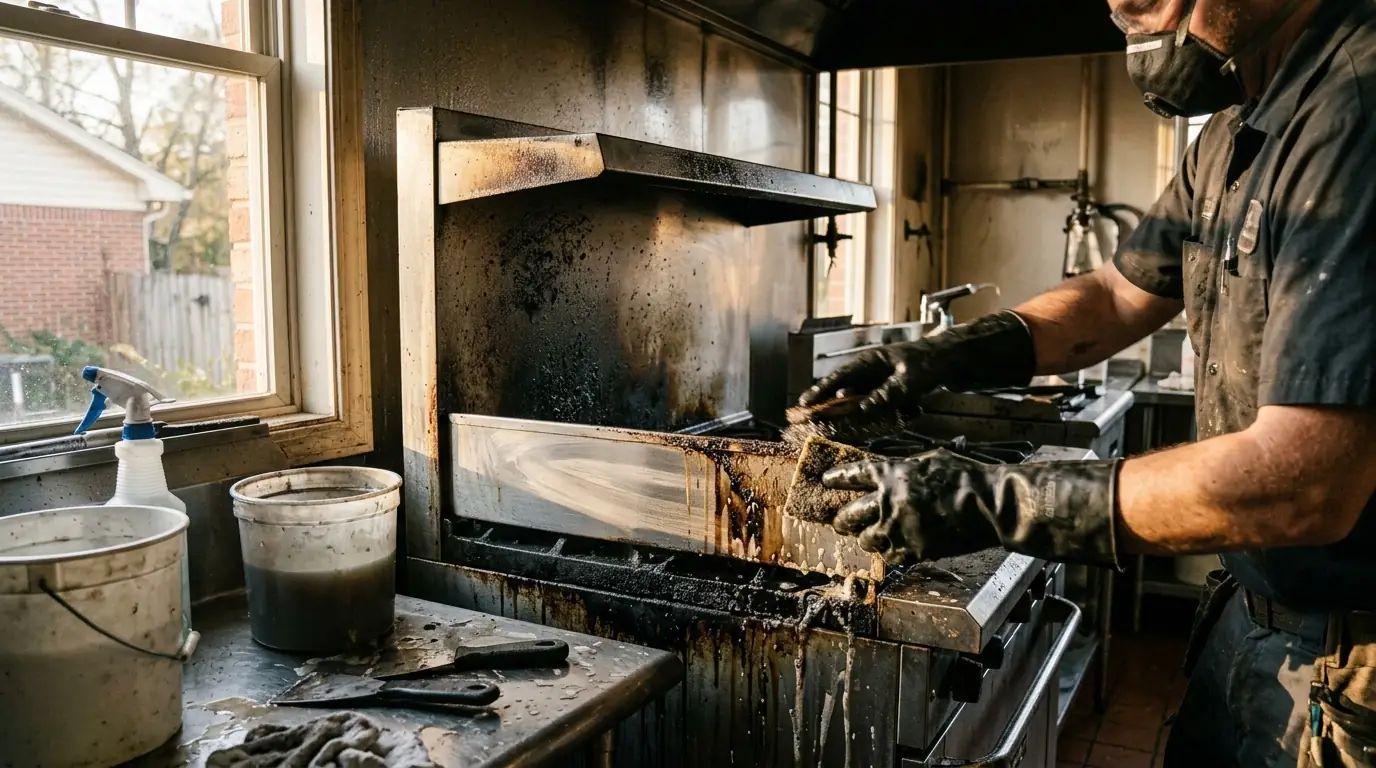
Grease smoke leaves a heavy, sticky film that ordinary degreaser spreads rather than lifts. On the line we clean fryers, ranges, flat-tops and reach-ins inside and out, pull the equipment and clean the floor beneath, and wash walls and ceiling above the cook zone. Walk-in coolers get their door gaskets and evaporator fans cleaned, because a cooler running during the fire pulls smoke straight through. Porous things that hold odor, like acoustic ceiling tile and cardboard stock, are usually cheaper to replace than to treat.
Reopening After a Fire
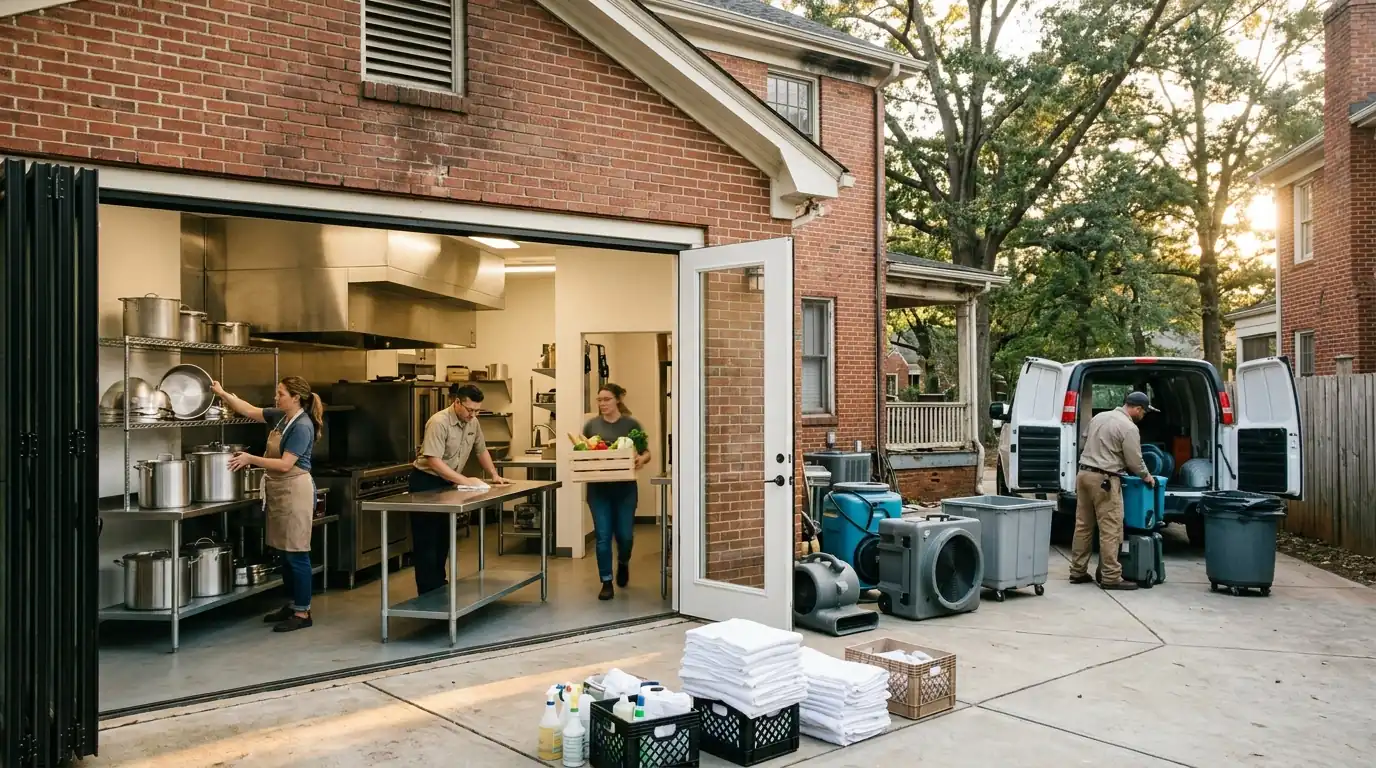
Most owners care about one date: when the doors open. You get a written scope the first day to send to your insurer, including the business interruption side, and the work is staged so the kitchen can pass inspection before the dining room is finished if that gets you serving sooner. Odor treatment in the dining room can run overnight between cleaning days. When we leave, food-contact surfaces are cleaned and rinsed, and you have photos of every stage for the claim and the inspector.
How long the kitchen stays down
The quickest jobs are a hood discharge caught early with no smoke past the kitchen door: cleaning can wrap up in a day or two. Fires that smoked out the dining room add odor treatment and often ceiling tile replacement, which stretches the job into days rather than hours.
Who clears a Charlotte restaurant to reopen
Where the restaurant sits decides who signs off on the fire side. Inside Charlotte city limits the Charlotte Fire Department is the authority, while kitchens in Huntersville, Matthews and the other Mecklenburg towns answer to the County Fire Marshal, and both enforce the rule that commercial hoods and their suppression systems are serviced every six months. The two-alarm fire at a NoDa brewery in July 2024 is the kind of call where cleaning order decides how soon the taps come back on.
What a commercial kitchen cleanup includes
- Suppression agent neutralized on hood, filters, appliances and floor
- Line equipment cleaned inside and out, with the floor beneath
- Walk-in and reach-in gaskets, handles and fans cleaned
- Walls and ceiling degreased above the cook zone
- Porous stock and open food removed and logged
- Dining room walls, booths and fixtures cleaned
- HVAC returns and grilles cleaned, filters replaced
- Photo record of every stage for the inspector and insurer
Residue drying on the line?
Neutralizing suppression agent while it is fresh beats scraping a dried crust. Call now.
(704) 368-1592What moves the cost
Commercial kitchen jobs are priced on the affected area and how far the grease smoke traveled. Published per-square-foot figures give a starting range for the cleaning itself.
- Suppression discharge. A discharged system adds residue neutralizing across the whole line.
- How far the smoke went. A kitchen-only job costs far less than one that includes the dining room and restrooms.
- Porous materials. Ceiling tile, booth upholstery and paper goods are often replaced rather than cleaned.
- Schedule. Work staged around an inspection date or done after closing adds labor.
- Soot and smoke cleaning per square foot$2 to $6 per square foot of affected area
- Smoke remediation per square foot$3.50 to $7.00 per square foot
Published planning ranges, not our quote. Local labor, access and how far the smoke traveled move the final figure.
Questions about restaurant kitchen fire cleanup
It depends on the discharge and how far the smoke reached. A hood-only event moves much faster than a fire that smoked out the front of house. Our scope and timeline come in writing on day one.
No. The company that services your hood system recharges and re-tags it. We clean the residue around it and coordinate timing so the recharge is not waiting on us.
Tell us your constraints on the first call and we plan around them. Dining room odor treatment commonly runs overnight between cleaning days.
The wet agent is alkaline and irritating to skin and eyes, which is why it is neutralized, not just wiped. Keep staff off the line until it has been cleaned.
Open food, disposables and anything porous the smoke reached, such as paper goods and cardboard. It is all logged with photos for your claim.
Not once the source is gone. The odor lives in walls, booths, ceiling tile and HVAC returns, and cleaning those is what clears it.
Related work in Charlotte
Kitchen closed tonight?
Call while the residue is fresh. We answer any hour across Charlotte.
Call (704) 368-1592