To get smoke smell out of a house for good, remove the residue first, then treat what remains: clean walls, ceilings, ducts and fabrics with cleaners matched to the smoke type, use thermal fogging, hydroxyl generators or ozone, and seal framing that still holds odor. Candles, air fresheners and household cleaners only mask embedded smoke odor.
Why the smell keeps coming back
Smoke is made of fine particles and gases that settle on every surface they touch and soak into porous ones: drywall paper, bare wood, insulation, carpet, upholstery and the inside of ductwork. The smell you notice is that residue releasing odor, and it releases more when the house warms up or the air gets humid.
Charlotte's relative humidity sits around 70 to 75% most of the year, so a house that seemed fine in March can smell like the fire again in July. That is the residue, not your memory of the fire.
What does not work, and why
Most first attempts fail for the same reason: they treat the air, not the surfaces. That is also why they seem to work for a day or two before the smell creeps back.
- Candles and plug-in fresheners add fragrance on top of the smell; the residue stays.
- Open windows and fans move air, not residue, and in humid weather they add moisture.
- Bowls of vinegar, baking soda or charcoal absorb a little from the air and nothing from the walls.
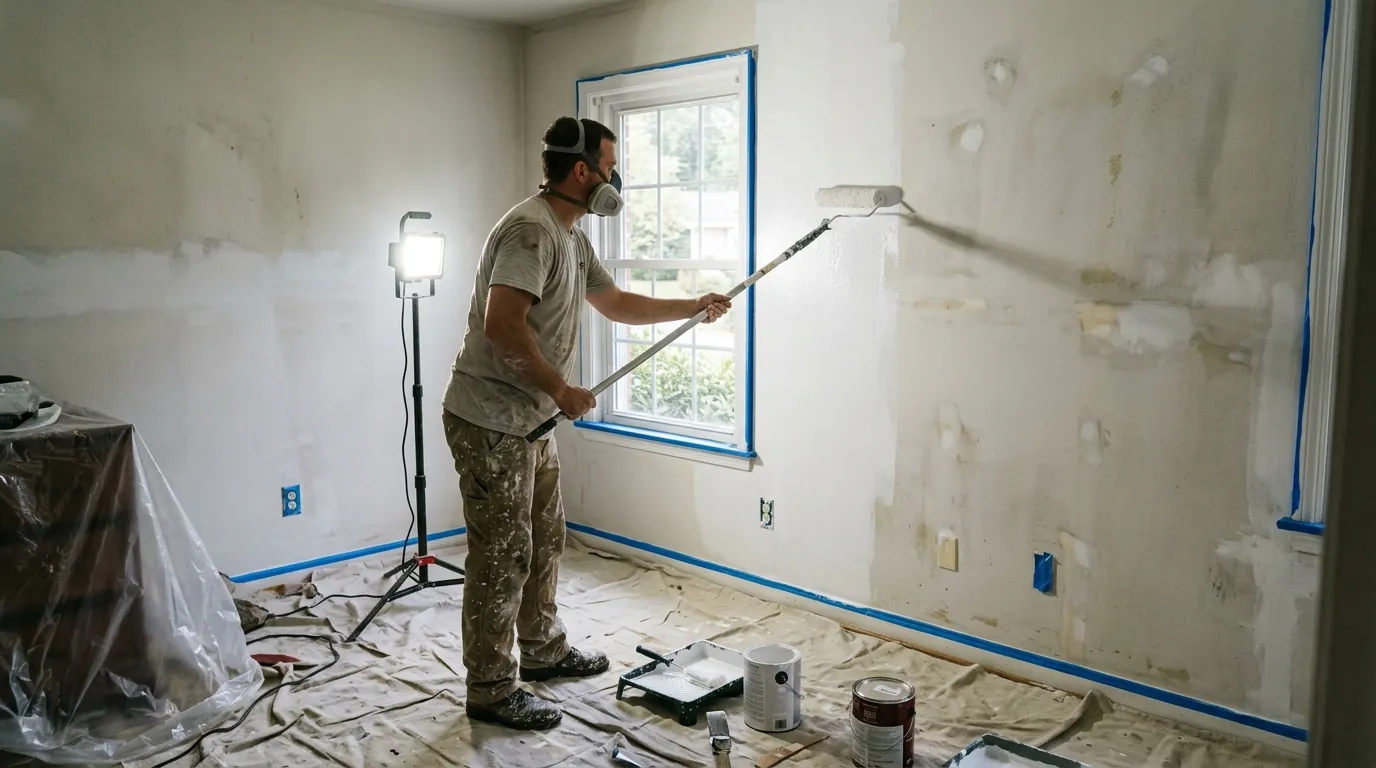
- Painting over it with latex lets the odor and the stains bleed back through.
- Running the HVAC spreads residue from the ducts into rooms that were clean.
Step one: remove the residue
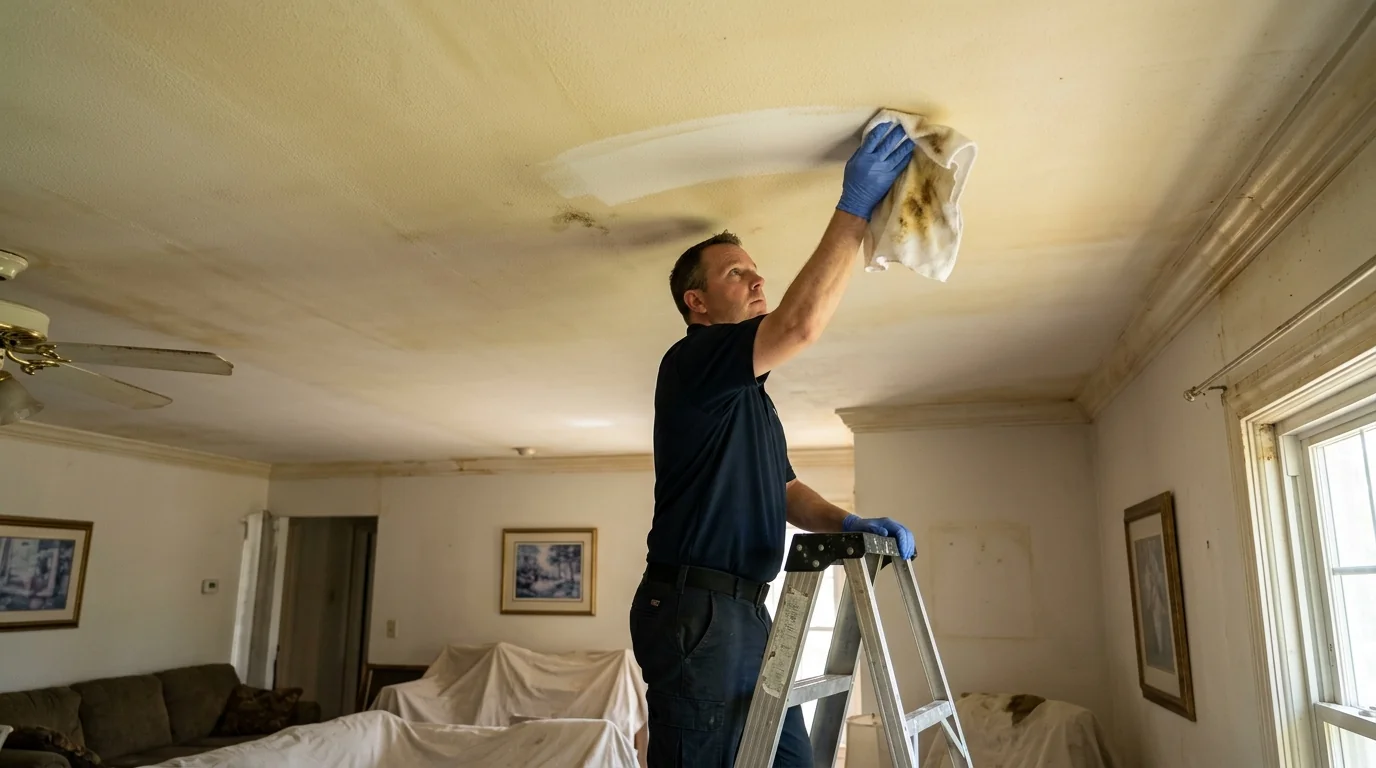
Every lasting fix starts with cleaning. Walls and ceilings are HEPA vacuumed and dry-sponged, then washed with a cleaner matched to the residue, because protein residue from a kitchen fire, synthetic residue from plastics and wood soot each need different agents. That is the core of smoke damage cleanup and soot removal.
Closets, cabinets and drawers get the same treatment, because closed spaces often hold more smell than open rooms. The HVAC is cleaned before it runs again. Clothing, bedding and curtains are cleaned and deodorized or, when too heavily exposed, replaced.
Smell still there after cleaning?
Call and we will find where it is coming from. We answer any hour.
(704) 368-1592Step two: treat the odor that remains
Once the residue is gone, what is left is odor in places a sponge cannot reach. Three treatments do most of that work, and choosing between them is the heart of smoke odor removal.
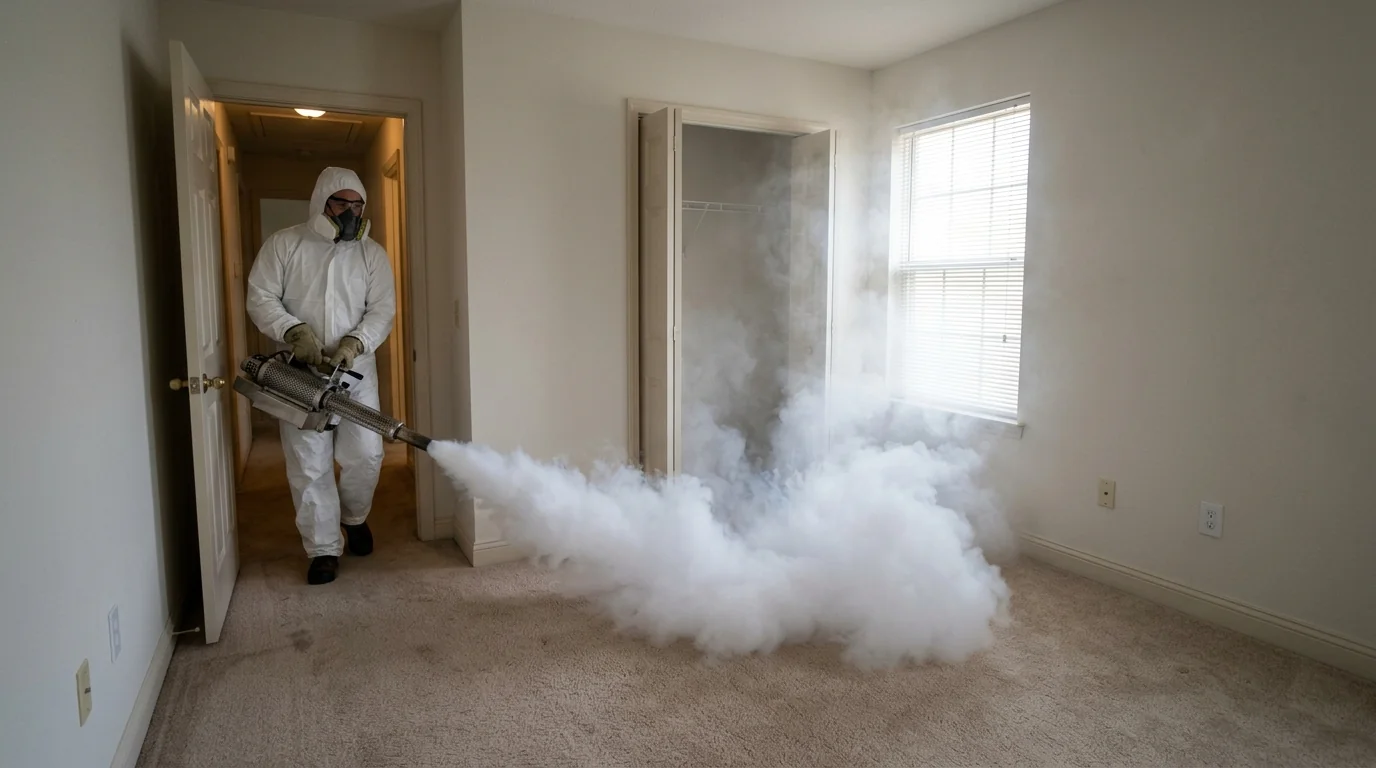
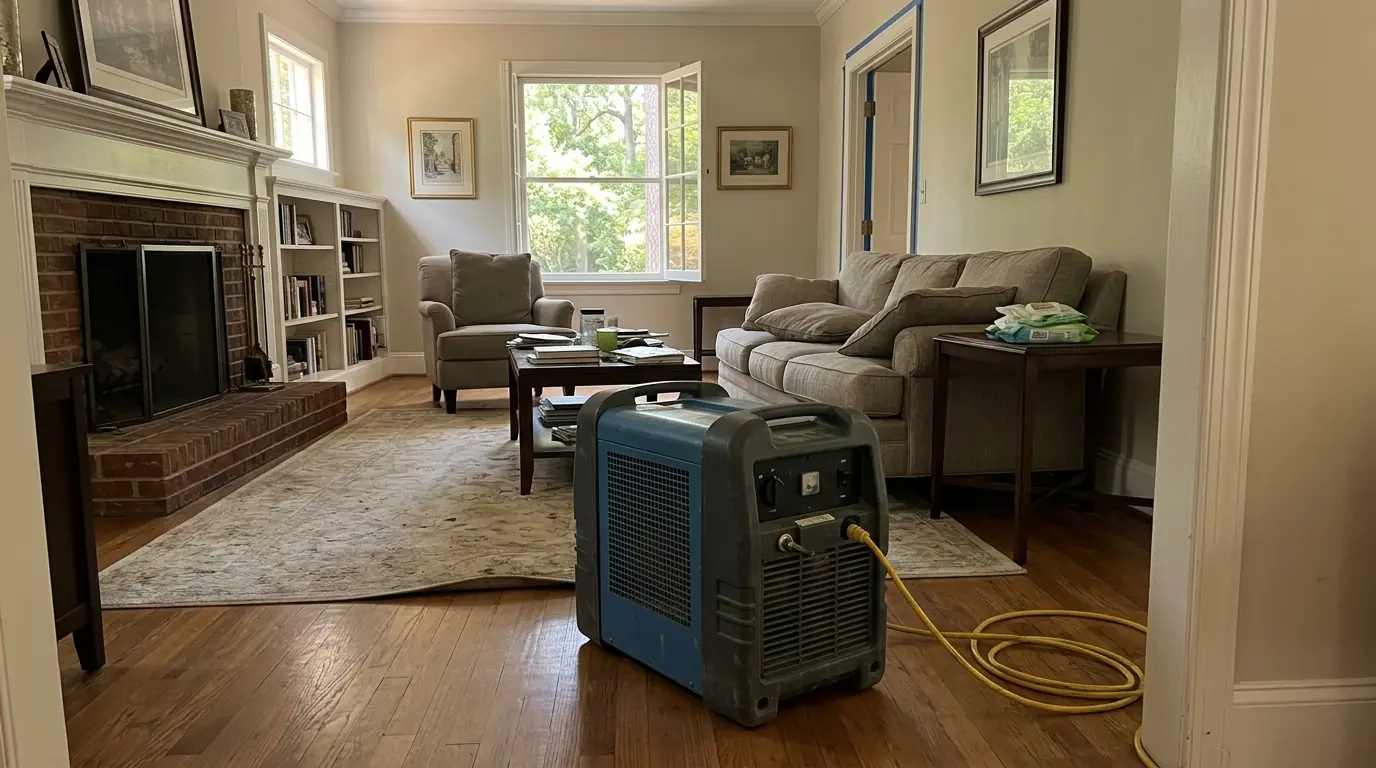
Thermal fogging heats a deodorizer into a fine fog that follows the smoke's path into cracks and cavities. Hydroxyl generators break odor down slowly and safely with people in the house. Ozone works fast but only in an empty house, because it irritates the lungs at treatment levels. The choice depends on the residue and on whether you are living there.
Protein and synthetic odors often need more than one treatment, while dry wood smoke usually clears with one. Whatever is used, the house is aired out and walked again before anyone calls the job done.
Step three: seal what cannot be cleaned
Some odor lives in the structure itself: framing, subfloor and roof decking behind the walls, and attic insulation. Framing is blasted clean and sealed with an odor-blocking primer before walls are closed, and smoky attic insulation is replaced rather than treated.
Skipping this step is the most common reason a house smells fine after cleanup and bad again on the first hot day. It is also cheaper than it sounds: a coat of sealer on framing that is already open costs far less than reopening finished walls later.
Where smoke smell hides in a house
When a house still smells after cleaning, the source is almost always one of a short list of places. Checking them one by one is faster than treating the whole house again.
- Closet and cabinet interiors, which trap residue and never get aired out.
- Ductwork, filters and the air handler, which spread odor every time the system runs.
- Attic insulation, a deep layer of fibers that soaks up smoke from the rooms below.
- Carpet pad and subfloor, which hold odor long after the carpet itself looks clean.
- Upholstery, mattresses and curtains, where smoke sits deep in foam and fabric.
- Wall cavities, which breathe odor into rooms through outlets and switch boxes.
How to tell the smell is really gone
Close the house up on a warm afternoon for a few hours, then walk in from outside. That is when residue releases the most odor and your nose is freshest. If a room or closet still smells, something was missed there, usually a closet shelf, a duct run or insulation above the ceiling. A proper job ends with exactly this walk-through, done together.
Questions people ask about this
Often months or longer. Residue keeps releasing odor, especially in heat and humidity, until it is removed.
It can break down strong odor fast, but only after cleaning and only in an empty house. It does not remove soot.
Yes, if hydroxyl generators are used. Ozone and thermal fogging need the house empty.
Only with a sealing primer over walls that were cleaned first. Latex paint alone lets the odor through.
Published guides put odor treatment at about $200 to $600 per room and ozone treatment at $400 to $800, on top of the cleaning that has to come first.
Keep reading
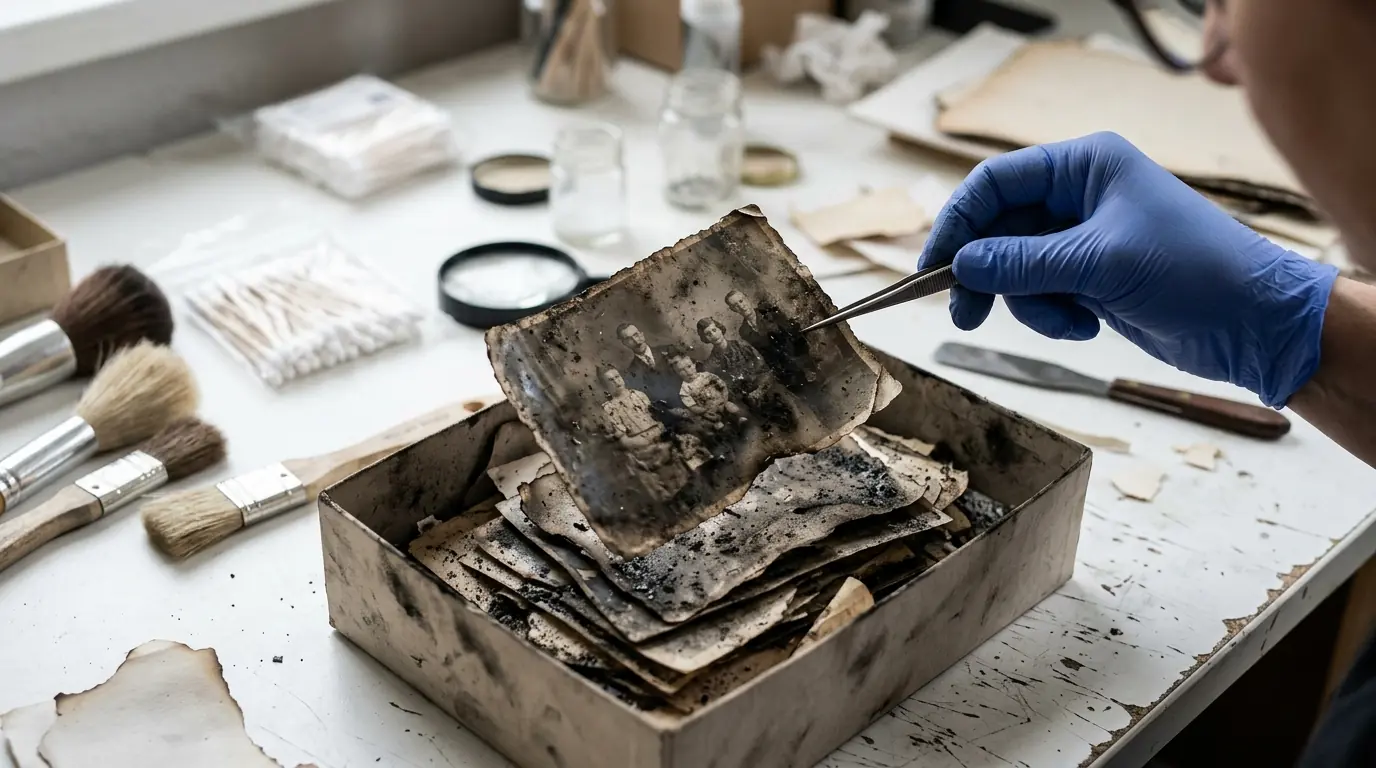
Can smoke-damaged clothes and furniture be saved?
What restores well, what rarely does, and how to decide before you throw anything away.
What to throw away after a house fire
Food, medicine, cosmetics and soft goods that have to go, what is worth cleaning, and why to photograph first.
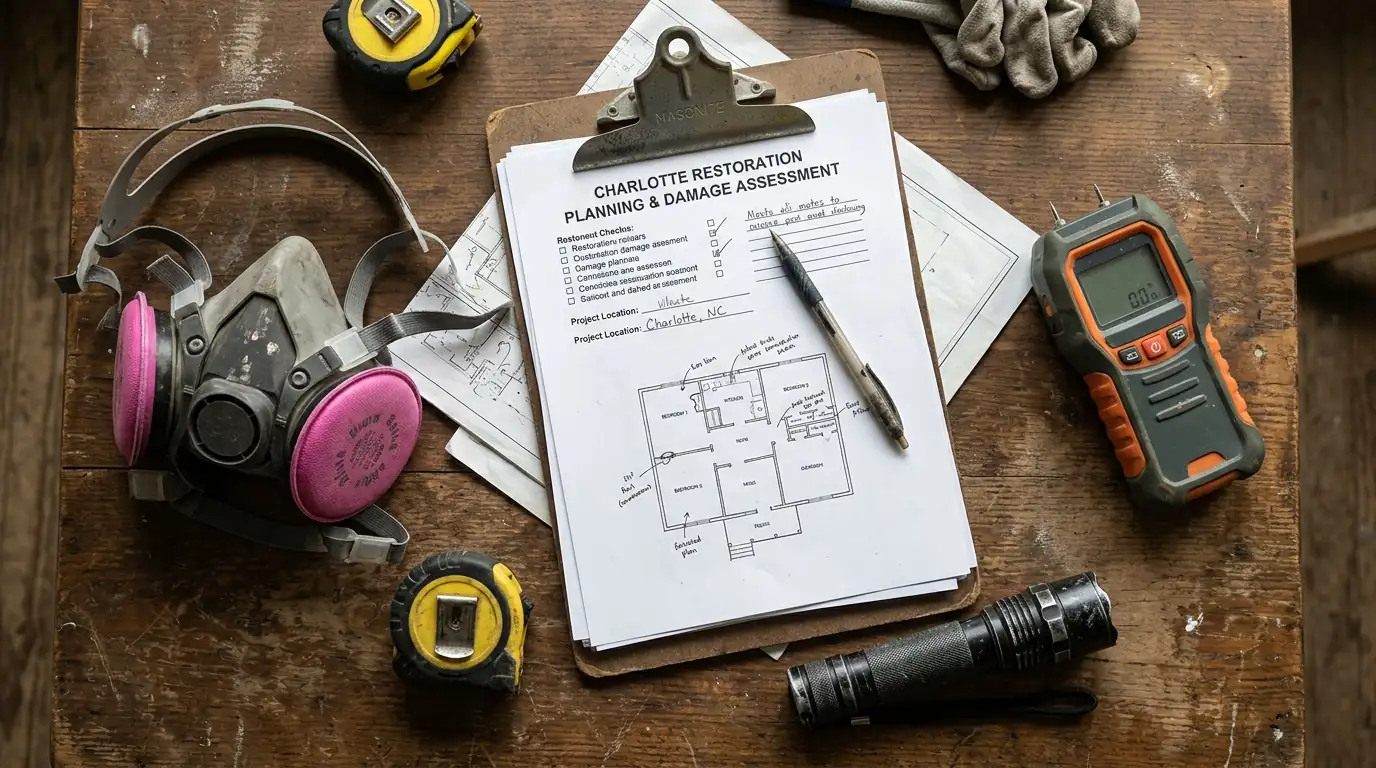
What fire damage restoration costs in Charlotte
Published planning ranges for board-up, soot removal, odor treatment and rebuild, and what pushes a job to the high end.
Want the smell gone for good?
Call and we will test the residue and plan the cleaning, treatment and sealing in the right order.
Call (704) 368-1592