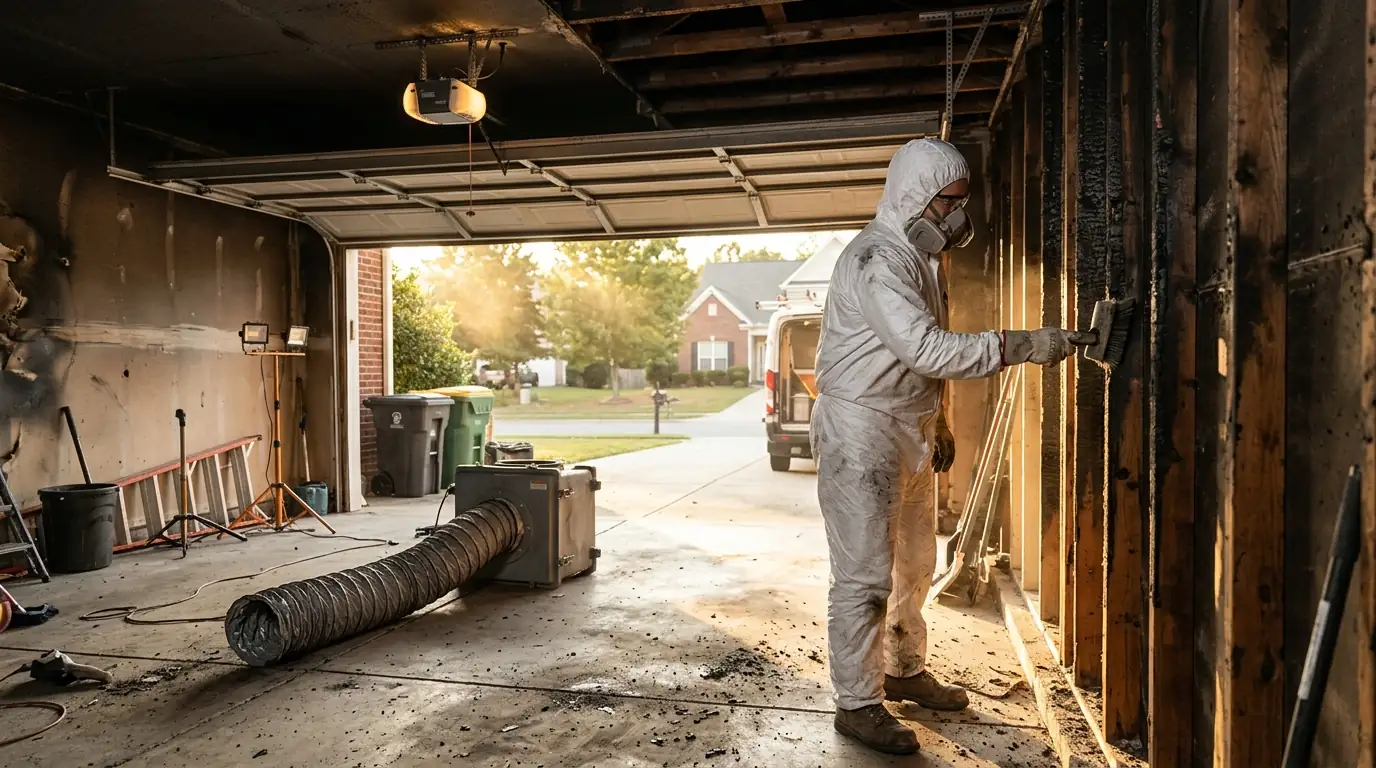
Garage fire restoration in a Charlotte home covers the garage itself, where burning tires, fuel, plastics and stored chemicals leave a heavy, oily residue, and the house next to it, where smoke gets past the firewall, the house door and any rooms above. We clean both, test the rooms indoors, and repair the fire separation so it protects the house again.
Why garage fires smell worse than they look
Garages hold the things that burn dirtiest: tires, gas cans, paint, lawn chemicals, plastic bins and the car itself. Their smoke is heavy with synthetic and petroleum residue that coats every surface and carries a smell ordinary cleaners do not touch. Many garages also have a bonus room or bedroom above, so smoke and heat have somewhere to go.
The job splits in two: restore the garage to a clean, sealed shell, and chase any smoke that crossed into the house.
What moves the cost
Garage jobs are priced on the soot cleaning, the firewall repair and whatever smoke reached the house. Published soot cleanup figures give the range for the cleaning side.
- Firewall damage. Burned or opened separation walls add demolition, framing checks and rebuild.
- Residue type. Tire, fuel and plastic residue takes more passes than wood soot.
- Smoke in the house. Rooms beside or above the garage add cleaning and odor treatment.
- Stored chemicals. Hazardous containers need separate handling before cleaning starts.
- Soot damage cleanup$325 to $4,500 or more
- Remediation only vs remediation plus reconstruction$4 to $7 per square foot for remediation alone; $20 or more per square foot with reconstruction
Published planning ranges, not our quote. Local labor, access and how far the smoke traveled move the final figure.
Concrete Slab and Block Wall Cleaning
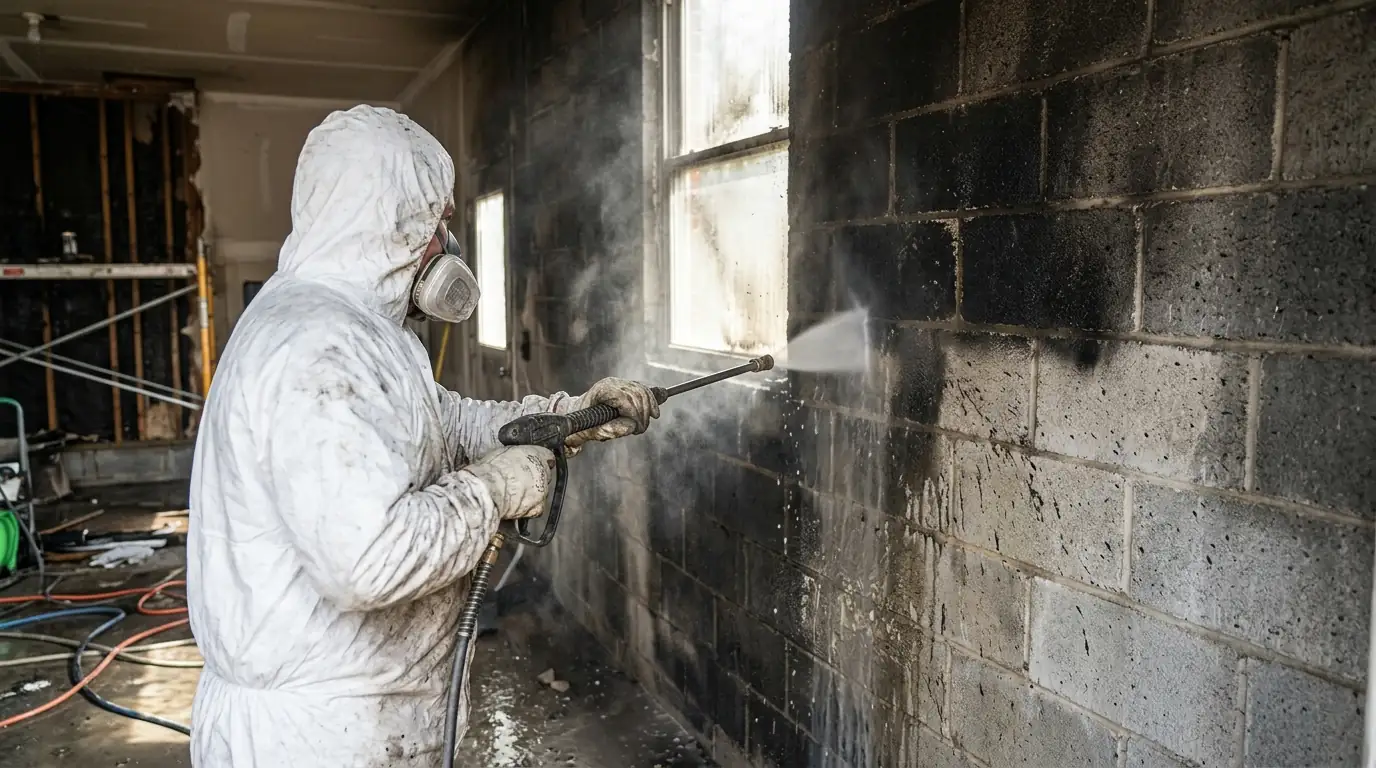
Concrete and block are porous, so they soak up soot and oily residue instead of letting it sit on the surface. We dry-clean the loose soot first, then degrease the slab and walls with alkaline cleaners and hot-water pressure washing, working the residue out of the pores rather than pushing it in. Stains from burned tires and fuel often need a second pass or a poultice. Once clean and dry, block walls and the slab can be sealed to lock in remaining odor before the garage goes back into use.
Firewall Between Garage and House
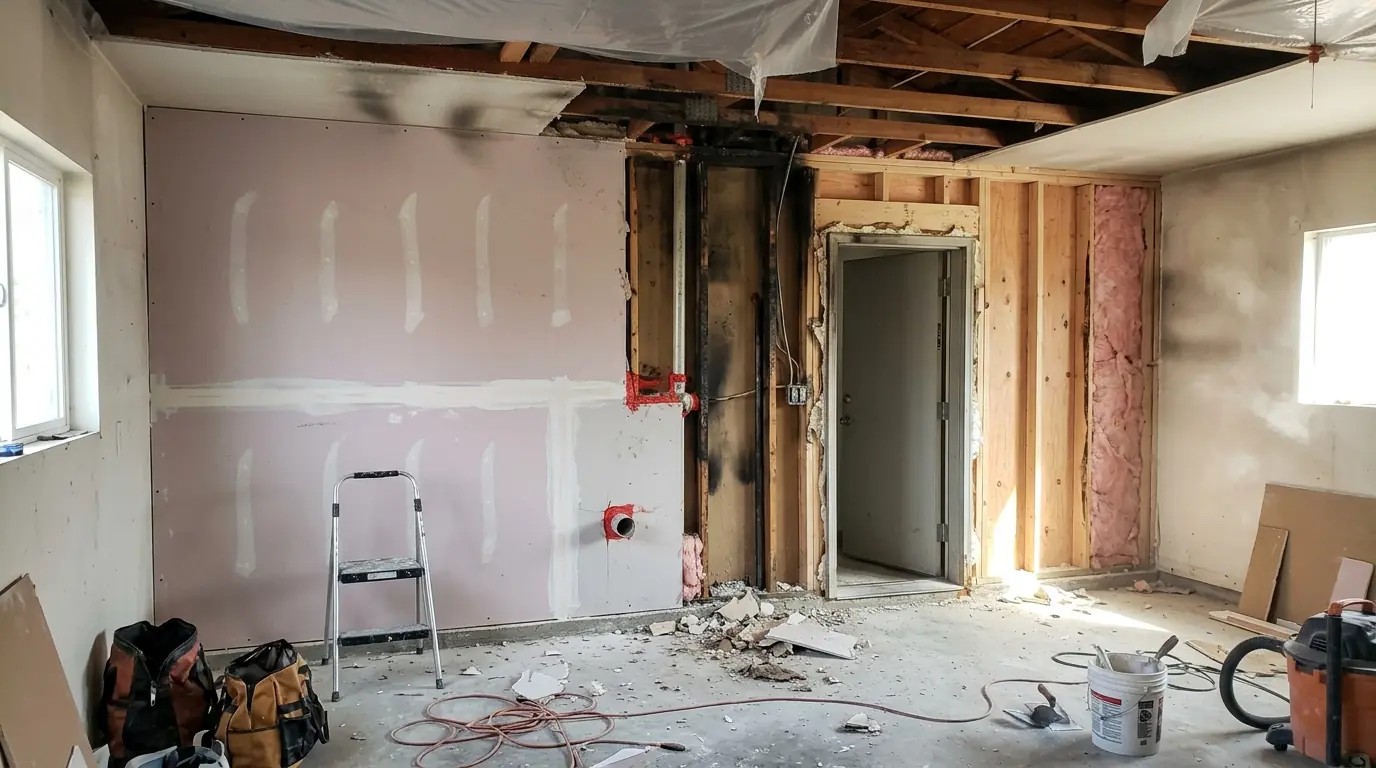
The residential code requires a fire separation between an attached garage and the house: at least half-inch drywall on the garage side, thicker fire-rated board under any rooms above, and a solid or fire-rated door into the house. After a fire that separation is often burned, cracked or opened up. We remove damaged drywall on the garage side, check the framing and the door, and clean the house side of the wall. Rebuilding the separation to code is part of the repair, not an optional upgrade.
Vehicle and Chemical Residue
A car fire throws off residue from tires, upholstery, plastics and fluids, and stored chemicals add their own. Before cleaning we note what was stored and what burned, because containers of pesticide, pool chemicals or solvents need careful handling, and some residue should not meet the wrong cleaner. The vehicle is usually handled by your auto insurer, so we photograph it in place for that claim and work around its removal. Tools and metal equipment are cleaned early, before corrosion sets in.
What garage fire restoration includes
- Safety check of power, gas and stored chemicals
- Photos of the garage, vehicle and contents in place
- Residue testing in rooms beside and above the garage
- Removal of debris and burned contents
- Tear-out of damaged drywall and insulation
- Degreasing and sealing of slab and block walls
- Cleaning and sealing of exposed framing
- Firewall drywall and house door restored
Rooms over the garage in Mecklenburg County
Where a Charlotte house has a bonus room or bedroom over the garage, that floor is where a garage fire does its quiet damage. Smoke and heat push up into the floor cavity, and the insulation there, which Mecklenburg County requires at R-19 for a floor over a garage, has to come out if it is sooty or wet. We open the garage ceiling, check the cavity above, and clean the room overhead as part of the same job.
How a garage fire job runs
- Make it safe
Power, gas and stored chemicals checked before anyone works.
- Photograph the garage
The car, contents, walls and ceiling as they are.
- Check the house side
Rooms beside and above the garage tested for residue.
- Clear the garage
Salvageable contents out and listed, debris removed.
- Open the separation
Damaged drywall and insulation out so framing can be checked.
- Clean slab, block and framing
Dry clean, degrease, rinse, then seal.
- Rebuild the firewall
Drywall and house door restored to code before finishes.
Questions about garage fire restoration
Usually not. The car is typically handled by your auto policy. We photograph it in place for both claims and work around its removal.
Yes. Smoke finds the gaps around the house door, the attic and the ceiling of any room above. We test those rooms even when they look clean.
Containers are checked and separated before cleaning. Damaged or leaking ones need proper disposal, not the general dumpster.
Heavy tire and fuel stains can leave a shadow after cleaning. Sealing the slab usually evens it out and locks in the odor.
Structural and electrical repairs in the garage need permits in Mecklenburg County. Cleaning and cosmetic work do not.
Cleaning is often a few days. Firewall and ceiling repairs, and any rooms above, add rebuild time on top.
Related work in Charlotte
Garage fire, and the house smells too?
Call and we will walk both with you. We answer any hour across Charlotte.
Call (704) 368-1592