A fire damage assessment in Charlotte records the full loss before cleanup changes it: residue type in each room, moisture readings where firefighting water went, and a photo and video inventory of the structure and contents. That record becomes the scope of work and the backbone of your insurance claim, so it belongs in the first day or two.
Why the assessment comes before the cleanup
Every step of a fire job removes evidence: soot gets wiped, wet drywall gets cut out, damaged belongings get bagged. If none of it was recorded first, the adjuster sees a cleaned house and a list written from memory. A proper assessment captures the loss at its worst, room by room, so the scope, the estimate and the claim all start from the same facts.
It also sets the order of work: wet rooms are dried first, heavy residue is cleaned before odor treatment, and savable belongings are packed out before demolition.
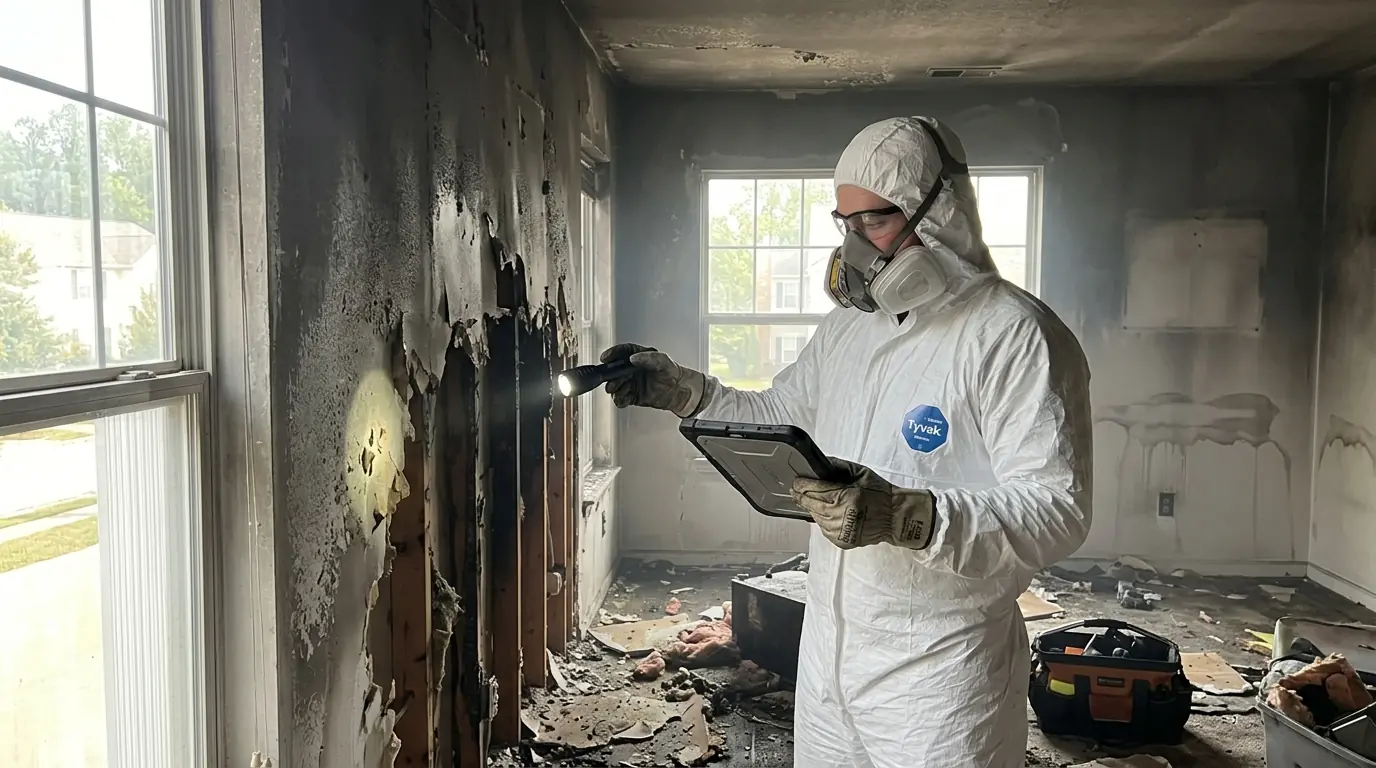
What the assessment file includes
- Room-by-room residue test results
- Moisture readings and a sketched wet-area map
- Photos of every room from each corner
- A continuous video walk-through
- Close-ups of damage and residue patterns
- Contents photos with serial numbers where relevant
- A written scope for drying, cleaning and rebuild
- The fire department incident number, once you have it
Residue Type Testing
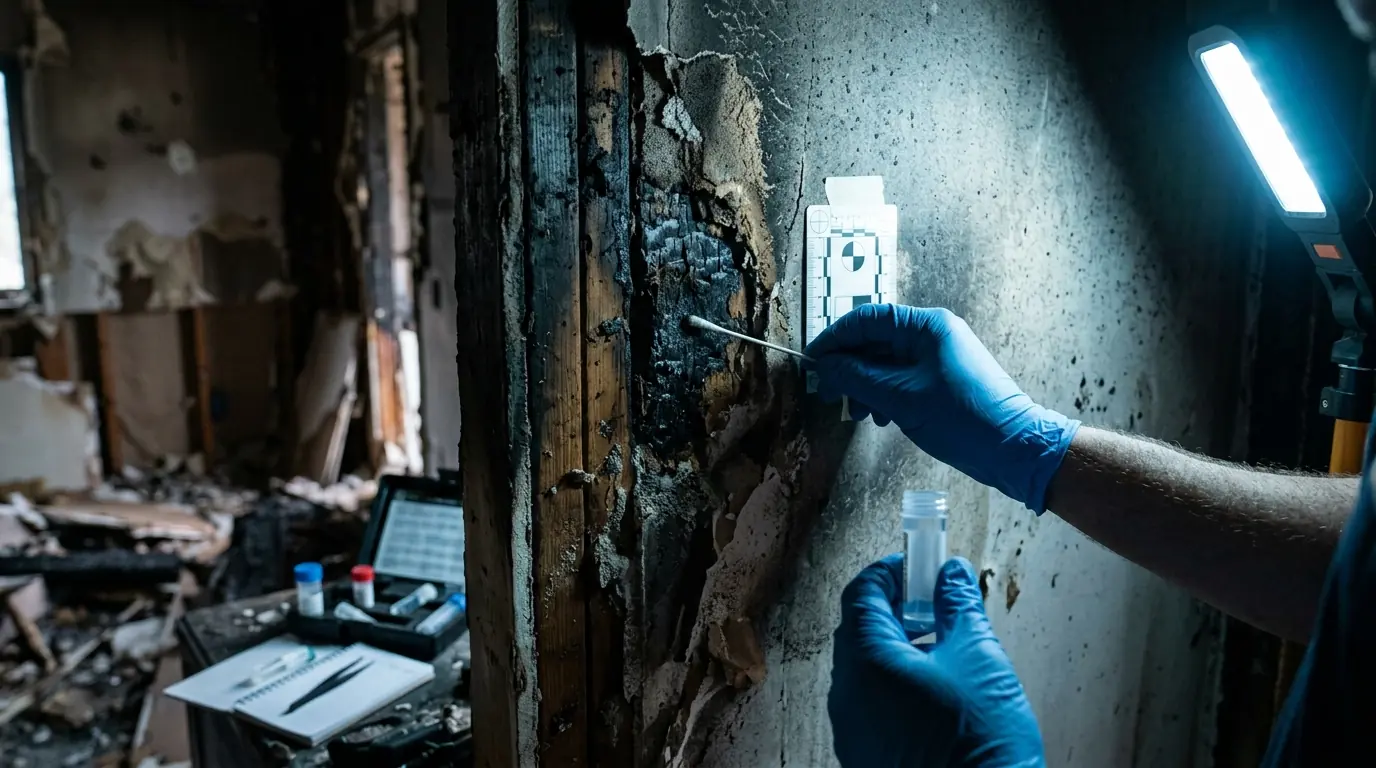
Each room is tested with a dry sponge and by inspection to tell dry wood soot from wet smoke film and the protein residue a kitchen fire leaves. The result goes into the scope for that room, because it decides the cleaning method, the labor and whether a surface can be cleaned or has to be replaced. Testing also finds residue in rooms that look untouched, inside closets and cabinets, which is where claims most often come up short. Results are listed room by room in the file.
Moisture Mapping
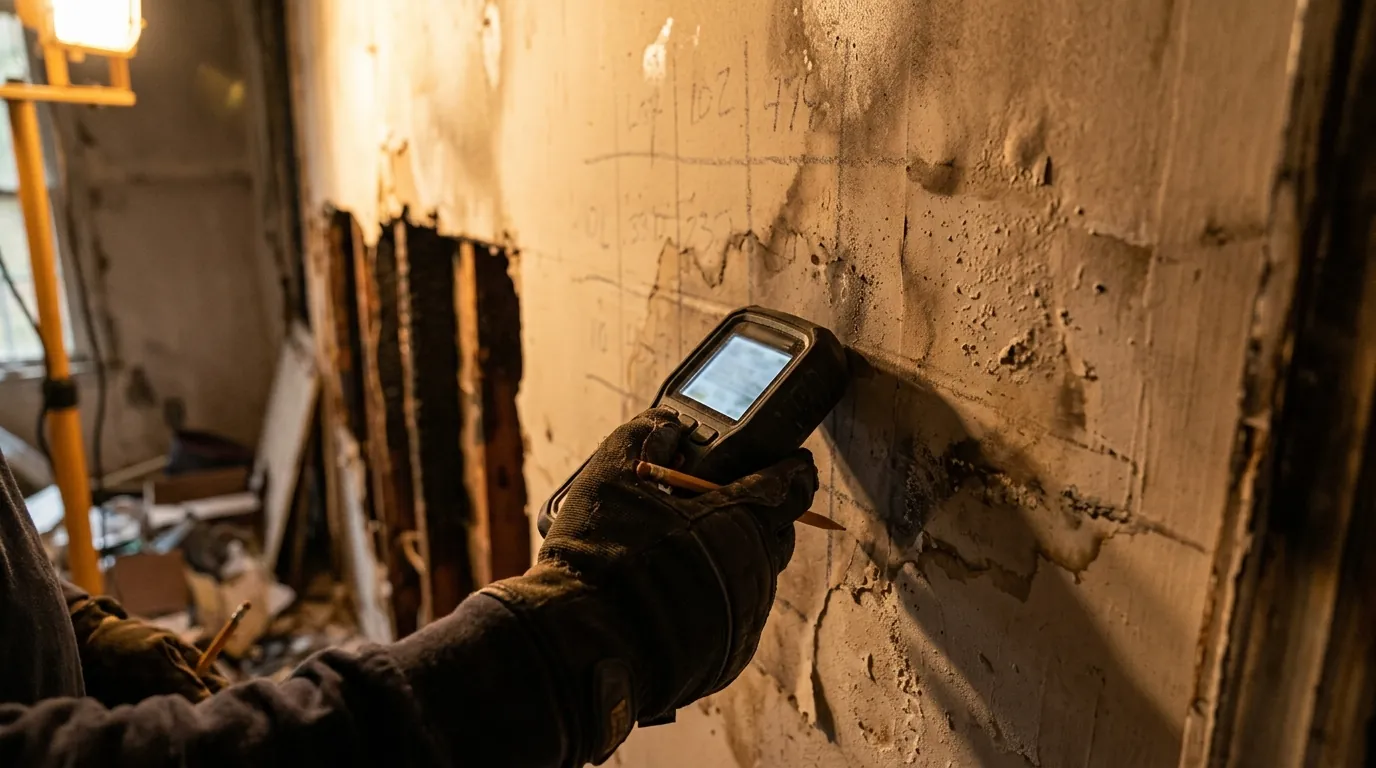
Firefighting water spreads further than it looks. It runs into wall cavities, under flooring and into the rooms below, and it keeps wicking for days. We take moisture readings across walls, floors and ceilings, mark where the wet areas end, and sketch them on a floor plan. That map tells the drying plan where equipment goes, shows the adjuster why a wall that looks fine has to be opened, and becomes the baseline for proving the structure is dry later on.
Photo and Video Inventory for Your Claim File
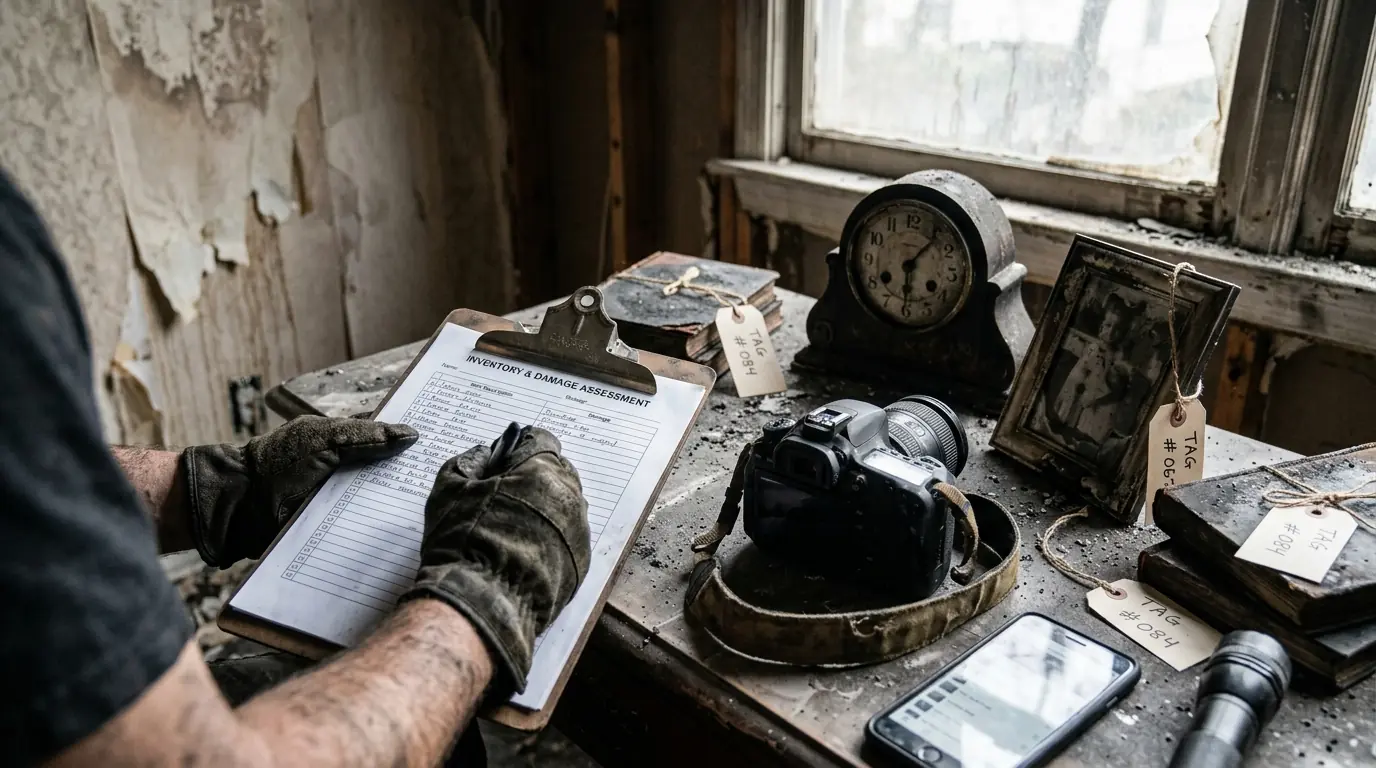
Every room is photographed from each corner and filmed in one continuous walk-through, then close-ups record damage, residue patterns and anything of value. Contents are photographed where they sit, with serial numbers and labels captured where they matter. Items that cannot be saved are photographed before they are set aside. You get the files organized by room, so you and your adjuster work from the same record, and nothing depends on anyone remembering what was on a shelf in the back bedroom.
Getting the fire report in Charlotte
The Charlotte Fire Department runs 45 stations and answered roughly 137,000 calls in 2022, and the fires it responds to are written up to national incident reporting standards. The city publishes those incident reports on its open data portal, and your insurer will usually ask for the report or its incident number. We add it to the claim file next to our assessment, so the cause and date the department recorded line up with the damage we document.
How an assessment runs
- Confirm it is safe to enter
Fire department release, power status and structural hazards first.
- Walk every room
With you, noting what burned, what smoked and what got wet.
- Test the residue
Room by room, including closets and cabinets.
- Map the moisture
Readings across walls, floors and ceilings, sketched on a plan.
- Photograph and film
Rooms, damage, contents and serial numbers.
- Write the scope
What gets dried, cleaned, packed, removed and rebuilt.
- Hand over the file
Photos, video, readings and scope, organized by room.
What moves the cost
An assessment is the first step of the restoration job, and what it takes depends on the size of the loss rather than a published rate. These are the things that make it bigger or smaller.
- Size of the house. More rooms mean more testing, readings and photos.
- How far the water went. Moisture mapping across floors and ceilings takes longer than one room.
- Contents volume. A full photo inventory of a furnished home is the biggest time cost.
- Report detail. Adjusters on larger claims often want floor plans and item lists.
How long the assessment takes
A small kitchen or single-room fire can be assessed in a few hours. A whole house with water in several rooms and a full contents inventory usually takes most of a day, and the written scope follows once the readings and photos are organized.
Questions about fire damage assessment
No. Call your insurer to open the claim and call us to document and protect the house. Policies generally expect you to prevent further damage, and our record helps the adjuster's inspection.
Yes, and you should, before anything moves. Ours add residue results, moisture readings and item-level detail that phone photos usually miss.
Yes. Photos, video, moisture readings and the scope are yours, organized by room.
Test results, readings and photos are what settle those conversations. We walk the house with the adjuster when asked and show where each line of the scope comes from.
As soon as the fire department releases the house. Soot keeps etching surfaces and water keeps spreading, so the first day or two matter.
Yes. It still tells you what can be cleaned, what has to go and what the job involves before you spend money on it.
Related work in Charlotte
Need the loss documented before cleanup starts?
Call and we will walk your Charlotte home, test, measure and photograph it, and hand you the file.
Call (704) 368-1592