Dry smoke residue from a hot, fast fire is powdery and comes off with dry methods; wet smoke residue from a slow, smoldering fire or burning plastics is sticky, smears and smells stronger; protein residue from a kitchen fire is nearly invisible but carries a sharp odor. Each needs its own cleaning method, which is why residue is tested before any wall is touched.
Why fires leave different residue
How a fire burns decides what it leaves. A fire with plenty of oxygen and heat burns fast and fairly completely, leaving dry, powdery soot. A fire starved of oxygen smolders, burns cooler and leaves more unburned material behind as a sticky, oily film. What burned matters too: wood and paper leave different residue from vinyl, foam and plastics, and cooking fires leave a residue of burned fats and proteins.
Most house fires involve more than one of these, so a single house often has different residue in different rooms. The color of the smoke during the fire is a rough clue: thick black smoke usually means plastics and wet residue, while lighter gray smoke points to wood and paper.
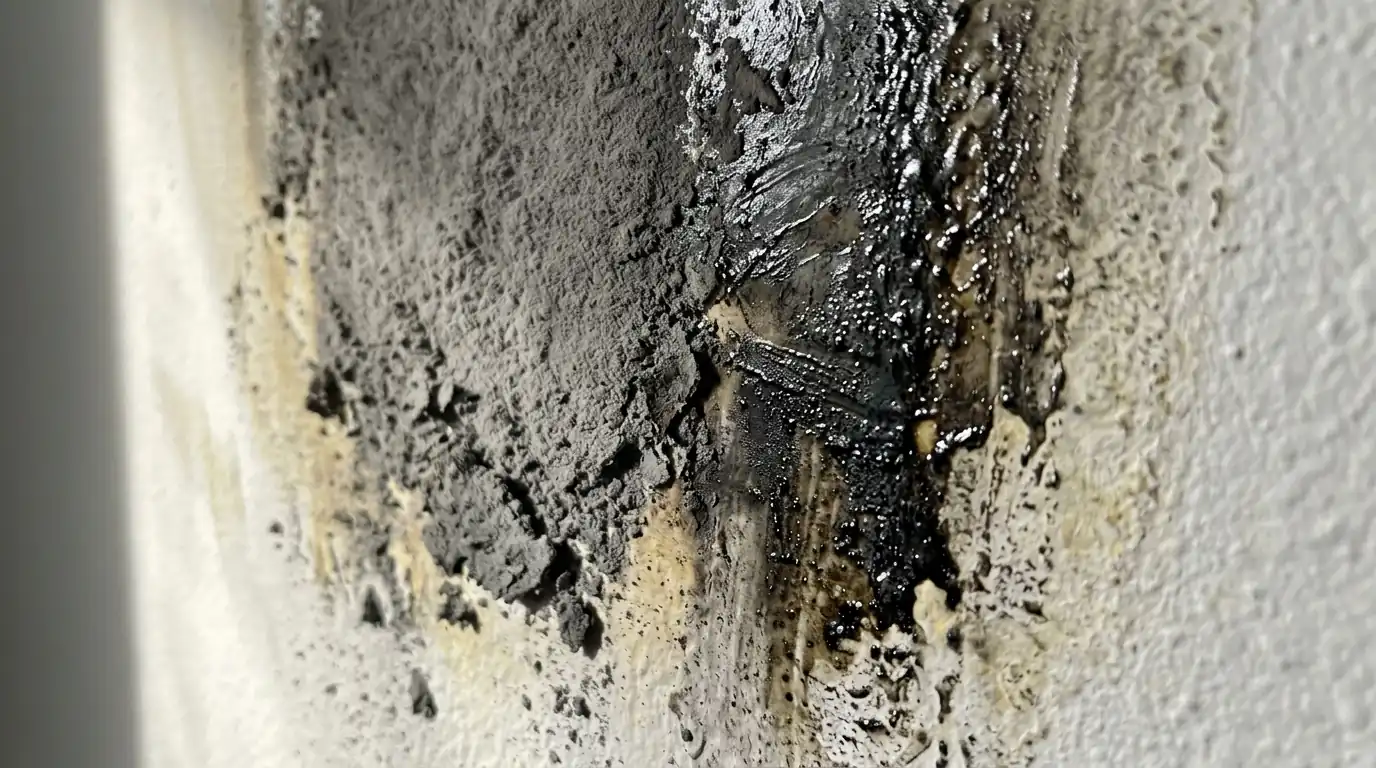
Dry smoke residue
Dry smoke comes from hot, fast fires, often wood and paper. The soot is powdery, gray to black, and sits on the surface. It is the easiest to clean when handled correctly: HEPA vacuuming and chemical dry sponges lift most of it without any water. The mistake is wiping it with a wet cloth, which turns the powder into a paste and pushes it into the paint.
Wet smoke residue
Wet smoke comes from smoldering fires and from burning plastics, foam and rubber. The residue is sticky and dark, smears at a touch, and carries a heavy, acrid smell. Dry sponges only remove the top layer; the rest needs degreasing cleaners and several passes, with rinsing so no film is left under new paint.
Electrical fires, with their burned wire insulation and device housings, usually leave this kind, which is why electrical fire cleanup is planned around synthetic residue from the start.
Not sure what kind of residue you have?
Call and we will test every room before anything is touched. We answer any hour.
(704) 368-1592Protein residue from kitchen fires
Protein residue is the one people miss. Burned food leaves a thin, yellowish, greasy film that is often nearly invisible, with a sharp, sour smell that spreads far beyond the kitchen. It discolors paint over time and needs enzyme or protein-specific cleaners; ordinary cleaners smear it into a haze.
It is also the most common residue in homes. NFPA data put cooking behind 72% of fires in apartments and 37% of fires in one- and two-family homes, so kitchen fire cleanup is one of the most frequent jobs of all.
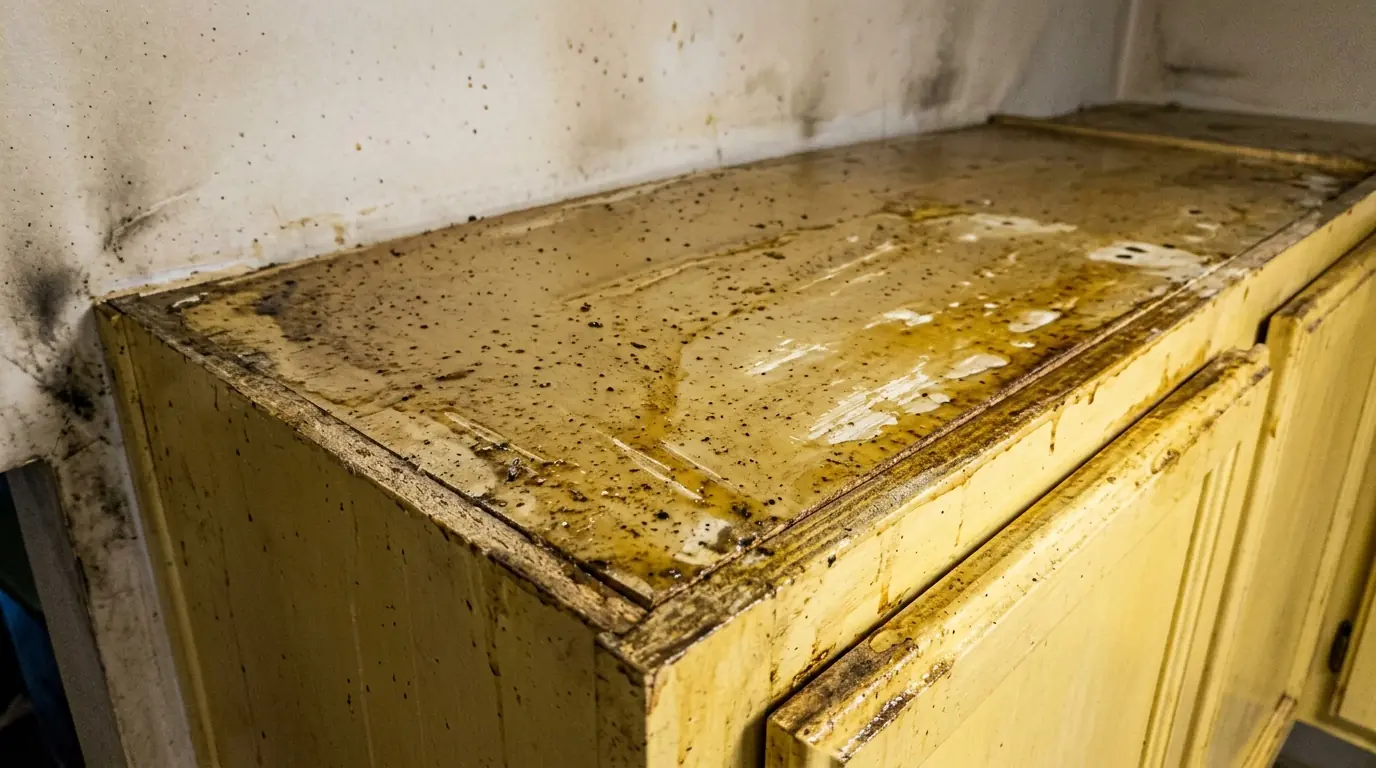
How residue is tested, room by room
Before cleaning starts, each room is checked with a dry sponge and by eye and touch. Dry soot comes off cleanly on the sponge; wet smoke smears; protein film shows as a yellow tint and a sticky feel, often most on upper walls and cabinet tops.
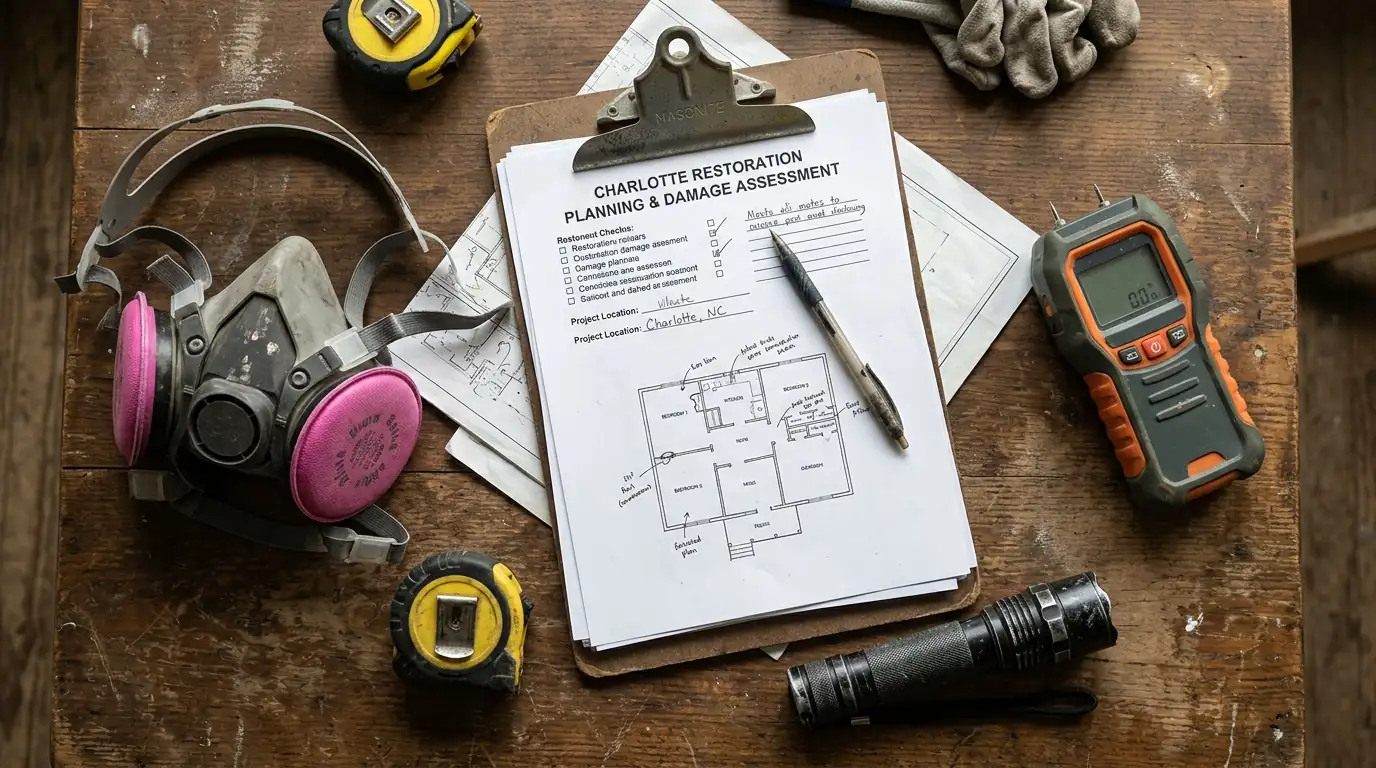
The results go room by room into the assessment and scope, because they decide the method, the labor, and whether a surface can be cleaned or has to be sealed and painted.
Testing also catches residue in rooms that look untouched. Smoke travels to the coolest surfaces, so closets, exterior walls and the rooms farthest from the fire can hold film you cannot see until a sponge shows it. Those rooms are where claims most often come up short.
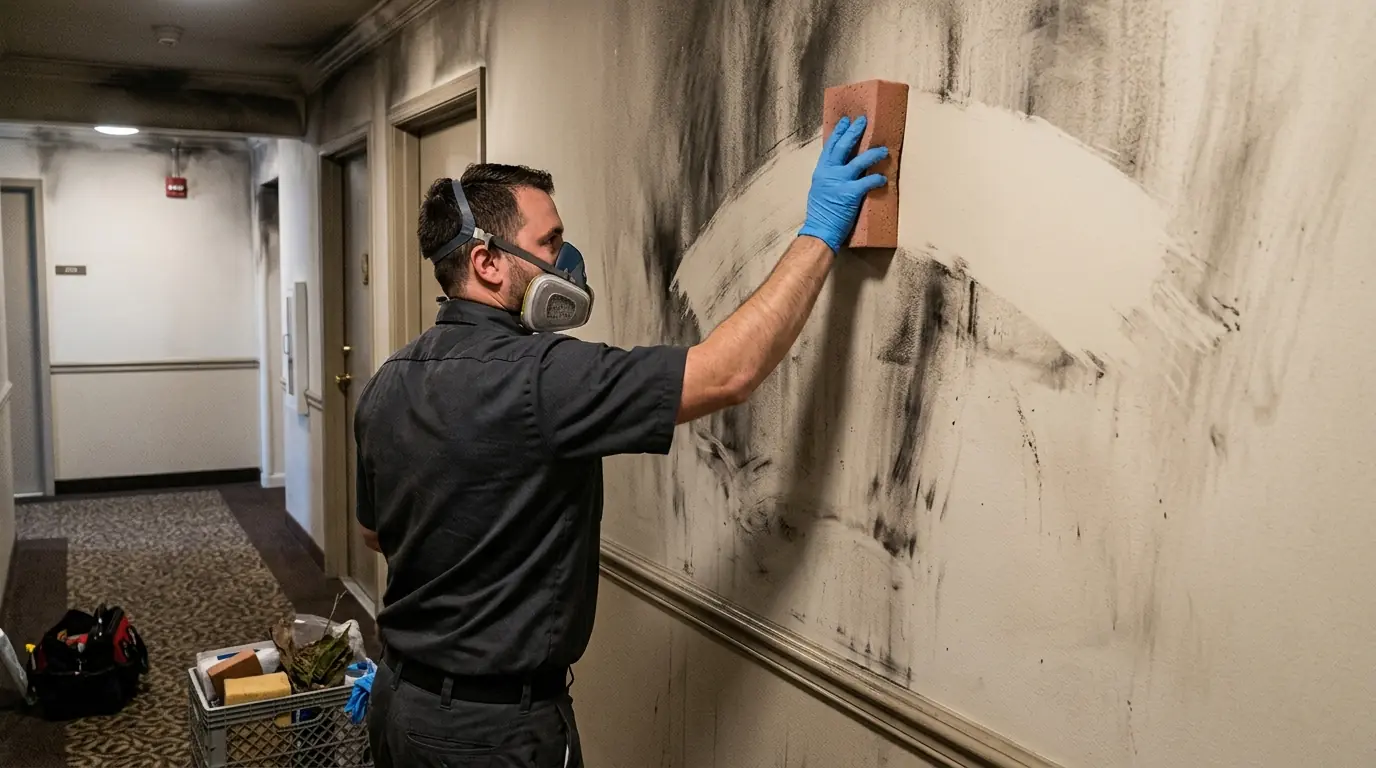
What each residue means for your belongings
The same three residues land on everything you own, and each changes what can be saved. Dry soot on hard goods, dishes and decor usually cleans off completely with the right method, which is why contents cleaning saves so much of a household. Wet smoke residue is the problem for electronics: it is acidic and sticky, it gets into vents and circuit boards, and it keeps corroding until it is removed, so electronics cleaning keeps devices unplugged until they are cleaned.
Protein residue matters most for fabric. It is nearly invisible on clothing, bedding and curtains, but it carries the sour smell into every drawer, and a hot home wash can set it for good. Clothing and textile restoration starts with removing it dry and pretreating before anything gets wet.
What happens when the wrong method is used
Most walls that end up repainted after a fire could have been cleaned with the right method first. These are the common mistakes.
- Water on dry soot smears it into the paint, turning a cleanable wall into a repaint.
- Dry methods on wet smoke spread the residue around and leave a film behind.
- All-purpose cleaner on protein residue leaves a greasy haze that keeps smelling.
- Paint over any of them without sealing, and the stain and odor come back through.
Questions people ask about this
Rub a small area with a dry white cloth. Powder that comes off cleanly is dry soot; black smears are wet smoke; a yellow, greasy film with a sour smell is protein residue.
Wet smoke from plastics and smoldering fires, because it smears and takes several passes. Protein residue is the hardest to notice.
Yes, often. Rooms near the fire and rooms far from it can hold different residue, which is why every room is tested.
Yes. Dry soot usually costs least to clean; wet smoke and protein residue take more time and different cleaners.
Soot particles are fine enough to breathe in, and burned plastics release irritating compounds, so air scrubbers and respirators are used during cleaning.
Keep reading
How to get smoke smell out of a house for good
Why candles and open windows fail, and how fogging, hydroxyl and sealing actually remove the odor.
Can smoke-damaged clothes and furniture be saved?
What restores well, what rarely does, and how to decide before you throw anything away.
What to throw away after a house fire
Food, medicine, cosmetics and soft goods that have to go, what is worth cleaning, and why to photograph first.
Want every room tested first?
Call and we will read the residue room by room and plan the cleaning to match.
Call (704) 368-1592