Electrical fire cleanup in a Charlotte home deals with the residue that burning wire insulation, device housings and plastics leave: a sticky, acidic film that smears and corrodes. The circuit stays off until an electrician has made it safe; then we clean the room, deodorize, and replace what the heat or residue ruined.
Signs an electrical fire left more than a scorch mark
- A sharp plastic smellBurned insulation smells unlike wood smoke, and it lingers.
- Soot fanning up the wallA dark plume above an outlet or switch shows how far the smoke went.
- Discolored cover platesBrowned or warped plates nearby point to heat in the circuit.
- Residue on light fixturesCeiling fixtures on the same circuit collect film and heat marks.
- A sticky film that smearsSynthetic soot smears at a touch, unlike dry wood soot.
- Soot at the return grilleThe HVAC pulled smoke from the room into the rest of the house.
- Breakers that trip againA circuit that keeps tripping means stop and call an electrician.
From a tripped breaker to a clean room
- Make it safe
The circuit stays off; if the panel is involved, the house may too.
- Walk and photograph
The source, the soot pattern and every affected room.
- Open the wall if needed
Scorched drywall removed so the electrician can reach the box.
- Dry clean first
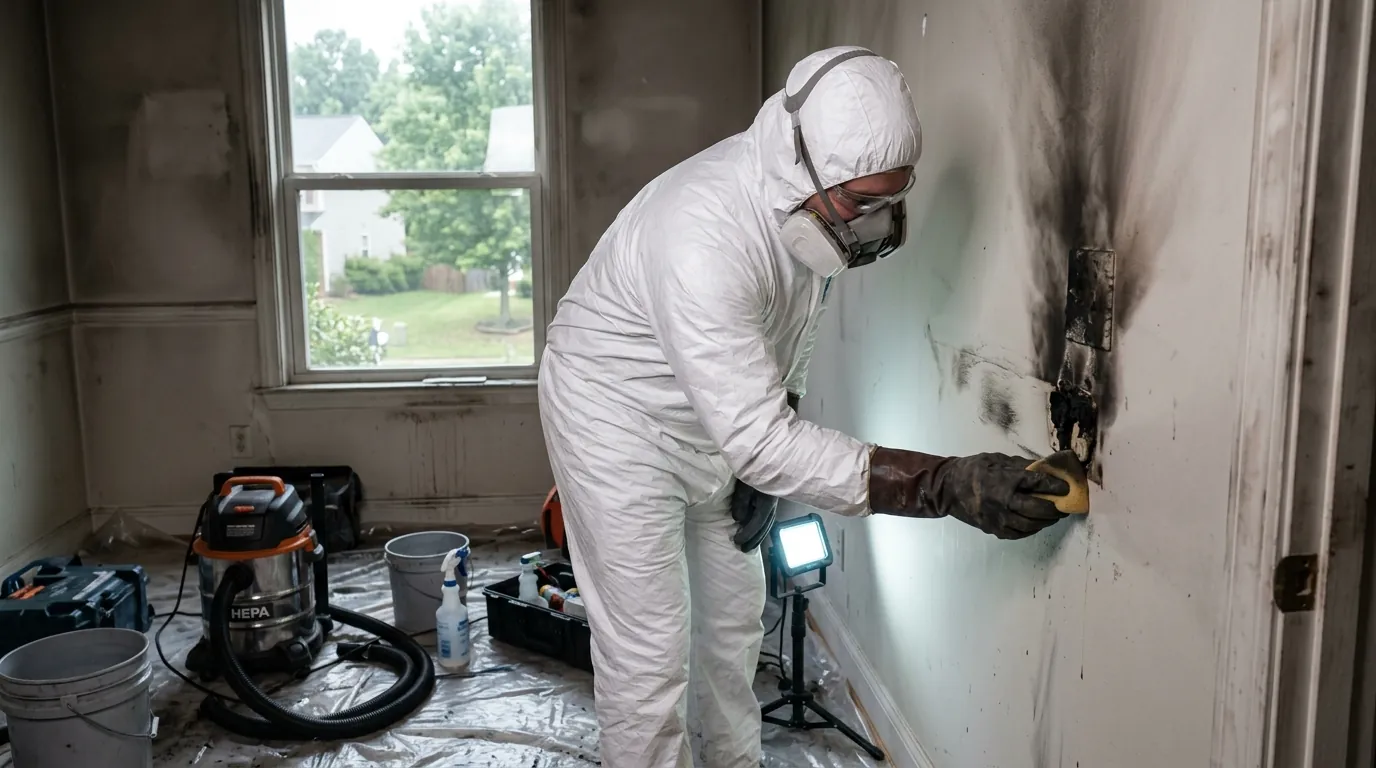
HEPA vacuuming and dry sponges on walls, ceilings and fixtures.
- Clean the synthetic film
Residue-specific cleaners, rinsed between passes.
- Clean and test contents
Electronics and appliances near the source handled separately.
- Treat the odor
Once the residue is gone and the repair is inspected.
Why a small electrical fire leaves a big mess
Most electrical fires start in an outlet, a switch, a light fixture, an extension cord or the panel, and many burn out or are put out before they spread. The damage left behind is out of proportion to the flame: plastics and vinyl wire jacketing burn into a black, oily smoke that coats the room and carries a sharp chemical smell.
That residue needs synthetic-smoke methods, and the work fits around the electrical repair, which comes first.
Outlet, Panel and Wiring Fires
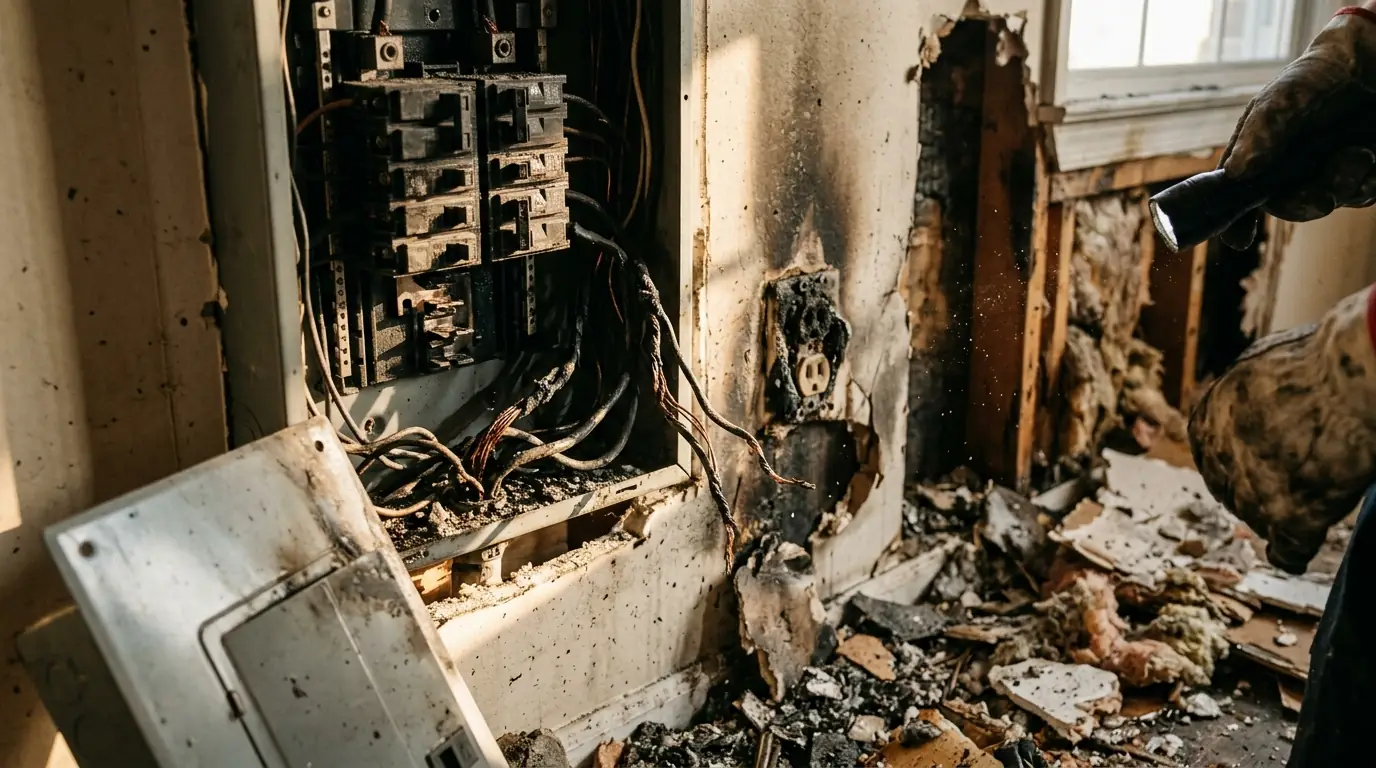
An outlet or switch fire usually scorches the wall around the box and throws soot up the wall and across the ceiling. A panel fire does the same in a garage, basement or utility closet, and often smokes the whole house through the return air. We clean the soot pattern outward from the source, remove the scorched drywall around the box when the electrician needs access, and check the wall cavity for smoke that traveled along the wire run. Anything behind the wall is photographed before it is closed up.
Melted Plastic and Synthetic Residue
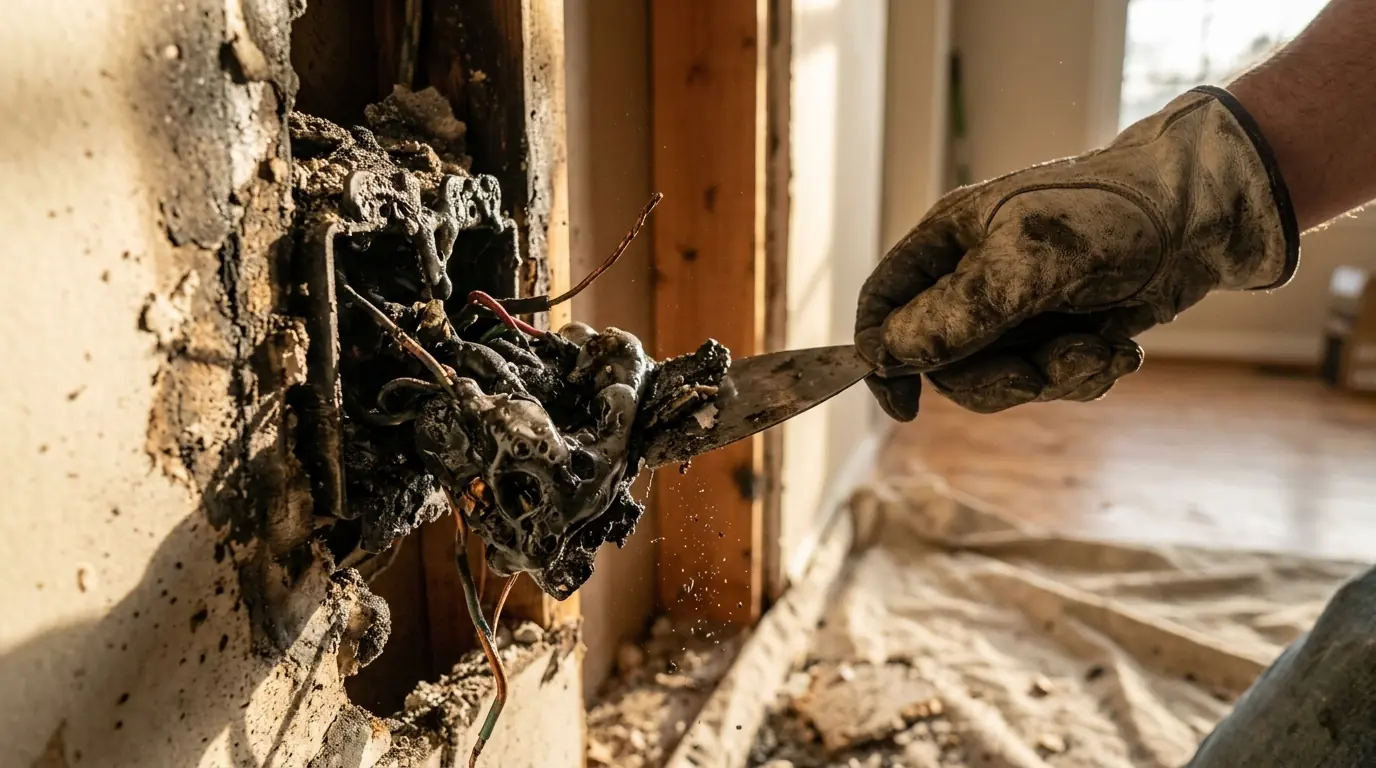
Synthetic residue is the hardest kind to clean. It smears when wiped, clings to glossy surfaces, and has a harsh odor that survives ordinary cleaning. We start with HEPA vacuuming and dry sponges to take off what comes off dry, then use cleaners made for synthetic residue, rinsing between passes. Melted plastic fused to a surface is cut or scraped away, not smeared. Electronics and appliances near the source get their own cleaning and testing, because the same residue corrodes circuit boards.
Coordinating the Electrical Repair
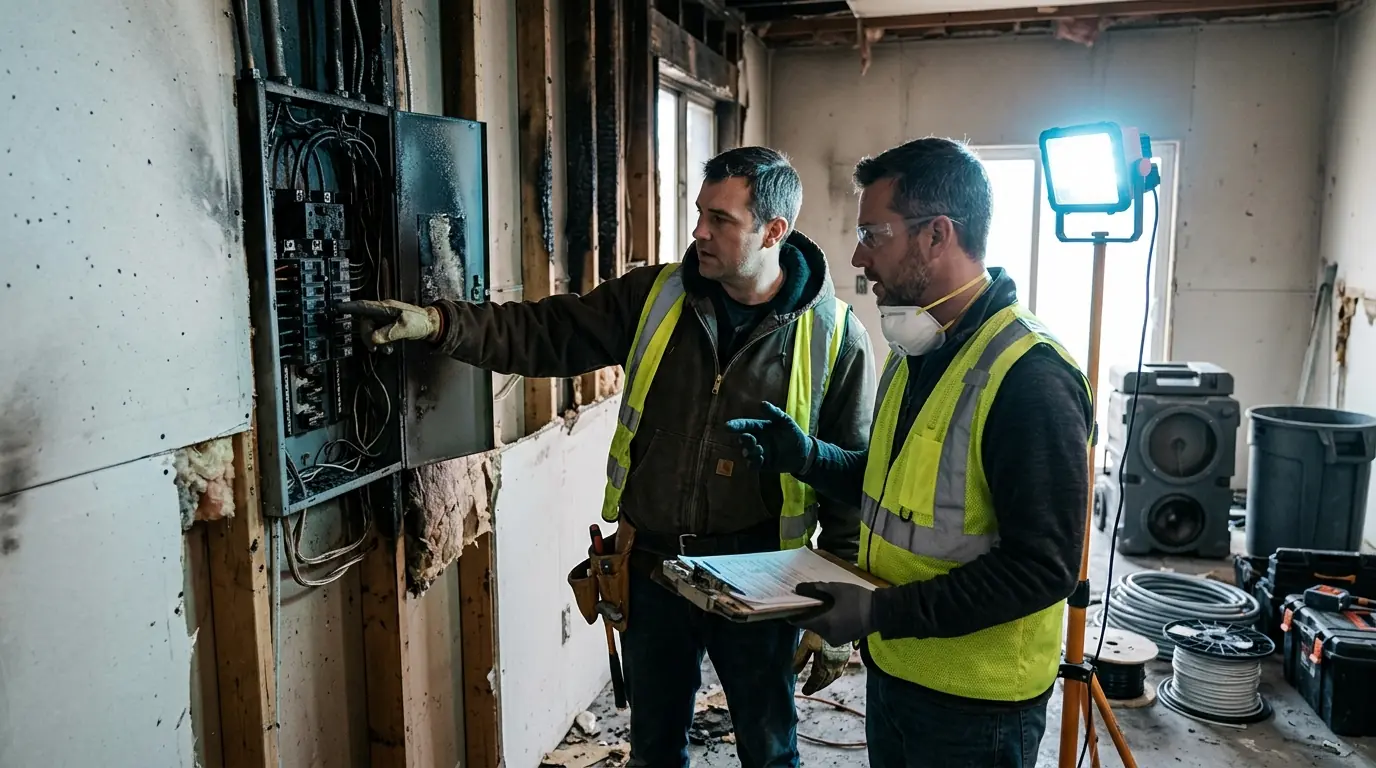
No cleaning happens on a circuit that has not been made safe. The electrician isolates the damaged circuit, and often the panel, then repairs or replaces wiring, boxes and devices under a permit. We plan around that: cleaning the safe rooms first, opening walls where the electrician needs access, and finishing the fire-side rooms once the repair is inspected. Your insurer gets one set of photos covering both the electrical damage and the smoke, which makes the claim easier to follow.
How long an electrical fire job takes
The cleaning itself is usually quick, often a day or two for a room or two. What sets the calendar is the electrical side: the repair, the permit inspection, then closing and finishing any walls that were opened. Final cleaning and odor treatment come after that inspection so nothing has to be cleaned twice.
Permits and code for electrical fire repairs in Charlotte
Mecklenburg County Code Enforcement requires a permit for any electrical installation or repair, and Charlotte enforces the 2023 National Electrical Code, so replaced wiring, boxes and panels are inspected before the walls close. That inspection usually sets the schedule for the rest of the job, which is why we sequence the cleaning around it instead of finishing every room first.
What moves the cost
Electrical fire cleanup is priced like other soot work, by the affected area, plus any contents and odor treatment.
- How far the smoke spread. A scorched outlet in one room versus a panel fire that smoked the house.
- Synthetic residue. Burned plastics take more passes and stronger cleaners than wood soot.
- Wall openings. Drywall opened for the electrician adds removal now and repair later.
- Contents near the source. Electronics and appliances need their own cleaning and testing.
- Soot damage cleanup$325 to $4,500 or more
- Smoke remediation per square foot$3.50 to $7.00 per square foot
Published planning ranges, not our quote. Local labor, access and how far the smoke traveled move the final figure.
Questions about electrical fire cleanup
Often, if the damaged circuit is isolated and an electrician has confirmed the rest is safe. If the panel was involved, power may be off until it is repaired.
No. An electrician repairs the wiring under a permit. We clean, open walls where they need access, and schedule around their work and the inspection.
Synthetic residue holds odor and releases it as the house warms up. It fades only when the residue is cleaned off the surfaces it landed on.
Burned plastics release irritating compounds, so we use respirators and air scrubbers while cleaning. Keep children and pets out of the room until it is done.
Keep them unplugged. They are cleaned and tested separately, with results in the claim file.
Cleaning often takes a day or two once the circuit is safe. Rooms with opened walls wait on the electrical inspection and the drywall repair after it.
Related work in Charlotte
Breaker tripped and the room smells burned?
Keep that circuit off and call. We answer any hour across Charlotte.
Call (704) 368-1592