HVAC cleaning after a Charlotte house fire removes soot and smoke residue from the return and supply ducts, the air handler's coil, blower and plenum, and the registers, then replaces filters. It should happen before the system runs again, because a single heating or cooling cycle spreads residue into every room, including rooms that were already cleaned.
Why the HVAC gets cleaned before it runs
A forced-air system pulls air through the return, runs it across the coil and blower, and pushes it back out through every supply register. If it was running when the fire started, or someone turned it on afterward, it pulled smoke through that whole path and left residue on every surface inside. The next time it runs, it blows that residue back out.
So the HVAC is cleaned as part of the smoke job, and it stays off until then.
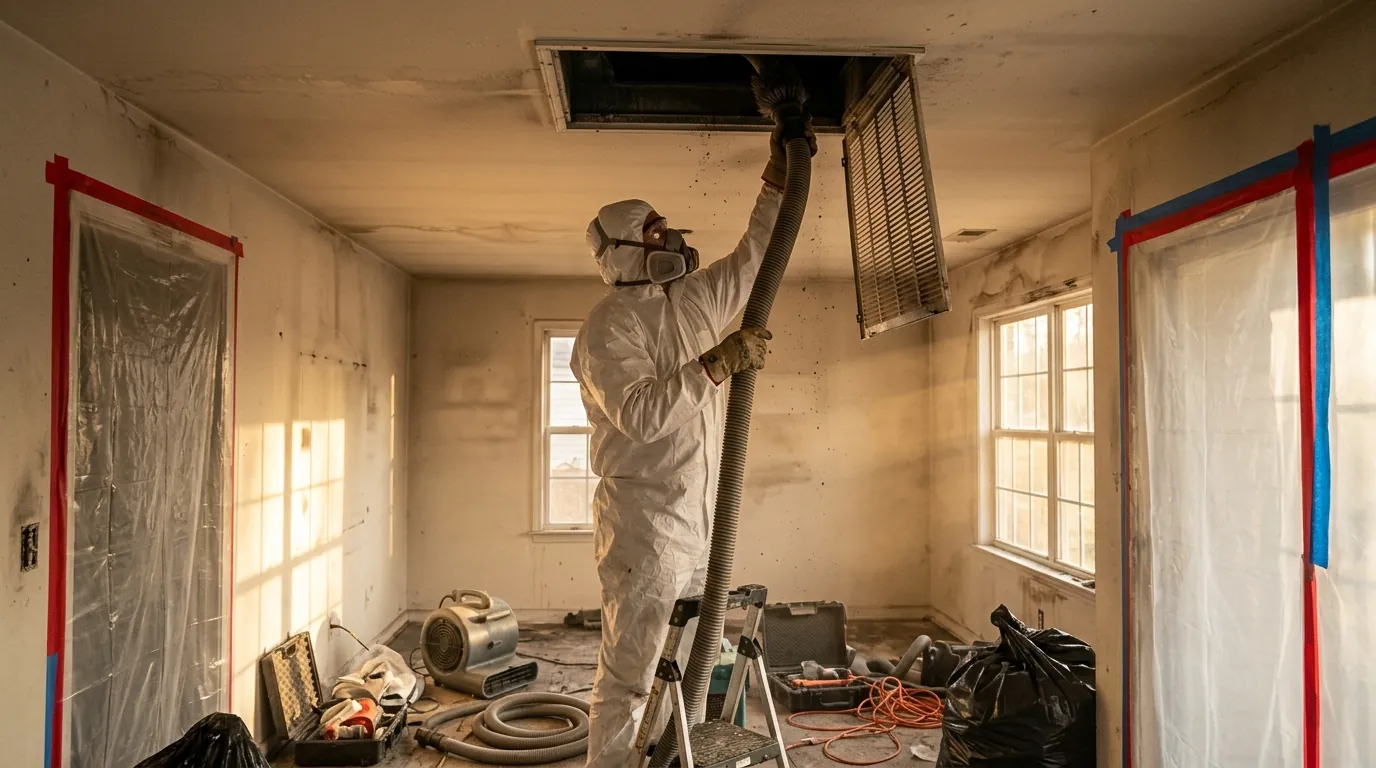
Duct Soot Removal
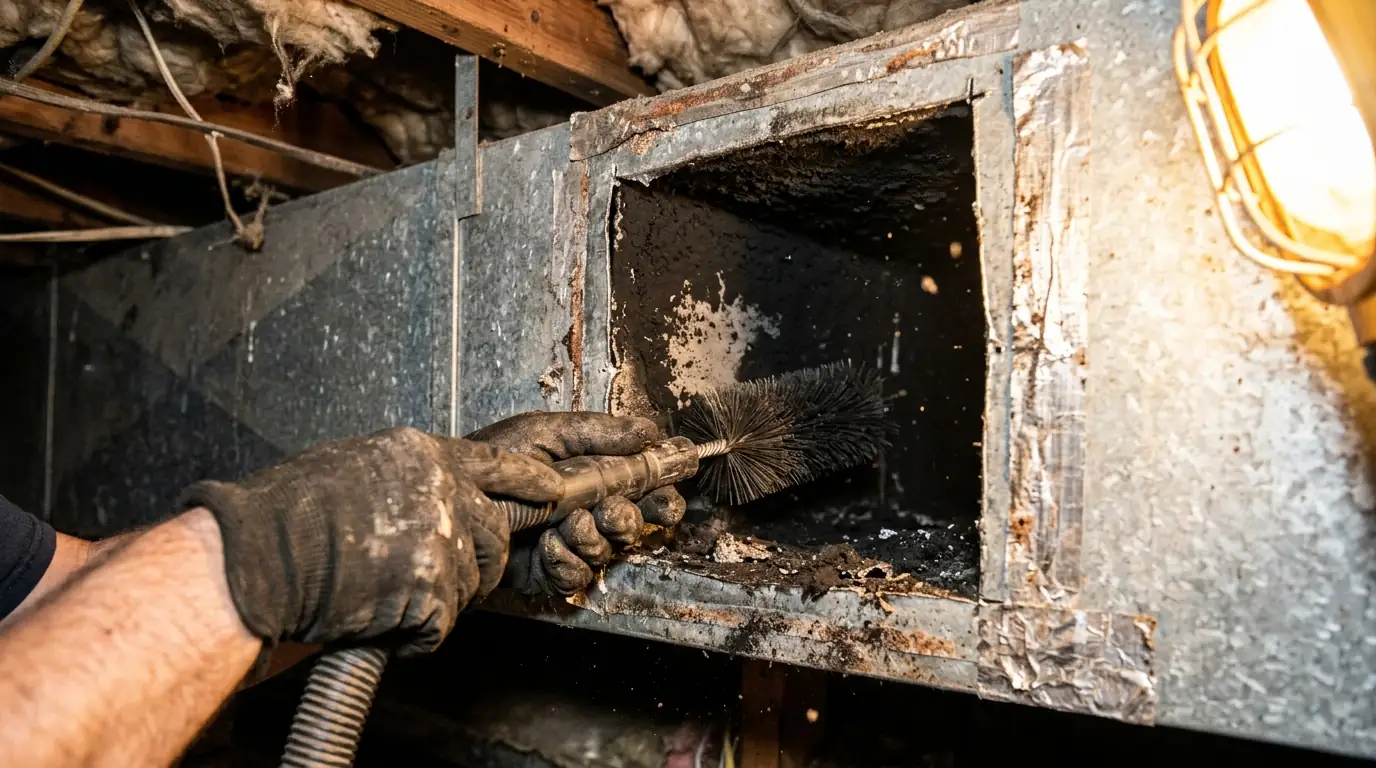
Ducts are cleaned under negative pressure: a powerful vacuum is connected to the trunk line, and brushes and air whips are run through each branch to break soot loose so it is pulled toward the vacuum instead of into the house. Flexible duct that is heavily sooted or heat-damaged is often cheaper and more reliable to replace than to clean, and we say so. Duct board and lined ducts with smoke residue in the lining are handled the same way: cleaned where possible, replaced where not.
Coil, Blower and Plenum Cleaning
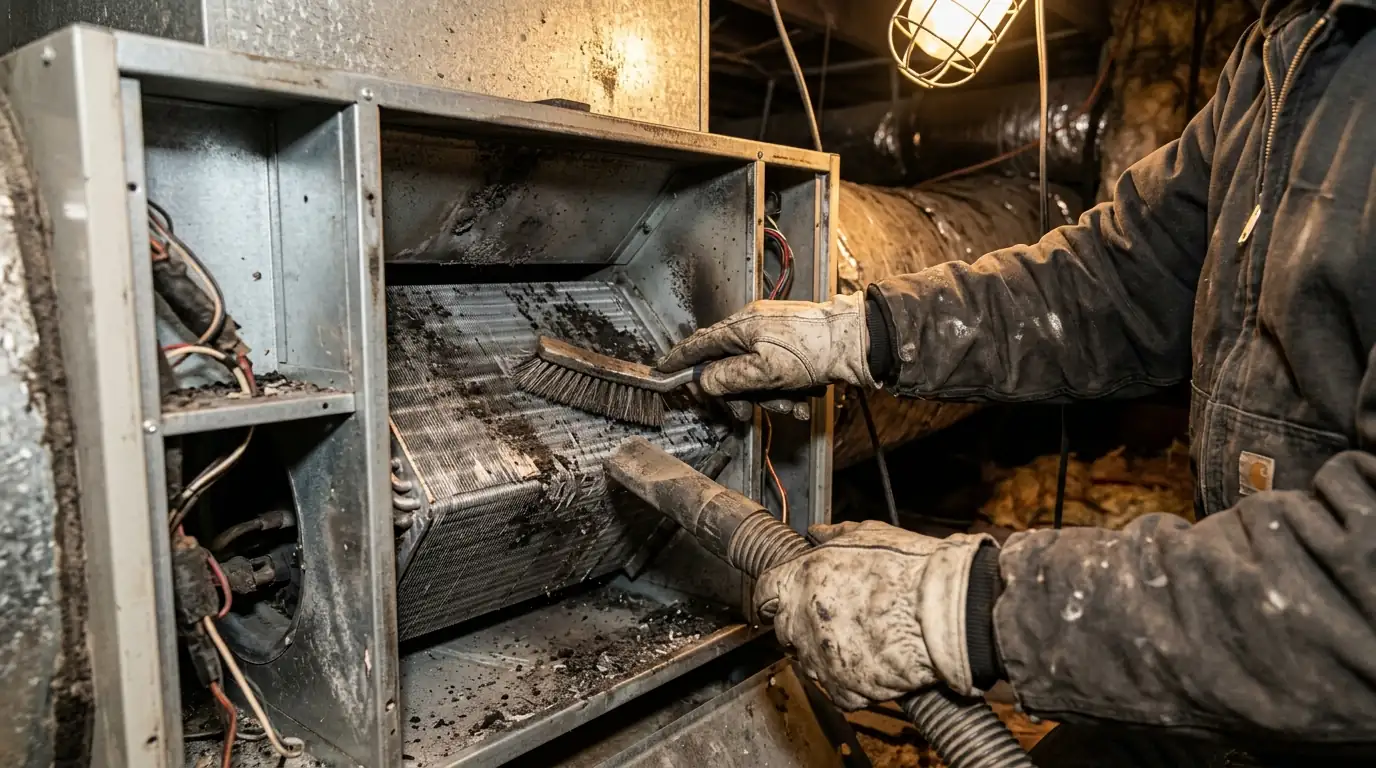
The air handler is where residue concentrates. The evaporator coil's fins trap soot and hold odor, so the coil is cleaned with coil cleaner and rinsed. The blower wheel is removed or cleaned in place, because soot on its blades throws it off balance and cuts airflow. The plenum and cabinet interior are vacuumed and wiped. Refrigerant and electrical repairs, if the fire damaged the unit, are for the HVAC contractor, and cleaning is finished before they restart the system.
Filter and Register Replacement
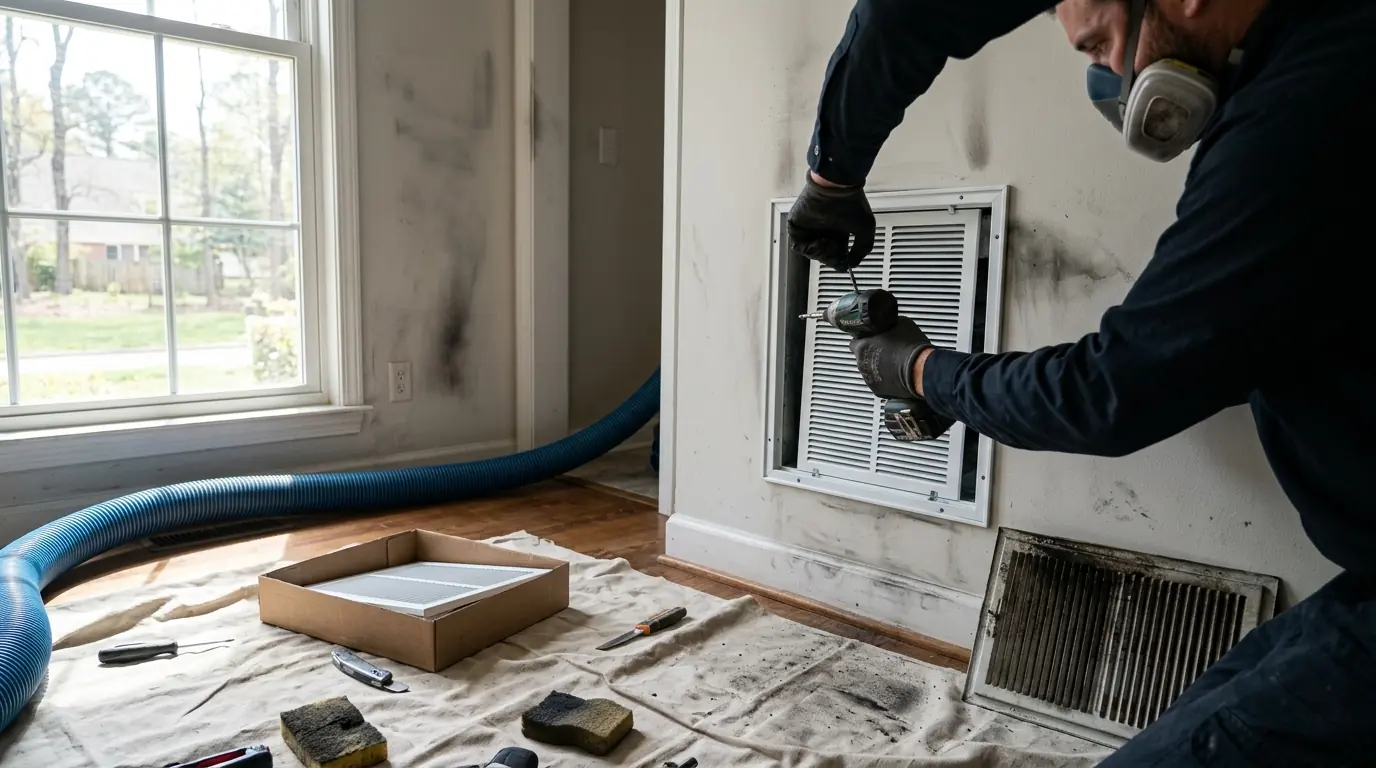
Filters that were in the system during the fire are full of soot and go straight in the bag. After cleaning, new filters are installed, sometimes a higher-efficiency grade for the first weeks to catch residue still working loose, followed by an early second change. Supply registers and return grilles are removed, cleaned or replaced, and the boots behind them wiped. Then the system is run with you while we check the registers for any sign of soot on a white cloth.
Heat pumps in Charlotte homes run most of the year
EIA's 2020 housing survey found that 38% of North Carolina homes heat with a central heat pump, nearly three times the national share of 13%. A heat pump heats and cools through the same air handler and ducts, so in many Charlotte houses the system runs in almost every season, and residue left inside gets circulated all year rather than sitting idle through a mild winter.
How the HVAC is cleaned
- Keep it off
No heating or cooling until cleaning is done.
- Inspect the system
Returns, supplies, coil, blower and filter checked for soot.
- Seal the registers
Covered so the vacuum pulls residue in, not out.
- Clean the ducts
Negative air and agitation, branch by branch.
- Clean the air handler
Coil, blower wheel, plenum and cabinet.
- Replace filters and grilles
New filters, cleaned or new registers.
- Run and check
A test run with you, registers checked for soot.
What moves the cost
Duct cleaning after a fire is priced by the size of the system and how much of it needs replacing. The published range below covers duct cleaning after a fire.
- Size of the system. More runs and registers mean more time.
- Residue level. Light soot versus heavy synthetic residue in every branch.
- Replacement. Heat-damaged flex duct or duct board costs more than cleaning.
- Air handler. Coil and blower cleaning is a separate step from the ducts.
- Air duct cleaning after a fire$250 to $500
Published planning ranges, not our quote. Local labor, access and how far the smoke traveled move the final figure.
Signs smoke went through your HVAC
- A black or gray filterA filter darker than its age explains.
- Soot around supply registersDark streaks on the ceiling around vents.
- A dirty return grilleResidue where the system pulled air in.
- Smoke smell when it runsOdor that comes back every heating or cooling cycle.
- Soot inside the register bootVisible once the grille is lifted off.
- Residue in cleaned roomsFilm coming back on walls after cleaning.
- Weaker airflowSoot on the coil and blower restricts air.
Duct and air handler work pairs HEPA negative-air machines with Chemspec coil and residue cleaners, and Odorox hydroxyl units for the air afterward.
Questions about hvac & duct cleaning after a fire
Please do not. Every cycle spreads residue into clean rooms. Portable fans or window units in unaffected rooms are safer until cleaning is done.
Not always. Metal ducts clean well. Flexible duct that is heavily sooted or heat-damaged is often better replaced.
It removes the residue that causes it inside the system. Odor elsewhere in the house is handled by cleaning and treating the rooms.
No. If the fire damaged the unit, an HVAC contractor repairs it. We clean it and coordinate so they restart a clean system.
Usually a day for a typical house. Replacing duct runs or cleaning more than one system adds time.
After heavy cleaning in the rooms and before odor treatment, so the system does not re-contaminate cleaned rooms.
Related work in Charlotte
Heat or AC ran after the fire?
Turn it off and call. We clean systems across Charlotte before they run again.
Call (704) 368-1592