Crawlspace drying in a Charlotte home removes standing water and wet insulation from under the house, dries the joists, beams and subfloor with dehumidifiers and air movers until moisture readings reach dry targets, and replaces the vapor barrier on the ground. It matters after plumbing leaks, storms and firefighting, because water left under a house feeds mold on the framing.
Why water under the house matters so much
Water that goes through a floor, a leak under a bathroom, or storm water running under the foundation ends up in the crawlspace, on the plastic vapor barrier and the soil below. It does not evaporate on its own in a closed, humid space. The joists and subfloor absorb it, fiberglass insulation between the joists holds it against the wood, and mold can start on the framing within days.
Crawlspace drying is slow, cramped work, and it is often skipped. It should not be.
What moves the cost
Crawlspace drying is priced by the size of the crawlspace, how much has to come out and how long the equipment runs. Published cost guides do not list it separately, so here is what drives the number.
- Water type. Clean supply water versus dirty storm or sewer water.
- Insulation. Wet batts between the joists removed and replaced.
- Vapor barrier. New barrier area and sealing detail.
- Drying time. Equipment runs until the wood reaches dry targets.
Wet Crawlspaces After Leaks and Firefighting
Standing water is pumped out first, with the power to anything in the crawlspace checked before anyone goes in. Water from a supply leak is clean; water from firefighting, a sewer line or storm runoff is dirty and handled accordingly. We trace where the water spread with moisture meters on the joists and subfloor, since the wet area underneath is often larger than the damage upstairs. Any plumbing leak is fixed by a plumber before drying starts, so the job is not done twice.
Vapor Barrier Replacement
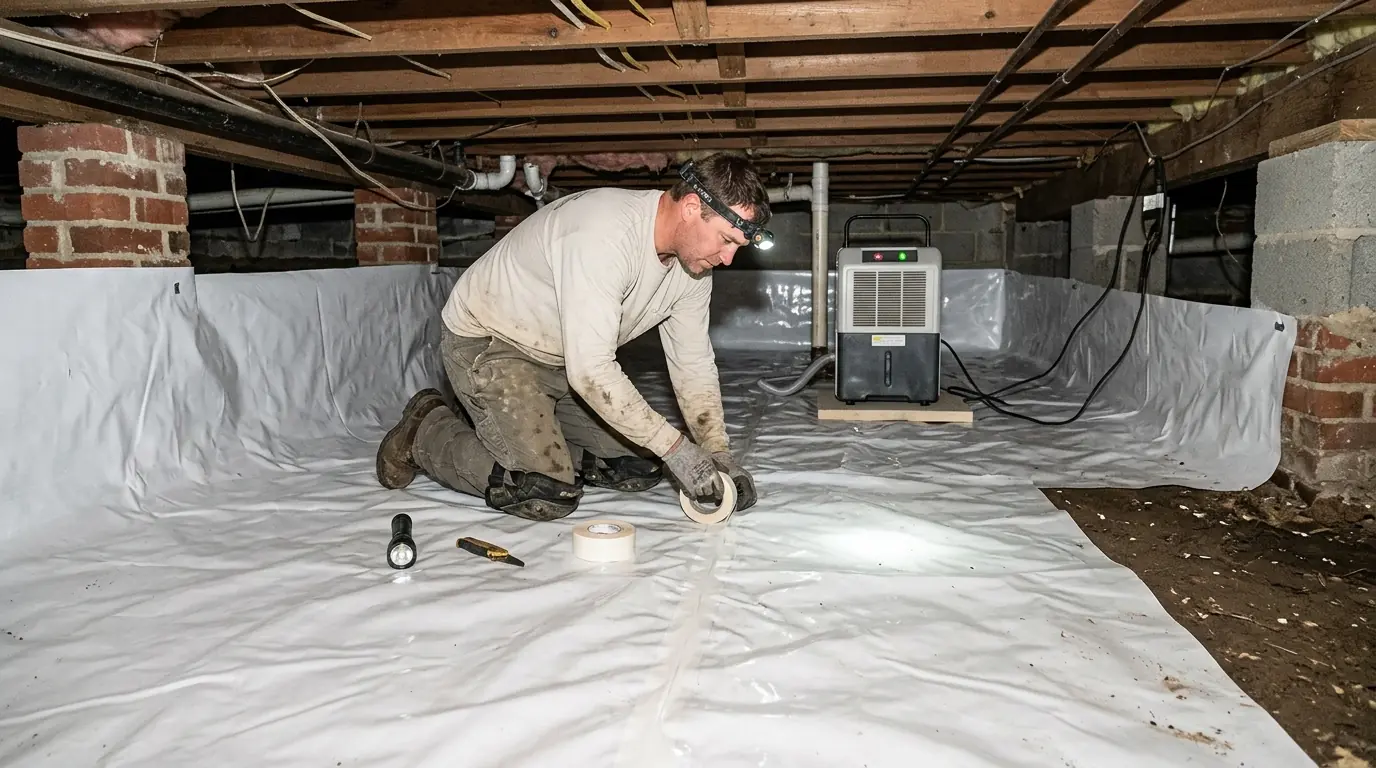
The vapor barrier is the plastic sheet on the crawlspace floor that keeps ground moisture out of the house. After a flood or a leak it is usually torn, full of water pockets and dirty underneath, so it is pulled out, the soil is allowed to dry, and a new barrier is laid with overlapping, taped seams turned up the foundation walls. A good barrier also makes the crawlspace easier to inspect and keeps future leaks visible instead of soaking into the soil.
Joist and Subfloor Moisture
Wet fiberglass insulation between the joists holds water against the wood and has to come out. The joists, beams and subfloor are then dried with dehumidifiers and air movers placed in the crawlspace, with readings taken on the wood daily until it reaches dry targets. Framing with surface mold is cleaned and treated with an antimicrobial. Once it is dry and the new barrier is down, insulation is replaced between the joists, and floors upstairs that cupped are judged after the wood below is stable.
What crawlspace drying includes
- Safety check of power and access
- Pump-out of standing water
- Moisture readings on joists, beams and subfloor
- Removal of wet insulation between the joists
- Removal of the torn or soaked vapor barrier
- Dehumidification with daily readings to dry targets
- Cleaning and treatment of surface mold on framing
- New vapor barrier with taped seams, then insulation replaced
Crawlspaces and older Charlotte houses
Builders across the South Atlantic states have moved almost entirely to slab foundations for new houses: 85.7% of new single-family homes started in the region in 2024, according to NAHB's analysis of Census data, while crawlspaces made up just 9.2% nationally. So crawlspaces around Charlotte sit mostly under older houses, whose insulation and vapor barriers are often past their best before any leak happens. Water damage in those homes almost always needs the crawlspace checked.
How a crawlspace is dried out
- Check it is safe
Power and access checked before anyone goes in.
- Pump out
Standing water removed from the crawlspace floor.
- Map the moisture
Readings on joists, beams and subfloor.
- Remove wet materials
Soaked insulation and torn vapor barrier pulled out.
- Dry the framing
Dehumidifiers and air movers, with readings daily.
- Treat surface mold
Framing cleaned and treated where needed.
- Close it up
New vapor barrier, then insulation replaced.
Crawlspace drying runs on Dri-Eaz and Phoenix dehumidifiers with B-Air and XPOWER air movers, and Benefect antimicrobial on framing where it is needed.
Questions about crawlspace drying & vapor barrier
A musty smell in the house, cupping floors, high indoor humidity or water you can see from the access hatch are the usual signs.
Rarely. Wet fiberglass holds water against the joists and is removed and replaced.
Usually several days to a week or more, longer than the rooms above, because crawlspaces are tight and humid.
After a flood or leak, usually yes. A torn, dirty barrier holds water and odor under the house.
Sealing and conditioning a crawlspace is a separate building project with its own code requirements. We restore the crawlspace to dry and sound first; encapsulation can be planned afterward.
Yes. Air moves up from the crawlspace into the house, carrying odor and spores with it.
Related work in Charlotte
Water under the house?
Call and we will check the crawlspace and start the drying. We serve homes across Charlotte.
Call (704) 368-1592