Water damage restoration in a Charlotte home starts with stopping the source and extracting standing water, then drying the structure with air movers and dehumidifiers until moisture readings reach dry targets. Drywall, insulation or flooring that cannot dry in place is removed, and the damaged areas are rebuilt once the structure is confirmed dry.
Signs of water damage you cannot see yet
- Baseboards pulling awaySwelling wood and drywall push trim off the wall.
- Soft or cupped flooringHardwood cups and laminate lifts as water gets underneath.
- Stains on the ceiling belowWater from above shows as rings before it drips.
- Bubbling paintMoisture behind the paint lifts it off the wall.
- A musty smellDamp materials start smelling before mold is visible.
- A higher water billA slow hidden leak often shows up on the bill first.
- Warm spots on a slab floorA hot water line leaking under the slab can warm the floor.
From the first call to a dry house
- Stop the source
We help you shut off the water or the main on the phone.
- Extract standing water
Truck-mounted or portable extraction from floors and carpet.
- Map the moisture
Meters and thermal imaging to find where the water went.
- Remove what cannot dry
Pad, soaked insulation, and drywall below the wet line.
- Set drying equipment
Air movers and dehumidifiers placed by the readings.
- Check readings daily
Equipment moved or removed as each area reaches target.
- Repair
Drywall, flooring and finishes once the structure is dry.
What happens to a house in the first 48 hours of a leak
Water moves down and sideways: through the floor, under baseboards, into wall cavities and down to the subfloor or crawlspace. Drywall wicks it upward, insulation holds it, and wood swells. Within a day or two, wet materials can start growing mold, which turns a drying job into a remediation job.
Speed matters most at the start and measurement at the end: a structure is dry when the readings say so, not when it feels dry.
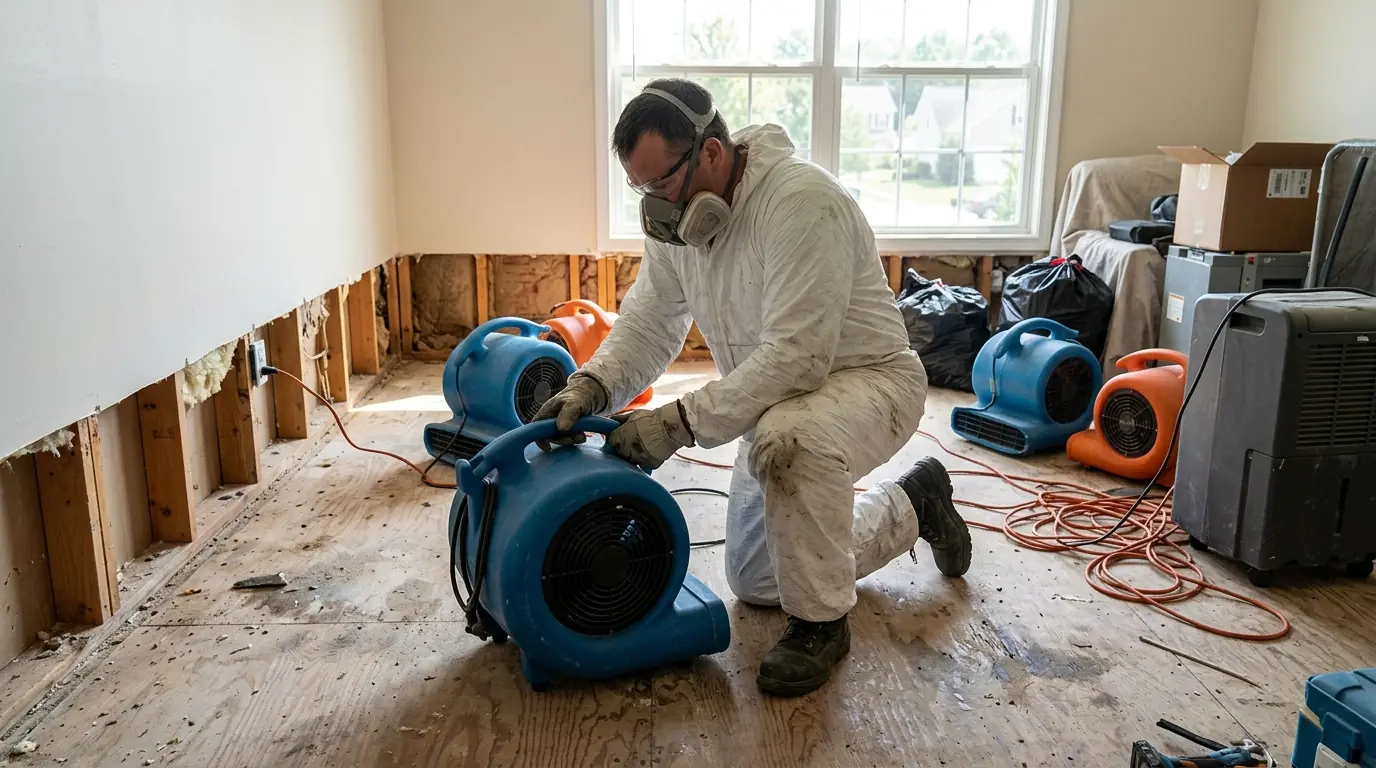
Burst and Frozen Pipes
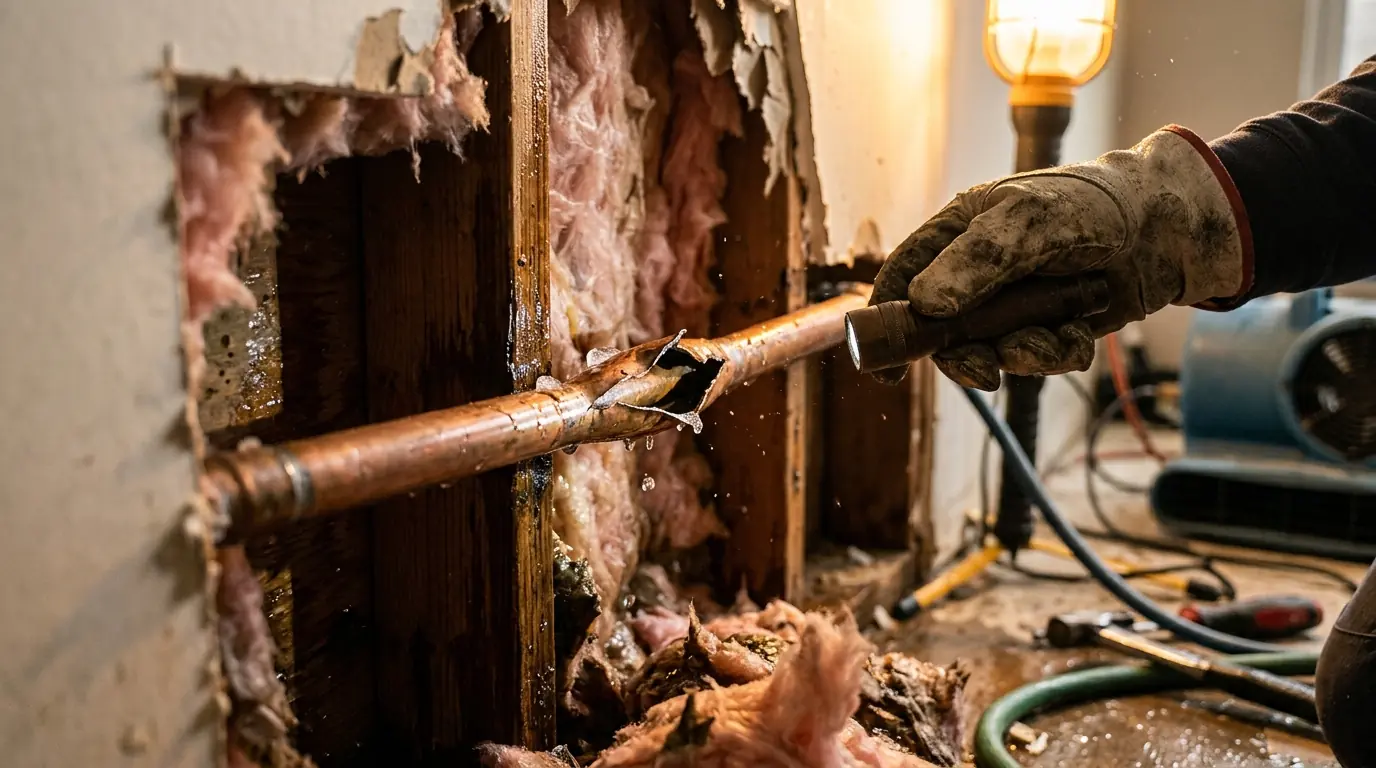
A burst supply line pushes water at full household pressure until the main is shut off, so the first thing we do on the phone is help you find it. Pipes in exterior walls, attics and crawlspaces are the ones that freeze, and they often split in more than one place, so the whole run is checked once the water is off. Extraction and drying start right away, and the wall is opened where the pipe needs repair, which also lets the cavity dry.
Appliance and Water Heater Leaks
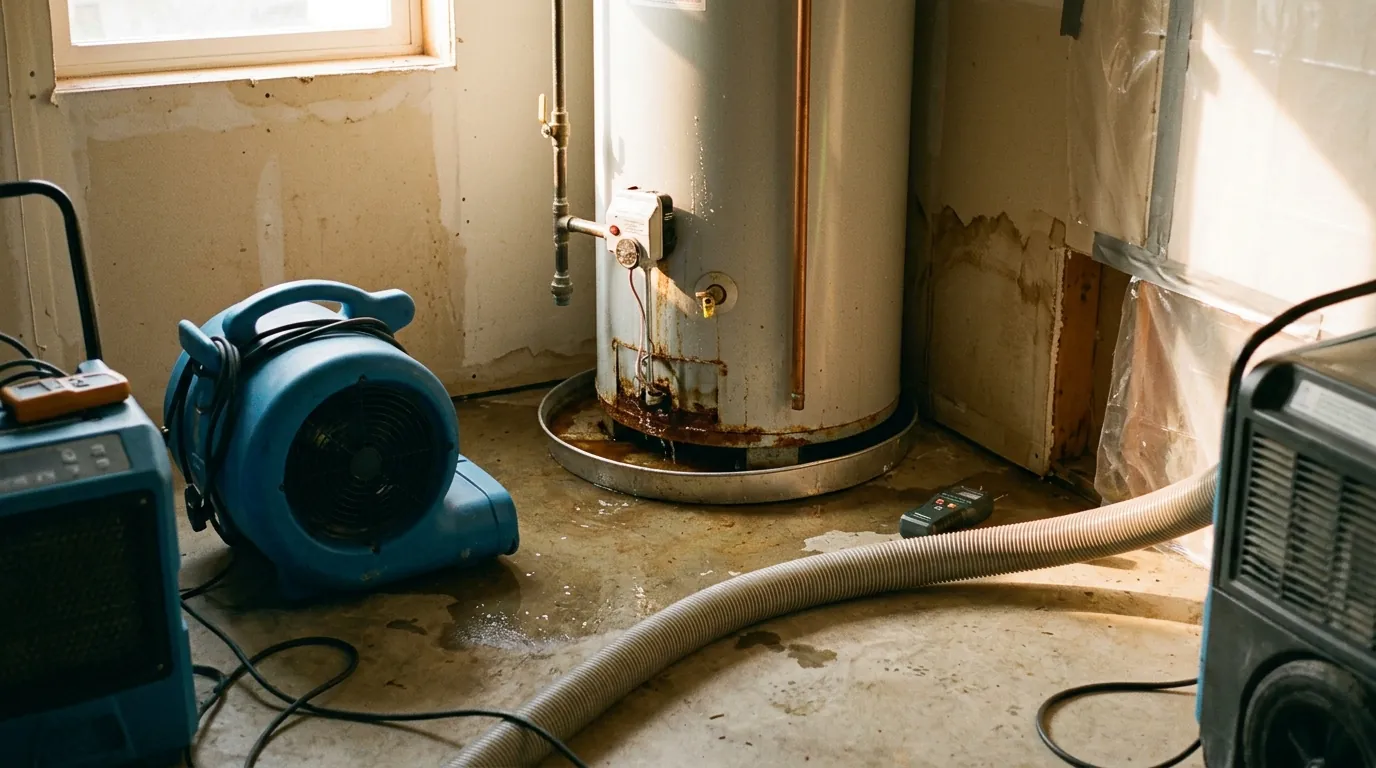
Water heaters, washing machine hoses, dishwashers, ice-maker lines and HVAC condensate lines leak slowly or all at once. Slow leaks are the tricky ones: water spreads under flooring and inside cabinets for days before anyone notices, so the damage is usually wider than the puddle. We trace the wet area with moisture meters and thermal imaging, pull kick plates and toe-kicks to dry under cabinets, and photograph the failed part. Those photos go straight into the claim file, alongside the moisture readings.
Storm and Roof Leak Intrusion
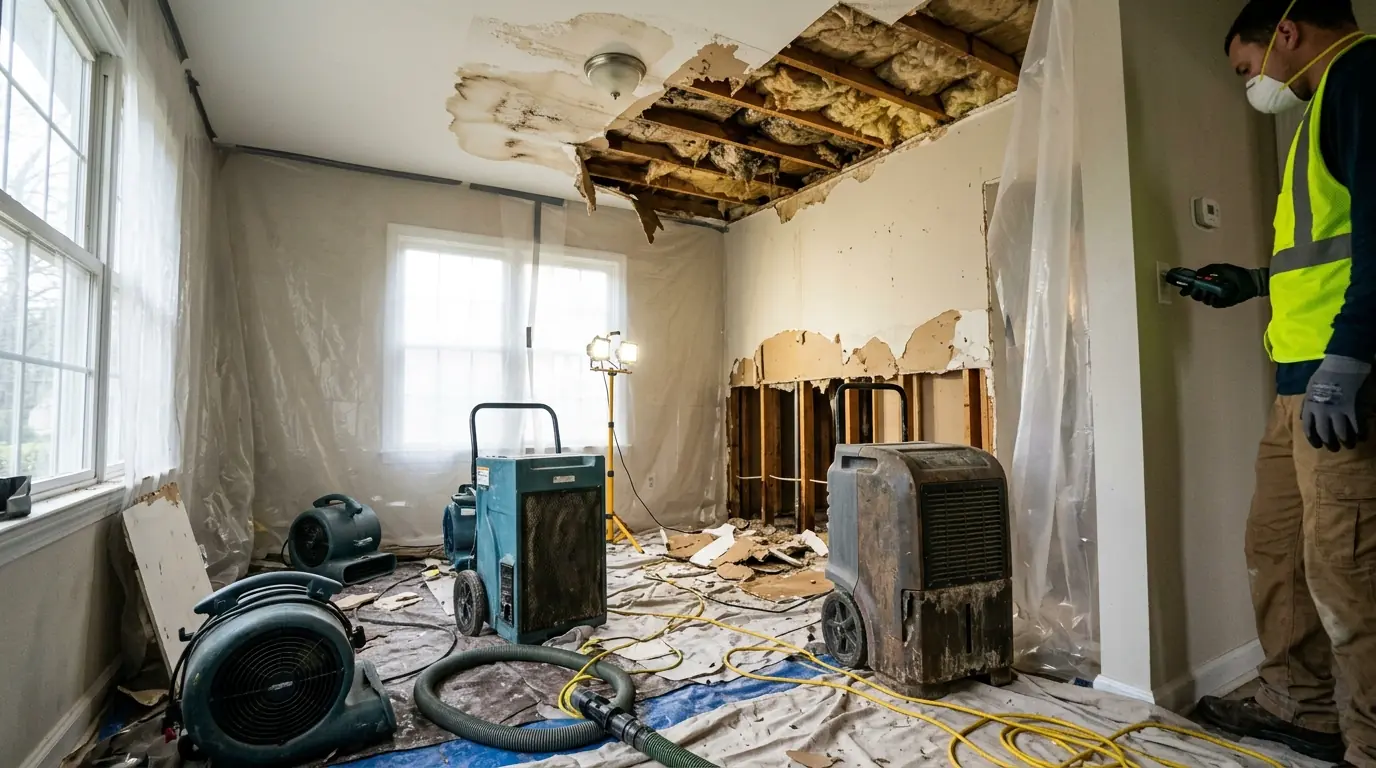
Wind-driven rain and roof leaks bring water in from above, through the attic, down wall cavities and across ceilings. Wet attic insulation holds water against the ceiling drywall below, which is why ceilings sag. We tarp the roof or cover the opening so no more water gets in, remove soaked insulation and sagging ceiling drywall, and dry the attic and the rooms below. Storm water that came in at ground level is treated as contaminated and cleaned accordingly, with soaked materials removed.
Water damage calls across the Charlotte region
Mecklenburg County holds only about 47% of the Charlotte region's housing, and the suburban counties around it together hold slightly more, so water damage calls come from well beyond the city. Inside Charlotte, rentals add a twist: more than 2,300 build-to-rent homes are under construction in the city alone, and in a rental the tenant usually finds the leak while the owner's policy covers the building. We document for both so neither side waits.
What moves the cost
Water damage is priced on how much water there was, how far it spread and what has to come out. Published guides do not give a reliable range for general leaks, so here is what drives the number.
- Clean or dirty water. A supply line is clean water; storm water and sewage need more removal and cleaning.
- How far it spread. One room versus water that reached the floor below.
- Removal. Wet insulation, flooring and drywall that cannot dry add tear-out and rebuild.
- Drying time. Equipment runs until readings reach target, usually a few days.
Drying runs on Dri-Eaz and Phoenix dehumidifiers with XPOWER and B-Air air movers, and Benefect antimicrobial on wet framing where it is needed.
Questions about water damage restoration
Usually a few days for a typical leak, longer for hardwood, plaster or water that reached a crawlspace. Readings, not the calendar, decide when it is done.
Often, if the water was clean and it is caught early. The pad usually gets replaced. Carpet soaked with storm or sewage water does not.
Sudden leaks like a burst pipe usually are covered; slow leaks and flooding often are not. We document the source and damage so your adjuster can decide.
Usually not. Drying equipment is loud and some rooms may be closed off, but most families stay.
To dry the wall cavity and remove material that will not dry before mold starts. The cut stays low, just above the wet line.
It can within a day or two on wet materials. Fast extraction and measured drying are what prevent it.
Related work in Charlotte
Water on the floor right now?
Shut off the water if you can, then call. We answer any hour across Charlotte.
Call (704) 368-1592