Sewage backup cleanup in a Charlotte home treats the water as Category 3, grossly contaminated, so porous materials it soaked, such as carpet, pad, drywall and insulation, are removed rather than dried, and every hard surface is cleaned and sanitized before drying. Keep people and pets out of the area, and do not run fans that spread contaminated air.
How a sewage cleanup runs
- Keep people out
Children, pets and anyone vulnerable away from the area.
- Stop the source
A plumber or Charlotte Water clears the blockage.
- Contain the area
Plastic barriers and negative air around the affected rooms.
- Extract
Standing sewage removed with equipment kept for contaminated jobs.
- Remove what it soaked
Carpet, pad, drywall and insulation bagged and documented.
- Clean and sanitize
Every exposed surface cleaned, then antimicrobial applied.
- Dry and check
Readings to target, then a check before the rebuild.
Why sewage is handled differently from a clean leak
Water from a burst supply line is clean when it arrives. Sewage carries bacteria, viruses and other contaminants, and anything porous it soaks is treated as contaminated for good. That changes the whole job: protective equipment for the crew, containment so the rest of the house stays clean, removal instead of drying for soaked materials, and sanitizing before the structure is dried.
The cause matters too, because a backup that is not fixed comes back. The plumbing side goes to a plumber or the city; the cleanup and restoration are ours.
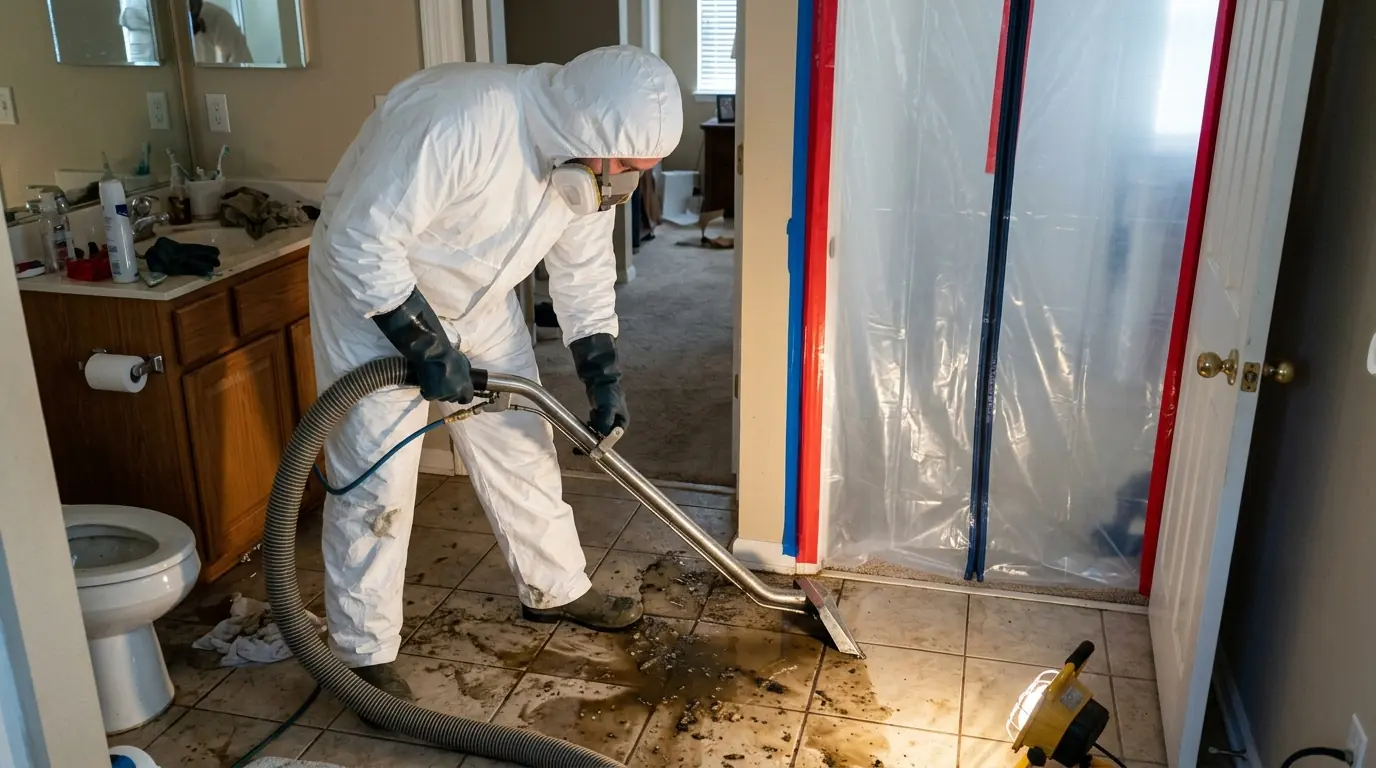
Toilet and Floor Drain Backups
Most household backups come up through the lowest drains in the house: a ground-floor toilet, a shower, a laundry standpipe or a floor drain in a garage. The water spreads outward across the floor and under walls, and it wicks into drywall and baseboards within hours. We keep people from walking through it, extract the standing water with equipment kept for contaminated jobs, and map how far it reached with moisture meters, because the stain line usually understates it. The blockage itself goes to a plumber, or to Charlotte Water when it is in the public line.
Category 3 Water Removal
Restoration standards class sewage as Category 3 water, the most contaminated kind. Carpet and pad it touched are removed and bagged, along with drywall to a set height above the wet line, the insulation in those wall cavities and any porous furniture that sat in it. Hard flooring is judged by whether water got underneath. Everything removed is photographed and listed before it leaves, because on a sewage claim the adjuster needs to see why each item was not simply dried.
Sanitizing and Rebuild Clearance
Once contaminated materials are out, every exposed surface is cleaned and treated with an antimicrobial: slab or subfloor, the bottom of the framing, the insides of cabinets and anything hard that stays. Air scrubbers run throughout. Drying follows, with readings until the framing reaches dry targets, and only then does the rebuild start. The area is checked before walls close, and some owners or insurers ask for independent testing at that point, which fits into the schedule without holding up the rebuild.
Grease, wipes and Charlotte sewer backups
Charlotte Water responds to more than 200 spills a year caused by grease clogging sewer pipes, and it inspects more than 4,000 restaurants a year to keep grease out of the lines; most blockages start at a kitchen drain. When a clog is in the public main, Charlotte Water's crews clear it, so call 311 and choose the sewer emergency option. The cleanup inside your home or business is ours to handle either way.
Cleaning up sewage yourself: the risks
Bleach and a mop deal with the surface but not with what soaked into carpet, pad, drywall and baseboards, which is where the smell and the bacteria stay. Fans and the HVAC spread contaminated air to the rest of the house, and a wet-vac that is not cleaned properly carries contamination wherever it goes next.
If you must act before help arrives, wear gloves and boots, keep children and pets away, turn off the HVAC, and do not run fans in the affected rooms.
What moves the cost
Sewage cleanup is priced on the area affected and how much has to come out. Published cost guides do not give a reliable range for it, so here is what drives the number.
- How far it spread. One bathroom floor versus water that ran under walls into several rooms.
- What it soaked. Carpet, drywall and insulation removal add labor and disposal.
- How long it sat. Water left a day or more reaches further into materials.
- Rebuild. Flooring, drywall and trim replacement after the area is cleared.
Contaminated-water jobs run on Benefect antimicrobial, Dri-Eaz and Phoenix dehumidifiers and XPOWER air movers, with HEPA air scrubbers throughout.
Questions about sewage backup cleanup
A small spill on a hard floor, carefully, with gloves and disinfectant. Anything that soaked carpet or drywall, or spread across rooms, needs removal and sanitizing, not just mopping.
Keep everyone out of the affected area, especially children, older adults and anyone with health problems. If the only bathroom is involved, staying elsewhere for a few days is sensible.
No. Carpet and pad that sewage soaked are removed and replaced; they cannot be reliably sanitized.
A plumber for your own lines, Charlotte Water for the public main. We clean up and restore once the source is stopped.
Often only with a sewer or water backup endorsement. Check your policy; we document the damage either way.
Removal and sanitizing usually take a day or two, then several days of drying before the rebuild.
Related work in Charlotte
Sewage on the floor right now?
Keep everyone out of the area and call. We answer any hour across Charlotte.
Call (704) 368-1592