Kitchen and grease fire cleanup in a Charlotte home removes the protein and grease residue a stovetop fire spreads, which is nearly invisible but carries a strong, sour odor into every room. It needs enzyme or degreasing cleaners, not ordinary soap, and covers the range hood, cabinets inside and out, backsplash, walls, ceilings and the appliances near the stove.
How a kitchen fire gets cleaned up
- Make the kitchen safe
Power and gas to the range off until it is checked.
- Photograph everything
Appliances, cabinets, hood and residue patterns.
- Find how far it went
Rooms, closets and the HVAC checked for protein film.
- Empty and move
Cabinets emptied, appliances pulled out from the walls.
- Degrease top to bottom
Ceiling, walls, cabinets, backsplash and floor.
- Clean the hood and duct
Filters, fan and duct cleared of grease.
- Treat the odor
Once the film is gone, room by room.
Why a small kitchen fire smells so bad
Burning food and grease produce a different residue from a wood fire. Instead of black soot, protein fires leave a thin, yellowish, greasy film you may barely see, and a smell sharp enough to follow you out of the house. It rides the air into bedrooms, closets and the HVAC, and it clings to paint, cabinet boxes and fabric.
A grease fire adds heavier, darker residue around the range and hood, and often heat damage to the cabinets above.
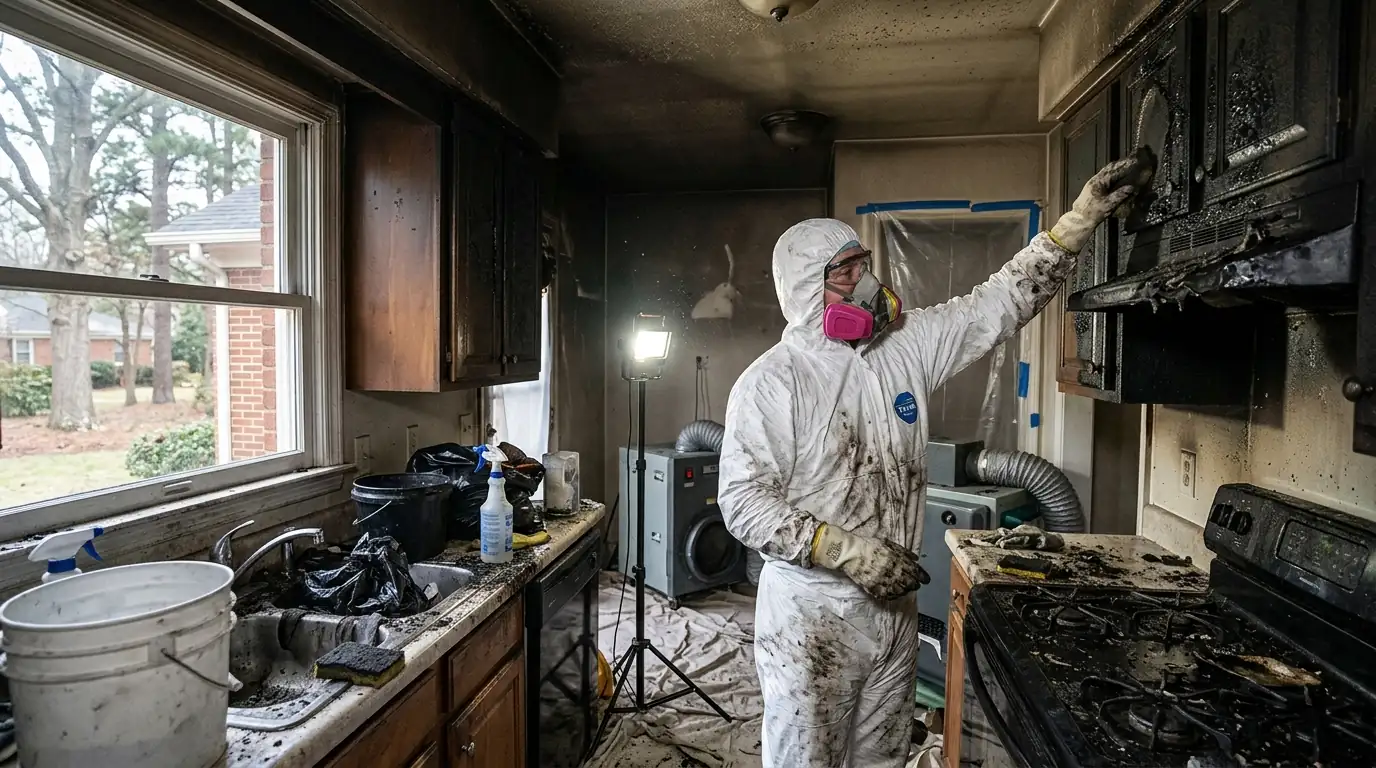
Protein Residue From Burnt Food
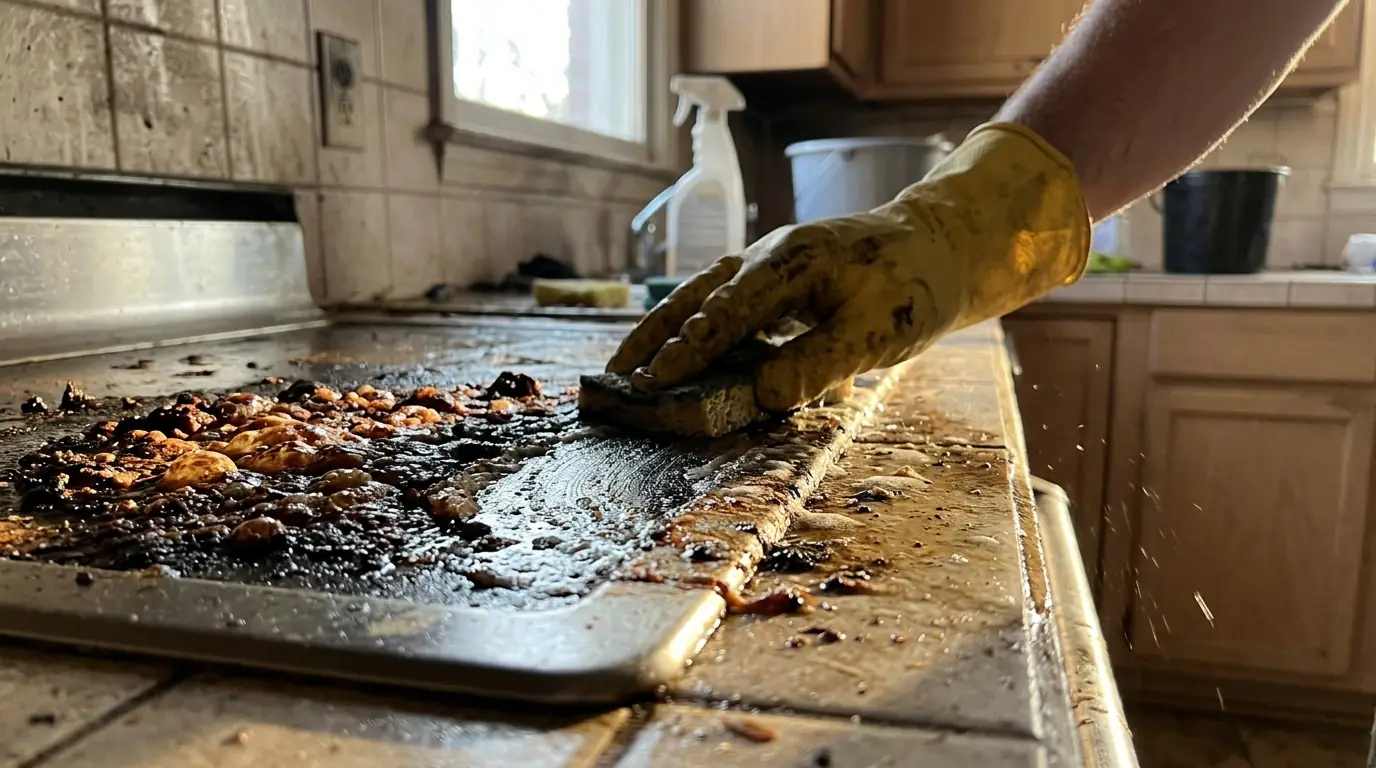
Protein residue is hard to see and easy to miss, which is why kitchen fire cleanups often come up short. We check rooms far from the kitchen for the telltale sticky feel and smell, then clean walls, ceilings, doors and trim with enzyme-based or protein-specific cleaners that break the film down instead of smearing it. All-purpose cleaners and soapy water tend to spread it into a streaky haze. Odor treatment follows only after the film is gone, because the smell lives in the residue.
Range Hood, Cabinets and Backsplash
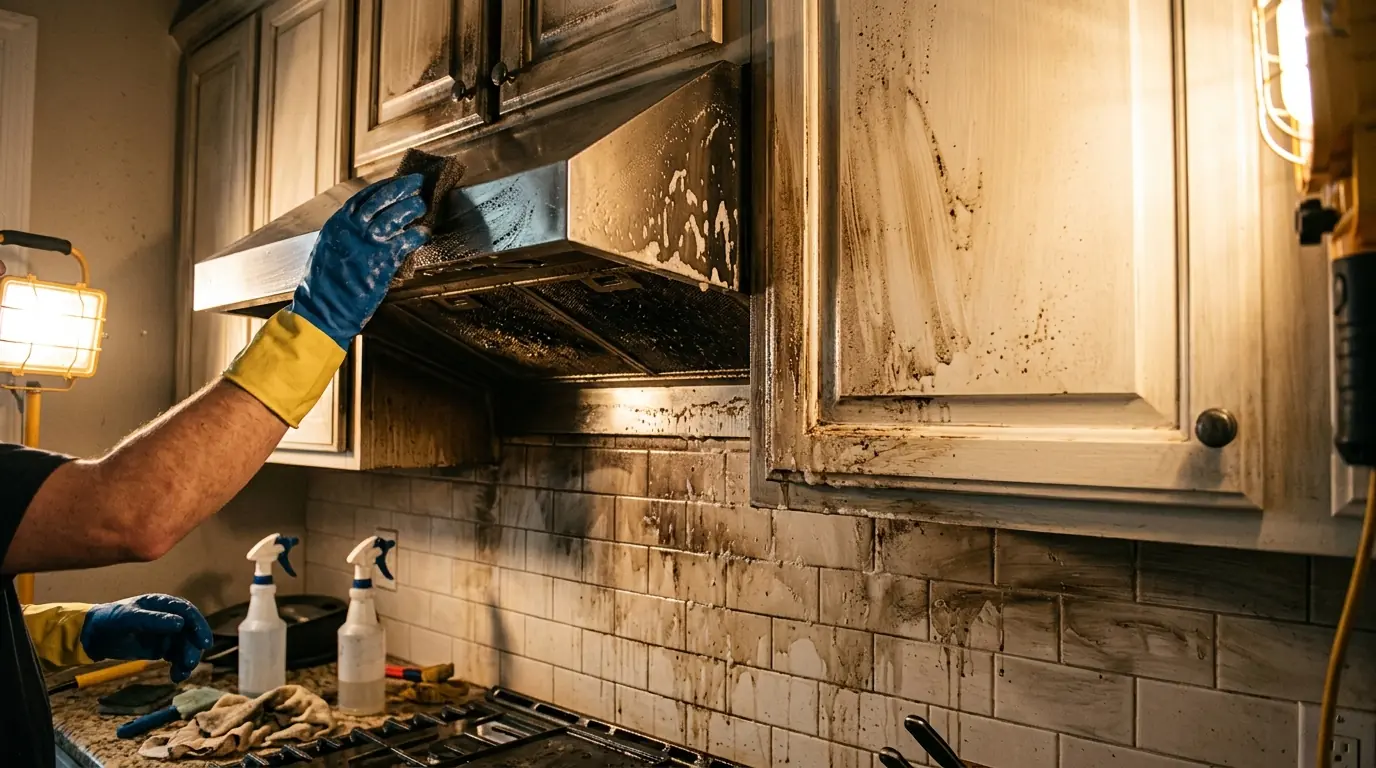
The hood takes the worst of it: grease, soot and heat. Filters are replaced or degreased, the hood interior and fan cleaned, and the duct to the outside checked for grease buildup, which is a fire hazard in its own right. Cabinets are emptied and cleaned inside and out, including shelf edges, hinges and the undersides of the uppers. Heat-blistered finishes and melted edges are photographed for the claim. Tile backsplash and grout are degreased, and grout that stays stained may need resealing.
Appliance Removal and Replacement Coordination
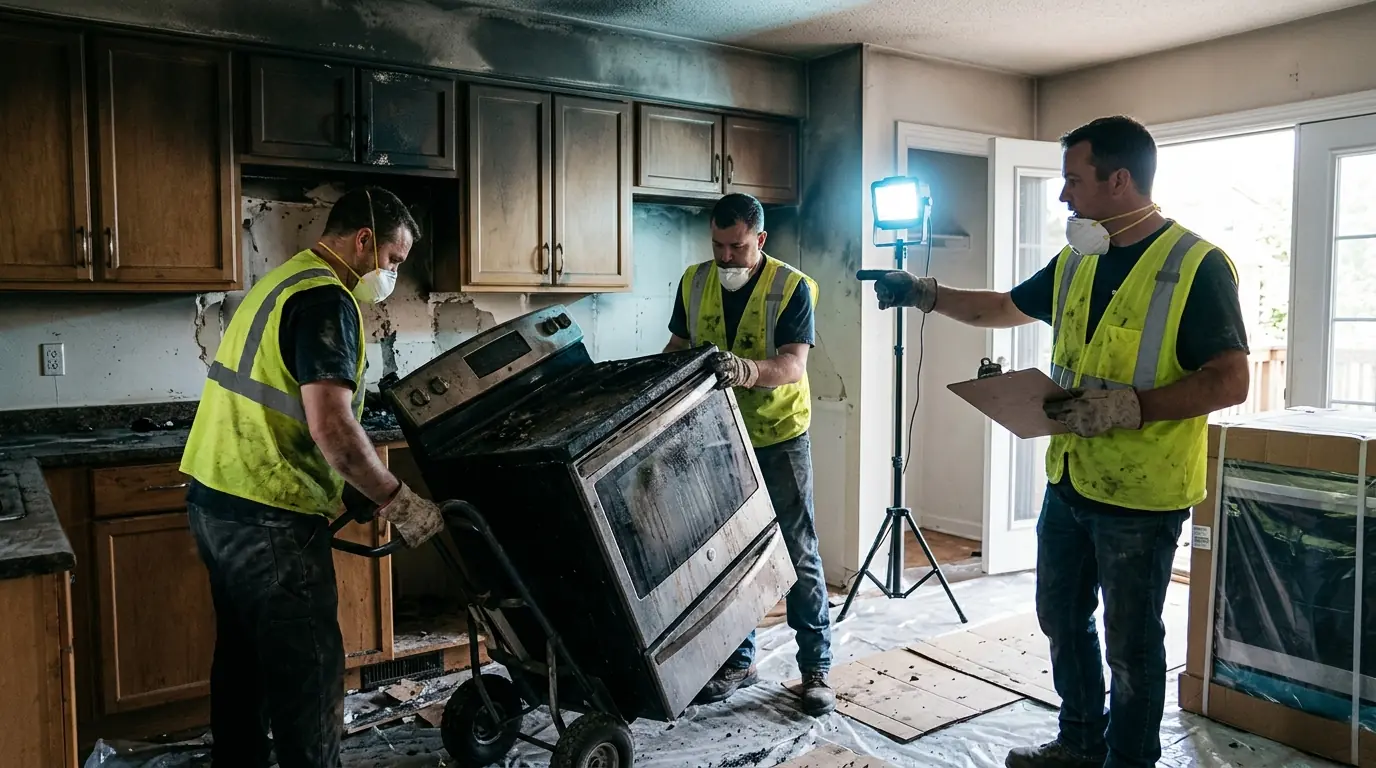
A range that caught fire, the microwave above it and a refrigerator nearby are often losses, or at least need cleaning inside and out. We photograph each appliance with its model and serial number, unplug and move them so the walls and floor behind them can be cleaned, and hold the damaged ones until your adjuster agrees. When replacements arrive, the gas or electrical hookup is done by the installer or a plumber or electrician, and cleaning is scheduled so nothing new goes into a dirty kitchen.
Why kitchen fires top the list in North Carolina
North Carolina's Office of State Fire Marshal reports unattended cooking as the leading cause of cooking fires and of the injuries and deaths they cause, and national NFPA data put cooking behind 37% of fires in one- and two-family homes and 72% of fires in apartments. For a Charlotte household, that makes the kitchen the likeliest place a fire starts, and protein residue the likeliest thing to be underestimated afterward.
Cleaning up after a kitchen fire yourself
Soap and water spread protein residue into a greasy haze, and scented sprays add perfume on top of the smell without removing it. Scrubbing heat-damaged cabinet finishes can peel them further. Dry chemical from an extinguisher should be vacuumed, not wiped wet, or it turns into a sticky, corrosive paste.
Before we arrive, open windows if the weather allows, keep the HVAC off, and leave the range unplugged or the gas off.
What moves the cost
Kitchen fire cleanup is priced by how far the residue spread and what in the kitchen has to be replaced. These published figures cover the cleaning and odor side.
- How far the smoke went. Protein residue in every room costs more than a kitchen-only job.
- Grease or protein. Grease fires add heavy degreasing around the range and hood.
- Cabinets. Heat damage can turn cleaning into cabinet replacement.
- Appliances. Moving, cleaning behind and holding damaged units adds labor.
- Soot damage cleanup$325 to $4,500 or more
- Odor removal per room (ozone, fogging, hydroxyl)$200 to $600 per room
Published planning ranges, not our quote. Local labor, access and how far the smoke traveled move the final figure.
Kitchen fire jobs lean on Unsmoke and Chemspec protein and grease cleaners, with Odorox hydroxyl units running while the house is occupied.
Questions about kitchen & grease fire cleanup
A light, local mess, perhaps, with a degreaser rather than soap. If the smell has reached other rooms, the residue is there too, and it usually needs professional cleaning to clear.
Protein film is nearly invisible and smears with ordinary cleaners. It needs a protein-specific cleaner, and it is often on ceilings and in closets people do not think to clean.
Usually not, unless heat blistered the finish or melted edges. Most cabinets clean up inside and out.
Not until it has been checked. A range that was part of the fire should stay off, gas or electric, until it is inspected.
Open food and anything in the cabinets near the stove should be thrown out. Sealed cans can be cleaned. Refrigerated food is usually discarded if the power went off or smoke got in.
A contained stovetop fire is often a day or two of cleaning. When protein residue spread through the house it takes longer, plus odor treatment.
Related work in Charlotte
Kitchen fire, and the whole house smells?
Call and we will find how far the residue went. We answer any hour across Charlotte.
Call (704) 368-1592