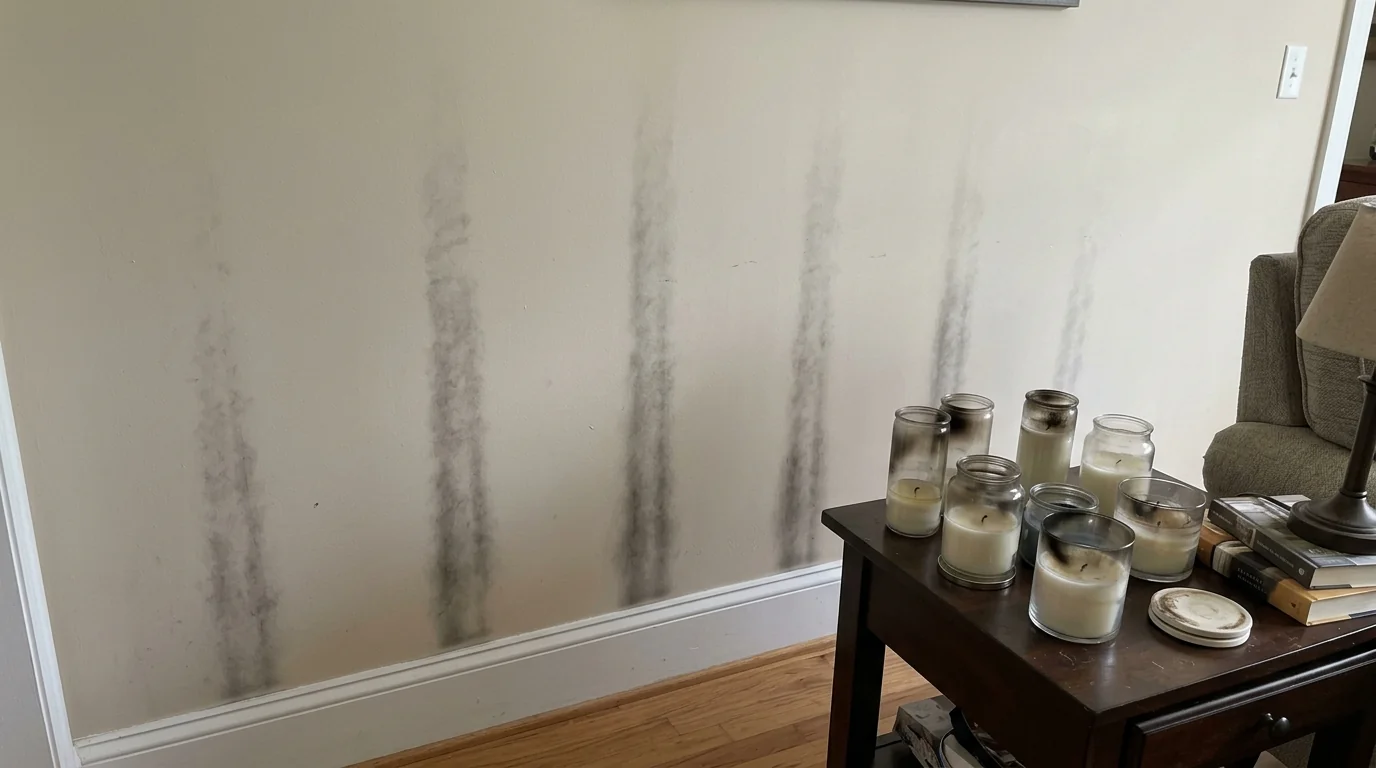
Candle and furnace soot cleanup in a Charlotte home removes the fine black residue that burning candles, oil lamps or a badly burning furnace, water heater or gas fireplace leave with no fire at all. It shows up as ghosting lines over studs, dark carpet edges and gray ceilings. The source is found and fixed first; then walls, ceilings, carpet and the HVAC are cleaned.
How a house gets sooty without a fire
Soot is unburned carbon, and anything that burns poorly makes it. Scented candles, especially jar candles with long wicks, can release a steady stream of it; so can a furnace, water heater or gas fireplace that is out of adjustment. Over weeks and months the soot follows air currents and settles on the coolest surfaces, where it draws patterns people often mistake for mold or dirt.
Cleaning without finding the source only resets the clock, so the source comes first.
What moves the cost
Soot cleanup without a fire is priced like other soot work, by the area affected. The published figure below gives the per-square-foot range.
- Source. An appliance fault adds duct and air handler cleaning.
- Area. One room of candle ghosting versus a whole house on one HVAC system.
- Paint. Flat paint with heavy ghosting may need sealing and repaint.
- Carpet. Filtration lines take extra passes and may only lighten.
- Soot and smoke cleaning per square foot$2 to $6 per square foot of affected area
Published planning ranges, not our quote. Local labor, access and how far the smoke traveled move the final figure.
Cleaning candle soot yourself
Wiping soot lines with a wet cloth or all-purpose cleaner smears the oily film into a wide gray streak, and melamine sponges take paint with it. Painting over the lines without sealing lets them bleed back through within weeks.
Before anything else, stop burning candles and have any gas appliance checked. A dry sponge on a small patch is the safest first test.
Candle Soot and Ghosting Lines
Ghosting is the pattern soot leaves when it settles more on colder parts of a wall: dark vertical lines over studs, outlines of ceiling joists, and shadows around nails and electrical boxes. Candle soot is fine and oily, so it smears if wiped. Walls and ceilings are HEPA vacuumed and dry-sponged, then washed with cleaners made for soot, and heavily marked flat paint is sealed and repainted. Lampshades, curtains and fabric near the candles are cleaned too, because they hold the same film.
Furnace and Water Heater Soot
A gas furnace, water heater or fireplace that burns with too little air, a cracked heat exchanger or a blocked flue can release soot into the house. That is a safety issue before it is a cleaning job, because the same fault can mean carbon monoxide. The appliance is shut off and checked by an HVAC technician or the gas utility first. Then the ducts and air handler are cleaned, since the system spread the soot, and the rooms are cleaned from the ceiling down.
Carpet Filtration Lines
Dark lines along the edges of wall-to-wall carpet, under doors and around stair edges are filtration soiling: air moving through the gap under the baseboard or door deposits soot in the carpet fibers as if they were a filter. They are among the hardest soot marks to remove. We vacuum along the edges with crevice tools, treat the lines with soot-specific spotting agents and hot-water extraction, and repeat where needed. Some deep lines lighten rather than disappear, which you hear before we start.
Furnaces, heating season and soot in North Carolina
About half of North Carolina homes heat with a furnace, according to EIA's 2020 housing survey, and nearly half of the state's home heating fires happen in December, January and February, the months when furnaces, gas logs and candles all run hardest. That is also when soot marks from a badly burning appliance or a winter of candles tend to show up in Charlotte homes. The State Fire Marshal advises a professional chimney inspection every year, and a yearly furnace check catches the burner faults that make soot.
How soot without a fire is cleaned up
- Find the source
Candles, appliances and flues checked.
- Make it safe
Faulty appliances shut off and checked by an HVAC technician.
- Protect the rooms
Floors covered and air scrubbers running.
- Clean the HVAC
Ducts, coil and blower, if the system spread the soot.
- Dry clean first
HEPA vacuum and dry sponge, ceilings down.
- Wash and seal
Soot cleaners, then sealing where marks remain.
- Treat the carpet
Filtration lines spotted and extracted.
Candle and furnace soot comes off with Unsmoke dry sponges and cleaners, Chemspec for carpet spotting and extraction, and Zinsser primer where walls need sealing.
Questions about candle & furnace soot cleanup
Soot lines follow studs, joists and airflow paths and wipe gray-black onto a white cloth. Mold usually appears in damp spots and grows unevenly. If in doubt, have it checked.
Any candle can soot if the wick is long or the flame flickers. Trimming wicks and keeping candles out of drafts helps a lot.
It can be a sign of a fault that also produces carbon monoxide. Turn the appliance off and have it checked before anything is cleaned.
Not on its own. The soot bleeds through ordinary paint, so walls are cleaned and sealed first.
Often they can be greatly reduced. Deep, old lines sometimes lighten rather than disappear completely.
Sometimes, when a sudden appliance malfunction caused it; less often for gradual candle soot. Check your policy.
Related work in Charlotte
Black lines on the walls and no fire?
Call and we will help find the source, then clean it properly. We serve homes across Charlotte.
Call (704) 368-1592