After a house fire, keep the heat and air conditioning off until the system is inspected and cleaned, because the return pulls soot-laden air in and the supply ducts blow residue into every room, including rooms the smoke never reached. The ducts, coil, blower and filters are cleaned first; one cycle before that can spread residue through the whole house.
What happens inside the system during and after a fire
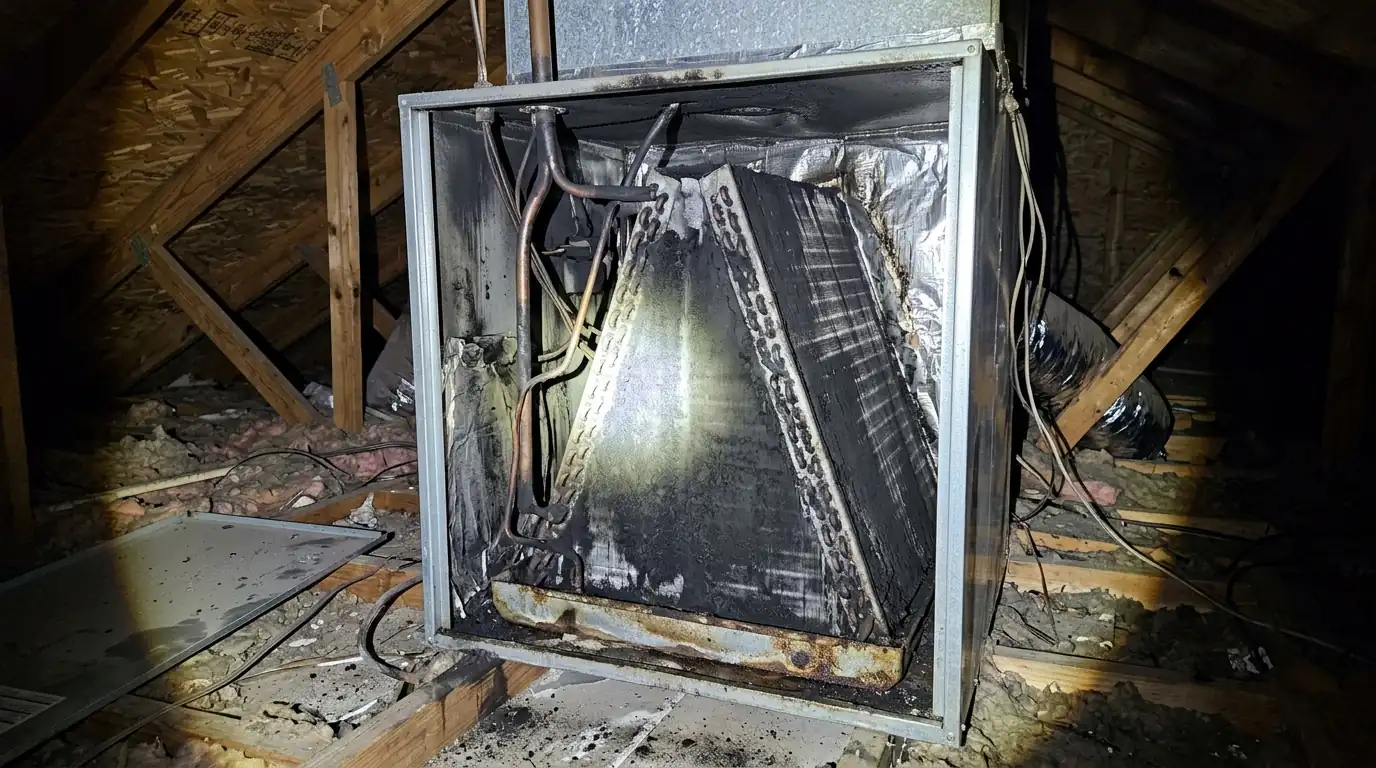
A forced-air system pulls air from the house through the return, runs it across the filter, the coil and the blower, and pushes it back out through every supply register. If it was running when the fire started, it pulled smoke through that whole path, and soot settled on every surface inside. Turn it on afterward and it does the same thing again, this time spreading what is already inside.
Restoration guidance is consistent on this point: the water used to fight a fire soaks the structure, and the HVAC should not be run until the residue has been assessed.
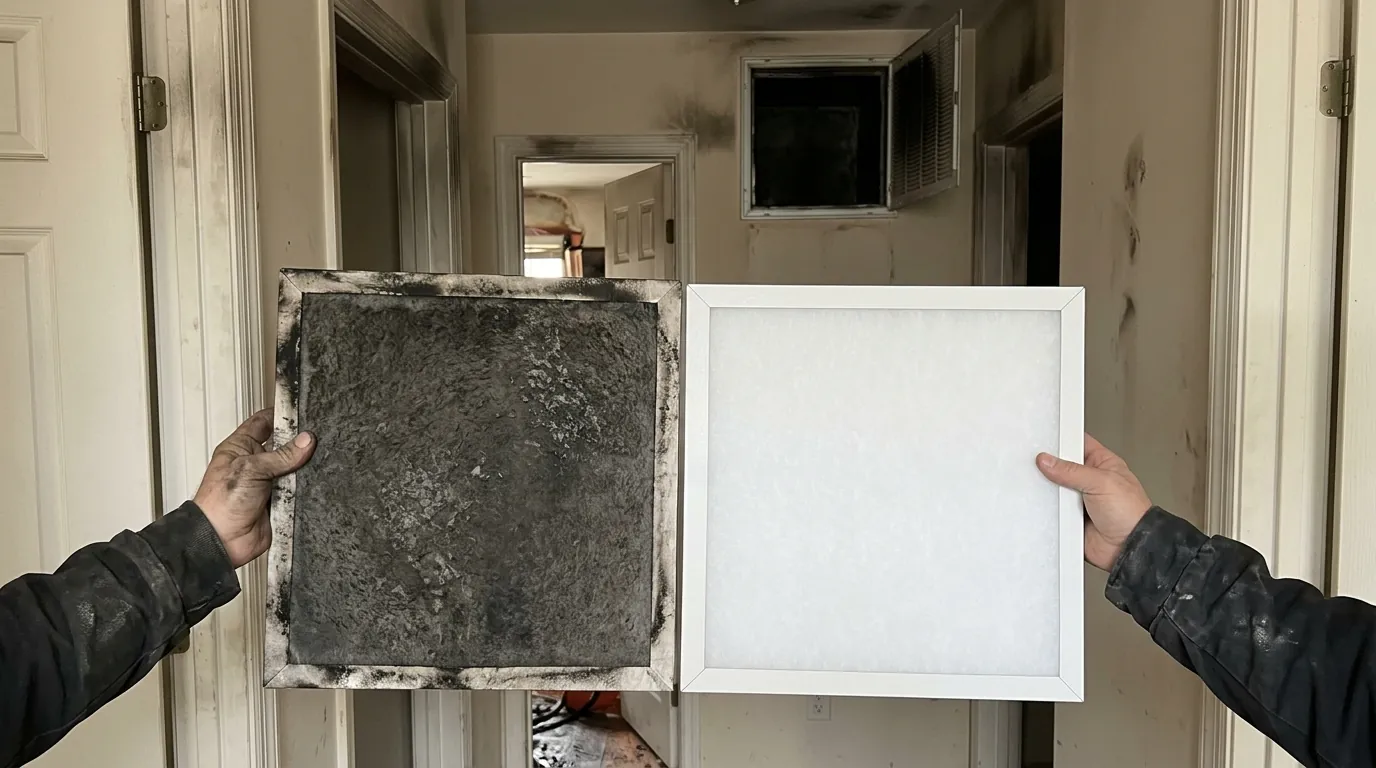
Why it matters more in Charlotte homes
38% of North Carolina homes heat with a central heat pump, nearly three times the national share, and a heat pump heats and cools through the same air handler and ducts. In many Charlotte houses that means the system runs through most of the year, so residue left inside does not sit idle over a mild winter; it circulates almost every day.
Charlotte's humidity adds a second problem. Relative humidity stays around 70 to 75% most of the year, and damp soot in ducts holds odor that returns every time the system switches on.
How far one cycle spreads residue
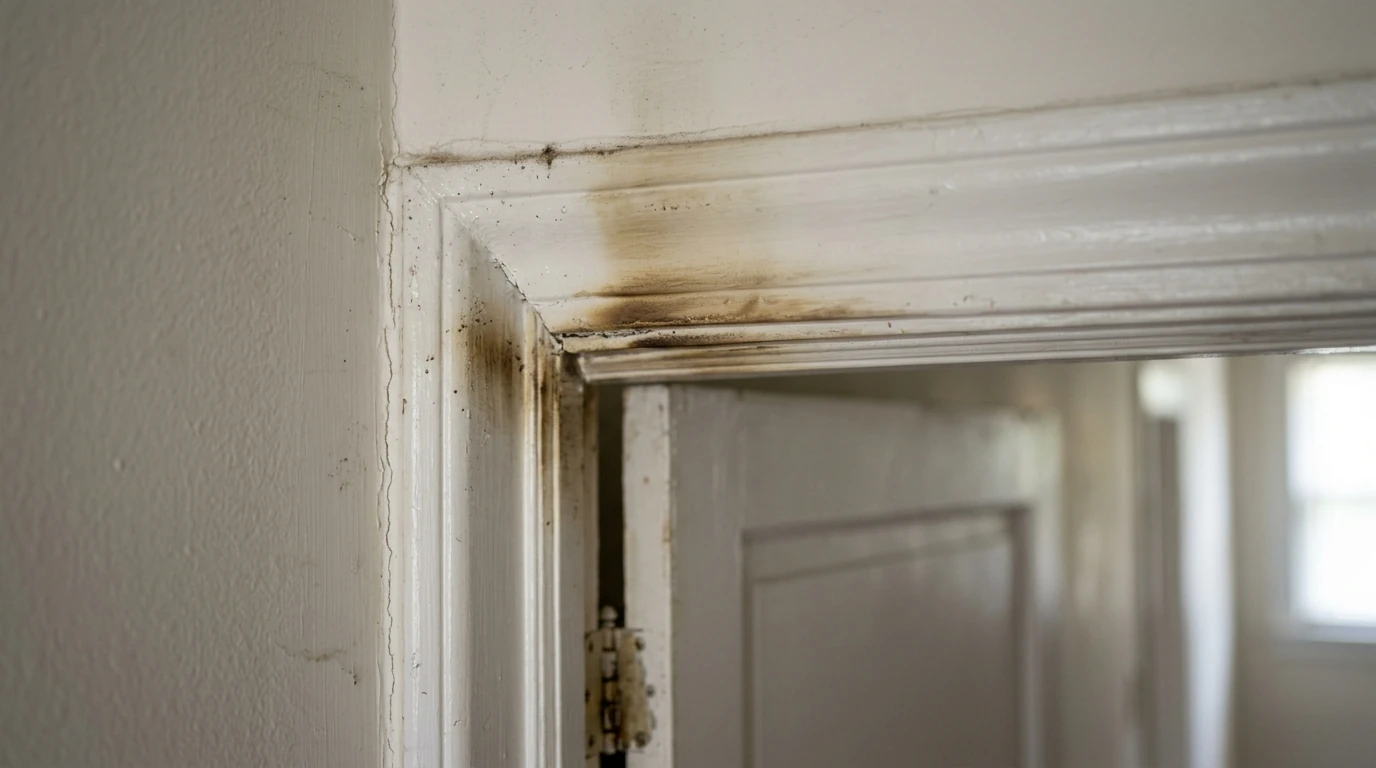
Soot particles are fine enough to travel the full length of a duct run and settle in the rooms at the end of it. The first sign is usually dark streaks on the ceiling around supply registers, followed by a smoke smell that returns with every cycle and a film coming back on walls that were already cleaned.
By then, the smoke cleanup in those rooms has to be done again, which is one of the most common avoidable costs in a fire job. Rooms at the far end of the house, which the smoke never reached directly, are often the ones that suffer most, because nobody thought to protect them.
Heat or AC already ran after the fire?
Turn it off now and call. We will check how far the residue spread.
(704) 368-1592What cleaning the system involves
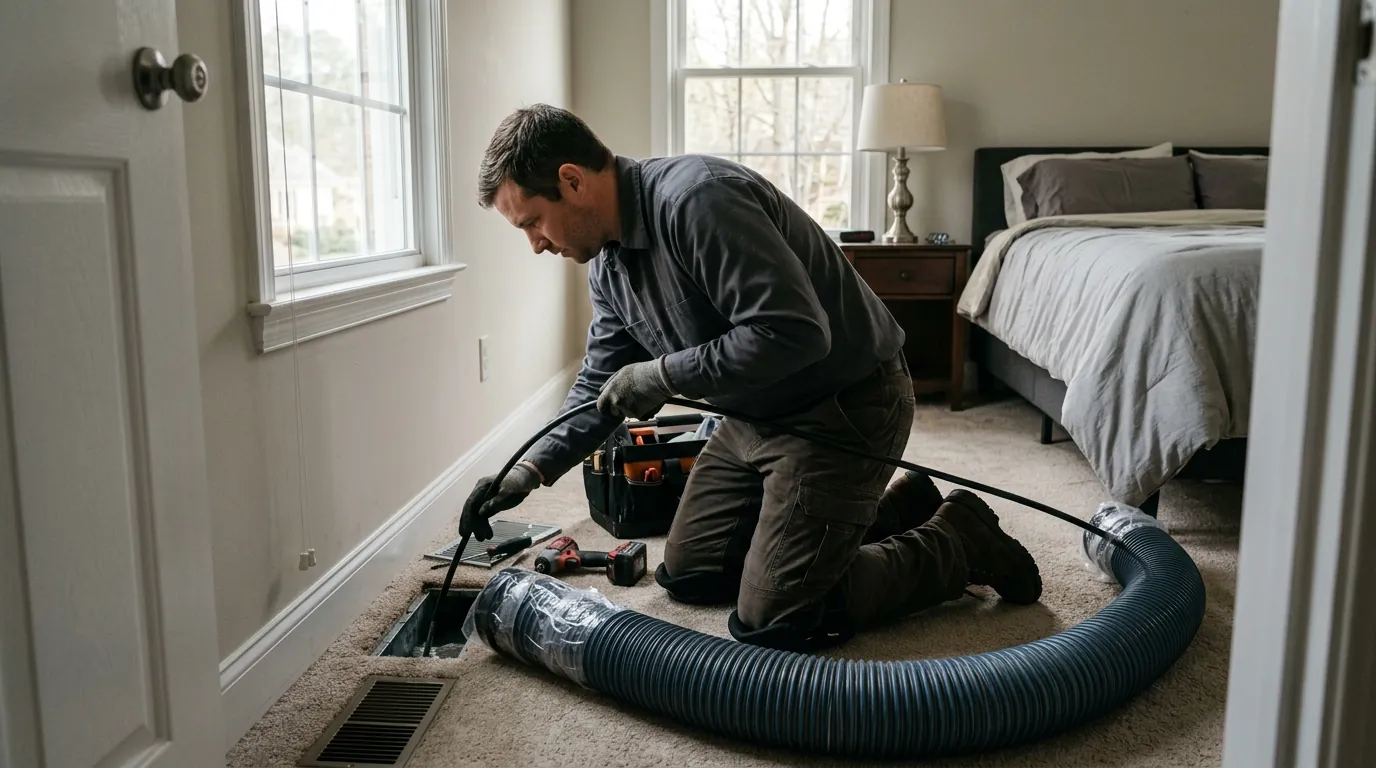
Ducts are cleaned under negative pressure, with a powerful vacuum on the trunk line and brushes run through each branch, so soot is pulled toward the vacuum, not into the house. The coil, blower wheel and plenum in the air handler are cleaned separately, because that is where residue concentrates. Filters are replaced, registers and grilles cleaned or replaced, and heavily sooted or heat-damaged flexible duct is often replaced rather than cleaned. HVAC and duct cleaning after a fire covers the details.
Published cost guides put duct cleaning after a fire at about $250 to $500. Repairs to the unit itself, if the fire damaged it, are for an HVAC contractor.
Staying comfortable while it is off
Going without heating or cooling is uncomfortable, especially in a Charlotte summer or a winter cold snap. A few options help while the system waits for cleaning.
- Window units or portable heaters in rooms the smoke did not reach, used as their safety instructions say.
- Box fans for airflow, kept out of the rooms still being cleaned.
- Dehumidifiers in the rooms you are using, which also help the house dry.
- A few days elsewhere, if heat or humidity makes the house unsafe for anyone vulnerable.
Window units and mini-splits count too
Window air conditioners and ductless mini-split heads pull room air through a filter and coil just like a central system, only on a smaller scale. If one ran in a smoky room, its filter and coil now hold soot and odor, and switching it on blows that back into the room.
Window units in heavily smoked rooms are often cheaper to replace than to clean. Mini-split heads are cleaned in place, with the coil and blower wheel washed and the drain pan cleaned. Either way the same rule applies: leave it off until it has been checked.
When it is safe to turn it back on
The system can run again once the ducts, air handler and registers are cleaned, new filters are in, and heavy cleaning in the rooms is finished, usually before odor treatment so the system does not re-contaminate cleaned rooms.
The test is simple: run it with the restorer present and hold a white cloth near a supply register. No soot on the cloth and no smoke smell on startup means it is ready. If either shows up, something inside the system still needs cleaning.
Questions people ask about this
No. The fan moves air through the same ducts and spreads residue exactly like heating or cooling does.
Not always. Metal ducts usually clean well. Heat-damaged or heavily sooted flexible duct is often replaced.
Usually about a day of cleaning for a typical house, longer if duct runs are replaced or there is more than one system.
No. The filter only catches what passes it; soot already in the ducts, coil and blower stays until they are cleaned.
Usually, when smoke from a covered fire went through the system. The assessment documents it for your adjuster.
Keep reading
Wet smoke vs dry smoke residue
Two fires, two completely different cleanups. How we read the residue before a single wall gets touched.
How to get smoke smell out of a house for good
Why candles and open windows fail, and how fogging, hydroxyl and sealing actually remove the odor.
Can smoke-damaged clothes and furniture be saved?
What restores well, what rarely does, and how to decide before you throw anything away.
Want the system checked before it runs?
Call and we will inspect the ducts, coil and blower and clean what the smoke reached.
Call (704) 368-1592