After a house fire, throw away open or exposed food, medications that were near heat or smoke, cosmetics and toiletries, burned or melted items, and porous things soaked in firefighting water such as mattresses and pillows. Keep everything else until it is photographed, listed and checked, because clothing, dishes, furniture and electronics can often be cleaned, and discarded items need a record for your claim.
Why not to throw anything away yet
The instinct after a fire is to clear out everything that smells or looks damaged. Resist it for a few days. Items thrown out before they are photographed and listed are hard to claim, and many things that look ruined clean up well once the residue is removed.
The exceptions are real hazards: spoiled food, broken glass and anything that could hurt someone. Photograph those, then get rid of them. For everything else, a few days of patience costs nothing, while a missing record can cost a great deal later.
Food: what has to go
Heat, smoke and firefighting chemicals can contaminate food even inside closed packaging, and the rule from food safety agencies is simple: when in doubt, throw it out.
- Anything open, or in permeable packaging such as cardboard, bags or boxes
- Food stored near the fire, even in cans or jars, if the heat bulged, rusted or dented them
- Everything in the refrigerator and freezer if the power was off long enough to warm it, or smoke got inside
- Produce, bread and anything left out on the counters
- Drinks and food that firefighting water touched
Medicines, cosmetics and toiletries
Medications exposed to heat, smoke or water should be replaced; heat can change how they work, and smoke residue gets into bottles that were not sealed. Call your pharmacy and doctor for replacements, and keep the damaged bottles and their labels for your claim.
Cosmetics, lotions, toothbrushes and anything that goes on skin or in the mouth are replaced rather than cleaned. So are baby bottles, pacifiers and teething toys that were exposed to smoke. Keep receipts for replacements, since they usually belong in the claim.
Not sure what to keep?
Call and we will walk your belongings with you before anything goes out.
(704) 368-1592Bedding, mattresses and soft goods
Mattresses, pillows and upholstered pieces are judged by how heavy the smoke was and whether water reached them. Light smoke can often be cleaned and deodorized; heavy smoke deep in the foam, flame damage or dirty firefighting water usually means replacement.
Bedding, clothes and curtains usually clean well, as long as they are not washed hot at home first, which can set the odor. Clothing and textile restoration covers how it is done.
What is usually worth keeping
Most of a household's belongings fall into this group, and contents cleaning is designed around saving them.
- Dishes, glassware and metal cookware, which clean fully.
- Hard furniture of wood, metal or glass.
- Clothing and linens, cleaned with smoke-specific methods.
- Electronics that pass testing after cleaning.
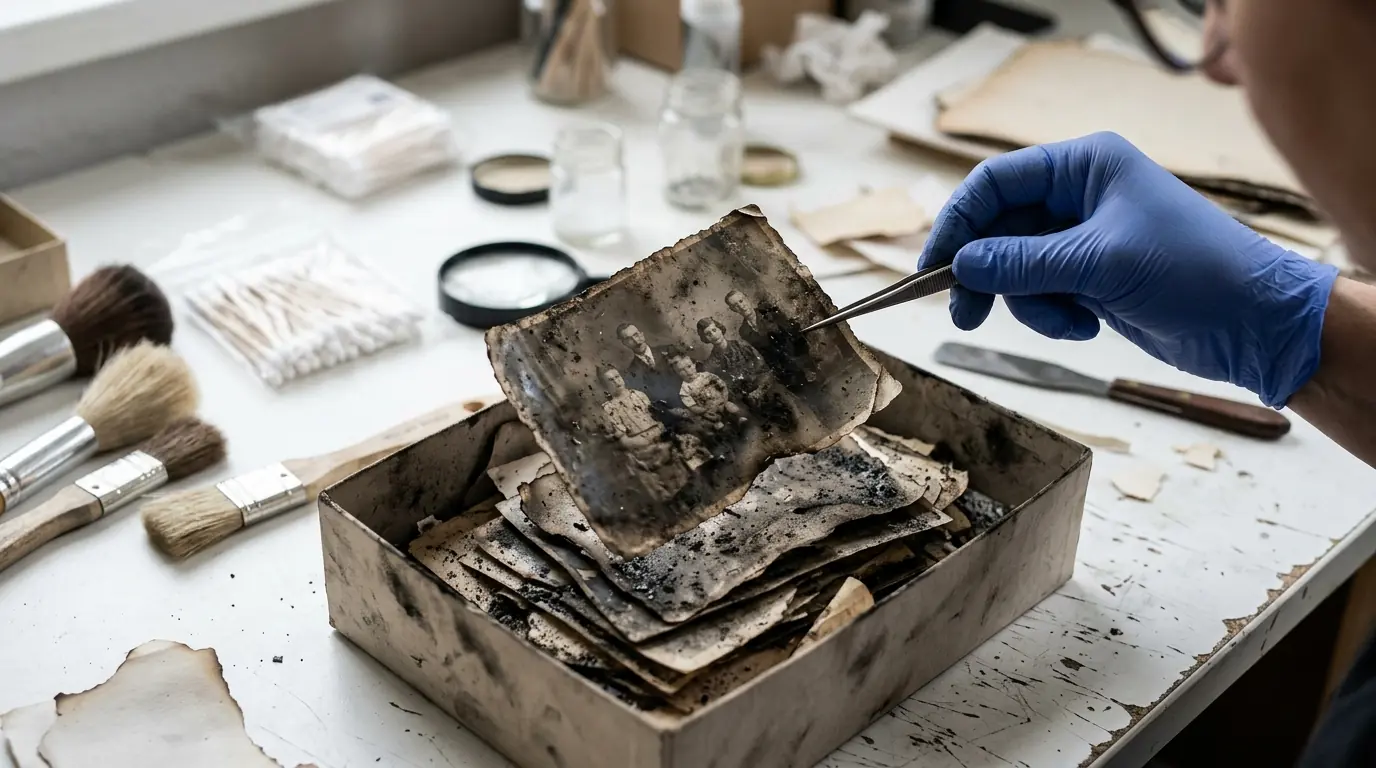
- Photos and documents, which can often be cleaned, frozen or scanned.
- Jewelry, keepsakes and collectibles, cleaned by hand.
Electronics: unplug, do not discard
Televisions, computers and appliances that sat in smoke often look ruined and are not. What damages them is soot and moisture inside, which corrodes circuit boards over days, and switching them on to test them speeds that up. Keep them unplugged and dry, and have them cleaned and tested before deciding anything; storage drives in particular often survive when the rest of the machine does not.
Wet papers and photos: never straight to the trash
Documents and photographs that got wet in the firefighting look like the first things to throw away, and they are often the most savable. Put wet papers and prints in sealed bags and freeze them, which stops mold and buys time; freeze-drying can often dry them flat and recover what is printed on them. Smoke-darkened papers can be scanned before they are cleaned.
Children's gear and car seats
Children's items deserve a closer look. Plastic toys and hard gear usually clean well, but plush toys with foam inside, crib mattresses and anything a baby puts in its mouth are usually replaced after heavy smoke. Car seats that were exposed to heat or heavy smoke should be checked against the manufacturer's guidance, which often calls for replacement.
How to throw things out the right way
When items do have to go, photograph each one or each group, note what it was and roughly how old, and add it to your contents inventory. Keep damaged items until your adjuster has seen them or agreed in writing.
In a restoration job, discarded items are listed and held until the claim allows disposal, and hazardous items such as chemicals and batteries are separated from the general debris during the contents pack-out.
Questions people ask about this
Only if the cans were not heated, bulged, rusted or dented, and have been washed. Cans near the heat of the fire should be thrown away.
Not if the power was off long enough for it to warm, or if smoke got inside. Smoke can taint food even in the refrigerator.
No. Most clothing can be cleaned. Avoid washing it hot at home first, which can set the odor.
Replace any that were exposed to heat, smoke or water, and keep the bottles and labels for your claim.
It is much easier if they were photographed and listed first. Keep damaged items until your adjuster agrees.
Keep reading
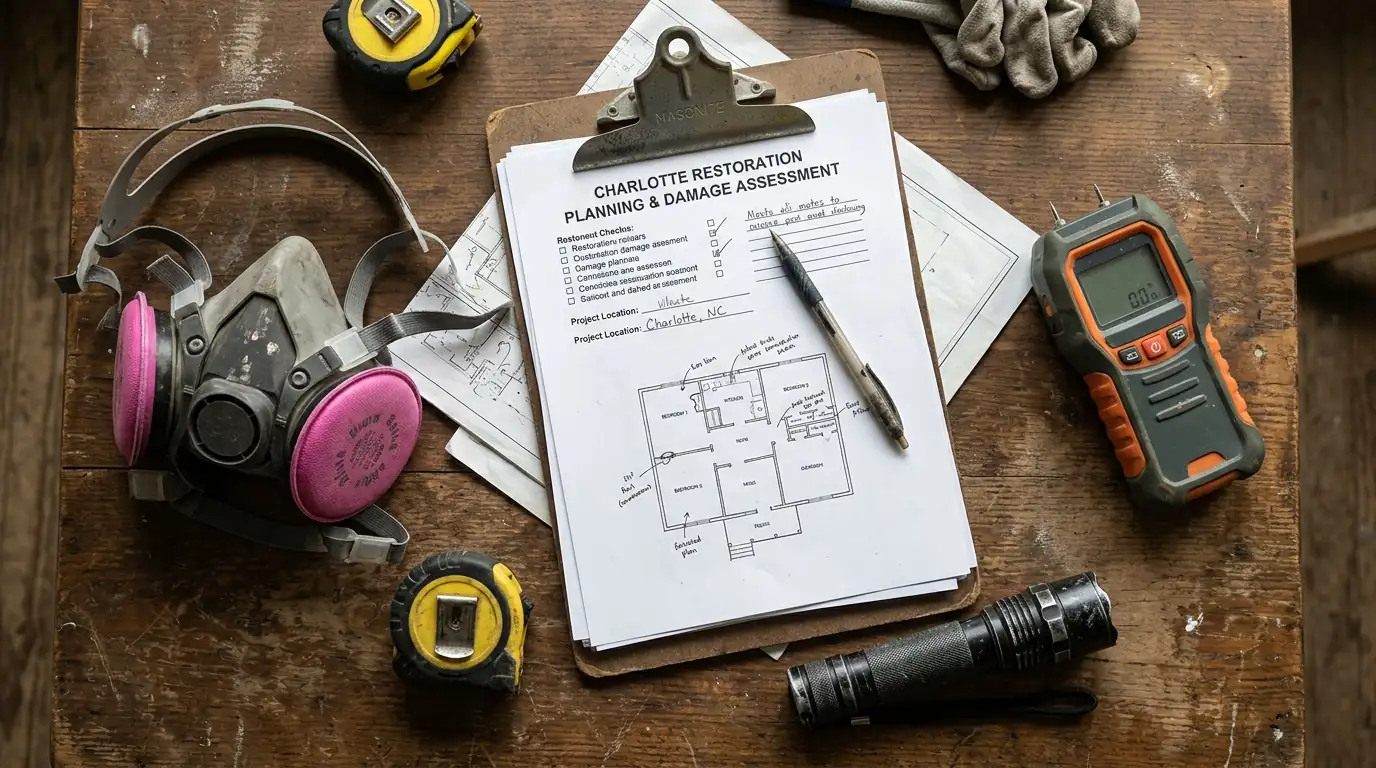
What fire damage restoration costs in Charlotte
Published planning ranges for board-up, soot removal, odor treatment and rebuild, and what pushes a job to the high end.
Documenting a fire loss for your claim in NC
Photos, inventory, receipts and moisture logs: what an adjuster needs to see and how we help you build the file.
How long fire damage restoration takes
From a two-day kitchen fire cleanup to a months-long rebuild: realistic timelines phase by phase.
Deciding what to keep?
Call and we will sort, inventory and clean what can be saved.
Call (704) 368-1592