When a neighbor's fire damages your home in North Carolina, you usually file with your own homeowners insurer first, because your policy covers fire and smoke damage to your house regardless of where the fire started. If the neighbor was at fault, your insurer can later seek repayment from the neighbor's insurer, and may recover your deductible too. Document the smoke, heat and water damage in your home right away.
Your own policy usually pays first
It feels backwards, but the usual path is to claim on your own policy. Homeowners policies cover your house against fire and smoke damage regardless of where the fire started, so your insurer pays for the cleanup and repairs under your coverage, minus your deductible. Waiting for the neighbor's insurer to accept fault can take months, while smoke residue and water damage get worse every day.
Your neighbor's insurer generally has no obligation to pay you unless the neighbor is legally responsible for the fire, and establishing that takes time. Your own insurer owes you the coverage you bought, whatever caused the fire.
How subrogation works
If your insurer pays your claim and the fire was caused by your neighbor's negligence, your insurer can pursue the neighbor's insurer for what it paid. This is called subrogation, and it happens between the insurance companies, usually without you. If they recover money, your insurer may refund some or all of your deductible.
Your part is to cooperate: keep your documentation, keep any evidence your insurer asks you to hold on to, and do not sign anything from the neighbor's insurer that releases claims without talking to your own adjuster first.
When the neighbor's policy matters directly
There are situations where the neighbor's liability coverage becomes the main route, or an important second one.
- You have no insurance and need to claim against the neighbor's liability coverage.
- Your losses exceed your own limits, and the neighbor was at fault.
- You want your deductible back and your insurer is not pursuing subrogation.
- The fire started in a shared building, like a townhome or duplex, where an association policy may also apply.
Smoke from a fire next door?
Call. We test your house for smoke and water and document it for your insurer.
(704) 368-1592Smoke and water damage you cannot see
A neighbor's fire usually damages your house in three ways: heat that cracks windows, warps siding or scorches trim on the side facing the fire; smoke that enters through vents, attic openings, gaps and open windows; and water from firefighting that soaks shared walls or the ground near your foundation. The smoke is the easiest to miss, because a light film on walls and inside cabinets may not be obvious until it starts to smell.
Have the house checked even if it looks fine. Residue tests on walls and inside the HVAC system show whether smoke got in, and moisture readings show whether water reached shared walls or crawlspaces. Smoke intrusion cleanup and exterior soot and siding cleaning cover most of what a neighbor's fire leaves behind.
What to document
Start the record before anything is cleaned or repaired.
- Photos and video of the side of your house facing the fire: siding, windows, trim and roof edge.
- Photos inside, especially rooms on that side, with the lights on.
- The date, time and fire department incident number.
- Anything officials said about the cause.
- Receipts for any hotel or emergency costs.
- Residue test results and moisture readings from your restoration company.
If officials keep you out
Sometimes your house is fine but you cannot go home, because the burned house is unsafe and the area is closed. Many homeowners policies include a civil authority provision under loss-of-use coverage for this, paying extra living costs for a limited time when a civil authority prohibits use of your home because of direct damage to neighboring property from a covered peril. Ask your adjuster whether yours does, and read our guide to additional living expense coverage.
Keeping it neighborly
A fire is usually the worst week of your neighbor's year too. Letting the insurers handle fault keeps the conversation between neighbors about recovery, not blame. Share your insurers' contact details, avoid statements about who caused the fire, and let the adjusters and the fire incident report sort out the rest.
If your neighbor asks who you are using for the cleanup, it often helps to have both houses handled by the same crew; smoke that crossed between them can be traced and documented once, for both insurers.
Questions people ask about this
Usually your own first. Your policy covers fire and smoke damage regardless of where the fire started.
That depends on your insurer and your claim history. Ask your agent; a claim recovered through subrogation may be treated differently.
Possibly. If your insurer recovers from the neighbor's insurer through subrogation, it may refund some or all of your deductible.
Yes. Smoke film inside walls, cabinets and ducts is easy to miss and can smell for months.
Your own policy still covers your house. Your insurer can decide whether to pursue the neighbor directly.
Keep reading
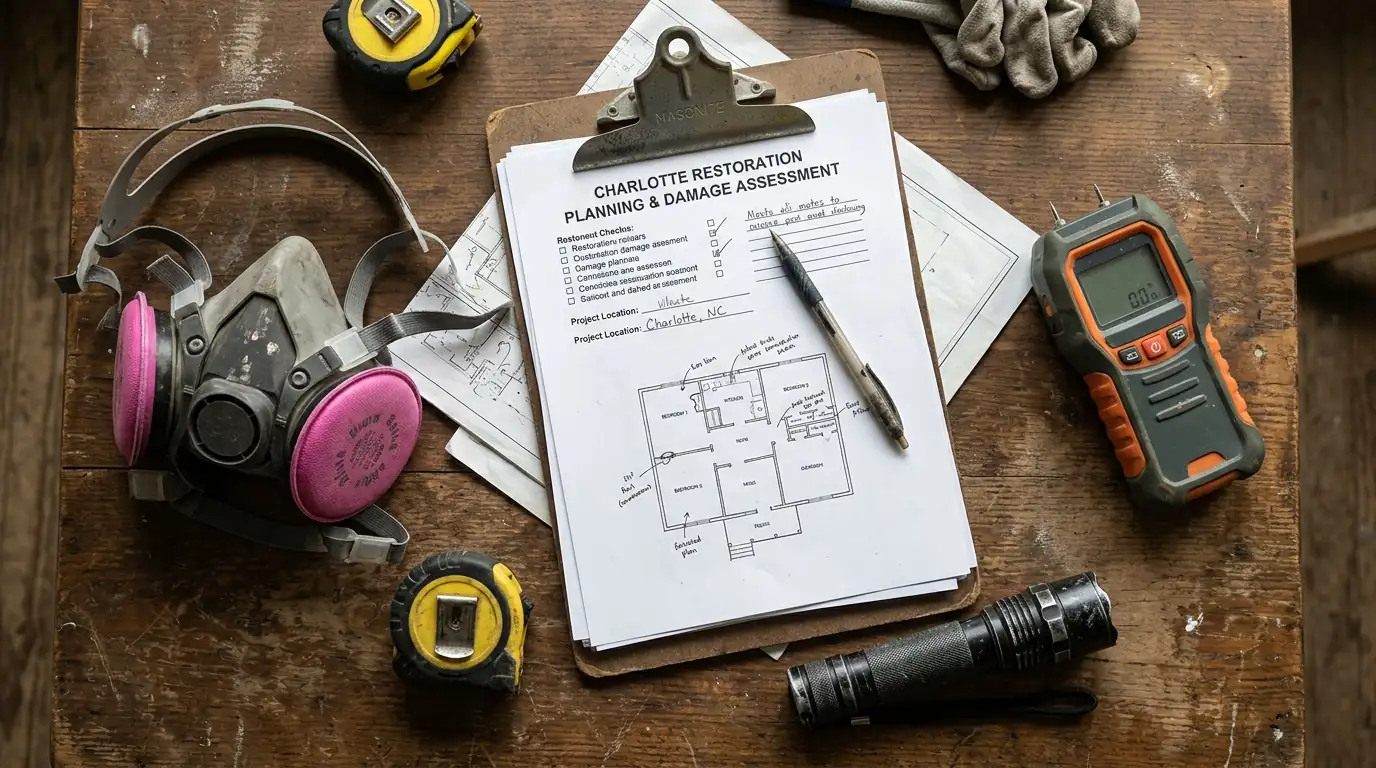
How to get a fire incident report in Charlotte
What the fire report shows, how to request it from the City of Charlotte or a nearby department, and what to do while you wait.
Selling a house after a fire in North Carolina
Restore first or sell as is, what the NC disclosure form asks about fire, and the records that reassure buyers.
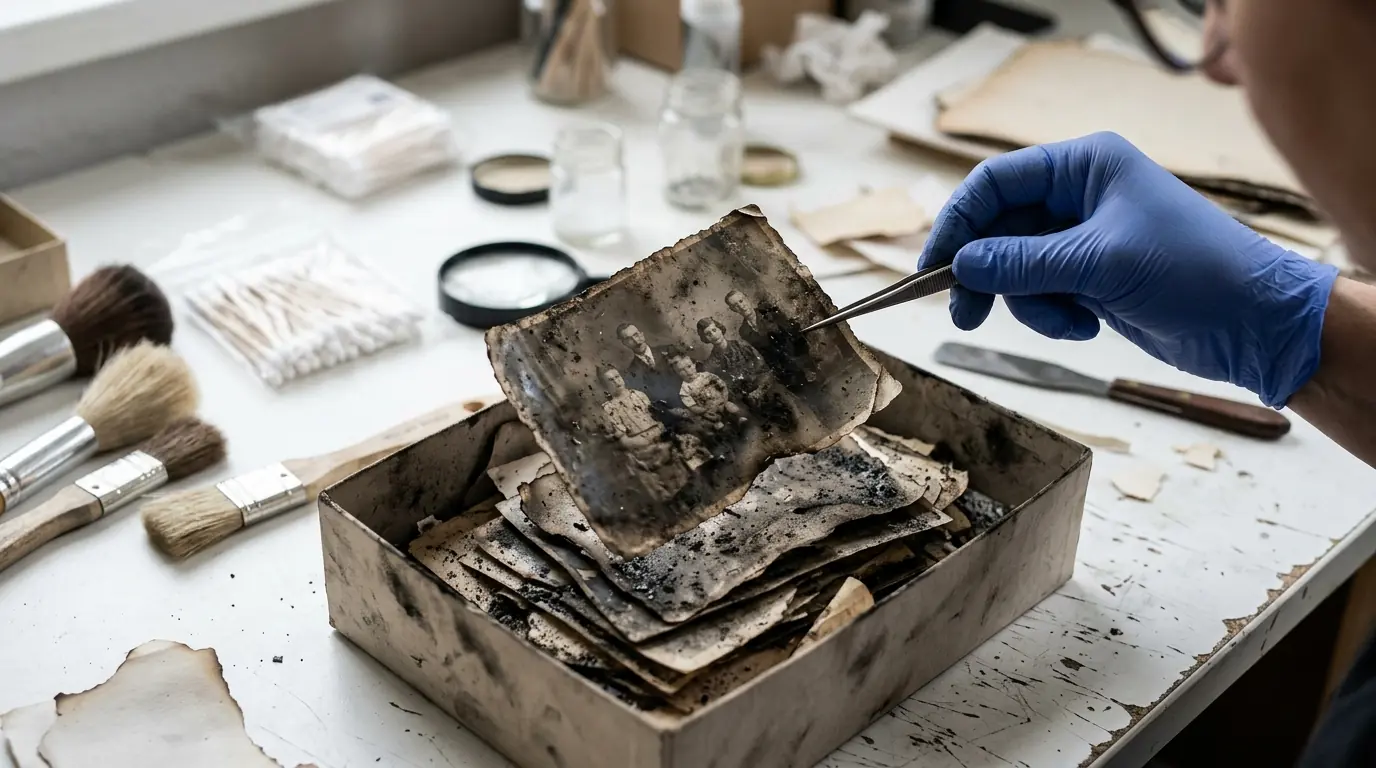
Winter heating fire safety for Charlotte homes
Space heaters, chimneys, furnaces and generators: how to heat safely through a cold snap and what to do if something catches.
Not sure whether smoke got in?
Call any hour. We check residue and moisture and give you a clear answer.
Call (704) 368-1592